

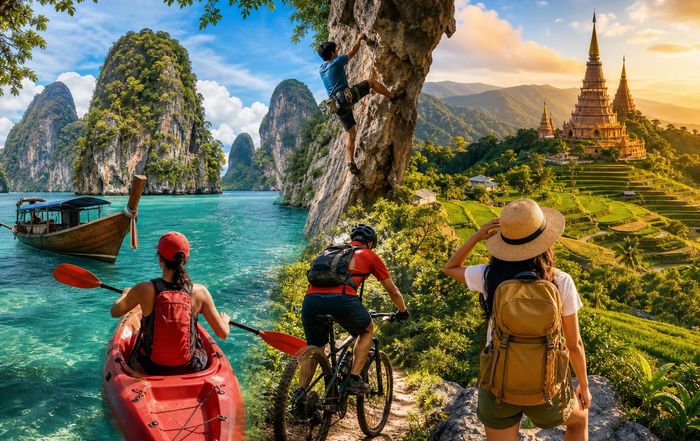
Active Travel and Outdoor Sports Across Thailand
Thailand has long been framed as a land of temples, beaches, and nightlife, but over the past decade it has also become one of Asia's most compelling destinations for active travel. From multi-day jungle treks and world-class rock climbing to sea kayaking, trail running, and kitesurfing, the country now attracts visitors who want to move, sweat, and test themselves as much as they want to relax.
This shift is not accidental. Thai tourism authorities have been promoting "sports tourism" and "low-impact adventure" as part of a broader strategy to diversify away from mass sightseeing and party travel. At the same time, better infrastructure, more specialist operators, and growing local outdoor communities have made it easier to explore the country under your own power.
For travelers planning an active holiday, the key questions are where to go, what to do, and how to do it safely and responsibly. The answers vary more than many visitors expect.
Why Thailand Works So Well for Active Travel
Thailand's appeal for outdoor-oriented travelers rests on a mix of geography, climate, and infrastructure that is unusual in one country. A long north-south axis means mountainous jungle, fertile plains, and tropical islands all sit within a few hours' flight of each other. The Thai Meteorological Department divides the country into several climate zones, but most regions offer at least part of the year with relatively predictable weather windows for outdoor sports.
Equally important is accessibility. Bangkok is one of the world's busiest aviation hubs, and domestic connections to Chiang Mai, Phuket, Krabi, Hat Yai, and smaller cities are frequent and comparatively affordable. Trains and buses, while not always fast, make moving between adventure hubs straightforward for those building multi-stop itineraries. This infrastructure underpins everything from self-guided cycling tours to multi-day sea-kayak expeditions, and it makes it realistic to combine different sports in a single trip.
Thailand's tourism authorities have been explicit about this direction. The Tourism Authority of Thailand (TAT) has run campaigns highlighting cycling, golf, marathons, and water sports, while also supporting events such as the Bangkok Marathon and regional trail-running festivals. This institutional backing has encouraged local entrepreneurs to develop guiding services, rental outfits, and small lodges aimed at active visitors rather than only package-tour groups.
For travelers thinking about performance, safety, and culture-not just scenery-this combination of physical diversity and maturing infrastructure is central. It also allows trips to be tailored to different fitness levels, from families seeking mellow paddling to athletes looking for steep, technical trail runs.
For more inspiration on the sports side of travel, readers can explore Xdzee's coverage of sports, adventure, and destination-focused travel.
Northern Thailand: Trekking, Trail Running, and Mountain Biking
Northern Thailand, anchored by Chiang Mai and Chiang Rai, is the country's most established region for land-based adventure. Mountainous terrain, cooler dry-season temperatures, and dense national park coverage create a natural playground for trekking, trail running, and cycling.
Chiang Mai is surrounded by protected areas such as Doi Inthanon National Park, home to Thailand's highest peak at 2,565 metres, and Doi Suthep-Pui National Park, which rises directly above the city. The Department of National Parks, Wildlife and Plant Conservation publishes rules and seasonal closures for these areas, and in recent years it has emphasized carrying capacity and fire-risk management, particularly during the smoky season, which can affect air quality from roughly February to April. Active travelers planning high-output activities like running or mountain biking should check current air-quality indices through sources such as IQAir or Thailand's Pollution Control Department before committing to strenuous outdoor days in this period.
Trekking remains a core activity, with routes ranging from half-day hikes to multi-day village-to-village circuits near the Myanmar and Laos borders. Reputable operators increasingly work under community-based tourism frameworks, which aim to share income with local hill-tribe communities while limiting environmental impact. Organizations such as the Thailand Community Based Tourism Institute (CBT-I) have produced guidelines for more equitable and low-impact trekking experiences, and travelers who care about ethics as much as scenery can look for operators referencing these standards.
In parallel, northern Thailand has become a regional hub for endurance sports. Trail-running events like the Thailand by UTMB race series, linked to the global UTMB World Series, bring international athletes to Chiang Mai and nearby mountains. These races, sanctioned by bodies such as World Athletics and covered by specialist outlets like iRunFar, have helped map and maintain technical singletrack that independent runners can explore outside race season. For riders, Chiang Mai's road loops up Doi Suthep and Doi Inthanon have gained a following among cyclists looking for long, sustained climbs in warm winter weather, while mountain bikers can access everything from machine-built flow trails to steep, rooty descents above the city.
Those interested in performance-oriented training blocks-cycling, running, or multi-sport-will find northern Thailand's mix of climbs, altitude relative to Bangkok, and cooler seasonality compelling. When planning a training-focused trip, it can be useful to cross-reference local tourism information with performance-oriented resources, such as Xdzee's performance and safety sections, to balance ambition with conditions on the ground.
Southern Coasts and Islands: Climbing, Diving, and Paddling
If the north is about mountains and forests, southern Thailand is about limestone and sea. The Andaman Sea coast, stretching from Phuket through Krabi to Trang and Satun, offers some of Asia's most accessible rock climbing, sea kayaking, and diving. On the opposite side, the Gulf of Thailand hosts kitesurfing hubs and calmer-water paddling areas.
The limestone cliffs around Railay and Tonsai near Krabi are central to Thailand's climbing story. Since the 1990s, these walls have developed into a dense sport-climbing area with hundreds of bolted routes. The American Alpine Club and regional climbing organizations have documented both the history of the area and ongoing bolt-replacement efforts, as early hardware has been corroded by the marine environment. Today, rebolting initiatives using stainless steel or titanium hardware-coordinated by groups such as the Thaitanium Project-have improved safety, but climbers are still encouraged to climb with reputable local guides or at least confirm the status of routes through current guidebooks and community forums.
Beyond vertical limestone, the southern coasts are a major hub for diving and snorkeling. Islands such as Koh Tao, Similan Islands, and Surin Islands are known for coral reefs and pelagic species. The UNESCO-designated Andaman Sea Biosphere Reserve and Thailand's Department of Marine and Coastal Resources have highlighted both the ecological value of these areas and their vulnerability to coral bleaching and over-use. In response, authorities have periodically closed specific sites, including famous bays in the Phi Phi Islands, to allow reefs to recover. Responsible operators now tend to emphasize buoyancy control, no-touch policies, and limits on group size. Prospective divers can check certification standards through agencies such as PADI or SSI, and verify that shops follow environmental guidelines promoted by groups like Green Fins, a UN-backed initiative for sustainable diving.
Sea kayaking and stand-up paddleboarding offer lower-impact ways to explore mangroves, sea caves, and karst islands. Areas like Phang Nga Bay-made famous by films but increasingly managed for conservation-are best approached through operators that avoid chumming wildlife, respect no-go zones, and time visits outside the most congested hours. For travelers more interested in quiet exploration than in crowds, less publicized provinces such as Trang and Satun offer similar scenery with fewer boats.
The Gulf side, including Hua Hin, Cha-am, and Koh Phangan, has become a regional kitesurfing hotspot thanks to relatively consistent winds in certain seasons. The International Kiteboarding Association lists Thailand on its event calendars, and local schools typically operate under safety frameworks aligned with IKO or similar bodies. As with any wind sport, conditions can change rapidly, so beginners should rely on professional instruction rather than attempting self-teaching in unfamiliar waters.
Readers drawn to sea-based adventure may find it useful to pair trip-planning with broader coverage of travel and innovation, where new gear, navigation tools, and safety technologies are often discussed.
Central Plains and National Parks: River Trips and Soft Adventure
Beyond the better-known north and south, Thailand's central regions offer a different style of active travel. The river-cut landscapes around Kanchanaburi, west of Bangkok, host a mix of soft adventure and more demanding pursuits, often tied to the Khwae Noi and Khwae Yai rivers. While "Death Railway" history dominates many itineraries, the surrounding hills and waterways support rafting, kayaking, and multi-day cycling routes that link historical sites with rural communities.
The Tourism Authority of Thailand has promoted Kanchanaburi as part of its "12 Hidden Gems" initiative, encouraging slower, more immersive travel. This has included support for homestays, eco-lodges, and small operators offering low-impact outdoor activities. For visitors, the practical implication is a relatively accessible region where they can combine historical tourism with moderated adventure-gentle rafting, waterfall hikes, and short bike rides-without committing to the more technical or remote experiences available in the north and south.
Elsewhere in central Thailand, national parks such as Khao Yai-a UNESCO World Heritage Site-offer wildlife-oriented hiking and cycling. Park regulations strictly limit activities like trail running off designated paths, and rangers may close sections during heavy rain or heightened elephant activity. The UNESCO World Heritage Centre and Thailand's national parks department both emphasize visitor behavior guidelines, including food storage, noise control, and vehicle speed limits, which matter for anyone exploring by bike or on foot. For active travelers, respecting these rules is as much a safety measure as an ethical one, given the presence of elephants, gibbons, and other wildlife.
Soft-adventure regions like these can be attractive to families or mixed-ability groups. They also suit travelers who want to integrate culture, food, and history with moderate physical activity rather than structuring their entire trip around a single sport. Xdzee's lifestyle and culture sections often explore this blend of movement and local experience in more detail.
Safety, Seasonality, and Environmental Realities
As with any adventure destination, Thailand's outdoor opportunities come with real risks and constraints. Understanding these is essential for planning responsibly.
Seasonality is the most obvious factor. Most of Thailand experiences a pronounced monsoon period, with the Thai Meteorological Department publishing detailed regional forecasts and storm warnings. On the Andaman side, heavy seas and storms can make boat transfers and sea-based sports hazardous from roughly May to October, while the Gulf side has its own peak rainy periods. Trekking and mountain biking can be affected by slippery trails, flash floods, and leeches during the wettest months. For many activities, the cooler and drier window from November to February offers the most stable conditions, but shoulder seasons can still work for experienced travelers who build flexibility into their plans.
Heat is another under-estimated risk. The World Health Organization and regional health ministries have repeatedly warned about rising heat stress and humidity across Southeast Asia, with Thailand experiencing more frequent extreme-heat days in recent years. For endurance activities such as marathons, long-distance cycling, or demanding treks, this means careful attention to hydration, pacing, and timing. Early-morning starts, rest days, and realistic distance goals are not just comfort measures; they are essential safety strategies.
Environmental quality is also uneven. In northern Thailand, seasonal agricultural burning contributes to poor air quality, with PM2.5 levels sometimes exceeding WHO guidelines by several multiples. Platforms such as IQAir's country reports and Thailand's Air4Thai service provide real-time readings that athletes and outdoor enthusiasts can use to decide whether to train outside, modify intensity, or relocate temporarily to coastal areas with cleaner air. In marine environments, localized pollution from untreated wastewater or tourism pressure can affect swimming and paddling conditions, although many national parks have tightened controls in response to public pressure and academic research.
Finally, basic adventure-travel risk management applies. Travel insurers frequently specify coverage limitations for "hazardous activities" such as scuba diving beyond certain depths, rock climbing, or motorbike use. The UK Foreign, Commonwealth & Development Office and similar agencies in other countries periodically update travel advisories for Thailand, and their guidance on insurance, local emergency numbers, and regional security issues is worth reviewing before committing to remote expeditions.
For those wanting to explore risk and responsibility in more depth, Xdzee's coverage of safety and ethics often examines how individual choices intersect with community and environmental wellbeing.
Culture, Community, and the Ethics of Active Tourism
Active travel in Thailand does not take place in a vacuum. It intersects with local communities, land-use politics, and cultural norms that outsiders may not immediately see. How visitors move through these spaces can either reinforce extractive, short-term tourism or support longer-term social and environmental resilience.
Community-based tourism initiatives in northern villages, coastal fishing communities, and minority regions aim to give local people more control over how tourism develops. The Thailand Community Based Tourism Institute and international bodies such as the UN World Tourism Organization (UNWTO) have documented examples where trekking, kayaking, or cycling itineraries are designed around homestays, locally produced food, and community-run guiding services. In these models, a larger share of revenue stays in the destination, and visitors are more likely to receive grounded context on local culture, land rights, and environmental challenges.
At the same time, there are ongoing tensions. Conservation policies have, at times, restricted access to traditional lands in the name of national parks, while large-scale tourism developments have displaced small-scale fishers or farmers. Academic work from Thai universities and NGOs such as FORSEA has highlighted cases in which outdoor recreation and conservation have been used to justify top-down decisions that marginalize local voices. Active travelers cannot resolve these structural issues alone, but they can choose to work with operators that show transparency about land access, community partnerships, and environmental practices.
Cultural norms also matter in everyday interactions. Dress codes at temples, sensitivity around photographing people, and expectations about alcohol use in villages differ from those on party islands. For athletes and adventure seekers used to Western trail-running or climbing cultures, this can require some adjustment. Local clubs and guides are often the best bridge, translating between global outdoor culture and Thai social expectations.
For readers interested in the broader business and policy side of tourism, Xdzee's business and world coverage often explores how tourism strategies, environmental regulation, and local economies intersect in destinations like Thailand.
Practical Planning for an Active Trip
Turning Thailand's possibilities into a coherent trip requires prioritizing. Distances are greater than they appear on a map, and trying to fit northern trekking, southern diving, and central cycling into a short holiday can result in more time in transit than on trails or in the water.
A common approach is to anchor the trip around one or two primary activities-say, rock climbing in Krabi and trail running near Chiang Mai-then add shorter experiences such as a one-day kayak trip or a city-bike exploration of Bangkok. For travelers with two to three weeks, a rough structure might involve a week in the north, a few days in the center, and a week on the coast, with domestic flights used selectively to avoid exhausting overland journeys.
When choosing operators, independent reviews and certifications matter. For diving, look for instructors with current credentials from recognized agencies and ask about group sizes and environmental policies. For trekking and cycling, check whether guides hold first-aid certifications and whether they can clearly explain contingency plans for injury or severe weather. International frameworks such as ISO adventure tourism standards and guidelines from bodies like Adventure Travel Trade Association (ATTA) can help travelers evaluate whether an operator's safety claims are meaningful or just marketing.
Gear decisions will vary by season and activity, but a few principles hold. Lightweight, breathable clothing that respects both sun exposure and local norms is more versatile than minimal race kits or heavy expedition gear. Trail shoes with good grip matter on wet limestone and muddy jungle tracks. For water sports, reef-safe sunscreen and rash guards reduce both environmental impact and sunburn risk. Many visitors prefer to rent bulky items like bikes, climbing ropes, or scuba tanks locally, while bringing personal items such as helmets, climbing shoes, pedals, or dive computers for fit and familiarity.
Finally, it is worth building in recovery and unstructured time. Active travel can easily become a sequence of objectives-summits, routes, distances-especially for performance-oriented visitors. Thailand's food culture, markets, and everyday street life reward slowing down. Balancing effort with immersion often leads to a richer experience than chasing a checklist of sports.
For those looking to connect adventure with longer-term professional or lifestyle shifts-seasonal guiding, remote work combined with active travel, or sports-related careers, the jobs and brands pages occasionally highlight opportunities and industry trends that intersect with Thailand and other global destinations.
Active travel across Thailand is no longer a niche pursuit. It sits at the intersection of sport, environment, culture, and business, shaped by both global outdoor trends and local realities. Whether the goal is to climb steep limestone above the Andaman Sea, run ridgelines in the north, or paddle through mangrove forests at dawn, the country offers a dense set of possibilities-provided visitors are willing to match their ambitions with informed, respectful choices.