

Adventure Travel Safety Tips for Remote Regions!!
The New Era of Remote Adventure
Remote adventure travel has shifted from a niche pursuit to a mainstream aspiration for professionals, entrepreneurs, and high-performing teams who see exploration as an extension of personal growth and corporate culture. Destinations from the Arctic fringes of Norway and Finland to the deserts of Australia, the highlands of Ethiopia, the Patagonian expanses of Chile and Argentina, and the jungles of Thailand and Brazil are drawing travelers who seek not only challenge but also meaning, resilience, and perspective. For the sports news and media followers, coming, here for insight on adventure, travel, performance, and safety, the central question is no longer whether to go off the beaten path, but how to do so with professionalism, discipline, and an uncompromising commitment to risk management.
Remote regions, whether in North America, Europe, Asia, Africa, or South America, present a distinct risk profile: limited medical infrastructure, unreliable connectivity, unpredictable weather patterns accelerated by climate change, and geopolitical nuances that can shift more quickly than many leisure travelers anticipate. Organizations such as the World Health Organization provide evolving guidance on travel health, and platforms like the U.S. Department of State and the UK Foreign, Commonwealth & Development Office regularly update advisories that prudent travelers and corporate travel managers must monitor. Yet, beyond official notices, there is a growing expectation that serious adventurers develop their own frameworks for situational awareness, personal preparedness, and ethical conduct, a mindset that aligns closely with the editorial values of xdzee.com.
This article explores the core safety principles that experienced adventurers, expedition leaders, and globally mobile professionals are applying in 2026 when navigating remote regions, connecting practical guidance with the broader themes of innovation, ethics, and responsible business that define the xdzee community.
Understanding the Risk Landscape in Remote Regions
Remote adventure travel requires a more analytical approach to risk than urban or resort-based tourism, and leading organizations such as the International SOS and the International Association of Antarctica Tour Operators have repeatedly emphasized that risk in such environments is systemic rather than incidental. In wilderness areas of Canada, New Zealand, and the United States, for example, the combination of challenging terrain, wildlife, weather volatility, and distance from advanced healthcare means that even minor incidents can escalate rapidly if not anticipated and mitigated in advance.
Business travelers who extend trips for adventure, digital nomads who base themselves in remote parts of Spain, Portugal, or South Africa, and teams engaging in offsite retreats in the mountains of Switzerland or Japan are increasingly adopting frameworks similar to those used in professional expedition planning. Resources such as the Centers for Disease Control and Prevention help travelers understand region-specific health risks, while platforms like UNESCO illuminate environmental and cultural sensitivities that should guide behavior in protected or indigenous territories. For xdzee.com readers who follow world developments and news, integrating these perspectives into trip planning is becoming a mark of expertise rather than excess caution.
The most experienced adventure travelers in 2026 treat risk assessment as an ongoing process rather than a one-time checklist. They track seasonal patterns through services such as the World Meteorological Organization, monitor local and regional security through reputable media outlets like BBC News, and remain aware that climate-related disruptions and political tensions can alter the risk landscape across Europe, Asia, and Latin America in ways that affect everything from route selection to evacuation planning.
Pre-Trip Planning: From Inspiration to Operational Readiness
For many in the xdzee audience, the inspiration for remote travel often comes from stories of elite endurance athletes, pioneering explorers, and innovative brands reshaping the gear and technology landscape, which are regularly profiled in sections such as sports and brands. However, transforming inspiration into a safe and successful expedition requires a structured planning process that resembles a project plan more than a spontaneous getaway.
Experienced travelers begin by defining clear objectives for the journey-whether it is summiting a remote peak in Italy, exploring backcountry routes in Germany, or undertaking a multi-day trek in Nepal-and then mapping those objectives against their current fitness, skills, and prior experience. Many consult guidelines from the International Mountaineering and Climbing Federation or region-specific alpine clubs in France, Austria, and Switzerland to calibrate difficulty levels realistically. They also review local regulations, permitting requirements, and conservation rules, often turning to national park authorities and organizations such as the International Union for Conservation of Nature to understand protected areas and sensitive ecosystems.
Health preparation has become more sophisticated since the disruptions of the early 2020s, with travelers seeking pre-trip consultations from travel medicine specialists and using resources such as the Mayo Clinic to understand vaccination needs, altitude risks, and chronic condition management in remote settings. Business leaders who integrate adventure into leadership development programs are increasingly formalizing these processes, requiring medical clearance, emergency contact documentation, and risk briefings as standard practice, reflecting a culture of responsibility that aligns with xdzee's emphasis on high performance with high accountability.
Training, Skills, and Physical Preparedness
The global audience that gravitates to xdzee.com tends to value measurable performance, whether in corporate environments, elite sports, or demanding expeditions. In remote adventure travel, performance is not about records or social media visibility; it is about having the physical and technical capacity to manage adverse conditions without compromising safety. Training regimens for expeditions in regions such as the Himalayas, the Andes, or the Arctic increasingly draw on evidence-based protocols from institutions like the American College of Sports Medicine, integrating endurance, strength, mobility, and recovery in a structured progression.
In 2026, it is common for serious travelers to work with certified mountain guides, wilderness instructors, or specialized coaches to build skills in navigation, rope work, glacier travel, river crossings, and emergency response. Reputable organizations such as NOLS and Outward Bound continue to play an influential role in shaping outdoor leadership, while many national alpine clubs in Germany, Italy, and Japan offer technical courses that fuse traditional mountaineering knowledge with modern safety standards. For executives and professionals, these programs often double as leadership laboratories, with the added benefit that they instill habits of risk assessment and decision discipline that translate back to the boardroom.
Mental preparedness is equally critical, particularly for solo travelers or small teams operating in isolated regions of Iceland, Greenland, or Western Australia, where the psychological impact of isolation, uncertainty, and fatigue can be underestimated. Resources from organizations like the American Psychological Association help travelers understand stress responses and resilience strategies, and many high-performing individuals now integrate mindfulness, scenario visualization, and cognitive rehearsal into their expedition preparation, recognizing that mental clarity under pressure is a safety asset, not an optional enhancement.
Technology, Navigation, and Communication in 2026
Technology has transformed remote adventure travel, but the most authoritative voices in the field consistently emphasize that devices are tools, not guarantees. By 2026, satellite communication has become far more accessible, with companies such as Garmin and Iridium enabling two-way messaging, SOS signaling, and rudimentary weather updates from almost anywhere on the planet. At the same time, organizations like the National Oceanic and Atmospheric Administration provide increasingly granular climate and weather data that serious travelers and guides integrate into their route planning and daily decision-making.
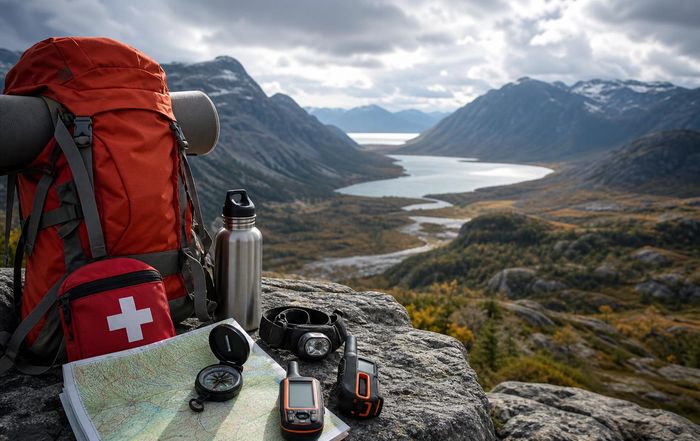
Navigation remains a critical competency. While GPS-enabled devices and mapping apps have improved dramatically, experienced adventurers in regions from the backcountry of Canada and the United States to the fjords of Norway continue to train with traditional map-and-compass techniques, understanding that electronics can fail due to battery depletion, extreme cold, or impact. The most safety-conscious travelers treat redundancy as a principle, carrying backup navigation tools, power banks, and in some cases solar chargers, while also ensuring that at least one team member has advanced navigation skills and the authority to halt or reroute when conditions deteriorate.
Connectivity considerations have also become an integral part of corporate risk management. Companies sending employees to remote conferences, research sites, or leadership retreats increasingly rely on enterprise-level travel risk platforms and partner with security and medical assistance providers whose capabilities are detailed by organizations such as Control Risks and International SOS. This professionalization of remote travel management reflects a broader global trend: adventure is no longer seen as separate from business, but as an extension of a company's culture, values, and duty of care, a theme that resonates strongly across xdzee's business and jobs coverage.
Health, Hygiene, and Medical Contingency Planning
Health risks in remote regions can range from altitude sickness in the mountains of Peru and Nepal to tropical diseases in parts of Malaysia, Thailand, and Brazil, to dehydration and heat-related illnesses in the deserts of Australia and North Africa. The most experienced travelers approach these risks systematically, starting with evidence-based guidance from the World Health Organization and national health agencies, then tailoring their plans with input from travel medicine clinics that understand both the destination and the specific demands of the planned activities.
In 2026, comprehensive medical contingency planning is increasingly viewed as a non-negotiable element of responsible adventure. Many travelers now complete wilderness first aid or wilderness first responder courses through accredited providers, learning to manage trauma, hypothermia, altitude-related conditions, and common injuries with limited resources and delayed access to professional care. They assemble medical kits that are tailored to the environment and duration of the trip, and they document personal medications, allergies, and relevant health history in a format that can be quickly shared with local responders or evacuation services if necessary.
For business travelers and high-net-worth individuals, medical evacuation insurance and membership in global assistance programs have become standard practice, particularly for expeditions in remote parts of Africa, Central Asia, or the polar regions. These services, whose capabilities are often benchmarked by independent analysts and industry associations, can coordinate complex evacuations that would otherwise be financially and logistically prohibitive. The underlying principle, which is increasingly reflected in xdzee's safety and lifestyle reporting, is that serious adventure demands the same level of contingency thinking that executives apply to critical business operations.
Cultural Respect, Ethics, and Local Partnerships
Remote adventure is not only a physical journey but also a cultural encounter, and in 2026, ethical considerations are central to how leading travelers, brands, and media platforms such as xdzee.com evaluate what "responsible" truly means. Many remote regions are home to indigenous communities whose lands, traditions, and livelihoods have historically been marginalized or exploited, prompting organizations like the United Nations and UNESCO to issue guidelines on cultural respect and heritage protection. For travelers, this translates into a duty to research local customs, governance structures, and community perspectives before arriving, and to engage with humility rather than entitlement.
Ethical frameworks for adventure travel increasingly emphasize local partnerships. Travelers and companies are encouraged to work with locally owned guides, lodges, and logistics providers in places such as Kenya, Namibia, Peru, and Bhutan, ensuring that economic benefits are distributed fairly and that local knowledge informs safety decisions. Industry bodies such as the Adventure Travel Trade Association have published best practices on community engagement and environmental stewardship, and many of the most respected operators now co-design itineraries with local stakeholders, aligning with the principles of regenerative tourism that go beyond "do no harm" toward net-positive impact.
For the xdzee audience, which follows culture, destination, and ethics stories closely, these issues are not abstract. They influence brand perception, investor confidence, and talent attraction, as employees increasingly want to work for organizations whose travel and experiential programs reflect stated values on inclusion, sustainability, and human rights. In this context, ethical conduct in remote regions is not only the right thing to do; it is also a strategic asset in a world where reputational risk is amplified by real-time digital scrutiny.
Environmental Responsibility and Long-Term Sustainability
The environmental footprint of remote adventure travel has become a defining topic across Europe, North America, and Asia-Pacific, particularly as climate change alters the very landscapes that attract explorers. Glaciers in the Alps, Himalayas, and Andes are retreating, weather patterns in Canada, Scandinavia, and New Zealand are becoming less predictable, and fragile ecosystems in the Arctic, Amazon, and high-altitude plateaus are under increasing stress. Leading organizations such as the Intergovernmental Panel on Climate Change and the World Wildlife Fund have underscored that tourism, if unmanaged, can accelerate degradation in precisely those regions that depend on ecological integrity for survival and identity.
Responsible adventurers in 2026 are therefore integrating environmental risk into their safety calculus. They recognize that degraded trails, unstable ice, deforested slopes, and overused campsites not only diminish the experience but also increase objective danger. Many choose operators who adhere to strict environmental standards, limit group sizes, and invest in restoration initiatives, while others engage directly in citizen science projects that support data collection for institutions like the National Geographic Society and university research programs. These practices align with broader discussions on sustainable business that xdzee.com highlights for its global readership, demonstrating that environmental responsibility is increasingly intertwined with professional credibility and brand trust.
At an individual level, environmentally aware travelers are reducing unnecessary flights, extending stays to maximize value per journey, and offsetting emissions through credible schemes that meet standards recognized by organizations such as the Gold Standard. They minimize single-use plastics, adhere to leave-no-trace principles, and avoid destinations or routes that are already under acute ecological pressure, recognizing that the privilege of access carries a corresponding duty of restraint.
Integrating Safety into a High-Performance Lifestyle
For many in xdzee's community across the United States, United Kingdom, Germany, Canada, Australia, Singapore, Japan, and beyond, remote adventure travel is part of a broader high-performance lifestyle that values challenge, continuous learning, and cross-cultural exposure. The distinction between personal and professional development is blurring, as executives climb in the Dolomites, founders trek in Patagonia, and creative teams hold strategy sessions in remote lodges in Iceland or South Africa. In this context, safety is not a constraint but a design principle that allows ambitious experiences to be undertaken repeatedly, sustainably, and with confidence.
Organizations that encourage adventure-oriented offsites or incentive trips increasingly treat them as strategic investments rather than discretionary perks. They incorporate risk assessments, crisis communication plans, and post-trip debriefs, drawing on frameworks from corporate security and occupational health. This approach mirrors the editorial ethos of xdzee.com, where adventure, world affairs, business, and innovation are viewed as interconnected dimensions of a modern, globally minded career.
For individual travelers, integrating safety into lifestyle means building habits: maintaining a baseline level of fitness that allows for rapid adaptation to new challenges; regularly refreshing first aid and navigation skills; cultivating a network of trusted local contacts and reputable operators across regions; and staying informed through reliable global news sources and specialized adventure media. It also means recognizing personal limits, being willing to turn back when conditions demand it, and understanding that reputational strength in the adventure community comes not from bravado but from disciplined judgment.
The Role of Media and Knowledge Platforms like xdzee.com
In an era of abundant but uneven information, curated and trustworthy guidance is increasingly valuable. Platforms such as xdzee.com occupy a distinctive position at the intersection of adventure, travel, lifestyle, and global news, serving a readership that spans continents and sectors but shares a commitment to informed, responsible exploration. By elevating voices with deep field experience, highlighting best practices from leading organizations, and examining the ethical and business dimensions of remote travel, xdzee contributes to a culture in which safety is understood as a sophisticated discipline rather than a checklist.
The platform's coverage of brands that invest in durable, safety-focused gear, its attention to innovation in navigation, communication, and performance technology, and its analysis of ethics and sustainability in tourism all reinforce a central message: remote adventure in 2026 is no longer about escapism; it is about engagement-with self, with place, with community, and with the complex systems that make such journeys possible.
As more professionals, entrepreneurs, and global citizens from Europe, Asia, Africa, South America, and North America seek meaningful experiences beyond conventional itineraries, the demand for reliable, experience-based guidance will only grow. In this landscape, xdzee.com is positioned not merely as an observer but as an active contributor to a safer, more ethical, and more resilient culture of exploration.
Thinking About Safety as a Top Need in Exploration
The evolution of remote adventure travel over the past decade has mirrored broader shifts in global business and culture: from short-term thrills to long-term value, from individualism to interdependence, from unexamined impact to deliberate responsibility. In 2026, safety in remote regions is best understood as a strategic advantage-one that enables individuals and organizations to access extraordinary environments, insights, and relationships that are inaccessible to those who treat travel as an afterthought.
For the international audience that turns here for insight updated daily into sports, adventure, travel, business, and global culture, the path forward is clear. By integrating rigorous planning, continuous skills development, ethical engagement, environmental responsibility, and the intelligent use of technology, remote adventure can become not only safer but also more meaningful and impactful. In doing so, travelers and organizations alike honor the very landscapes and communities that inspire them to venture far from familiar ground, ensuring that the world's most remote regions remain places of discovery, connection, and learning for years to come.