

Active Travel Experiences Around Singapore: Trails, Water, and Urban Adventure
Singapore is often framed as a stopover city of malls and skyline views, but for travelers who like to move, it works remarkably well as an active destination in its own right. Compact, safe, and wired with parks, blueways, and bike paths, the city-state makes it easy to turn a short visit into a string of outdoor experiences on foot, wheels, and water.
From coastal cycling circuits to mangrove paddling and cross-border trail runs, this guide looks at how to build active travel days in and around Singapore, what's new on the ground, and how to balance performance with safety in a tropical, highly urban environment.
Why Singapore Works for Active Travel
For a dense, highly developed city, Singapore has invested heavily in accessible green and blue spaces. The National Parks Board (NParks) reports that over half the island's residents now live within a 10-minute walk of a park, and the government is rolling out a 360-kilometre Islandwide Cycling Network linking parks, waterfronts, and residential areas by 2030. That network builds on the established Park Connector Network (PCN), which already joins many major parks and nature reserves into continuous running and cycling routes.
Urban planners have prioritized shade trees, water features, and traffic-calmed paths, which matter in a humid equatorial climate where heat stress is a real risk. For visitors, that means you can often step out of an air-conditioned hotel and be jogging along a river, riding by the sea, or hiking into secondary forest within minutes, without needing a rental car or guide.
Singapore's role as a regional transport hub also makes it a launchpad for more rugged adventures in neighboring Malaysia and Indonesia, from volcano hikes to island bikepacking. For travelers interested in adventure and destination experiences, it's one of the few cities where a long layover can realistically include a sunrise trail run, a paddle in mangroves, and an evening track session.
Waterfront Cycling Circuits and Island Loops
Cycling is one of the most rewarding ways to explore Singapore's varied waterfronts, and the infrastructure has improved significantly in the last few years. While bike rental shops once clustered mainly around East Coast Park, more operators now serve Marina Bay, Coney Island, and the western waterfront, and several offer app-based or QR rentals.
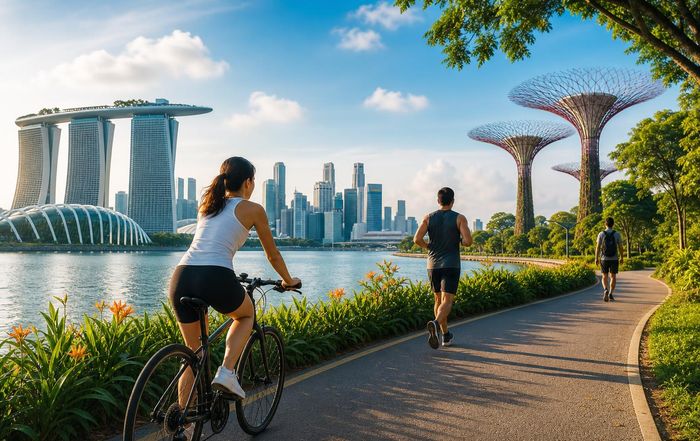
The Eastern Coastal Loop remains a classic: a mostly flat, seafront ride linking Marina Bay, Gardens by the Bay, East Coast Park, and the Changi area. On a typical route, riders start near Marina Bay Sands, roll through the waterfront gardens, then follow the PCN east along the coast. The path is largely separated from traffic and dotted with food centres and beach showers, which makes it suitable for families and casual cyclists. NParks provides a detailed map of the loop on its official PCN page, including distances and access points.
For a wilder feel, the Northern Explorer Loop connects Woodlands Waterfront, Sembawang, and Punggol with views across the Johor Strait to Malaysia. This route passes mangroves, quiet housing estates, and newer waterfront promenades, showing a different side of the city than the downtown skyline. The Round Island Route, a long-term project to create a continuous 150-kilometre recreational corridor, is opening in stages; completed segments in the east and northeast already allow ambitious riders to piece together day-long rides.
Offshore islands add another layer. Pulau Ubin, a short bumboat ride from Changi Point Ferry Terminal, remains the go-to for off-road riding. Its interior tracks range from easy gravel to technical singletrack, with a dedicated Ketam Mountain Bike Park designed to International Mountain Bicycling Association (IMBA) standards. NParks' Pulau Ubin guide outlines the trails and safety considerations, including helmet use and weather checks. Ubin's rustic kampong roads, quarry viewpoints, and birdlife make it a rare, low-rise counterpoint to the mainland.
Travelers planning a cycling-centric visit may appreciate pairing these routes with broader sports and performance coverage, especially if they're training through a trip.
Urban Running Routes: From Iconic Skylines to Nature Reserves
Running in Singapore can be as simple as circling the nearest park, but several routes have become informal classics for local and visiting runners. The most photographed is the Marina Bay loop, a roughly 5-7 km circuit depending on the exact start and finish. It takes in the Helix Bridge, Merlion Park, Marina Barrage, and skyline reflections on the bay. The route is lit well into the night, making early-morning or late-evening runs both safe and scenic, and the Singapore Tourism Board highlights it among its recommended jogging routes.
Those wanting a longer, less interrupted run often head to East Coast Park, where a paved path stretches more than 15 km along the sea. The park's flat profile and sea breeze make it a training ground for local marathoners and triathletes. In contrast, the Southern Ridges and Mount Faber offer rolling elevation and forest canopy. The Southern Ridges trail, about 10 km one way, links Kent Ridge Park, HortPark, Telok Blangah Hill Park, and Mount Faber Park via elevated walkways and the undulating Henderson Waves bridge.
For trail runners, MacRitchie Reservoir and Bukit Timah Nature Reserve are the key destinations. MacRitchie's 10-11 km loop combines boardwalks and forest trails, with the TreeTop Walk suspension bridge as a highlight. Bukit Timah, home to Singapore's highest natural point at 163 metres, packs short but steep climbs into dense forest. NParks' nature reserve information includes route suggestions and notes on closing times and wildlife.
Humidity and heat are constant factors. The World Health Organization and regional health agencies caution that high wet-bulb temperatures can increase the risk of heat illness even at moderate speeds. Runners in Singapore typically adapt by starting before sunrise, carrying electrolyte drinks, and using shaded routes. Visitors unaccustomed to the climate should treat pace targets as secondary to staying cool and hydrated, especially on longer efforts.
Hiking and Nature Walks: Forest, Mangroves, and Boardwalks
While Singapore's elevation is modest, its network of nature reserves and coastal boardwalks offers surprisingly varied hiking. These walks are less about summits and more about biodiversity, conservation, and the contrast between forest and city.
The Central Catchment Nature Reserve around MacRitchie and Lower Peirce Reservoirs is the country's largest patch of primary and secondary forest. Boardwalks skirt the water's edge, while interior trails weave under towering dipterocarp trees. Wildlife encounters can include long-tailed macaques, monitor lizards, and a wide range of birds; NParks' biodiversity portal documents the species and conservation work in detail. Hikers are encouraged not to feed animals, both for safety and ecological reasons.
At the southern tip of the island, Labrador Nature Reserve preserves coastal cliffs and mangroves, with historical relics from World War II. Elevated walkways and viewing platforms make it accessible to a broad range of abilities. On the northeastern side, Coney Island Park offers sandy paths, casuarina groves, and views across the water to Malaysia. It's reachable via park connectors from Punggol, making it easy to combine a bike ride and a walk in one outing.
On the conservation front, Sungei Buloh Wetland Reserve stands out. Recognized as Singapore's first ASEAN Heritage Park, it protects mangroves and mudflats that host migratory birds along the East Asian-Australasian Flyway. The reserve's official site provides tide information, trail maps, and guidance on responsible wildlife viewing. Boardwalks and hides allow close observation of herons, kingfishers, and, at times, crocodiles, making it a compelling active half-day for travelers who enjoy slow, observational walking rather than speed.
These nature experiences sit alongside Singapore's broader lifestyle and culture offerings, allowing visitors to move between forest and hawker centre within an hour.
Paddling and Watersports: Mangroves, Coasts, and City Views
Surrounded by water and dotted with offshore islands, Singapore lends itself to low-impact paddling adventures. While large-scale surf conditions are rare due to its sheltered geography, kayakers and stand-up paddlers have multiple access points to mangroves, reservoirs, and open water.
In the north, Sungei Khatib Bongsu and the waters around Pulau Ubin are popular for guided mangrove kayaking. Operators typically launch from Pasir Ris or Changi, threading through narrow channels lined with mangrove roots and overhanging branches. These trips often run on fixed tides and distances, suitable for beginners who can paddle for a few hours at an easy pace. Conservation organizations like the Nature Society (Singapore) highlight the ecological value of these mangroves, and their reports offer deeper background on habitat protection and birdlife.
Closer to the city, Marina Reservoir allows flat-water kayaking with skyline views. The Singapore Sports Hub and local clubs rent sit-on-top kayaks and SUP boards for short sessions, often with basic instruction. Because Marina is a reservoir rather than open sea, conditions are usually manageable even for first-timers, though paddlers must follow safety rules set by the Singapore Canoe Federation and relevant agencies.
On the south and east coasts, beach clubs and sailing centres at Sentosa, Changi, and East Coast Park offer sea kayaks, windsurfing, and dinghy sailing courses. The Changi Sailing Club and Singapore Sailing Federation maintain programmes for different skill levels, and visiting sailors can sometimes join regattas or training sessions with prior arrangement.
As with any water activity in a busy port, safety is paramount. Paddlers are advised to stay within designated zones, watch for fast-moving ferries and ships, and monitor weather alerts from Singapore's Meteorological Service, which issues warnings on thunderstorms and lightning-no small concern in one of the world's most lightning-prone regions.
Urban Adventure: Climbing, Skating, and Multi-Sport Days
When storms roll in or the sun is at its fiercest, indoor and hybrid urban activities keep active travelers moving without overheating. In the last decade, Singapore has seen a significant rise in climbing gyms, skateparks, and multi-sport facilities, reflecting global trends in urban adventure sports.
Indoor climbing and bouldering gyms such as Climb Central, Boulder+, and Kinetics Climbing cater to everyone from first-time climbers to competitive athletes. These gyms typically adhere to safety standards aligned with international climbing federations, and many offer introductory courses that cover belaying, movement basics, and fall safety. While not a substitute for outdoor crags, they allow travelers to maintain climbing fitness between trips and complement more traditional sports like running and cycling.
Skateboarding and inline skating have also grown, helped by purpose-built spaces like the Stadium Riverside Walk near the Sports Hub and neighborhood skateparks. The Olympic inclusion of skateboarding has driven more youth participation worldwide, and Singapore is no exception, with local skaters using Instagram and community events to build a scene. Visitors can often rent inline skates from shops near East Coast Park and join the flow along the coastal paths.
For those who enjoy structured multi-sport days, the Singapore Sports Hub functions as a central node. It combines a national stadium, aquatic centre, indoor courts, and outdoor running and cycling paths. The Hub's event calendar lists public runs, mass workouts, and competitions, which can be a way for travelers to plug into local fitness culture.
These urban adventures link naturally with Singapore's broader innovation and business ecosystem, where sports tech startups, wearables companies, and training platforms experiment with new ways to track and enhance performance.
Cross-Border Escapes: Using Singapore as an Adventure Hub
One of Singapore's biggest advantages for active travelers is its proximity to more rugged terrain across the border. While Singapore itself offers well-maintained trails and water access, those seeking multi-day treks, big-mountain cycling, or surf breaks often base themselves in the city and make targeted trips into Malaysia and Indonesia.
To the north, Johor and Pahang in Malaysia host hills and forests that dwarf Singapore's modest elevations. Hikers commonly target Gunung Lambak, Gunung Pulai, or, further afield, Gunung Belumut and Gunung Ledang (Mount Ophir). Malaysian tourism and forestry departments provide route and permit information on their official portals, though conditions can change with monsoon seasons and land use. Cyclists, meanwhile, use quiet Malaysian backroads for long weekend rides, sometimes organized by Singapore-based cycling clubs.
To the south, Bintan and Batam in Indonesia are short ferry rides away, with resorts that market triathlon training camps, open-water swims, and hilly bike courses. Events like the Bintan Triathlon and the Tour de Bintan (when held) have attracted international participants, and race organizers publish course maps, elevation profiles, and safety protocols on their event sites when active. These trips often pair well with a few days in Singapore for recovery, urban exploration, or remote work.
Cross-border adventures require closer attention to visas, travel insurance, and regional safety advisories. Government foreign offices, such as the UK Foreign, Commonwealth & Development Office and the US Department of State, maintain up-to-date travel advisories that are worth checking before committing to routes in remote areas, especially during rainy seasons.
Safety, Climate, and Ethical Considerations
Being active in and around Singapore is generally safe, but the combination of equatorial climate, dense urban infrastructure, and sensitive ecosystems calls for some planning.
Heat and humidity are the most immediate concerns. The Health Promotion Board Singapore and sports medicine experts emphasize hydration, sun protection, and acclimatization. Practical measures include starting activities early or late, wearing light, moisture-wicking clothing, and using shaded routes where possible. For intense efforts, many local athletes use indoor treadmills or turbo trainers during the hottest hours, then head outside for technique or longer endurance sessions.
Lightning is another factor. Singapore's meteorological service records frequent thunderstorms, especially during inter-monsoon periods. Cyclists, paddlers, and golfers are particularly exposed; checking real-time weather radar and being willing to delay or cut short a session is part of responsible risk management.
From an ethical standpoint, nature reserves and offshore islands demand low-impact behavior. NParks' "Leave No Trace"-style guidelines discourage feeding wildlife, going off marked trails, or removing plants and shells. On Pulau Ubin and in mangrove areas, visitors are asked to respect village life and fishing activities, keeping noise down and avoiding litter. These principles align closely with the broader ethics of sustainable adventure travel, where the goal is to enjoy wild spaces without degrading them.
Finally, travelers should ensure that any guided activity-whether kayaking, climbing, or cross-border trekking-is run by reputable operators who carry appropriate licenses, insurance, and safety gear. Industry associations like the Adventure Travel Trade Association (ATTA) publish best-practice guidelines for adventure providers, which can help travelers evaluate tour quality even when local regulations vary.
Building an Active Itinerary Around Singapore
For visitors, the challenge is less about finding things to do and more about choosing which experiences fit into limited time. A three-day active itinerary might combine a sunrise Marina Bay run, an afternoon at an indoor climbing gym, and a coastal ride on day one; a mangrove paddle and nature reserve hike on day two; and a cross-border day trip or Pulau Ubin ride on day three. Longer stays allow for deeper exploration of the PCN, multiple nature reserves, and perhaps a weekend in Malaysia or Indonesia.
Because public transport is efficient and many routes start near MRT stations, it is possible to stay car-free while remaining highly active. That, in turn, keeps the environmental footprint of an active trip relatively low compared with fly-in, drive-everywhere adventure holidays.
For travelers who see movement as central to how they experience places-whether that's running past landmarks, paddling into mangroves, or skating a waterfront promenade-Singapore and its surrounding region offer a compact but surprisingly diverse playground. With a bit of planning around climate and safety, it's one of the easier places in Asia to blend city life, nature, and sustained physical activity into a single trip.