

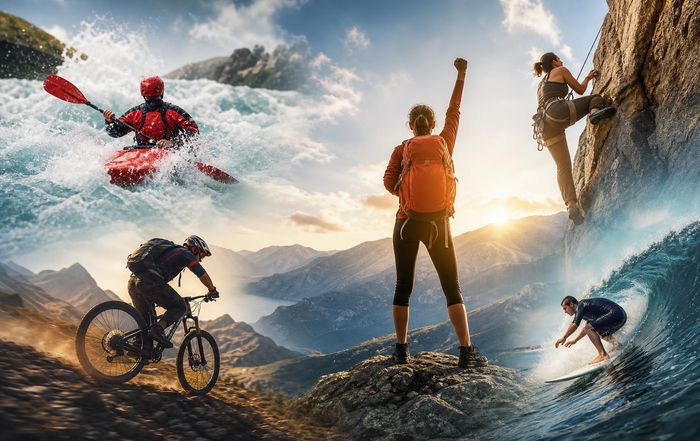
Adventure Sports That Build Strength and Confidence
Adventure sports sit at a rare crossroads where physical challenge, psychological growth, and pure fun overlap. For many people, they are not just a way to stay fit, but a structured path to becoming stronger, braver, and more self-assured in everyday life. From climbing your first indoor route to paddling through whitewater or running a mountain trail, these pursuits force the body and mind to adapt in ways that traditional gym routines often do not.
This article explores a selection of adventure sports that are particularly effective at building both physical strength and real-world confidence. It also looks at what kind of strength each sport develops, how it changes the way participants think and feel, and how to get started safely if you are new to this kind of challenge.
For loyal online fans who want to go deeper into performance, safety, and lifestyle angles around these activities, related coverage across sports, adventure, travel, and safety can help connect training with bigger life goals.
Before you read the rest of the article, just want to say thank you for reading deeply and engaging fully. Our daily content is created to inform, inspire, and connect a loyal worldwide audience.
Why Adventure Sports Are So Effective for Strength and Confidence
Adventure sports stand out because they combine three elements that research consistently links to confidence gains: measurable physical progress, exposure to manageable risk, and problem-solving under pressure. Sports psychologists often refer to this as building self-efficacy-the belief that you can handle challenges-which is strongly correlated with resilience and mental health. Studies summarized by the American Psychological Association show that regular physical activity improves mood and reduces anxiety; adventure sports add an extra layer by training people to stay composed in uncertain or high-stress environments.
On the physical side, many of these sports are full-body workouts. Activities like rock climbing, trail running, mountain biking, and paddlesports demand strength, stability, and cardiovascular fitness at the same time. They also tend to be highly variable: no two climbs, trails, or rivers are exactly alike. That variability forces the body to recruit different muscles and movement patterns, building functional strength that transfers well to everyday tasks and other sports. Organizations such as the American College of Sports Medicine highlight multi-planar, real-world movement as a key component of long-term musculoskeletal health.
Crucially, adventure sports also provide clear feedback loops. When someone climbs a route they once had to back off, rides a technical section they used to walk, or paddles a rapid that once scared them, the improvement is obvious and tangible. These small wins accumulate into a durable sense of capability that often spills over into work, relationships, and other personal goals. For readers interested in how this intersects with lifestyle and culture, the broader context of performance and lifestyle content can be a useful complement.
Rock Climbing and Bouldering: Strength from Problem-Solving
Few sports illustrate the combination of physical and psychological challenge as clearly as rock climbing and bouldering. At first glance, they are about pulling yourself up a wall, but regular climbers know that success depends as much on strategy and composure as on raw strength.
Climbing develops substantial upper-body and core strength, especially in the forearms, shoulders, back, and deep stabilizers around the hips and spine. Bouldering, which involves shorter routes ("problems") without ropes but with crash pads, tends to be more power-oriented and often includes dynamic moves that demand explosive strength. Roped climbing, whether indoors or outdoors, emphasizes endurance and technique over longer periods of exertion. Research published in the Journal of Strength and Conditioning Research has shown that climbing can significantly improve grip strength and muscular endurance, while also enhancing flexibility and balance.
On the confidence side, climbing forces people to confront fear in a controlled environment. Indoor climbing gyms, which have expanded rapidly across North America and Europe according to reports from the Climbing Wall Association, use standardized safety systems and trained staff to reduce objective risk. Yet the subjective experience of being high on the wall, making decisions about which holds to trust, and committing to moves outside your comfort zone can be intense. Successfully navigating that experience builds what many climbers describe as "calm under pressure"-a skill that can translate into better decision-making in stressful everyday situations.
For those interested in starting, reputable organizations such as the American Alpine Club and the UK-based British Mountaineering Council provide guidance on safe indoor climbing, basic gear, and how to find qualified instruction. Readers who are drawn to travel and destination-focused climbing, from sport crags in Spain to bouldering in South Africa, can connect this with broader destination coverage and adventure travel resources.
Trail Running and Mountain Running: Building Engine and Grit
Trail running and mountain running are accessible, low-barrier ways to experience adventure. A pair of shoes and a relatively short drive (or even a city park with hills) can be enough to begin. Compared with road running, uneven terrain demands more from stabilizing muscles around the ankles, knees, and hips, while elevation changes add a strength-training component that flat pavement cannot match.
Physiologically, trail running is a potent cardiovascular workout that can improve VO₂ max, leg strength, and balance. Studies cited by organizations such as World Athletics highlight the benefits of varied terrain for joint health and neuromuscular coordination. Steep climbs build power in the quadriceps and glutes, while descents challenge eccentric strength and coordination. Over time, runners often notice improved agility, posture, and core engagement as they learn to read the ground and adjust their stride.
Psychologically, trail running offers both solitude and manageable risk. Navigating roots, rocks, and narrow paths requires constant attention, which many runners find meditative. There is also a strong sense of progression: distances increase, climbs feel less intimidating, and technical sections that once required walking become runnable. Completing a first trail race or mountain event-whether a 10K or an ultramarathon-can dramatically shift someone's self-image. Organizations like the International Trail Running Association provide race directories, safety guidelines, and information on how to prepare for different terrains and altitudes.
For readers who see running as part of a broader performance and wellness strategy, connecting trail training with resources on performance and lifestyle can help integrate it into daily life, travel plans, and long-term health goals.
Mountain Biking: Technical Strength and Tactical Confidence
Mountain biking combines endurance, strength, and technical skill in a way that feels more like play than exercise, at least once the basics are in place. Riders must manage climbs, descents, obstacles, and changing surfaces, often at speed, which makes it a highly engaging sport both physically and mentally.
From a strength perspective, mountain biking builds powerful legs, particularly the quadriceps and glutes, while also demanding significant core stability to keep the bike under control on rough terrain. Upper-body engagement is stronger than in road cycling, especially in the arms, shoulders, and upper back, as riders absorb impacts and maneuver around rocks, roots, and drops. Research summarized by the International Mountain Bicycling Association points to improvements in cardiovascular fitness, balance, and coordination even in relatively new riders who ride regularly.
Confidence gains come from mastering technical skills and managing speed and risk. Learning to descend a steep trail, corner effectively, or roll through a rock garden involves breaking complex movements into smaller, learnable components. Many riders start with easier "green" and "blue" trails in purpose-built bike parks before progressing to more advanced lines. This graded challenge system, common in adventure sports, is a powerful confidence builder because it allows participants to experience fear, manage it, and succeed repeatedly without being overwhelmed.
Safety-wise, established organizations and trail associations emphasize the importance of helmets, protective gear, and progressive skill development. The Adventure Cycling Association and regional mountain bike clubs offer route information, skills clinics, and guidance on trail etiquette and environmental responsibility. For those who link adventure sports with travel, bikepacking and destination riding-from the Alps to British Columbia-fit naturally with travel and adventure themes.
Whitewater Kayaking and Packrafting: Strength in Flow States
Whitewater kayaking and the increasingly popular discipline of packrafting (using lightweight inflatable boats that can be carried in a backpack) introduce water, current, and hydraulics into the adventure equation. These sports can look intimidating from the outside, but structured instruction and beginner-friendly rivers make them more accessible than many people assume.
Physically, paddlesports are outstanding for upper-body and core strength. Each stroke engages the shoulders, back, arms, and obliques, especially when paddlers learn to rotate from the torso rather than pulling only with the arms. Maintaining stability in moving water also recruits deep core muscles and hip stabilizers. The American Canoe Association notes that regular paddling can improve cardiovascular fitness, muscular endurance, and joint mobility, particularly in the upper body.
Mentally, whitewater demands focus and presence. Reading a river, choosing a line through rapids, and executing strokes at the right moment create a "flow state" where distractions fall away. Overcoming the fear of capsizing and learning to self-rescue or roll the kayak are major confidence milestones; they transform the river from something that feels threatening into an environment where the paddler feels competent and in control. This shift in perception-seeing challenge as manageable rather than overwhelming-is central to building robust self-confidence.
Because moving water carries inherent risk, reputable training and adherence to safety standards are non-negotiable. Organizations such as British Canoeing and the International Rafting Federation provide safety frameworks, instructor qualifications, and river grading systems. For those interested in the ethics and culture of river travel, topics like river conservation, indigenous water rights, and sustainable tourism connect paddlesports to broader world and ethics conversations.
Surfing and Cold-Water Surf Culture: Balance, Power, and Patience
Surfing has long been associated with lifestyle and identity as much as with sport. Beyond the imagery, it is a demanding full-body workout and a powerful teacher of patience and humility. Cold-water surfing in places like the UK, Scandinavia, and parts of North America also brings an extra layer of resilience and mental toughness.
Physically, surfing develops shoulder and back strength through paddling, leg and core power through popping up and riding, and fine balance from constantly adjusting to a moving surface. Studies highlighted by the International Surfing Association show that surfers often have strong aerobic capacity and muscular endurance, particularly in the upper body. Cold-water conditions can increase energy expenditure further, as the body works to maintain temperature, though this also raises safety considerations around hypothermia.
Confidence in surfing grows slowly but deeply. Progress is not linear; conditions change daily, and waves do not repeat themselves. Learning to read swell, tides, and local breaks, then committing to a wave and managing wipeouts, trains persistence and emotional regulation. Many surfers describe a shift from feeling at the mercy of the ocean to feeling part of it, which can be a profound psychological transformation. This relationship with uncertainty-accepting that you cannot control everything but can control your preparation and reactions-translates directly to other areas of life.
For newcomers, reputable surf schools and lifeguarded beaches are crucial. National agencies such as the UK's Royal National Lifeboat Institution and Australia's Surf Life Saving provide guidance on rip currents, conditions, and safe beach behavior. Those interested in the intersection of surf culture with environmental activism can explore organizations like Surfrider Foundation, which work on coastal protection and ocean health, connecting individual adventure with global environmental ethics.
Via Ferrata, Scrambling, and Entry-Level Alpine Experiences
For people who are drawn to mountains but hesitant about full technical climbing, via ferrata routes and non-technical scrambling offer a structured middle ground. Via ferrata-literally "iron path"-are protected climbing routes equipped with fixed cables, rungs, and ladders, most common in the Alps but increasingly found in North America and other regions.
These routes require less specialized technique than traditional rock climbing but still demand leg strength, grip endurance, and solid core stability. Long vertical sections and exposure can be physically tiring and mentally intense. Scrambling, which typically involves using hands and feet on steep but mostly unroped terrain, similarly develops functional strength and balance, especially around the hips, knees, and ankles.
Confidence gains here are closely tied to exposure and self-trust. Moving along a narrow ridge or vertical ladder with significant drop-offs on either side forces people to confront fear of heights and refine their movement control. Progression is key: starting on easier routes rated for beginners and gradually increasing difficulty allows the nervous system and skill set to adapt. Mountain safety organizations, such as the UIAA - International Climbing and Mountaineering Federation, emphasize proper equipment (harness, helmet, via ferrata lanyard), weather awareness, and route choice to keep risk at an acceptable level.
For active individuals who see mountains as both playground and classroom, these activities connect naturally with adventure, destination, and safety content, especially when planning trips that combine physical challenge with cultural or scenic exploration.
Scuba Diving and Freediving: Calm Strength Under Pressure
Underwater sports like scuba diving and freediving may not look like traditional strength training, but they build a different kind of power: breath control, body awareness, and emotional regulation under literal pressure. They also require enough physical conditioning to manage equipment, currents, and sometimes challenging entries and exits.
Scuba diving emphasizes controlled movement, buoyancy, and efficient use of air. Divers need adequate leg strength and cardiovascular fitness to swim comfortably, especially in currents, and core stability to maintain trim and control. Freediving, which involves breath-hold dives without scuba tanks, can be more physically and mentally demanding. It requires strong respiratory muscles, flexible ribcage and diaphragm, and the ability to relax the body deeply even as carbon dioxide levels rise. The global governing body AIDA International publishes freediving safety and training guidelines, underscoring the importance of proper instruction and never diving alone.
The confidence benefits in underwater sports center on mastering fear and controlling physiological responses. Both scuba and freediving challenge people to stay calm in environments where panic could have serious consequences. Learning to equalize, manage buoyancy, or ride out the urge to breathe while ascending safely teaches precise self-control. Many divers report that this carries over into daily life, making them more composed in arguments, deadlines, or unexpected stressors.
Safety agencies such as PADI and SSI provide standardized training frameworks, while organizations like Divers Alert Network offer medical and emergency resources. For those drawn to the intersection of adventure, conservation, and ethics, issues such as coral reef protection, marine wildlife interaction, and sustainable dive tourism connect diving to broader world and ethics themes.
How to Choose the Right Adventure Sport for Your Strength and Confidence Goals
Selecting an adventure sport is less about chasing trends and more about aligning with personal temperament, access, and long-term motivation. People who enjoy technical puzzles and controlled environments often gravitate toward climbing gyms, bouldering, or indoor training that can later transition outdoors. Those who prefer endurance and solitude may find trail running, mountain running, or bikepacking more sustainable. Water lovers might choose surfing, kayaking, or diving, accepting that conditions and seasons will shape their practice.
Practical considerations matter. Availability of qualified instruction, local terrain, cost of gear, and time commitments can all influence which sports are realistic. Organizations such as REI Co-op in the United States, the UK's National Outdoor Centre Plas y Brenin, and various national alpine clubs provide entry-level courses and gear advice that can reduce the barrier to entry. Many cities now have climbing gyms, indoor bike parks, or artificial surf facilities that allow beginners to try activities in controlled settings before committing to bigger trips or investments.
It is also important to recognize that strength and confidence gains come from consistent, progressive engagement rather than one-off extreme experiences. A single skydive or bungee jump may be memorable, but regularly training for a mountain run, climbing project, or paddling season builds deeper, more transferable self-belief. Integrating adventure sports into a broader lifestyle-through performance planning, safety education, and even business or jobs considerations for those entering outdoor industries-can turn them into long-term engines of growth rather than occasional thrills.
Balancing Risk, Safety, and Sustainable Progress
Adventure sports derive much of their transformative power from engaging with risk, but that does not mean courting unnecessary danger. Modern safety frameworks, equipment standards, and training systems exist precisely so participants can experience challenge and uncertainty while keeping actual harm probability relatively low. National parks agencies, alpine clubs, and rescue organizations around the world consistently emphasize preparation, realistic self-assessment, and respect for environmental conditions as key to sustainable participation.
For newcomers, this often means starting in guided or instructional settings, investing in appropriate safety gear, and learning fundamental skills such as navigation, weather interpretation, and basic first aid. Resources from bodies like the National Outdoor Leadership School and Leave No Trace also highlight the ethical dimension: minimizing environmental impact and respecting local communities and cultures. This ethical awareness adds another layer of confidence-not just in one's physical and mental capacities, but in the ability to be a responsible participant in shared outdoor spaces.
Ultimately, adventure sports that build strength and confidence do so by creating a structured conversation between fear and capability. Each climb, run, ride, rapid, or wave asks a simple question: "Can you handle this?" Over time, the answer shifts from "I am not sure" to "I know how to prepare, assess, and respond." In that shift lies the real value of these pursuits-stronger bodies, yes, but also clearer judgment, deeper resilience, and a more grounded sense of what is possible in the rest of life.