

Best Mountain Sports for Fitness and Exploration
Mountain landscapes invite a different kind of movement. The air is thinner, the terrain is rougher, and almost every route comes with a view that makes the effort feel worthwhile. For people who want fitness with a strong dose of exploration, mountain sports offer an unusually rich mix of endurance, strength, balance, and outdoor immersion.
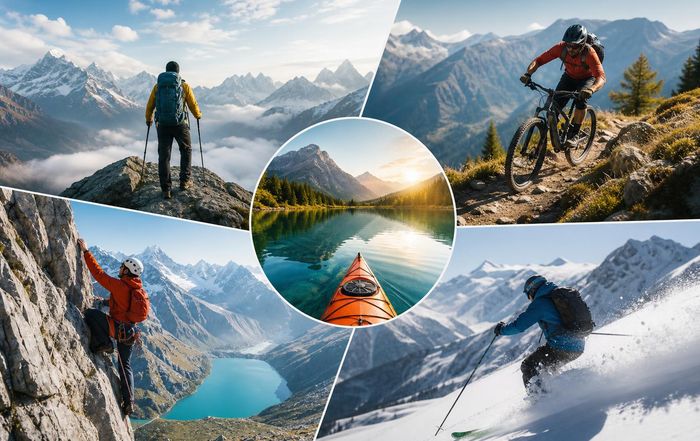
This guide looks at some of the most rewarding mountain sports for both physical conditioning and discovery-from hiking and trail running to alpine climbing, ski touring, and mountain biking. It also highlights basic safety, gear, and training considerations to help you choose the right discipline for your goals and environment.
For folks who want to dive deeper into related topics, our daily coverage of sports, adventure, travel, and safety offers additional context on gear, destinations, and risk management.
Why Mountain Sports Are So Effective for Fitness
Mountain environments force the body to work harder than flat terrain. Steep gradients increase muscular demand on the legs, hips, and core, while uneven surfaces challenge stabilizing muscles and balance. At higher elevations, reduced oxygen availability increases cardiovascular strain, which can improve aerobic capacity over time when approached progressively and safely.
Studies published in journals such as the European Journal of Applied Physiology have found that regular hiking can significantly improve cardiorespiratory fitness and body composition, especially when routes involve sustained elevation gain. Meanwhile, research on trail running suggests that uneven terrain may reduce repetitive strain in comparison to flat road running, though it introduces its own injury risks.
Beyond physical benefits, mountain sports are strongly linked to mental health. Organizations such as Mental Health Foundation and Mind highlight that exposure to natural environments can reduce stress and anxiety, and a growing body of research supports the idea that "green exercise" improves mood and cognitive function. The American Psychological Association has summarized evidence that regular time in nature can enhance attention and emotional well-being.
From a lifestyle perspective, mountain sports also intersect naturally with travel and culture. Routes often pass through remote villages, protected parks, and traditional landscapes, turning workouts into opportunities to encounter local communities, food, and history-something that aligns strongly with Xdzee's focus on destination experiences and modern, active living.
Hiking and Trekking: The Accessible Gateway
For most people, hiking is the most accessible mountain sport. It demands minimal technical skills, can be scaled to almost any fitness level, and is available in mountain regions worldwide-from the Rockies and Alps to the Japanese Alps, Drakensberg, and Patagonian Andes.
Hiking primarily trains aerobic endurance and lower-body strength. Long ascents load the quadriceps and glutes, while descents challenge eccentric strength and balance. Multi-day trekking adds a load-bearing component as you carry a pack, which can improve functional strength if the weight and distance are increased gradually. The American Hiking Society provides practical guidance on conditioning and planning, emphasizing progressive mileage and elevation gain to avoid overuse injuries.
From an exploration standpoint, hiking offers unparalleled flexibility. Well-known long-distance routes such as the Tour du Mont Blanc, Appalachian Trail, GR20 in Corsica, and Te Araroa in New Zealand allow hikers to cross borders, ecosystems, and cultural regions under their own power. Many national parks and conservation areas publish official trail maps and safety advice-resources from the U.S. National Park Service and Parks Canada, for example, offer detailed information on trail conditions and seasonal hazards.
For those new to mountain environments, hiking is also a practical way to learn essential skills like navigation, layering for changing weather, and basic risk assessment. That foundation becomes crucial if you later transition into more technical sports such as alpine climbing or ski touring. Readers interested in performance aspects-pace, heart-rate zones, and training structure-may find additional insight in Xdzee's performance coverage.
Trail Running: Speed, Flow, and Technical Footwork
Trail running takes the basic idea of hiking and turns up the intensity. Instead of walking mountain trails, you run or jog them, often alternating between running flats and downhills and power-hiking steep climbs. This sport has grown rapidly, with events ranging from short vertical-kilometer races to ultra-distance mountain marathons.
From a fitness perspective, trail running is a powerful tool for cardiovascular conditioning. It typically involves prolonged periods in moderate to high heart-rate zones, improving aerobic capacity, lactate threshold, and muscular endurance. The softer, varied surfaces can reduce the impact forces associated with road running, but technical terrain increases the risk of ankle sprains and falls. The International Trail Running Association (ITRA) offers guidelines on training, safety, and environmental responsibility.
Mountain trail running also trains agility and proprioception. Navigating rocks, roots, and loose scree demands constant micro-adjustments, engaging stabilizer muscles in the feet, ankles, hips, and core. Over time, runners often report improved balance and coordination that carry over into other sports such as skiing and climbing.
On the exploration side, trail running allows you to cover more ground than hiking in a given time, making it ideal for travelers who want to experience high-alpine terrain on a tight schedule. Iconic races like UTMB Mont-Blanc in France and Hardrock 100 in the United States have also helped showcase remote mountain landscapes to a global audience, encouraging responsible adventure tourism.
However, trail running in the mountains amplifies safety considerations. Weather can change quickly, and getting cold or injured far from a road or lift can be serious. Organizations such as Mountain Rescue England and Wales publish practical advice on kit, route planning, and emergency protocols. For a deeper dive into risk management and decision-making, Xdzee's safety and innovation sections often explore technologies like GPS devices, satellite messengers, and advanced footwear.
Rock Climbing and Bouldering: Strength, Precision, and Vertical Exploration
Mountain rock faces turn fitness into a three-dimensional puzzle. Rock climbing and bouldering provide intense upper-body and core training while demanding mental focus, route reading, and problem-solving.
Traditional and sport climbing on mountain crags typically involve rope systems, belaying, and protection placed in the rock. Bouldering, usually done on shorter problems with crash pads, emphasizes powerful, gymnastic moves. Both disciplines develop finger strength, pulling power, shoulder stability, and body tension. Research published in the International Journal of Environmental Research and Public Health suggests that climbing can significantly improve strength and balance while also benefiting mental health.
In mountain regions, climbing becomes a form of exploration that is hard to match. Classic venues like Yosemite Valley, the Dolomites, and Chamonix offer routes that trace natural weaknesses in cliffs and spires, often reaching summits inaccessible by hiking trails. For many climbers, the appeal lies not only in physical difficulty but in the intimate experience of rock quality, weather patterns, and exposure.
Because of the inherent risks-falls, rockfall, changing weather-climbing requires a stronger emphasis on formal instruction and partner skills than some other mountain sports. Organizations like the American Alpine Club and the British Mountaineering Council (BMC) provide extensive resources on climbing safety, gear standards, and environmental ethics. In many countries, certified guides under systems such as the IFMGA offer instruction that can accelerate skills while managing risk.
Climbers also play a growing role in conservation and access debates. Groups such as Access Fund in the United States advocate for sustainable climbing practices and crag protection, underscoring how closely the sport is tied to landscape stewardship-an ethical dimension that overlaps with Xdzee's focus on ethics and responsible adventure.
Alpine Mountaineering: Endurance, Technical Skills, and High-Altitude Objectives
Alpine mountaineering extends climbing into glaciated and high-altitude terrain, combining rock, snow, and ice with long approaches and complex route-finding. It is one of the most demanding mountain sports both physically and technically, but also one of the most immersive for those seeking deep exploration.
Fitness requirements are broad. Mountaineers need aerobic endurance for long summit days that can exceed 10-15 hours, strength and stability to move with a pack over varied terrain, and resilience to cope with cold, wind, and altitude. Training often blends hiking with weighted packs, interval work, and strength sessions focused on the posterior chain and core. Organizations like Outdoor Research and American Alpine Institute publish in-depth guides on mountaineering training and preparation.
Exploration is central to mountaineering. Routes on peaks like Mont Blanc, Mount Rainier, Aoraki / Mount Cook, or Ama Dablam take climbers into glacial basins, high ridges, and remote camps that are otherwise inaccessible. Many classic alpine routes have deep historical and cultural significance, connecting modern climbers with early exploration narratives and local mountain communities.
However, the risk profile is significantly higher than that of hiking or trail running. Hazards include crevasses, avalanches, rock and ice fall, altitude illness, and severe weather. The International Climbing and Mountaineering Federation (UIAA) provides globally recognized safety standards, technical recommendations, and equipment norms. Many national mountain rescue and alpine clubs echo a common message: formal training, conservative decision-making, and respect for conditions are non-negotiable.
Because of the environmental impact of growing high-altitude tourism, ethical questions around waste management, local labor conditions, and overcrowding on famous peaks have become more prominent. Reputable guiding services and local authorities increasingly promote leave-no-trace principles, capped permits, and better infrastructure, echoing broader debates in adventure travel and world tourism.
Ski Touring and Splitboarding: Winter Endurance and Backcountry Freedom
In snowy mountain regions, ski touring and splitboarding open up winter landscapes beyond resort boundaries. Instead of relying on lifts, participants use climbing skins and specialized bindings to ascend slopes, then remove the skins and ski or ride back down.
From a fitness standpoint, ski touring is essentially uphill hiking or running on skis, with added demands on hip flexors, glutes, and core. Long tours can burn substantial calories and provide sustained cardiovascular training. A study in the Scandinavian Journal of Medicine & Science in Sports has noted that ski mountaineering racing involves high aerobic loads comparable to elite endurance sports, underscoring how demanding this activity can be even at recreational levels.
Exploration is a key draw. Touring allows skiers and snowboarders to reach untracked bowls, remote passes, and quiet forests far from resort crowds. Countries such as Switzerland, Norway, Canada, and Japan have well-developed touring cultures, with guidebooks and online platforms documenting popular routes and avalanche information. Official avalanche centers-like the Avalanche Canada forecast portal and the European Avalanche Warning Services network-offer daily bulletins on snowpack stability and danger levels.
However, avalanche risk is a central safety concern. Education programs such as AIARE (in North America) and national avalanche courses in Europe and elsewhere teach terrain assessment, rescue techniques, and decision-making frameworks. Many experts recommend that new tourers start with guided trips or mentorship and carry essential safety gear: transceiver, shovel, and probe, along with first-aid supplies and communication tools.
Ski touring also raises land-use and environmental questions. Overcrowding in sensitive winter habitats, motorized access, and climate change's impact on snow reliability are active topics in mountain communities and policy debates. These issues connect to broader conversations in business and news about the future of winter tourism, local economies, and conservation.
Mountain Biking: Technical Riding and Broad Terrain Coverage
Mountain biking transforms trails and alpine tracks into high-intensity routes that blend endurance, strength, and technical handling skills. Disciplines range from cross-country (XC) and marathon riding to enduro and downhill, but all share the basic idea of navigating off-road terrain on a bike designed for rough surfaces.
Physically, mountain biking combines cardiovascular effort with muscular strength in the legs and upper body. Climbs build aerobic capacity and leg power, while descents require dynamic stability, grip strength, and core engagement to control the bike over rocks, roots, and drops. Research in sports science has shown that mountain biking can produce similar cardiovascular benefits to road cycling while adding neuromuscular and balance challenges.
From an exploration perspective, bikes dramatically increase the amount of terrain you can cover in a day compared with hiking. Alpine regions in countries such as Switzerland, Italy, Canada, and New Zealand have embraced mountain biking as a way to diversify tourism beyond winter, developing trail networks and lift-assisted bike parks. Many of these areas connect villages, high pastures, and viewpoints, offering a mix of cultural and natural experiences.
Safety considerations include speed-related crashes, technical descents, and equipment failure. Helmets are essential, and body armor is common for more aggressive riding. Organizations like the International Mountain Bicycling Association (IMBA) promote trail etiquette, sustainable riding practices, and advocacy. Respecting multi-use trail rules and minimizing erosion are key to maintaining access and protecting fragile alpine ecosystems.
The rise of e-mountain bikes (e-MTBs) has broadened access, allowing riders with varying fitness levels to tackle steep climbs and longer distances. This technology raises debates about trail sharing, speed differentials, and environmental impact, but it also opens mountain experiences to older riders and those returning from injury-an example of how innovation is reshaping mountain sports.
Via Ferrata: A Hybrid Between Hiking and Climbing
Via ferrata routes-protected climbing paths equipped with steel cables, rungs, and ladders-bridge the gap between hiking and rock climbing. Originating in the Alps, particularly Italy and Austria, they have spread to mountain regions worldwide, offering non-climbers a way to experience exposure and vertical terrain with relative security.
Fitness demands are moderate to high, depending on route difficulty. Participants need leg and core strength for steep ladders and traverses, plus enough upper-body endurance to manage repeated pulling moves. Because you remain clipped into a safety cable with a specialized lanyard, the technical barrier is lower than for traditional climbing, but fatigue can still be a factor on long routes.
Exploration benefits are substantial. Via ferrata lines often follow dramatic ridges, traverse cliff bands above valleys, or access summits with panoramic views. Tourism boards and alpine clubs in countries like Italy, France, Switzerland, and Slovenia have developed networks of routes, sometimes linking them into multi-day itineraries. Local tourism websites or alpine clubs usually provide graded route descriptions, access information, and seasonal advice.
Safety remains critical. While via ferrata systems reduce the risk of unroped falls, improper use of lanyards, overcrowding, and rockfall can still cause serious accidents. Many mountain rescue organizations recommend helmets, harnesses, proper via ferrata sets certified under EN 958 standards, and a conservative approach to weather and route choice, especially for beginners or families.
Choosing the Right Mountain Sport for Your Goals
Selecting a mountain sport depends on your fitness level, appetite for technical skills, time availability, and access to suitable terrain. It can help to think in terms of primary benefits and barriers rather than labels.
Those prioritizing cardiovascular fitness with minimal technical overhead often start with hiking or trail running, gradually increasing elevation gain and distance. People drawn to strength, problem-solving, and vertical exposure may gravitate toward rock climbing or via ferrata, perhaps beginning indoors or with guided instruction before transitioning outdoors. Winter enthusiasts with access to snow-covered ranges might choose ski touring or splitboarding, while riders who enjoy speed and flow are likely to prefer mountain biking.
Cross-training across several disciplines can build a more robust mountain skill set. For example, trail running improves endurance for alpine climbs, climbing builds strength and movement confidence for via ferrata and scrambles, and ski touring develops winter navigation skills that complement summer hiking. Xdzee's coverage of lifestyle and sports often explores how these activities can fit sustainably into work, family, and travel schedules.
Practical considerations should also guide choices. Access to instruction, rescue infrastructure, and reliable information varies between regions. National alpine clubs, certified guides, and official park authorities are often the best starting points for accurate local advice, including permits, seasonal closures, and wildlife interactions.
Safety, Ethics, and Sustainable Exploration
Across all mountain sports, safety and ethics are inseparable from fitness and exploration. The same landscapes that offer challenge and beauty can become unforgiving when weather shifts, equipment fails, or decisions are rushed.
Basic safety principles cut across disciplines: plan conservatively, check conditions from official sources, carry appropriate gear, and build skills progressively. Many rescue organizations emphasize the "3 T's": trip planning, training, and taking essentials. Government agencies such as AdventureSmart UK and Recreation.gov in the United States provide straightforward checklists and planning tools for mountain outings.
Ethically, mountain sports raise questions about environmental impact, local economies, and cultural respect. Leave No Trace organizations worldwide offer guidelines on minimizing trail erosion, waste, and wildlife disturbance. Supporting local guides, accommodation providers, and conservation initiatives can help ensure that money spent on adventure travel benefits host communities rather than bypassing them.
As climate change alters snow patterns, glacier stability, and wildfire risk, mountain sports are also becoming an entry point into broader environmental conversations. Some athletes and brands are using their platforms to advocate for climate action and sustainable tourism, blurring the lines between recreation, culture, and activism.
Bringing Mountain Fitness Into Your Life
For many people, the hardest part of engaging with mountain sports is not the gradient or the altitude but logistics: distance from major ranges, limited time, or uncertainty about where to start. Yet even occasional trips-one or two dedicated mountain adventures a year-can anchor training goals and offer powerful experiences of exploration and perspective.
Building a simple year-round plan can help. Off-season, gym work and local trails prepare the body for elevation and technical terrain. During peak travel windows or holidays, targeted trips to mountain areas allow you to apply those gains, whether on a hut-to-hut trek, a beginner climbing course, or a guided ski tour. Over time, these experiences can shape not only fitness levels but also how people think about travel, work, and daily life.
Whichever discipline you choose, mountain sports reward patience and curiosity. They ask participants to read landscapes, weather, and their own limits, turning fitness from a repetitive chore into a form of ongoing discovery. For those willing to learn the skills and respect the risks, the payoff is a kind of exploration-of place and of self-that few other environments can match.