

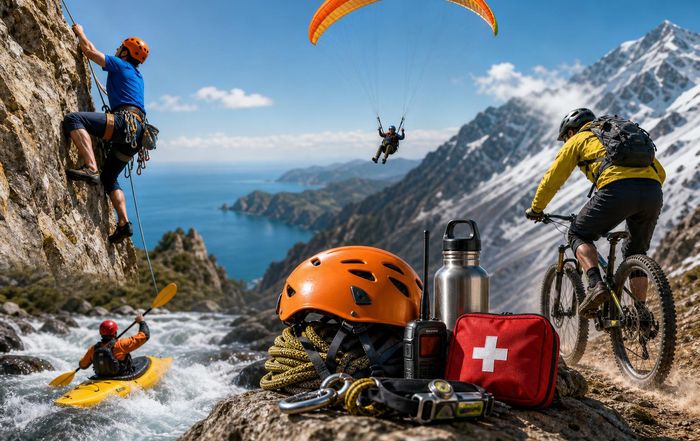
Essential Safety Tips for High-Energy Outdoor Sports
High-energy outdoor sports offer a powerful mix of adrenaline, freedom, and immersion in wild places. Whether it is downhill mountain biking, trail running, whitewater kayaking, climbing, kitesurfing, or backcountry skiing, the same reality applies: the higher the speed and exposure, the narrower the margin for error. Staying safe is less about eliminating risk and more about managing it intelligently so you can keep playing hard for years.
This guide brings together practical, research-backed safety principles that apply across many adventure disciplines, with examples from sports such as mountain biking, climbing, snow sports, paddling, and adventure travel. It is written for people who already love pushing themselves outside, not for wrapping anyone in bubble wrap.
For experience seeking individuals who want to go deeper into specific activities, related awesome coverage on sports, adventure, destination, and safety can help connect these principles to real-world trips and training.
Start with the right mindset: risk is a skill, not a personality trait
Many serious accidents in outdoor sports are not caused by freak events but by familiar situations that are misjudged. Research by organizations such as the American Alpine Club and Avalanche Canada shows recurring patterns: experienced participants pushing into poor conditions, groups ignoring early warning signs, or individuals feeling social pressure to continue when they should turn back.
Psychologists and safety organizations, including the International Climbing and Mountaineering Federation (UIAA), highlight cognitive biases like overconfidence, normalization of deviance ("we've done this before and it was fine"), and goal fixation as major contributors to accidents. These patterns show up in everything from summit pushes on high peaks to downhill mountain bike laps at the end of a long day.
Treat risk assessment as a skill to be trained just like strength or technique. That means consciously pausing to ask: What can hurt me here? How likely is it? How bad would it be? What can I do to reduce it? The UK Health and Safety Executive offers a simple framework for thinking about risk that can be adapted to adventure sports, even when decisions must be made quickly.
A useful mental rule in high-energy sports is "no single point of failure." If one decision, one anchor, one partner, or one piece of equipment stands between you and a catastrophic outcome, you are already too close to the edge.
Know your sport's specific hazards before you go
Each high-energy sport has its own typical accident patterns and environmental traps. Understanding these before you leave home is one of the highest-value safety investments you can make.
For snow sports like backcountry skiing and splitboarding, the fundamental hazard is avalanches. Agencies such as the U.S. National Avalanche Center and Avalanche Canada publish daily avalanche bulletins that detail current danger levels, problem types, and travel advice. Accident analyses consistently show that many fatal incidents occur on days rated "Considerable," when conditions are dangerous but still tempting, rather than on the most extreme days when most people stay home.
In whitewater kayaking and rafting, the main hazards include entrapment, foot entrapment in shallow fast water, strainers (fallen trees), and hydraulics at the base of drops. The American Canoe Association provides safety guidelines for paddlers that break down river classifications, cold water risks, and rescue basics.
For climbing and mountaineering, common accident causes include falls due to protection failure or misused equipment, rockfall, weather changes, and navigation errors. Annual reports like the American Alpine Club's Accidents in North American Climbing catalogue real incidents and lessons learned; reading them is a sobering but powerful way to internalize sport-specific hazards.
Even for activities that seem simpler, like trail running or fast hiking, environmental hazards such as heat illness, getting lost, sudden storms, or wildlife encounters can quickly escalate. National park agencies in the United States, Europe, and elsewhere publish detailed safety advice for hikers and runners that is highly relevant to anyone moving quickly in remote terrain.
When planning a trip or new sport, it is worth treating this research phase as part of the adventure, rather than a chore. It informs gear choices, route selection, and contingency planning-and it often makes the experience more interesting by deepening your understanding of the environment.
Choose gear for crashes and mistakes, not for ideal conditions
In high-energy sports, safety equipment is not just about preventing accidents; it is about making sure that when you do fall, crash, or swim, the outcome is survivable. Accident statistics in cycling, snowsports, and motorsports repeatedly show that protective gear significantly reduces the severity of injuries, even when it cannot prevent them entirely.
Helmets are the first line of defense in many sports. Modern standards such as EN 1078 for cycling, ASTM F2040 for snow sports, and UIAA 106 for climbing helmets define minimum impact performance, though they are not interchangeable. Organizations like Snell and Virginia Tech publish helmet testing results that help consumers compare models beyond marketing claims. For high-speed biking and skiing, extended-coverage helmets and technologies like MIPS or similar rotational-impact systems may offer additional protection in certain crash scenarios.
Body armor is particularly relevant for downhill mountain biking, BMX racing, and some forms of kitesurfing or windsurfing where high-speed impacts are common. Back protectors certified to standards such as EN 1621-2 are designed to reduce the force transmitted to the spine in a fall. In snow sports, back protectors and padded shorts can be valuable on icy days or in terrain parks.
In water sports, personal flotation devices (PFDs) are critical. The U.S. Coast Guard and equivalent agencies in Europe and other regions certify different types of lifejackets and buoyancy aids for various activities. For whitewater kayaking, a properly fitted Type III or Type V PFD with adequate buoyancy and rescue features is standard. Cold water paddlers should also consider drysuits or wetsuits, as hypothermia can develop quickly in water below about 15°C (59°F), according to U.S. Coast Guard cold water safety guidance.
For backcountry skiing, snowmobiling, and some off-piste snowboarding, avalanche transceivers, shovels, and probes are baseline gear, not optional. Studies summarized by the International Commission for Alpine Rescue (ICAR) suggest that buried avalanche victims have the highest survival rates when they are located and dug out within about 15 minutes-something that is only realistic if partners are equipped and trained.
Finally, navigation and communication tools-maps, GPS devices, satellite messengers, radios-are safety gear as well. As more outdoor athletes rely on smartphones, it is worth remembering that batteries die, screens break, and coverage disappears. Many mountain rescue organizations, such as Mountain Rescue England and Wales, explicitly recommend carrying a paper map and compass as a backup, along with a fully charged phone and, for remote areas, a satellite communicator or PLB.
For readers comparing gear across sports, the broader context of performance and innovation can help in understanding which technologies are genuinely safety-relevant versus mostly marketing.
Build skills progressively and respect the learning curve
Many high-energy sports are technically simple at a basic level-almost anyone can point skis downhill or paddle a kayak across flat water. The danger lies in mistaking early comfort for competence in complex environments.
Coaching organizations across disciplines emphasize structured progression. The International Ski and Snowboard Federation (FIS) and national ski schools encourage new riders to master controlled turns and stopping on moderate terrain before venturing into off-piste zones or terrain parks. The Professional Mountain Bike Instructors Association (PMBIA) and similar bodies promote a skills-based approach to trail difficulty, rather than relying solely on color codes, which can vary by region and resort.
In climbing, both indoor gyms and outdoor instruction programs stress learning proper belay techniques, knot tying, and communication before leading routes or attempting multi-pitch climbs. The American Mountain Guides Association (AMGA) and European equivalents publish best-practice guidelines that can help individuals evaluate whether their skills match their objectives.
A useful rule across sports is to change only one major variable at a time. If you are trying a higher-grade trail, do it in familiar weather. If you are learning to ride in mud, do it on terrain where you know the lines. If you are traveling to a high-altitude destination, keep the technical difficulty conservative while your body acclimatizes. This approach reduces the chance of multiple surprises compounding into an accident.
Professional instruction is often underrated. Certified guides and coaches can accelerate learning, correct bad habits before they become ingrained, and introduce real-world risk management practices. For those traveling to new destinations, combining instruction with travel or destination exploration can turn a trip into a long-term investment in safer performance.
Read the environment: weather, terrain, and changing conditions
In high-energy outdoor sports, the environment is not just a backdrop; it is an active participant. Many incidents occur because conditions change faster than people adjust their plans.
Weather is the most obvious factor. National meteorological agencies like the U.S. National Weather Service, the UK Met Office, and Météo-France provide detailed mountain and marine forecasts that go beyond simple temperature and precipitation. For climbers, skiers, and trail runners, key variables include wind speed, freezing level, precipitation type, and thunderstorm risk. In hot climates, heat index and humidity can be more important than air temperature alone when assessing the risk of heat exhaustion or heatstroke.
Terrain amplifies or moderates these conditions. Steep north-facing slopes in many mountain ranges hold snow and ice longer into the season, increasing avalanche and slip risks. South-facing slopes may be prone to rockfall in the afternoon as freeze-thaw cycles loosen holds. In rivers, narrow constrictions, undercut banks, and man-made structures can create dangerous hydraulics even at moderate flows. Topographic maps, satellite imagery, and local guidebooks all help in visualizing these hazards before you are committed to them.
Time of day also matters. Many mountain rescue statistics show a spike in incidents late in the afternoon and early evening, when fatigue is high and visibility is dropping. Starting early, especially for long alpine routes, canyon descents, or remote bike loops, is a simple but powerful safety measure.
Local knowledge remains one of the most valuable resources. Guide services, local clubs, and ranger stations often have up-to-date information about trail washouts, unstable slopes, wildlife activity, or river levels that may not be reflected in printed maps. Reputable forums and regional organizations, such as the British Mountaineering Council or Alpine clubs in Europe and North America, frequently publish current condition updates and safety alerts.
Manage speed, exposure, and fatigue
High-energy sports are defined by speed, dynamic movement, and exposure to consequences. Managing these three elements is central to staying safe.
Speed increases both the likelihood and severity of accidents. For mountain bikers, research published in journals like the Journal of Science and Cycling suggests that higher speeds correlate strongly with more serious injuries, particularly on technical terrain. Ski patrol data from major resorts show similar patterns: most severe injuries occur at high speeds on intermediate or advanced slopes, not necessarily in extreme terrain. Using speed strategically-slowing before blind corners, compressions, and intersections-can dramatically reduce risk without reducing enjoyment.
Exposure refers to how bad the outcome will be if something goes wrong. A small mistake on a mellow trail might mean a bruise; the same mistake above a cliff band or in a terrain trap can be fatal. Experienced athletes often talk about "consequence management": choosing lines and routes that match their fall tolerance that day. In practice, that might mean avoiding no-fall zones when tired, opting for lower-consequence features in the park, or choosing river lines with clean runouts when learning new moves.
Fatigue quietly erodes decision-making, reaction time, and coordination. Studies in sports science and occupational safety, including work summarized by the U.S. Centers for Disease Control and Prevention (CDC), show that sleep deprivation and accumulated fatigue impair judgment in ways similar to alcohol. In outdoor sports, this often shows up as mis-clipped carabiners, missed steps on descents, or poor line choices late in the day.
Practical strategies include setting a firm turnaround time, planning nutrition and hydration breaks, and accepting that "one more run" is often when injuries happen. For those training seriously, combining performance tracking with recovery metrics-something frequently discussed in performance coverage-can help align ambition with capacity.
Make communication and group dynamics part of your safety system
Most high-energy outdoor sports are social. That is a strength, but it can also introduce subtle pressures and communication failures that increase risk.
Clear pre-trip communication is as important as any piece of gear. Before setting off, groups should agree on the objective, difficulty, pace, and bailout options. Many avalanche education providers, such as the American Institute for Avalanche Research and Education (AIARE), recommend a structured pre-tour plan that includes roles (leader, navigator, tail), decision points, and "no-go" conditions.
On the move, simple, unambiguous signals reduce confusion. In mountain biking and skiing, common practices include one-at-a-time riding through high-consequence sections and pre-agreed signals for "all clear" or "stop." In climbing, standardized commands such as "On belay?" and "Belay on" are designed to prevent miscommunication; organizations like the UIAA and AMGA stress that climbers should avoid improvising or shortening these calls in noisy environments.
Group dynamics can subtly push people beyond their comfort or ability levels. Social psychologists describe phenomena like groupthink and peer pressure, which are well documented in accident analyses across mountaineering, aviation, and other high-risk fields. A practical countermeasure is to explicitly invite dissent: one common rule in avalanche terrain is that if any group member is uncomfortable with a slope, the group does not ski it, no questions asked.
Communication with the outside world is also part of a robust safety plan. Leaving a trip plan with a trusted contact-route, group members, expected return time, emergency numbers-is standard advice from mountain rescue and park agencies globally. Many now provide downloadable trip intention forms or online tools. In remote areas, satellite messengers or PLBs provide a way to call for help when mobile networks fail, but they do not replace self-reliance or decision-making; they are a last resort.
Prepare for emergencies and practice rescue skills
Even with the best planning, things sometimes go wrong. The difference between a close call and a tragedy often comes down to how quickly and effectively people can respond in the first minutes.
Basic first aid and CPR training are among the most universally recommended safety steps across all outdoor sports. Organizations like the Red Cross and St John Ambulance offer wilderness first aid courses that focus specifically on remote environments, where help may be hours away. These programs teach how to stabilize common injuries-fractures, sprains, hypothermia, heat illness-using limited resources, and how to decide when and how to evacuate.
Sport-specific rescue skills are equally important. In avalanche terrain, companion rescue practice with transceivers, shovels, and probes is essential; avalanche educators recommend regular, realistic drills, not just occasional practice in a parking lot. In whitewater sports, swimmers and paddlers should train in throw-bag use, defensive and aggressive swimming, and boat-based rescues under the supervision of qualified instructors.
Climbers and canyoneers benefit from learning self-rescue techniques: escaping the belay, hauling a partner, improvised rappels, and knot-passing. The American Alpine Club, Alpine clubs in Europe, and many guide services offer self-rescue courses that can turn potentially catastrophic situations into manageable problems.
Carrying a compact but capable first aid kit, emergency shelter (such as a bivvy sack or space blanket), and extra food and layers is standard advice from mountain safety organizations. The weight penalty is small compared with the benefit when plans change unexpectedly due to injury, weather, or navigation errors.
Readers interested in the ethical dimensions of rescue-such as when to call for help, how to balance self-reliance with public resources, and the responsibilities of commercial operators-may find further discussion in ethics and world coverage.
Travel and destination-specific considerations
Taking high-energy sports abroad adds layers of complexity: unfamiliar terrain, different emergency systems, variable infrastructure, and sometimes very different safety cultures.
Before traveling, it is worth researching how rescue and medical care work in your destination. In many alpine regions, helicopter rescue is highly professional but may not be free; organizations like REGA in Switzerland or Air Zermatt operate membership or insurance models. In some countries, mountain rescue is volunteer-based and funded by donations. Government travel advisories, such as those from the U.S. Department of State or the UK Foreign, Commonwealth & Development Office, often include information about local emergency numbers and healthcare quality.
Travel insurance that covers adventure sports is another critical piece. Many standard policies exclude activities like off-piste skiing, mountaineering above certain altitudes, or whitewater beyond specified grades. Specialist insurers and alpine clubs sometimes offer policies tailored to climbers, skiers, and other adventure athletes, but the details matter: evacuation coverage, gear loss, and liability protection can vary widely.
Cultural and environmental differences also influence risk. In some mountain regions, trail markings and guardrails may be minimal compared with North American or Western European standards, placing more responsibility on individuals. In tropical destinations, heat, humidity, and disease risks (such as malaria or dengue) may be more significant than technical hazards; the World Health Organization and national health services provide travel health guidance that can inform vaccinations, water treatment, and insect protection.
For those planning adventure-focused trips, combining safety planning with the inspiration and logistics in travel, destination, and even business coverage (for operators and guides) can help align expectations with on-the-ground realities.
Balancing progression, performance, and long-term health
High-energy outdoor sports reward commitment and progression, but they can also be hard on bodies over time. Safety is not just about avoiding catastrophic accidents; it is also about reducing wear-and-tear injuries that can limit participation later.
Sports medicine research, including work published by organizations such as the American College of Sports Medicine and International Olympic Committee, highlights overuse injuries-tendinopathies, stress fractures, joint degeneration-as major issues in endurance and impact sports. In mountain running, for example, knee and ankle problems are common; in climbing, finger and shoulder injuries often accumulate; in downhill biking and snow sports, repeated minor crashes can add up to chronic pain.
Integrating strength and conditioning, mobility work, and adequate recovery into training is therefore a safety strategy as much as a performance one. Professional teams and elite athletes increasingly treat "prehabilitation" as non-negotiable. For recreational athletes, even a basic, consistent strength program can improve joint stability and resilience in crashes or awkward landings.
Mental health is another dimension. The pressure to perform, fear of missing out on conditions, or identity tied too tightly to a sport can all push people into poor decisions-riding when injured, ignoring warning signs, or taking unjustified risks for social media content. Sports psychologists and organizations like Mind in the UK and Headspace have published resources on performance mindset and mental well-being that apply broadly to adventure athletes.
Balancing ambition with sustainability allows people to enjoy high-energy outdoor sports as a lifelong pursuit rather than a short, intense phase followed by burnout or injury. In that sense, safety is not an opposing force to performance; it is the foundation that supports it.
Bringing it all together!
Safety in high-energy outdoor sports is not about eliminating risk or dulling the experience. It is about stacking the odds in your favor through mindset, preparation, skills, gear, and communication, so that when things go wrong-and they occasionally will-the consequences are manageable.
Understanding your sport's specific hazards, choosing equipment that protects you when you fall, building skills progressively, reading conditions, managing speed and exposure, communicating clearly in groups, and preparing for emergencies are all interconnected pieces of the same system. None of them is complicated in isolation, but together they create the space to push hard with confidence.
For those expanding their horizons-whether into steeper lines, new countries, or different disciplines-connecting these principles with topic-specific original and fresh insights across adventure, sports, safety, performance, and culture can help keep the next chapter of progression both exciting and sustainable.
The mountains, rivers, trails, and coasts are not going anywhere. Taking safety seriously today is one of the best ways to ensure you will still be out there chasing lines, laps, and rapids many seasons from now.