

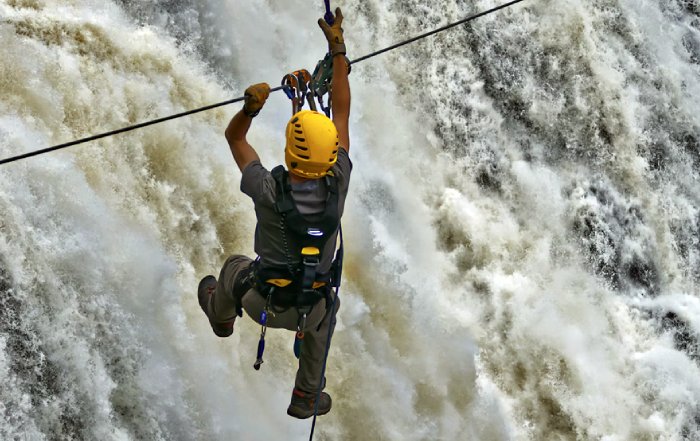
Extreme Adventure Across Diverse Landscapes: Performance, Risk, and Opportunity
Extreme Adventure Becomes a Global, Data-Driven Industry
Extreme adventure has fully transitioned from a fringe pastime into a structured global industry that is increasingly shaped by technology, sustainability, performance science, and sophisticated risk management, and this transformation is particularly evident to the international audience of XDZEE, who follow developments in sports, adventure, travel, and performance as part of their professional and personal decision-making. What was once defined primarily by individual thrill-seeking is now an ecosystem of specialized operators, high-end gear manufacturers, data analytics firms, training institutions, insurers, and regulators that collectively shape how people from the United States, Europe, Asia-Pacific, Africa, and South America engage with the world's most demanding environments.
This evolution has been driven by several converging trends. The global shift toward experiential tourism, documented by organizations such as the World Travel & Tourism Council, has encouraged travelers to seek out immersive, high-intensity experiences that deliver both emotional impact and personal development rather than passive sightseeing, and readers can explore how adventure tourism has become a major economic pillar through the work of the World Travel & Tourism Council. At the same time, the corporate and athletic worlds have placed growing emphasis on resilience, mental toughness, and high performance under pressure, making extreme environments a natural laboratory for leadership development and team building. Wearable devices, satellite communications, AI-enhanced mapping, and real-time weather intelligence have become integral to expedition planning and execution, while sustainability expectations from regulators, investors, and consumers mean that operators are increasingly judged not only on how exciting their experiences are, but on how responsibly they treat communities, cultures, and ecosystems.
For XDZEE, which positions itself as a trusted platform across news, world affairs, business, and lifestyle, this maturing of extreme adventure into a serious business sector requires coverage that goes beyond spectacle to examine governance, ethics, innovation, and long-term viability. Extreme adventure has become a lens through which to understand broader shifts in technology adoption, climate risk, consumer expectations, and global mobility, and the platform's focus on experience, expertise, authoritativeness, and trustworthiness reflects the demands of a readership that includes executives, investors, policymakers, and high-performing professionals alongside athletes and explorers.
Mountain Environments: High-Altitude Performance and Operational Excellence
Mountain regions remain the archetypal stage for extreme adventure, and in 2026, alpine environments in the United States, Canada, Switzerland, France, Italy, Austria, Germany, Japan, and New Zealand showcase how deeply technology, regulation, and professional standards have penetrated high-altitude sports. The Himalayas, Andes, Rockies, Alps, and Southern Alps continue to attract elite mountaineers and ski mountaineers, yet the way expeditions are conceived and executed has changed significantly, with organizations such as the UIAA - International Climbing and Mountaineering Federation and the American Alpine Club strengthening international norms around safety, environmental stewardship, and ethical conduct. Readers who want to understand how global standards influence mountain sports can explore the guidance of the UIAA, which has become a reference point for responsible practice from Nepal and Pakistan to the European Alps.
Technological innovation has redefined both risk and performance in the mountains. Lightweight composite materials have reduced the load for climbers and skiers, advanced avalanche airbags and transceivers have improved survival odds in critical incidents, and GPS-enabled devices paired with satellite messengers have made it possible to maintain situational awareness and communication even in the most remote ranges. AI-driven weather and avalanche forecasting tools integrate real-time data feeds with historical pattern analysis, allowing guides and expedition leaders to make more informed go/no-go decisions, and institutions such as the National Center for Atmospheric Research and Météo-France have contributed to more granular understanding of mountain microclimates. Those interested in the operational side of mountain safety can review resources from the National Weather Service and the European Centre for Medium-Range Weather Forecasts, which underpin many of the models used by professional guides.
For the XDZEE audience, the mountain environment illustrates how genuine adventure is built on deep expertise and disciplined systems rather than improvisation. In Switzerland, France, Italy, Germany, the United States, Canada, and Japan, elite guides undergo multi-year training and certification through IFMGA and national associations, acquiring competencies that range from technical ropework and glaciology to human factors and emergency medicine. Their operations resemble high-reliability organizations, with redundant safety checks, clear communication protocols, and structured after-action reviews, and this mindset is directly relevant to leaders in other high-stakes sectors who look to innovation in risk management as a strategic advantage. As climate change accelerates rockfall, glacier retreat, and weather volatility, the ability to integrate scientific insight, local knowledge, and real-time data becomes central to maintaining both safety and commercial viability in mountain-based adventure.
Vertical Frontiers: Rock, Ice, and the Cultural Shift of Climbing
Climbing has evolved into a multi-dimensional global culture that spans big-wall ascents in Yosemite and Patagonia, traditional climbing in the United Kingdom and South Africa, ice and mixed routes in Norway, Switzerland, and Canada, and highly technical sport climbing and bouldering scenes in urban centers from London and Berlin to Tokyo, Seoul, and Singapore. The inclusion of sport climbing in the Olympic Games, managed by the International Federation of Sport Climbing (IFSC) in partnership with the International Olympic Committee, has driven rapid professionalization, with athletes and coaches adopting sports science methodologies comparable to those in athletics or swimming, and readers can explore how Olympic recognition has reshaped the discipline through resources from the International Olympic Committee.
Ice and mixed climbing have been particularly affected by climate dynamics in regions such as the Alps, Scotland, Scandinavia, and North America. Advances in gear design from companies like Petzl, Black Diamond, and Grivel have enabled climbers to tackle more fragile and overhanging formations, yet the window of safe conditions is increasingly compressed by warming temperatures and unstable freeze-thaw cycles. Climbers and guides now rely heavily on climate assessments and seasonal outlooks from bodies such as the Intergovernmental Panel on Climate Change, and those who wish to understand how long-term warming trends reshape ice climbing destinations can review reports from the IPCC. This interplay between gear innovation, environmental constraints, and safety expectations reflects a broader reality: extreme adventure businesses must now integrate climate risk into their long-term strategy.
Urban climbing, parkour-inspired movement, and buildering have introduced new frontiers in cities across Europe, North America, and Asia, where vertical exploration intersects with architecture, social media, and youth culture. While often operating at the edge of legality and safety, these activities highlight a generational shift in how adventure is defined, with younger participants in the United States, United Kingdom, Germany, France, Spain, Italy, China, Japan, South Korea, and Singapore treating the built environment as a creative canvas. For XDZEE, whose coverage of culture and lifestyle trends emphasizes nuance over sensationalism, this space demands responsible storytelling that acknowledges both the athletic ingenuity and the real consequences of miscalculated risk, while also examining how brands and content platforms respond when visually spectacular but dangerous acts generate viral attention.
Water-Based Extremes: Oceans, Rivers, and Polar Thresholds
Extreme adventure on water has diversified into a sophisticated set of disciplines that span big-wave surfing, whitewater kayaking and rafting, offshore sailing, ocean rowing, and polar sea expeditions, and these activities now depend heavily on high-quality data, specialized rescue capabilities, and resilient logistics. Big-wave surfing in Portugal's Nazaré, Hawaii's Jaws, California's Mavericks, and South Africa's Dungeons has moved from a niche pursuit to a globally recognized performance domain, with the World Surf League and leading athletes working closely with meteorologists, oceanographers, and safety teams to anticipate swell conditions and manage risk. Those who want to understand how wave forecasting and marine safety underpin this field can explore insights from the National Oceanic and Atmospheric Administration and the Met Office, which provide many of the datasets used by surf forecasters and coastal authorities.
Whitewater kayaking and rafting on rivers in the United States, Canada, Norway, Germany, France, Chile, and Nepal demand a combination of technical paddling skill, hydrodynamic knowledge, and robust emergency planning, particularly in Class V and expedition-level environments where errors have severe consequences. Professional guiding operations increasingly follow safety frameworks influenced by organizations such as Rescue 3 International and national outdoor leadership bodies, emphasizing swiftwater rescue training, communication redundancy, and environmental responsibility. Those interested in how river safety is codified at the international level can learn more through the International Rafting Federation, which collaborates with operators and regulators across multiple continents.
Polar and sub-polar water-based adventures, including sea kayaking in Greenland, expedition cruises in Antarctica, and Arctic sailing routes along northern Canada, Norway, and Russia, represent some of the most logistically and ethically complex activities in the adventure sector. Expedition leaders depend on ice and climate data from scientific institutions such as the British Antarctic Survey, the Norwegian Polar Institute, and the National Snow and Ice Data Center, integrating this information into route planning, wildlife interaction protocols, and emergency contingencies. For those seeking a deeper understanding of how responsible polar tourism is governed, the guidance of the International Association of Antarctica Tour Operators provides a benchmark for balancing exploration, safety, and environmental protection. For XDZEE readers, these polar frontiers highlight the intersection of adventure, climate science, geopolitics, and ethics, themes that increasingly influence travel choices and investment decisions alike.
Desert and Arid Landscapes: Endurance, Navigation, and Strategic Minimalism
Desert and arid environments in North Africa, the Middle East, Australia, the American Southwest, and parts of Asia have become prime arenas for extreme endurance events, unsupported traverses, and overland expeditions, and their appeal lies in a combination of physical challenge, mental austerity, and logistical complexity. Multi-stage ultra-marathons inspired by events such as Marathon des Sables now take place in Morocco, Saudi Arabia, the United Arab Emirates, Jordan, Namibia, and Australia, challenging participants from Europe, North America, Asia, and Africa to manage heat stress, hydration, nutrition, and navigation over prolonged periods with limited external support. Sports science institutions such as Aspetar in Qatar and the Australian Institute of Sport have contributed significantly to understanding thermoregulation, electrolyte balance, and acclimatization in extreme heat, and readers can delve into the science of endurance in hot environments through the Gatorade Sports Science Institute and peer-reviewed work indexed on PubMed.
Overland desert expeditions by 4x4 vehicles, motorcycles, and bicycles in regions such as Namibia, Botswana, Oman, Saudi Arabia, Western Australia, and the deserts of the United States require not only physical stamina but also advanced navigation, mechanical competence, and supply chain planning. The spread of digital mapping platforms, satellite communication devices, and vehicle telemetry systems has made it possible to track fuel consumption, route adherence, and weather threats in real time, yet these tools also create expectations of reliability that must be managed carefully in environments where rescue options can be limited. Increasingly, responsible operators in Africa, the Middle East, and Australia adopt sustainability frameworks that minimize off-track driving, protect fragile ecosystems, and respect the rights and knowledge of Indigenous communities whose presence in these landscapes predates modern adventure tourism by millennia. Those interested in how sustainable practices are being integrated into desert tourism can learn more from the United Nations Environment Programme, which provides guidance on balancing economic opportunity with environmental and social safeguards.
For XDZEE, which tracks emerging destination trends and links them to strategic thinking in business and geopolitics, desert adventures serve as powerful metaphors for operating in resource-constrained, high-uncertainty environments. The disciplines of meticulous planning, redundancy, and adaptive decision-making that underpin successful desert crossings resonate strongly with executives and investors navigating volatile markets, supply chain disruptions, and regulatory shifts, and this analogy reinforces the platform's commitment to connecting field-based experience with boardroom-level insight.
Aerial and Urban-Edge Activities: Wingsuits, BASE, and Simulation-Driven Training
Some of the most visually striking and controversial forms of extreme adventure in 2026 occur in the air and at the boundary between natural and built environments, where wingsuit flying, BASE jumping, and high-altitude skydiving push the limits of human flight and risk management. Regulatory frameworks in the United States, Switzerland, Norway, France, the United Arab Emirates, and other jurisdictions have tightened around BASE jumping in particular, requiring more structured engagement with aviation authorities, land managers, and emergency services. Organizations such as the United States Parachute Association (USPA) and national aviation regulators play a central role in defining training standards, equipment requirements, and operational limits for skydiving and related disciplines, and those who wish to understand the broader context of aviation safety and regulation can explore materials from the Federal Aviation Administration and the European Union Aviation Safety Agency.
Wingsuit performance flying in Norway's fjords, the Alps, and North America, as well as urban BASE jumps from towers in Asia and the Middle East, have been amplified by action cameras, livestreaming platforms, and social media, creating high-impact narratives that can simultaneously inspire innovation and incentivize risk escalation. Professional teams and brand-backed projects now rely on advanced pre-visualization methods, including 3D terrain modeling, computational fluid dynamics, and AI-assisted risk assessment, to design lines and exits that align with defined risk thresholds. Research from aerospace engineering departments and human factors labs has improved understanding of aerodynamics, situational awareness, and cognitive load during high-speed descents, and those seeking a deeper look at human performance in extreme aviation contexts can review studies summarized by NASA's Human Research Program.
In parallel, the growth of drone technology, virtual reality training, and digital twin environments has reshaped how aerial adventure is taught, rehearsed, and monitored. Training centers in the United States, United Kingdom, Germany, France, China, Japan, and Australia increasingly integrate VR simulations that allow athletes to practice wingsuit or skydiving scenarios in controlled virtual spaces, reducing the need for repeated high-risk exposures during early learning phases and enabling detailed debriefing. For XDZEE, whose analysis of innovation often draws parallels between extreme sports and aerospace or automotive test programs, this convergence of simulation, data analytics, and human performance research reinforces the view that top-tier extreme athletes now operate much like test pilots, combining disciplined preparation with an acute respect for risk boundaries.
Safety, Governance, and Ethical Expectations in a Mature Sector
As extreme adventure has become more visible and commercially significant, the expectations placed on operators, athletes, brands, and destinations have increased accordingly, and by 2026, safety and ethics are central differentiators rather than optional add-ons. Regulators, insurers, local communities, and informed participants in countries from the United States and Canada to Switzerland, New Zealand, South Africa, Brazil, and Japan scrutinize how risks are identified, mitigated, and communicated, particularly when incidents occur in high-profile locations or when fragile environments are impacted. In response, leading organizations have adopted structured risk management frameworks borrowed from sectors such as aviation, energy, and healthcare, implementing formal hazard identification processes, incident reporting systems, standardized operating procedures, and continuous improvement loops that analyze near-misses as rigorously as accidents. Those who wish to understand how such frameworks are codified can explore methodologies published by the International Organization for Standardization, which inform many adventure tourism safety standards worldwide.
Ethical considerations extend beyond physical safety to encompass environmental impact, cultural sensitivity, and the integrity of marketing narratives. Overcrowding on iconic peaks, commercialization of sacred or culturally significant sites, and the glamorization of reckless behavior on social media have triggered debates within the global adventure community and prompted the development of codes of conduct that prioritize respect for local cultures, transparent communication about risk, and adherence to environmental best practices. Organizations such as the Leave No Trace Center for Outdoor Ethics and The Mountain Institute have been instrumental in articulating principles that are now embedded in guide training, park regulations, and brand campaigns, and those interested in sustainable outdoor behavior can learn more through Leave No Trace. For XDZEE, whose editorial lens emphasizes ethics and safety alongside performance, these developments shape how stories are selected, framed, and evaluated, ensuring that coverage rewards transparency and responsibility rather than purely dramatic imagery.
The rise of sophisticated consumers in markets such as the United States, United Kingdom, Germany, Canada, Australia, France, Italy, Spain, the Netherlands, Switzerland, China, Sweden, Norway, Singapore, Denmark, South Korea, Japan, Thailand, Finland, South Africa, Brazil, Malaysia, and New Zealand means that trust has become a critical asset for adventure brands and destinations. Participants increasingly research operator credentials, safety records, environmental policies, and community engagement before committing to high-value trips, and this due diligence aligns with broader trends in ESG investing and responsible consumption. In this context, XDZEE's role as a trusted information source is tied directly to its ability to highlight credible practices, interrogate weak claims, and provide context that helps readers make informed choices about where and how they engage in extreme adventure.
Economic, Cultural, and Career Implications of Extreme Adventure
Extreme adventure now plays a measurable role in local and national economies across multiple continents, contributing to employment, infrastructure investment, and brand development in destinations from New Zealand and Switzerland to Canada, South Africa, Brazil, and Thailand. Economic analyses from organizations such as the Organisation for Economic Co-operation and Development and the World Bank indicate that well-managed adventure tourism can generate higher per-visitor spending and stronger local linkages than mass tourism, especially when supply chains are localized and environmental impacts are controlled. Those interested in the macroeconomic dimension of tourism and adventure can explore broader sector reports from the OECD and the World Bank, which highlight both opportunities and vulnerabilities in a world shaped by climate change and shifting travel patterns.
Culturally, extreme adventure has become a shared language that connects communities and audiences worldwide, with films, documentaries, and digital platforms turning climbers, surfers, pilots, ultra-runners, and polar explorers into influential figures whose choices about sponsorships, environmental advocacy, and social inclusion shape perceptions far beyond their immediate disciplines. For readers who follow brands and lifestyle trends on XDZEE, this convergence of sport, culture, and commerce raises important questions about authenticity, representation, and long-term community impact, as companies navigate the balance between aspirational storytelling and realistic portrayals of risk and commitment. The global spread of adventure media from the United States and United Kingdom to Germany, France, Italy, Spain, China, Japan, South Korea, and Latin America has also diversified the narratives available, with more voices from local communities, women, and underrepresented groups beginning to shape the future of the sector.
From a career perspective, extreme adventure has opened professional pathways that extend well beyond traditional guiding roles, encompassing expedition logistics, risk consulting, content production, gear design and engineering, sports science, and destination management. Universities and specialist institutions in North America, Europe, Asia, and Oceania now offer degrees and certifications in outdoor leadership, adventure tourism management, and performance analysis, while major brands recruit athletes and subject-matter experts who can bridge technical competence with communication skills and ethical leadership. Those exploring new professional directions in this space can review labor market data and policy perspectives from the International Labour Organization, which provides insight into how tourism, sport, and creative industries are evolving globally. Within XDZEE's jobs and business sections, the platform continues to track skill requirements, regulatory changes, and entrepreneurial opportunities that define sustainable careers in this inherently risk-exposed yet highly dynamic sector.
XDZEE's Role in a Connected, High-Stakes Adventure Ecosystem
As extreme adventure continues to expand across mountains, oceans, deserts, polar regions, and urban skylines, the need for rigorous, globally informed, and ethically grounded coverage has become critical, and XDZEE has positioned itself as a reference point for readers who seek more than surface-level excitement. By integrating reporting and analysis across sports, adventure, travel, innovation, ethics, and broader world developments, the platform offers a holistic perspective on how regulatory shifts, technological advances, environmental pressures, and cultural trends collectively shape the future of high-risk pursuits.
For a global audience that includes decision-makers in business, government, and civil society as well as athletes and travelers, XDZEE's commitment to experience, expertise, authoritativeness, and trustworthiness means focusing on the systems and people behind the scenes: the guides refining safety protocols in the Alps and Rockies, the scientists modeling storm systems that affect surfers and sailors, the Indigenous leaders shaping responsible access to desert and mountain landscapes, the engineers designing safer gear, and the policymakers in Washington, Brussels, Berlin, London, Ottawa, Canberra, Tokyo, Seoul, and Singapore who define regulatory frameworks. By connecting these threads, the platform helps readers interpret extreme adventure not as isolated acts of daring, but as indicators of broader shifts in technology, climate adaptation, mobility, and human potential.
In 2026 and beyond, as climate pressures intensify, technological capabilities accelerate, and new frontiers open on land, sea, and in the air, the landscapes of extreme adventure will continue to evolve, and so will the expectations placed on those who operate within them. Participants, professionals, and observers will require trustworthy guidance, nuanced information, and critical perspectives to navigate the risks, rewards, and responsibilities inherent in these pursuits. Anchored at xdzee.com, and informed by its global, cross-sector audience, XDZEE aims to remain a central, reliable point of reference in this complex ecosystem, helping readers across continents assess where to go, whom to trust, how to prepare, and how to align their appetite for adventure with long-term commitments to safety, ethics, and sustainable performance.