

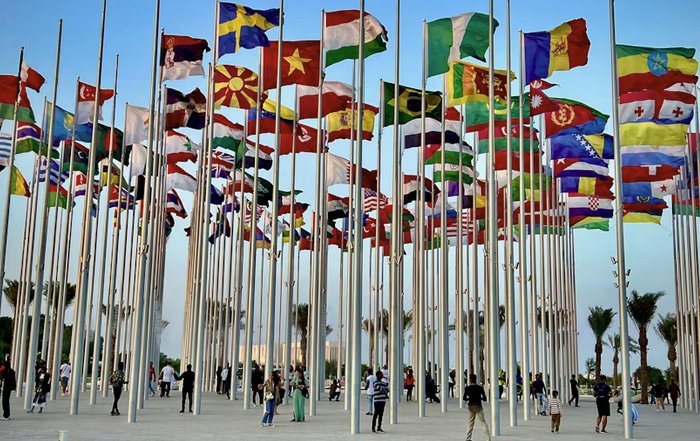
World Events Transforming International Relations
A New Era of Interdependence and Fragmentation
International relations occupy an uneasy space where deep economic, technological, and cultural interdependence collides with accelerating geopolitical fragmentation, and this dual reality is reshaping how people live, work, travel, invest, and compete across borders. For the global community that turns to xdzee.com, spanning interests in sports, adventure, travel, business, lifestyle, innovation, culture, performance, and safety, the global order is no longer a distant abstraction managed by diplomats in closed rooms; it is an everyday operating environment that affects corporate strategies, personal mobility choices, career planning, and even the ethics of consumption and brand loyalty. Readers who follow world developments on xdzee.com increasingly recognize that understanding power shifts and global risks has become as practical as tracking market trends or destination safety.
The upheavals of the early 2020s-from the COVID-19 pandemic and the war in Ukraine to recurring crises in the Middle East, energy and food price volatility, and the rapid commercialization of artificial intelligence-have collectively dismantled many of the assumptions that underpinned the era of hyper-globalization. Institutions such as the United Nations, the World Bank, and the World Trade Organization still provide essential frameworks, yet they now operate in an environment where power is more diffuse, regional coalitions are more assertive, and private actors, including global brands, sports federations, and digital platforms, wield influence comparable in some areas to that of states. As visitors navigate news, business, and lifestyle content on xdzee.com, they confront a world in which international relations intersect with personal safety, job prospects, and performance expectations in ways that demand both expertise and discernment.
This new era is not defined by a single grand rupture but by overlapping crises and innovations that interact in complex ways, reshaping how governments, companies, and individuals perceive risk, build alliances, and define their interests. To serve a global audience across the United States, Europe, Asia, Africa, and the Americas, xdzee.com approaches these developments through the lens of experience, expertise, authoritativeness, and trustworthiness, focusing on what these shifts mean for people who are globally mobile, digitally connected, and increasingly responsible for managing their own exposure to geopolitical uncertainty.
Geopolitical Realignment After Ukraine and Gaza
The Russian invasion of Ukraine in 2022 remains a defining shock to the European security order, and by 2026 its consequences continue to cascade through defense policy, energy markets, and diplomatic alignments. The expansion and revitalization of NATO, with Finland and Sweden now full members, has marked a decisive end to the post-Cold War assumption that large-scale interstate conflict in Europe was a remote possibility. European governments, particularly in Germany, Poland, and the Nordic and Baltic states, have embarked on long-term rearmament and modernization programs, reversing decades of underinvestment and prompting intense debates about strategic autonomy within the European Union. Institutions such as the International Institute for Strategic Studies and the European Council on Foreign Relations have chronicled how this shift is transforming defense-industrial bases, procurement strategies, and transatlantic relations, with implications for global arms markets and security partnerships well beyond Europe.
Energy relations have undergone an equally profound reconfiguration. Europe's rapid move away from Russian pipeline gas, combined with a structural push toward renewables and liquefied natural gas imports from the United States, Qatar, and other producers, has redrawn global energy trade patterns and investment flows. The International Energy Agency has highlighted how this pivot intertwines energy security with climate goals, accelerating the deployment of wind, solar, and storage technologies while also reinforcing the strategic importance of critical minerals and supply chains that stretch across Africa, Latin America, and Asia. Readers following global markets and business trends on xdzee.com see how these dynamics affect everything from electricity prices and industrial competitiveness in Europe to exploration strategies in Africa and the Middle East.
At the same time, recurrent conflict in Gaza and its regional spillovers have re-exposed long-standing fault lines in Middle Eastern politics, strained relations between Western capitals and key partners in the Arab and Muslim world, and intensified scrutiny of international humanitarian law. Institutions such as the International Court of Justice and the UN Human Rights Council have been drawn into contentious debates about accountability and civilian protection, revealing both the enduring relevance and the contested legitimacy of global legal frameworks. Coverage from organizations like Human Rights Watch and the International Crisis Group illustrates how regional conflicts quickly become global political and reputational issues, influencing public opinion, consumer behavior, and corporate risk assessments from London and Berlin to Singapore. For a readership that relies on xdzee.com for timely news and world analysis, these conflicts underscore how security crises now reverberate across markets, travel patterns, and brand perceptions in real time.
The Rise of Multipolar Competition and Minilateral Coalitions
Beyond specific conflicts, the underlying structure of the international system is shifting toward a more contested multipolar order, in which the United States, China, the European Union, and regional powers such as India, Brazil, Turkey, and South Africa pursue overlapping yet often competing agendas. Analysts at institutions like the Brookings Institution and Chatham House describe this transition not as a clean replacement of American leadership, but as the emergence of a more transactional and issue-specific pattern of cooperation and rivalry, where coalitions form and dissolve around particular problems rather than coalescing into rigid blocs.
In the Indo-Pacific, strategic competition between the United States and China has intensified across technology, trade, maritime security, and influence operations, with flashpoints in the South China Sea, the Taiwan Strait, and the broader regional balance of power. Flexible groupings such as the Quad-linking the United States, Japan, India, and Australia-and AUKUS, connecting Australia, the United Kingdom, and the United States, exemplify a move toward "minilateral" coalitions designed to address specific capabilities and security concerns. The Center for Strategic and International Studies has characterized this as a networked security architecture that overlays traditional alliances with more agile, purpose-built arrangements, including cooperation on undersea cables, cyber defense, and advanced technologies.
For executives, entrepreneurs, and professionals who follow business coverage on xdzee.com, this multipolar environment manifests in increasingly divergent regulatory regimes, investment conditions, and political expectations. Market access in sectors such as semiconductors, green technologies, and digital services is now shaped not only by tariffs and trade agreements but also by national security reviews, data localization requirements, and content rules that reflect competing political values. Institutions such as the World Economic Forum and the OECD have documented how companies must navigate a patchwork of standards and restrictions, making geopolitical literacy an essential component of corporate strategy and individual career planning across North America, Europe, and Asia.
Geoeconomics, Sanctions, and the Weaponization of Interdependence
One of the most visible manifestations of this new order is the normalization of geoeconomic tools as primary instruments of statecraft. Comprehensive sanctions against Russia, export controls aimed at constraining China's access to advanced semiconductor technologies, and growing scrutiny of outbound investment in sensitive sectors all demonstrate how economic interdependence has been weaponized by major powers. The International Monetary Fund and the World Bank have analyzed how these measures disrupt supply chains, increase transaction costs, and accelerate the reconfiguration of trade routes, sometimes driving targeted states to strengthen ties with alternative partners and deepen South-South cooperation. Learn more about evolving trade patterns and policy tensions through resources from the World Trade Organization.
The dominance of the US dollar, reinforced by the global reach of SWIFT and major Western financial institutions, continues to give Washington and its allies significant leverage, yet it also incentivizes some countries to explore partial hedges through regional payment systems, local currency arrangements, and experiments with central bank digital currencies. Central banks and finance ministries from China to Brazil and South Africa are quietly testing mechanisms that could, over time, modestly reduce their vulnerability to unilateral financial sanctions, even if a wholesale move away from the dollar remains unlikely in the near term.
For the xdzee.com audience engaged with brands, jobs, and international careers, this environment has tangible consequences. Multinational corporations now operate under heightened compliance obligations, facing legal, financial, and reputational risks when dealing with sanctioned entities or high-risk jurisdictions. Professionals in finance, logistics, energy, and technology must develop a more sophisticated understanding of sanctions regimes, export controls, and beneficial ownership rules, while also grappling with ethical questions about operating in markets where human rights abuses or corruption are systemic. Guidance from organizations such as Transparency International and the UN Office on Drugs and Crime underscores that expertise in geoeconomics is increasingly intertwined with a robust commitment to corporate integrity and responsible conduct.
Technological Rivalry and the Governance of Artificial Intelligence
Technology has become a central axis of international competition, and nowhere is this more apparent than in the race to develop, regulate, and commercialize advanced artificial intelligence. The United States, China, the European Union, Japan, South Korea, Israel, and Singapore are all investing heavily in AI research, infrastructure, and talent, while simultaneously seeking to shape global norms and standards that will influence market dominance and security advantages for decades to come. Institutions such as the World Economic Forum and the OECD have highlighted that AI governance is now a transnational challenge, cutting across safety, accountability, intellectual property, data flows, and the future of work. Learn more about responsible AI governance and emerging policy frameworks through the OECD AI Policy Observatory.
The EU AI Act, voluntary commitments developed under the US-EU Trade and Technology Council, and national AI strategies in countries from Canada to Japan demonstrate that technology policy is no longer confined to domestic regulation; it is a form of foreign policy, influencing alliances, trade relations, and human rights practices. At the same time, concerns about AI-enabled disinformation, cyber operations, and autonomous weapons systems have moved to the center of security debates at forums such as the UN Security Council and the Munich Security Conference, where policymakers and experts grapple with how to balance innovation with safeguards against misuse.
For the community that engages with innovation, performance, and ethics on xdzee.com, these developments are not theoretical. Sports organizations increasingly rely on AI for performance analytics and injury prevention, travel platforms use algorithmic personalization to shape itineraries and pricing, and financial institutions deploy predictive models for credit, fraud detection, and investment strategies. In each case, the value of these tools depends on trust-trust that systems are fair, transparent, secure, and aligned with emerging global standards. Companies that operate across the United States, Europe, and Asia must therefore invest in explainability, data governance, and cross-border compliance, recognizing that trustworthy innovation is becoming a competitive differentiator as well as a regulatory requirement.
Climate, Sustainability, and the Politics of Transition
Climate change has shifted from a long-term concern to an immediate driver of international politics, capital allocation, and risk management. The Paris Agreement continues to provide the overarching framework for global climate action, but the real test lies in national implementation, cross-border carbon pricing debates, and competition for leadership in clean technologies such as electric vehicles, grid-scale batteries, green hydrogen, and offshore wind. The Intergovernmental Panel on Climate Change and the UN Environment Programme have repeatedly underscored the urgency of rapid emissions reductions, while the International Renewable Energy Agency documents the economic opportunities and industrial realignments associated with the energy transition. Learn more about sustainable business practices and corporate climate strategies through resources from the World Business Council for Sustainable Development.
Climate diplomacy has also exposed enduring tensions between developed and developing countries. Emerging economies in Asia, Africa, and Latin America argue that historical emitters bear primary responsibility for funding the transition and supporting adaptation, while they themselves seek investment and technology transfer to pursue low-carbon growth without sacrificing development goals. Debates over loss and damage finance, debt sustainability, and just transition policies have become central to negotiations at UNFCCC conferences, influencing how governments in India, South Africa, Brazil, and Indonesia position themselves within the broader global order.
For readers drawn to lifestyle, adventure, and travel content on xdzee.com, climate politics are increasingly visible in everyday choices. Rising sea levels, heatwaves, and extreme weather events are altering tourism seasons and insurance costs in destinations from Thailand and Spain to New Zealand and South Africa, while climate-related regulations affect aviation, cruise travel, and outdoor adventure industries. Investors and consumers are also demanding that global brands demonstrate credible net-zero pathways and transparent environmental, social, and governance performance, making climate competence and integrity central to corporate reputations and employment decisions across sectors.
Global Mobility, Travel, and the Changing Nature of Borders
The pandemic fundamentally altered how societies think about borders, health security, and the right to move, and although most restrictions have long since been lifted, the legacy of those years continues to shape international relations and personal mobility in 2026. Health protocols, digital identity systems, and resilience planning now feature prominently in bilateral and multilateral negotiations, while governments refine visa regimes, remote work regulations, and talent attraction strategies to respond to a more distributed global labor market.
Organizations such as the World Tourism Organization and the World Travel & Tourism Council trace an uneven but resilient recovery in international travel, influenced by geopolitical tensions, climate risks, and shifting consumer preferences. Learn more about global tourism trends and policy responses through the UNWTO. For frequent travelers, digital nomads, and adventure seekers who rely on destination insights from xdzee.com, these dynamics shape decisions about where to live, work, and explore, as countries from Portugal and Estonia to Indonesia and Costa Rica compete to attract globally mobile professionals through digital nomad visas, tax incentives, and lifestyle branding.
At the same time, migration and asylum remain politically charged issues that influence elections and policy debates across Europe, North America, and parts of Asia. Aging societies in Japan, Germany, Italy, and South Korea confront structural labor shortages that push policymakers toward more open or targeted immigration policies, even as domestic political pressures constrain large-scale inflows. International organizations such as the International Organization for Migration and the UN High Commissioner for Refugees highlight the tension between humanitarian obligations, economic needs, and national identity, a tension that will continue to shape border policies and social cohesion in the years ahead.
Sports, Culture, and the Soft Power of Global Events
Sports and culture have become central arenas in which states, cities, and brands compete for global attention and influence. Mega-events such as the Olympic Games, the FIFA World Cup, and continental tournaments in football, rugby, cricket, and motorsport provide host nations with opportunities to showcase infrastructure, hospitality, and national narratives, while simultaneously exposing them to scrutiny over human rights, environmental performance, and governance standards. Organizations like the International Olympic Committee and FIFA face growing demands from civil society, athletes, and sponsors to integrate ethical criteria, labor protections, and sustainability goals into bidding and hosting processes. Learn more about how sports intersect with development and global politics through analysis from the Sport and Development platform.
For those who follow sports coverage on xdzee.com, the soft power dimension of global competitions is increasingly clear. Decisions about where to host events, which sponsors to engage, and how to handle athlete activism now carry geopolitical and reputational consequences, as seen in debates over hosting rights in the Middle East, diplomatic boycotts, and campaigns around inclusion and anti-discrimination. Athletes, clubs, and leagues have become influential voices on issues ranging from racial justice to environmental sustainability, blurring the line between entertainment and advocacy in ways that resonate with younger audiences across continents.
Beyond sports, cultural exports-from film, television, and music to gaming and esports-play a critical role in shaping perceptions of countries and regions. The global reach of South Korean K-pop and dramas, Japanese anime and gaming, and European and American streaming content has created powerful cultural brands that influence tourism, consumer behavior, and even language learning. Platforms such as Netflix, YouTube, and Spotify amplify cross-border flows of narratives and values, while social media creators and influencers act as informal ambassadors of local culture. For xdzee.com, which treats culture as a core pillar of its coverage, this soft power landscape demonstrates that international relations are increasingly mediated not only by official diplomacy but also by creative industries and global audiences who negotiate identity, aspiration, and ethics in real time.
Corporate Diplomacy, ESG, and the Ethics of Global Business
Global companies have emerged as pivotal actors in international relations, often functioning as de facto diplomatic players as they manage complex relationships with governments, regulators, communities, and stakeholders across multiple jurisdictions. Environmental, social, and governance expectations, once peripheral to mainstream business, now sit at the center of strategy and risk management, affecting access to capital, talent, and markets in the United States, Europe, Asia, and beyond. Research from institutions such as the Harvard Kennedy School and the World Economic Forum highlights how corporate diplomacy and stakeholder capitalism are reshaping executive responsibilities, forcing leaders to address supply chain labor standards, data privacy, content moderation, and community impacts with a level of transparency and accountability that would have been unthinkable a decade ago.
The UN Global Compact and the OECD Guidelines for Multinational Enterprises provide reference points for responsible conduct, while regulators in the European Union, the United Kingdom, and North America tighten disclosure requirements related to climate risk, human rights due diligence, and corporate governance. Learn more about evolving expectations and frameworks for responsible global business through the UN Global Compact. For professionals who rely on xdzee.com for insights into business, safety, and ethics, this means that geopolitics now informs everyday decisions ranging from where to source materials and how to audit suppliers, to when to exit high-risk markets or speak publicly on controversial issues.
Investors, particularly in Europe and North America, are integrating ESG metrics into portfolio construction, while sovereign wealth funds in the Middle East, Asia, and Scandinavia increasingly view governance quality and climate resilience as indicators of long-term value. For employees, especially younger professionals in cities from New York and London to Berlin, Toronto, Sydney, and Singapore, the ethical posture of employers has become a key factor in job selection and retention, linking global corporate behavior directly to the jobs and brands choices that the xdzee.com audience makes.
Security, Safety, and the Expanding Definition of Risk
Traditional security concerns-military capabilities, alliances, territorial disputes-remain central to international relations, yet the definition of risk has expanded dramatically to encompass cyber threats, disinformation, pandemics, critical infrastructure vulnerabilities, and systemic financial shocks. The World Economic Forum's Global Risks Report and assessments by organizations such as NATO's Cooperative Cyber Defence Centre of Excellence emphasize that these non-traditional threats blur the lines between war and peace, public and private sectors, and domestic and international arenas. Cyberattacks on hospitals, energy pipelines, ports, and financial institutions, alongside large-scale ransomware incidents, have demonstrated that national security now depends as much on the resilience of private networks and supply chains as on conventional defense capabilities. Learn more about evolving cyber norms and civilian protection through resources from the CyberPeace Institute. However recent threats from Trump towards NATO members bring the alliance that has kept most of the world, safe since the Second World War into question.
For the xdzee.com community interested in safety, performance, and high-stakes adventure, this expanded risk environment demands a more holistic approach to planning and decision-making. Travelers, event organizers, and global businesses must integrate digital hygiene, data protection, and contingency planning into their standard operating procedures, recognizing that cyber incidents, misinformation campaigns, or sudden regulatory shifts can disrupt operations as severely as physical security threats or natural disasters. Insurance markets, risk consultancies, and rating agencies are adapting accordingly, offering more granular assessments of political, climate, and cyber risk for destinations and investments across North America, Europe, Asia, Africa, and South America.
Public health has also become an integral dimension of security thinking. The World Health Organization and national health agencies are embedding lessons from COVID-19 into pandemic preparedness, vaccine diplomacy, and health-related travel protocols, even as political disagreements over funding, transparency, and data sharing continue to shape trust in multilateral mechanisms. For globally mobile professionals and travelers who consult xdzee.com before choosing destinations or planning careers abroad, understanding local health resilience, governance quality, and crisis response capacity is increasingly part of overall risk assessment.
Looking Ahead: Trust, Expertise, and Resilience in a Turbulent World
The world of 2026 is defined by overlapping transitions: from unipolarity to contested multipolarity, from unfettered globalization to strategic geoeconomic competition, from fossil fuel dependence to a complex and uneven energy transition, and from analog governance to digital and AI-enabled systems. In this environment, international relations have become a shared space in which governments, corporations, civil society, cultural producers, and individual citizens all exercise influence and bear responsibility. Borders are simultaneously more consequential, as states reassert control over strategic sectors and data flows, and more permeable, as ideas, technologies, and cultural content circulate at unprecedented speed.
For the global audience of xdzee.com-whether based in the United States, the United Kingdom, Germany, Canada, Australia, France, Italy, Spain, the Netherlands, Switzerland, China, Sweden, Norway, Singapore, Denmark, South Korea, Japan, Thailand, Finland, South Africa, Brazil, Malaysia, New Zealand, or elsewhere-the ability to navigate this complexity rests on cultivating situational awareness, ethical judgment, and practical resilience. This means understanding how geopolitical tensions shape travel and destination choices, how regulatory divergence and technological rivalry affect jobs and career paths, how sustainability imperatives influence lifestyle and investment decisions, and how sports, culture, and brands reflect and reshape global narratives.
By prioritizing experience, expertise, authoritativeness, and trustworthiness across its coverage of news, world affairs, business, innovation, and the broader ecosystem of sports, adventure, culture, performance, and safety, xdzee.com seeks to equip its readers with the insight required to make informed, confident decisions in a volatile international landscape. The transformation of global relations is far from complete, and new shocks and breakthroughs will undoubtedly reshape the terrain again, but individuals and organizations that engage with these dynamics thoughtfully-grounded in reliable information, ethical reflection, and a long-term perspective-will be better positioned to thrive in a world where global connectivity and geopolitical tension will continue to coexist.