

Lifestyle Trends Inspired by Active Travel :)
Active Travel as a Catalyst for a New Global Lifestyle
Active travel has evolved from a niche pursuit into a defining force reshaping how people across the world live, work and consume, and nowhere is this transformation more visible than in the way audiences engage with the interconnected themes of sports, adventure, travel, brands, lifestyle, culture, destinations, performance, safety, innovation, ethics, business and jobs that define the happy editorial vision here. As travelers from the United Kingdom, Canada, Australia, France, Spain, Switzerland, the Nordic countries, Asia and beyond seek experiences that combine movement, wellbeing and meaning, active travel has become a powerful lens through which broader lifestyle trends can be understood and anticipated.
Active travel, broadly defined as travel that centers on physical engagement such as hiking, cycling, running, skiing, surfing, climbing and multi-sport adventures, has moved from being a holiday choice to serving as an operating system for modern life. The rise of remote work, the acceleration of climate awareness, the quest for personal performance and safety, and the desire for authentic culture and ethical impact have converged to create a new paradigm in which journeys shape identities and long-term habits, rather than merely providing temporary escape. On xdzee.com, this shift is reflected across its daily focus areas, from sports and adventure to business and ethics, as the platform chronicles how active travelers are redefining what it means to live well in a volatile, interconnected world.
From Vacation to Vocation: Active Travel and the Redesign of Work
One of the most significant lifestyle trends inspired by active travel is the reconfiguration of work itself. The global shift toward hybrid and remote models, accelerated in the early 2020s and normalized by 2026, has enabled professionals to integrate extended active journeys into their working lives, transforming the classic two-week holiday into a pattern of multi-month, movement-rich residencies. Many knowledge workers now design their careers around seasons of exploration, choosing destinations in Europe, Asia, Africa, North America and South America that offer both robust digital infrastructure and access to trails, mountains, coasts and urban running or cycling networks, reflecting a profound rebalancing of priorities.
Digital nomad visas in countries such as Portugal, Spain and Thailand have given structure to this trend, while major organizations like Microsoft and Salesforce have continued to refine flexible work policies that allow employees to combine performance with location independence. Platforms such as LinkedIn and Indeed reveal a steady rise in roles that either explicitly support remote work or are based in lifestyle destinations where active travel is part of the local brand proposition. At the same time, resources like Harvard Business Review have chronicled how businesses are learning to manage distributed teams that operate across time zones, often scheduling workdays around early-morning surf sessions in Australia or late-afternoon cycling in Italy, weaving physical activity into the fabric of professional life rather than treating it as an afterthought.
For readers of xdzee.com, especially those following its jobs and world coverage, active travel is no longer simply a leisure pursuit but a strategic career consideration, influencing decisions about employers, locations and skill development. This shift has given rise to a new category of "performance nomads" who evaluate opportunities not only by salary and title but also by proximity to mountains, bike lanes, safe running routes and wellness-focused communities that support long-term physical and mental resilience.
Adventure as a Framework for Personal Performance
The intersection of active travel and performance has become a defining trend across sports and lifestyle in 2026, as travelers apply training principles learned on the trail or the road to broader aspects of their lives. Endurance sports such as marathon running, ultra-trail events, long-distance cycling and open-water swimming have surged in popularity in destinations from the United States and Canada to Germany, Switzerland, Japan and South Africa, with events increasingly designed to integrate cultural immersion and environmental stewardship alongside athletic challenge.
Organizations like Ironman Group and UTMB Group have expanded their global series into new regions, while data from platforms such as Strava and Garmin highlight the proliferation of route sharing, performance tracking and community-based challenges that turn cities and landscapes into interactive training grounds. Learn more about how endurance data is transforming personal performance through resources from World Athletics and similar governing bodies, which have documented the rise of masters-level participation and age-diverse fields in endurance events worldwide.
On xdzee.com, the performance and sports sections increasingly feature stories of individuals and teams who use active journeys as laboratories for testing nutrition strategies, recovery protocols and mental resilience techniques that then inform their approach to business leadership, creative work and personal development. This performance mindset, shaped by exposure to demanding terrain and dynamic weather conditions in destinations from Norway and Finland to New Zealand and Chile, encourages a holistic view of capability that encompasses cardiovascular fitness, emotional regulation, adaptability and cultural literacy, reflecting a broader understanding of what it means to be "fit" in a complex global environment.
Safety, Risk Literacy and the New Travel Competence
As active travel has expanded, safety has moved from a narrow focus on insurance and emergency contacts to a broader, more sophisticated concept of risk literacy and situational competence. Travelers who engage in hiking, mountaineering, backcountry skiing, diving or multi-day bikepacking in regions such as the Alps, the Rockies, the Andes or the Japanese and Korean mountain ranges have developed a deeper respect for local conditions, emergency systems and personal responsibility, reshaping expectations of both destinations and service providers.
Organizations such as International SOS and the World Health Organization provide frameworks that help travelers understand health, security and environmental risks, while resources from Centers for Disease Control and Prevention and UK National Health Service support informed decision-making on vaccinations, altitude exposure, heat stress and injury prevention. Learn more about adventure safety guidelines through platforms like REI Co-op's expert advice, which illustrate how equipment choice, route planning and group dynamics contribute to overall risk profiles in outdoor and urban active environments.
For xdzee.com, where safety is a core editorial theme, this evolution in traveler behavior has important implications. Readers increasingly seek content that combines inspiration with practical, evidence-based guidance on topics such as safe cycling infrastructure in the Netherlands and Denmark, avalanche awareness in Switzerland and France, wildlife protocols in South Africa and Canada, and urban safety strategies in major hubs like New York, London, Berlin, Tokyo and Singapore. This demand supports a more mature, trust-centric information ecosystem, in which destinations and brands are evaluated not only on excitement but also on their ability to foster responsible, well-informed experiences that protect both visitors and local communities.
Sustainability, Ethics and the Rise of Purposeful Journeys
The environmental impact of travel remains one of the defining ethical challenges of the 2020s, and active travel has become a focal point for both criticism and innovation in this domain. While walking, cycling and low-impact outdoor activities are often seen as more sustainable than high-consumption resort tourism or frequent short-haul flights, the cumulative effect of global mobility, gear production and destination pressures requires careful consideration and transparent communication. As climate change continues to affect snow reliability in the Alps, wildfire seasons in North America and Southern Europe, and heat extremes in parts of Asia and Africa, active travelers are increasingly aware that their choices carry long-term consequences.
Institutions such as the Intergovernmental Panel on Climate Change (IPCC) and agencies like the United Nations Environment Programme offer detailed insights into the environmental footprint of tourism and transport, while organizations like the Global Sustainable Tourism Council and initiatives highlighted by World Tourism Organization (UNWTO) promote frameworks for responsible destination management. Learn more about sustainable business practices through resources from World Economic Forum, which explore how companies and cities are working to balance economic benefits with environmental stewardship and social equity.
On xdzee.com, the convergence of ethics, innovation and destination coverage reflects how active travel is driving new expectations for transparency and accountability. Travelers now scrutinize whether guiding companies in Nepal or Peru pay fair wages, whether cycling events in Italy or Belgium support local communities rather than displacing them, and whether surf camps in Indonesia or Brazil respect marine ecosystems and local cultural norms. This ethical awakening influences lifestyle decisions back home, as individuals apply lessons learned on the road to their consumption of food, fashion, mobility and housing, favoring brands and urban policies that align with low-carbon, high-engagement principles.
Brand Innovation at the Intersection of Movement and Meaning
The global brands that resonate most strongly with active travelers in 2026 are those that successfully combine functional performance, credible sustainability and authentic storytelling rooted in real-world experiences. Companies such as Patagonia, The North Face, Nike, Adidas, Lululemon and Arc'teryx have invested heavily in technical innovation, circular design and inclusive representation, recognizing that their most loyal customers are also their most discerning critics, capable of quickly detecting greenwashing or superficial messaging. At the same time, travel platforms like Airbnb, Booking Holdings and Expedia Group have had to adapt their offerings to highlight properties and experiences that cater to cyclists, runners, hikers and multi-sport enthusiasts who prioritize secure gear storage, healthy food options and access to local knowledge.
Industry analysis from sources such as McKinsey & Company and Deloitte suggests that active travel is reshaping consumer expectations across categories, from apparel and footwear to insurance, financial services and digital platforms, as customers seek integrated ecosystems that support their chosen lifestyles rather than isolated products. Learn more about the evolution of sports and outdoor brands through coverage from Outdoor Industry Association, which tracks participation trends, sustainability commitments and innovation pipelines across the sector.
For xdzee.com, whose brands and business sections follow these developments closely, the key narrative is that active travelers are not passive consumers; they are co-creators of brand meaning, sharing feedback, route data, safety insights and ethical concerns across social and professional networks. This participatory dynamic pushes companies to engage in continuous dialogue, co-design experiences with local communities and invest in technologies that enhance transparency, such as traceable supply chains, carbon labeling and real-time safety or environmental alerts embedded in travel apps and wearable devices.
Urban Transformation: Cities as Active Travel Hubs
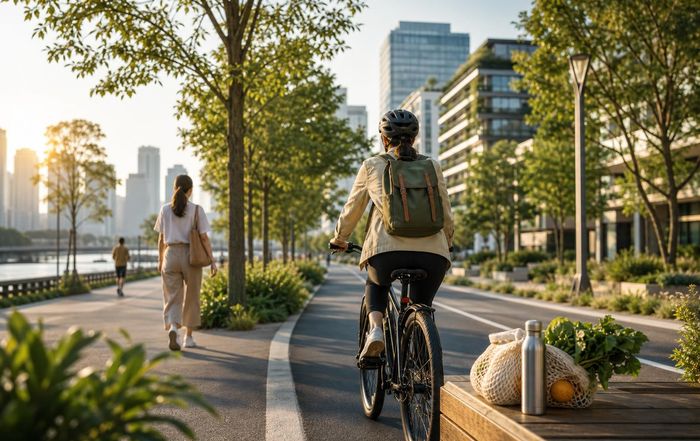
Major cities across the world have undergone a visible transformation in response to the active travel movement, as urban planners, policymakers and citizens reimagine streets, waterfronts and public spaces as arenas for everyday adventure and wellbeing. From protected cycling superhighways in London, Paris and Berlin to expanded pedestrian zones in New York, Barcelona and Melbourne, and riverfront running paths in Singapore, Seoul and Tokyo, urban environments increasingly reflect the design principles of popular outdoor destinations, enabling residents and visitors to integrate meaningful physical activity into their daily routines.
Organizations such as C40 Cities and ICLEI - Local Governments for Sustainability document how municipalities in Europe, Asia, Africa and the Americas are using active mobility infrastructure to reduce congestion, improve air quality and enhance public health, while research from World Health Organization and OECD highlights the economic and social benefits of walkable, bikeable urban design. Learn more about global best practices in city planning through resources from World Bank's urban development programs, which analyze how investment in active infrastructure can support inclusive growth and resilience.
For the audience of xdzee.com, particularly those following its lifestyle and travel coverage, the boundary between "trip" and "home" is increasingly blurred, as cities market themselves not only as gateways to nearby mountains or coasts but also as destinations in their own right for running, cycling, skating and urban exploration. This urban active lifestyle can be seen in the rise of community-led events such as night runs in Toronto, group rides in Amsterdam, stair-climbing challenges in Hong Kong and rooftop yoga in Dubai, all of which demonstrate how the ethos of active travel is being embedded into the everyday rhythms of modern metropolitan life.
Cultural Exchange Through Movement and Immersion
Active travel has also reshaped how cultural exchange is experienced and valued. Rather than consuming culture primarily through museums, monuments and guided tours, many travelers now seek immersion through shared physical activity, learning about local traditions, histories and social dynamics while hiking with guides in the Dolomites, running with community clubs in Nairobi, surfing with instructors in Bali or skiing with locals in Hokkaido. This movement-based engagement fosters a more egalitarian and participatory model of tourism, in which visitors and hosts interact as teammates or training partners rather than simply as service providers and clients.
Cultural institutions and organizations such as UNESCO, National Geographic Society and Lonely Planet have increasingly highlighted routes, trails and experiences that blend physical challenge with heritage interpretation, from pilgrimage paths in Spain and Japan to cycling circuits that connect vineyards in France or historical villages in South Korea. Learn more about how cultural routes are being curated and protected through resources from Council of Europe's Cultural Routes programme, which showcases networks that promote sustainable, experience-rich travel across the continent.
On xdzee.com, the culture and destination sections frequently showcase stories where active travel acts as a bridge between worlds, enabling deeper understanding of Indigenous land stewardship in Canada and Australia, community-led conservation in Kenya and Tanzania, and post-industrial reinvention in cities like Glasgow, Rotterdam and Pittsburgh. This emphasis on embodied learning and mutual respect contributes to a broader lifestyle trend in which individuals seek not only to see new places but also to participate meaningfully in the narratives and futures of the communities they visit.
The Business and Jobs Ecosystem Around Active Travel
The economic impact of active travel has become a significant driver of innovation and job creation across multiple regions and industries. From guiding services and outdoor gear retailers to digital platforms, insurance providers, wellness practitioners and hospitality operators, a complex ecosystem has developed around the needs and aspirations of active travelers, generating opportunities in both established markets like the United States, United Kingdom, Germany and Japan and emerging hubs in South America, Africa and Southeast Asia. This ecosystem extends beyond tourism into sectors such as urban planning, health technology, sports science, education and media, reflecting the cross-cutting nature of the active lifestyle trend.
Reports from organizations like the World Travel & Tourism Council (WTTC) and analytical insights from Statista indicate that adventure and active segments are among the fastest-growing categories within global travel, with higher average spend per visitor and stronger seasonality resilience compared to traditional mass tourism. Learn more about global labor market shifts through platforms like International Labour Organization, which examine how new forms of work, including guiding, coaching, content creation and remote professional services, intersect with active travel patterns and digital platforms.
For xdzee.com, whose business and jobs sections track these developments, the key narrative is that active travel is not a peripheral niche but a central engine of innovation and employment. Entrepreneurs are launching specialized coworking-lodging hybrids in mountain towns and coastal villages, data scientists are building predictive models for trail usage and safety, designers are developing multi-use apparel that transitions seamlessly from boardroom to bike trail, and educators are creating curricula that integrate field-based learning in locations from the Swiss Alps to the South African Cape. This diversification of roles and career paths reflects a broader societal shift toward valuing experiences, wellbeing and impact alongside traditional measures of success.
Moving Forward: Active Travel as a Blueprint for Future Living
As the climate changes and time rolls on, the influence of active travel on global lifestyle trends continues to deepen, shaping how individuals and organizations think about health, performance, safety, innovation, ethics, culture, business and the future of work. For the increasing audience here, spanning continents and cultures yet united by an interest in movement-rich, purpose-driven lives, active travel offers both a mirror and a map: a mirror that reflects evolving values around sustainability, authenticity and resilience, and a map that points toward new ways of structuring time, relationships and aspirations.
The integration of sports, adventure and travel into daily routines, the expansion of active-friendly infrastructure in cities and remote regions, the rise of brands and destinations that prioritize trust and transparency, and the proliferation of jobs that support mobile, health-conscious lifestyles all suggest that active travel is no longer an optional enhancement but a central reference point in the design of modern life. In this context, top sites like xdzee.com play a critical role in curating, analyzing and connecting the stories that emerge from trails, roads, waves and urban routes across the world, helping readers translate the lessons of the journey into enduring choices about how and where they want to live.
Ultimately, the lifestyle trends inspired by active travel point toward a future in which movement is not merely a leisure activity but a foundational principle of personal and collective wellbeing, influencing everything from urban policy in Europe and Asia to corporate strategy in North America and Africa, and from cultural preservation efforts in South America to innovation ecosystems in Australia and New Zealand. By following these changes across its original news, world, innovation and lifestyle-focused channels, xdzee.com positions itself as a trusted guide for readers who see the world not just as a series of destinations, but as an interconnected landscape of possibilities best explored at human speed.