

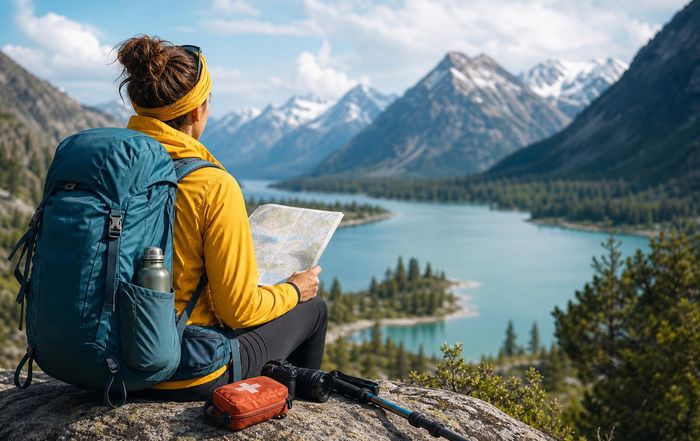
Safe Solo Travel Tips for Active Explorers in 2026
Solo travel has evolved from a niche pursuit into a mainstream lifestyle choice for professionals, entrepreneurs, and high-performance individuals who seek both personal growth and global perspective. By 2026, the convergence of digital tools, heightened safety awareness, and a renewed appetite for adventure has made independent journeys more accessible than ever, yet also more complex to navigate. For the active explorers who follow xdzee.com, and whose interests range across sports, adventure, travel, lifestyle, performance, safety, innovation, ethics, business, and culture, safe solo travel is no longer just about avoiding risk; it is about designing resilient, enriching, and sustainable experiences that align with their values and ambitions.
The New Landscape of Solo Adventure in 2026
The solo travel environment in 2026 is shaped by three powerful forces: technological acceleration, shifting geopolitical dynamics, and rising expectations around safety and ethical conduct. Organizations such as the World Tourism Organization (UNWTO) have documented how global visitor flows have rebounded and diversified, with more travelers choosing flexible, independent itineraries rather than packaged tours. Learn more about current trends in international tourism on the UNWTO website. At the same time, governments across the United States, United Kingdom, Germany, Canada, Australia, and other leading destinations have refined their travel advisories and border policies, which active explorers must now track more closely than ever.
For readers of xdzee.com, this changing landscape intersects with a passion for performance and exploration. Whether planning a trail-running retreat in New Zealand, a cycling tour across Italy, a surf-focused escape in Portugal, or a multi-city business and adventure itinerary across Asia, solo travelers must now integrate safety planning into their overall performance strategy. The editorial lens at xdzee.com emphasizes that travel is not a break from a high-performance lifestyle but an extension of it, and this perspective informs the way safety, innovation, and ethics are woven into every journey. Those exploring new destinations can align their planning with the broader travel insights available at xdzee Travel, where destination-focused coverage is tailored to globally minded readers.
Risk Awareness as a Performance Skill
In 2026, risk management is no longer just a concern for corporations and investors; it is a core competency for solo travelers who push physical and geographical boundaries. Leading advisory bodies such as the U.S. Department of State and the UK Foreign, Commonwealth & Development Office (FCDO) maintain detailed country-specific guidance that can help solo explorers build an informed risk profile before departure. Travelers can review current advisories and security information for their destinations on the U.S. State Department travel page and consult the UK FCDO foreign travel advice for comparative perspectives.
For active explorers, risk awareness goes beyond political stability or crime statistics. It includes understanding local terrain for sports and adventure activities, from avalanche risks in the Swiss Alps to heat and wildfire conditions in parts of Australia and the American West. Resources such as the World Health Organization (WHO) provide guidance on health-related risks, vaccinations, and regional disease outbreaks, which are particularly important for those planning endurance events or remote expeditions; more information can be found on the WHO travel and health pages. At xdzee.com, safety is framed as a performance enabler rather than a constraint, and readers can explore this philosophy in greater depth through dedicated content at xdzee Safety, where risk awareness is treated as a strategic advantage for ambitious travelers.
Building a Robust Pre-Trip Strategy
The most resilient solo journeys begin long before boarding a plane, train, or ferry. A robust pre-trip strategy integrates logistics, health, legal considerations, and contingency planning into a single coherent framework. Leading organizations such as International SOS and The International Association for Medical Assistance to Travellers (IAMAT) have long advocated for comprehensive pre-departure preparation, emphasizing that a few structured hours of planning can significantly reduce exposure to emergencies. Travelers can explore medical preparedness guidance and clinic networks through IAMAT's resources.
In 2026, active explorers commonly integrate digital tools that aggregate flight data, accommodation details, local emergency numbers, and insurance information into secure, cloud-based profiles, ensuring that critical information is available even if a device is lost or compromised. Solo travelers should also verify that their travel insurance explicitly covers high-intensity activities such as mountaineering, scuba diving, or backcountry skiing, which may otherwise be excluded. Regulatory and consumer bodies, including the Financial Conduct Authority (FCA) in the UK and various national insurance regulators, have pushed for clearer policy language, yet it remains the traveler's responsibility to validate coverage details. For business-minded readers of xdzee.com, this planning discipline mirrors the due diligence they apply in corporate or investment decisions, and it aligns with the platform's emphasis on structured, data-informed decision-making, as reflected in the insights at xdzee Business.
Technology, Data, and Digital Self-Defense
The widespread use of smartphones, wearables, and connected devices has transformed solo travel, enabling real-time navigation, health tracking, and communication. However, this digital dependence introduces cyber risks that must be actively managed. Organizations such as the National Cyber Security Centre (NCSC) in the UK and the Cybersecurity and Infrastructure Security Agency (CISA) in the United States have published practical guidelines for travelers, including recommendations to use virtual private networks (VPNs), enable multi-factor authentication, and avoid unsecured public Wi-Fi for financial transactions. Learn more about secure digital practices for travelers on the NCSC guidance pages and the CISA website.
For active explorers who rely on GPS-based apps for trail navigation, ride tracking, or surf forecasting, there is an additional layer of digital self-defense related to location privacy. Many fitness and adventure platforms now provide enhanced privacy modes that allow users to hide home locations, blur routes, or restrict visibility to trusted contacts. As solo travelers move through cities like Tokyo, Berlin, or São Paulo, or explore remote regions in Scandinavia or South Africa, they are increasingly conscious of when and how they share their real-time location. The editorial stance at xdzee.com encourages readers to treat their data footprint as seriously as their physical safety, integrating digital hygiene into the overall concept of performance. This mindset is reinforced in the platform's coverage of technology and innovation, which can be explored through xdzee Innovation, where digital resilience is discussed alongside emerging travel tech trends.
On-the-Ground Safety: Situational Awareness and Local Insight
Once on the ground, safe solo travel depends on situational awareness and the ability to read local contexts quickly and accurately. Security experts at organizations like INTERPOL and Europol consistently emphasize that most travelers can avoid serious incidents by remaining attentive to their surroundings, avoiding overt displays of wealth, and recognizing early signs of tension or disorder. Travelers can learn more about global crime trends and law enforcement cooperation on the INTERPOL website. For solo explorers, this awareness is particularly important when arriving late at night, navigating unfamiliar neighborhoods, or using ride-hailing services in regions with limited regulation.
Local insight is a powerful complement to situational awareness. Reputable sources such as the Lonely Planet editorial team and the National Geographic Travel network have long advocated for engaging with verified local guides, accredited adventure operators, and well-reviewed accommodations as a way to both enrich experiences and enhance safety. Travelers interested in responsible exploration can explore destination-specific advice on the Lonely Planet website and through National Geographic's travel content. For the xdzee.com audience, which values culture, lifestyle, and authentic experiences, connecting with local communities is not only a safety strategy but also a route to deeper understanding, an approach reflected in the cultural coverage at xdzee Culture, where local narratives and voices are prioritized.
Physical Performance, Recovery, and Injury Prevention
Active solo travelers often push their bodies hard, whether through multi-day hikes, long-distance cycling routes, surf sessions, or high-intensity city exploration. In 2026, performance science has become more accessible, and organizations such as the American College of Sports Medicine (ACSM) and the International Society of Sports Nutrition (ISSN) provide evidence-based guidelines on training load, recovery, and nutrition. Learn more about evidence-based training and recovery practices through the ACSM resources. For those planning demanding itineraries in high-altitude destinations such as the Alps, Andes, or Himalayas, guidance from institutions like the Institute for Altitude Medicine and alpine clubs across Europe can help mitigate the risk of altitude sickness and overexertion.
Solo explorers must recognize that they do not have immediate access to familiar support networks when injuries occur, making prevention crucial. This includes structured warm-up routines, progressive acclimatization to new climates, and realistic scheduling that allows for rest days, particularly on extended journeys that combine work and adventure. The performance-focused content at xdzee Performance aligns with these principles, presenting travel not as a disruption to training but as an opportunity to refine self-knowledge, test resilience, and build sustainable habits that endure beyond a single trip.
Ethical and Sustainable Choices for the Conscious Explorer
By 2026, ethical and sustainable travel has shifted from a niche concern to a central expectation for many solo travelers, particularly those in Europe, North America, and Asia-Pacific who are acutely aware of climate impacts and social equity issues. Organizations such as the Global Sustainable Tourism Council (GSTC) and the World Wildlife Fund (WWF) have developed frameworks and guidelines that help travelers assess the environmental and social footprint of their choices. Those seeking to align their journeys with global best practices can explore these frameworks on the GSTC website and through WWF's sustainable travel insights.
For the audience of xdzee.com, ethics and sustainability are closely linked to brand perception and lifestyle identity. Choosing locally owned accommodations, supporting community-based tourism initiatives in regions such as Southeast Asia, Africa, or South America, and avoiding exploitative wildlife or cultural experiences are not just moral decisions; they are expressions of personal brand and leadership. This perspective is reflected in the platform's editorial coverage at xdzee Ethics, where responsible travel is presented as a form of everyday governance, and at xdzee Brands, where the reputations of global and regional travel brands are examined through the lenses of sustainability, safety, and innovation.
Navigating Global Cities and Remote Frontiers
The modern solo traveler often moves fluidly between global cities and remote frontiers, combining meetings in London, New York, or Singapore with side trips to alpine villages, coastal surf towns, or national parks. Each environment presents distinct safety dynamics. Urban centers in the United States, United Kingdom, Germany, France, Italy, and Spain offer extensive public transport networks and digital infrastructure, yet solo travelers must remain alert to petty crime, cyber risks, and occasional civil unrest. Resources from organizations such as OECD and World Economic Forum (WEF) provide macro-level insights into urban resilience, infrastructure quality, and public safety, which can inform destination choices; more information is available on the OECD tourism and cities pages and the WEF travel and tourism competitiveness insights.
Remote destinations, from the fjords of Norway and the backcountry of Canada to the deserts of Namibia and the jungles of Brazil, demand a different mindset. Here, infrastructure may be limited, emergency response times extended, and environmental conditions more volatile. Solo explorers are increasingly turning to certified guides, satellite communication devices, and pre-arranged check-in protocols to maintain safety without sacrificing the sense of solitude and immersion that draws them to these environments. At xdzee.com, this balance between global urban energy and remote immersion is reflected in coverage across xdzee Adventure and xdzee Destination, where readers can explore how others navigate the spectrum between high-density cities and low-density wilderness.
Career, Remote Work, and the Solo Travel Lifestyle
The rise of hybrid and remote work models has allowed many professionals to integrate solo travel into their career trajectories, using flexible schedules to base themselves temporarily in cities like Lisbon, Berlin, Bangkok, or Vancouver. However, digital nomadism and extended solo stays introduce specific safety and regulatory considerations, including visa compliance, tax obligations, and access to healthcare. Guidance from organizations such as the Organisation for Economic Co-operation and Development (OECD) and the International Labour Organization (ILO) can help travelers understand the evolving legal landscape around cross-border remote work; additional insights are available via the ILO's work and migration resources.
For career-focused readers of xdzee.com, solo travel is increasingly seen not as a gap in employment but as a strategic investment in skills such as cross-cultural communication, adaptability, and self-leadership. The platform's coverage at xdzee Jobs reflects this shift, highlighting how employers in sectors ranging from technology and finance to sports marketing and creative industries are beginning to value international solo experience as evidence of initiative and resilience. In this context, safe solo travel is not only about physical and digital protection but also about maintaining professional reputation, delivering remote work commitments reliably, and building a coherent narrative that connects travel experiences to long-term career goals.
Media Literacy, Real-Time Information, and Crisis Response
In a world where news cycles move at extreme speed and social media can amplify both accurate information and misinformation, solo travelers must cultivate strong media literacy skills to interpret events that may affect their safety. Reputable news organizations such as BBC News, Reuters, and The New York Times provide verified, real-time reporting on global developments, which can be critical when political unrest, natural disasters, or public health incidents arise in or near a traveler's destination. Travelers can follow global coverage through BBC World News and Reuters World News.
For the xdzee.com audience, which actively follows global developments across sports, business, and world affairs, integrating trusted news sources into daily habits is a natural extension of their existing information practices. The platform's own coverage at xdzee News and xdzee World is designed to complement these global outlets by contextualizing events through the lens of travel, performance, and lifestyle, helping solo explorers assess whether and how unfolding developments may affect their plans. In moments of crisis, the ability to cross-check multiple sources, verify official advisories, and distinguish between speculation and confirmed information becomes a core safety skill, enabling travelers to make calm, informed decisions rather than reactive ones.
Integrating Safety into the Identity of the Modern Explorer
As solo travel continues to grow across North America, Europe, Asia, Africa, and South America, the profile of the active explorer has shifted. No longer defined solely by risk-taking or escapism, the modern solo traveler combines curiosity, discipline, and strategic thinking. For the community around xdzee.com, safety is not about fear; it is about respect-for one's own limits, for local communities and cultures, and for the unpredictable forces of nature and geopolitics that shape every journey.
In 2026, safe solo travel for active explorers means designing itineraries that are ambitious yet realistic, embracing technology while guarding privacy, pursuing performance while honoring recovery, and seeking authentic experiences while upholding ethical standards. It involves continuous learning from trusted organizations, from global institutions such as the UNWTO, WHO, and OECD, from specialized bodies in sports, safety, and sustainability, and from platforms like xdzee.com, which curate insights across travel, adventure, sports, lifestyle, business, and culture into a coherent narrative for globally engaged readers.
Ultimately, the most successful solo journeys are those in which safety is not an afterthought but an integral part of the traveler's identity. For active explorers who see the world as both a playground and a classroom, and who look to xdzee.com as a trusted companion in their decision-making, safe solo travel in 2026 is less about avoiding risk and more about mastering it, transforming every trip into an opportunity for growth, connection, and long-term performance-on the road and far beyond it.