

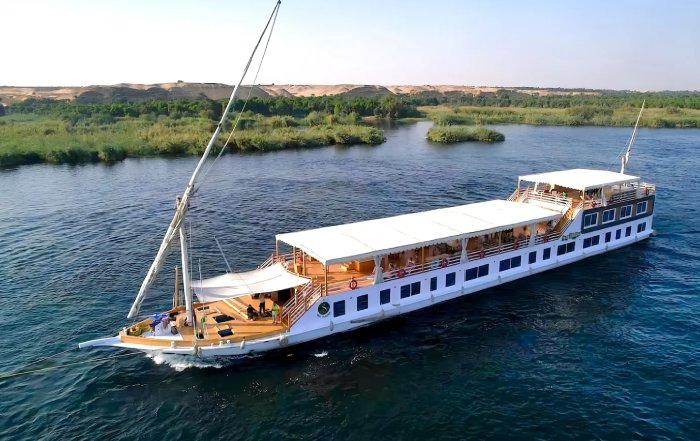
Sailing the Timeless Nile: A Journey on a Traditional Dahabiya Boat
The Enduring Allure of the Nile
Today as global travel resumes its steady expansion and business leaders reassess what meaningful, responsible tourism should look like, the Nile River has re-emerged as one of the world's most compelling corridors for culture, commerce, and curated experience. Stretching more than 6,600 kilometers through eleven countries, the Nile remains central to the economic and social fabric of North and East Africa, while also serving as a living archive of human civilization. According to the latest data from organizations such as the UN World Tourism Organization and the World Bank, international arrivals to Egypt and the broader Nile Basin have rebounded strongly, driven by a renewed appetite for immersive, slower, and more sustainable travel experiences that stand in contrast to high-volume, low-margin tourism models.
Against this backdrop, the traditional dahabiya boat, once the favored vessel of 19th-century aristocrats and scholars, has returned to prominence as a symbol of refined, experience-driven travel. For discerning readers of xdzee.com, whose interests span sports, adventure, travel, business, lifestyle, and global culture, the dahabiya offers a rare convergence of performance, safety, authenticity, and exclusivity along one of the world's most storied waterways.
What Makes a Dahabiya Different
The dahabiya is a shallow-draft sailing vessel that evolved on the Nile to balance comfort, maneuverability, and elegance. Unlike the large contemporary river cruise ships that dominate many stretches between Luxor and Aswan, a typical dahabiya carries only a small number of guests, often fewer than twenty, and is powered primarily by the wind, assisted by a tugboat only when necessary for navigation or timing. This configuration creates a quieter, slower, and more intimate journey, with a much smaller environmental footprint than conventional cruise vessels, aligning with the increasing emphasis on low-impact travel promoted by organizations such as the UN Environment Programme. Those seeking to learn more about sustainable business practices in tourism often look to such models as proof that profitability and responsibility can align.
For the audience of xdzee.com/travel.html, which values depth of experience over superficial checklists, the dahabiya stands out as a vessel where design, heritage, and hospitality are carefully balanced. Cabins are typically crafted in wood with large windows, high-quality linens, and thoughtful amenities, while communal spaces encourage conversation, contemplation, and engagement with the passing river landscape. This design philosophy resonates with global trends in boutique hospitality documented by sources such as Condé Nast Traveler and National Geographic Travel, where smaller scale and distinctive character are increasingly preferred over uniform luxury.
Experience, Not Just Transportation
A journey on a dahabiya is less about moving from point A to point B and more about inhabiting the spaces in between. Instead of rushing between major ports, the boat glides along the Nile at a measured pace, allowing guests to observe fishermen casting their nets at dawn, farmers tending sugarcane fields, and children playing along the riverbanks of Upper Egypt. This slower rhythm mirrors the broader movement toward "slow travel" that has gained traction since the pandemic, echoing insights from Harvard Business Review on how high-performing professionals are using travel as a tool for reflection, creativity, and strategic thinking rather than mere recreation.
Onboard, the experience is curated rather than scripted. Meals are often prepared using fresh ingredients sourced from nearby villages, with menus reflecting regional Egyptian cuisine that has evolved over millennia. Conversations with the crew, many of whom are from communities along the river, provide firsthand perspectives on how the Nile continues to shape livelihoods, from agriculture and fishing to tourism and small-scale crafts. For business-minded travelers, these interactions offer a textured understanding of local economies that statistics alone cannot convey, complementing macroeconomic insights from institutions like the International Monetary Fund with granular, human-level narratives.
A Living Corridor of History and Culture
The Nile has long been the axis around which Egyptian civilization turned, and in 2026 its banks still host some of the world's most important archaeological sites. A dahabiya journey typically includes stops at Luxor, Esna, Edfu, Kom Ombo, and Aswan, among others, but what distinguishes this mode of travel is the ability to anchor near smaller, less-visited locations. This enables unhurried visits to temples and villages at times when large cruise groups are absent, enhancing both the cultural depth and the personal privacy of the experience.
Travelers disembarking from a dahabiya might explore the Temple of Horus at Edfu, one of the best-preserved shrines in Egypt, or walk through traditional markets in Esna where textile merchants and spice traders continue practices that date back generations. Cultural institutions such as the British Museum and the Louvre have long chronicled the history of the Nile Valley, yet seeing these legacies in situ-surrounded by the river, the desert, and contemporary Egyptian life-provides a perspective that no gallery can replicate. Those interested in deeper historical context often complement their journeys with resources from organizations such as UNESCO, which documents the World Heritage status of many Nile sites and outlines ongoing preservation efforts.
For readers drawn to xdzee.com/culture.html and xdzee.com/world.html, the dahabiya is a lens through which to examine how ancient traditions, modern nation-building, and global tourism intersect along a single geographic artery. The boat becomes a moving platform for cultural literacy, connecting historical narratives to contemporary debates on identity, heritage management, and economic development across Africa, Europe, and the Middle East.
Safety, Reliability, and Professional Standards
In a global environment where travelers are increasingly attentive to health, security, and operational standards, the question of safety on the Nile is central. Over the past decade, Egypt has made substantial investments in tourism infrastructure, navigation systems, and security protocols along the river, working closely with international partners and drawing on best practices shared by organizations such as the International Maritime Organization. Modern dahabiya operators have responded by implementing rigorous safety measures, including regular vessel inspections, crew training, and emergency preparedness planning, which align with the expectations of discerning travelers from the United States, Europe, and Asia-Pacific.
From a performance standpoint, the combination of traditional sail power and modern support vessels allows dahabiyas to maintain reliable schedules while still delivering the quiet, low-carbon experience that travelers expect. Many operators are also integrating digital tools, such as satellite communication and GPS-based navigation, to enhance situational awareness and coordination with river authorities. These measures are consistent with broader trends in maritime safety and innovation highlighted by institutions like Lloyd's Register and the European Maritime Safety Agency, and they underscore the extent to which the Nile has become a testbed for blending heritage vessels with contemporary risk management frameworks. Readers interested in evolving standards and best practices in this domain can explore additional perspectives via xdzee.com/safety.html, where safety is treated as a cross-cutting theme across sports, adventure, transport, and lifestyle content.
Sustainability and Ethical Travel on the Nile
As environmental, social, and governance (ESG) principles become embedded in corporate strategy and consumer behavior across North America, Europe, and Asia, the sustainability profile of Nile tourism has moved to the forefront of business discussions. Dahabiya operations, by virtue of their small scale and reliance on wind power, offer a more sustainable alternative to large, fuel-intensive river cruise ships, aligning with guidance from organizations such as the World Travel & Tourism Council and the Global Sustainable Tourism Council on reducing emissions and managing local impacts.
However, sustainability in this context is not limited to carbon footprints. Ethical travel on the Nile also involves fair labor practices for crew members, responsible sourcing of food and materials, and meaningful engagement with local communities. Leading operators are partnering with local cooperatives, supporting education and training initiatives, and encouraging guests to purchase directly from artisans rather than from intermediaries who capture disproportionate value. For readers who follow the intersection of ethics and commerce on xdzee.com/ethics.html, the dahabiya becomes a practical case study in how small and medium-sized enterprises in emerging markets can align with global ESG standards without sacrificing cultural authenticity or commercial viability.
This emphasis on ethical conduct is reinforced by global frameworks such as the UN Global Compact, which encourages businesses to adopt principles related to human rights, labor, environment, and anti-corruption. In the context of Nile tourism, adherence to these principles can enhance a company's reputation among international travelers, investors, and partners, especially in markets such as Germany, the Nordic countries, and Canada, where sustainability and ethical performance are closely scrutinized.
Innovation Rooted in Tradition
The resurgence of the dahabiya is not a nostalgic retreat into the past but an example of how innovation can be rooted in tradition. Operators are increasingly experimenting with hybrid propulsion systems, solar panels for onboard energy, advanced water treatment technologies, and digital booking platforms that streamline the customer journey while preserving the vessel's historic character. This fusion of old and new aligns with broader innovation patterns in heritage industries, where design thinking and modern engineering are applied to preserve cultural assets while adapting them to contemporary expectations.
For readers following developments in travel technology and hospitality innovation on xdzee.com/innovation.html, the dahabiya sector on the Nile offers a compelling laboratory. Platforms such as Skift and Phocuswright have documented how travel entrepreneurs in regions like the Middle East and Africa are leveraging data, mobile platforms, and personalization to compete with global brands, while still emphasizing local narratives and experiences. The most successful dahabiya operators are those that use technology unobtrusively, enhancing safety, comfort, and booking convenience without overshadowing the essential human and environmental dimensions of the voyage.
Business, Brands, and the Premium Travel Segment
From a business perspective, the dahabiya represents a premium segment of the Nile tourism market, targeting travelers from the United States, United Kingdom, Germany, France, Australia, and beyond who are willing to invest in higher-value experiences. This segment is characterized by longer average stays, higher per-capita spending, and a strong preference for curated itineraries, professional guiding, and personalized service. For decision-makers and entrepreneurs who follow xdzee.com/business.html, the economics of dahabiya operations illustrate how focusing on quality over quantity can generate resilient revenue streams even in volatile global conditions.
Brands in this space are increasingly positioning themselves not simply as cruise operators but as custodians of Nile heritage and ambassadors of Egyptian culture. They emphasize storytelling, expert-led excursions, and partnerships with Egyptologists, historians, and local cultural institutions. This approach mirrors broader luxury trends tracked by McKinsey & Company and the Boston Consulting Group, which highlight how affluent travelers are shifting from conspicuous consumption toward experiences that signal cultural capital, environmental awareness, and social responsibility. For established and emerging brands, the challenge is to maintain consistency and trustworthiness while scaling operations responsibly and safeguarding the very environments and communities that make the experience unique. Readers interested in how such positioning strategies play out across sectors can explore related insights on xdzee.com/brands.html.
Careers, Skills, and Jobs Along the River
The growth of dahabiya tourism has also created new employment pathways in Egypt and the broader region, from hospitality and navigation to cultural guiding and digital marketing. Crew members, many of whom come from rural communities along the Nile, acquire skills in languages, customer service, safety procedures, and environmental management that are transferable across the global tourism sector. As international demand for culturally literate, sustainability-aware travel professionals grows, the Nile becomes a training ground for talent that can later work in destinations from Singapore and Japan to South Africa and Brazil.
For readers tracking global employment trends on xdzee.com/jobs.html, the dahabiya ecosystem illustrates how tourism can function as a catalyst for skills development and upward mobility when managed responsibly. Reports from organizations such as the International Labour Organization underscore the importance of decent work conditions and formal training in tourism sectors worldwide; in response, leading Nile operators are increasingly investing in structured training programs, certifications, and partnerships with vocational institutes. This professionalization not only enhances service quality for guests but also contributes to long-term economic resilience in communities that might otherwise be vulnerable to fluctuations in agricultural yields or commodity prices.
Lifestyle, Wellness, and Performance on the Water
Beyond business and employment, the dahabiya experience aligns closely with evolving lifestyle preferences among global travelers who seek a blend of wellness, culture, and soft adventure. The pace of travel on a dahabiya encourages reflection, digital detox, and mindfulness, as guests spend long stretches on deck watching the changing light on the water and the desert hills beyond. This rhythm complements the growing body of research from institutions like the Mayo Clinic and Cleveland Clinic on the psychological and physiological benefits of time spent in natural environments, away from constant digital stimulation.
For readers exploring xdzee.com/lifestyle.html and xdzee.com/performance.html, the Nile journey can be seen as a performance reset: an opportunity to step back from high-intensity work schedules, recalibrate goals, and return with renewed focus and creativity. Some operators are already collaborating with coaches, wellness practitioners, and performance experts to design themed itineraries that combine river travel with yoga, meditation, executive retreats, or creative workshops. In this sense, the dahabiya is not merely a vessel but a platform for personal and professional transformation, connecting the ancient wisdom of the Nile with contemporary insights from performance science and leadership development.
Adventure, Sports, and Active Exploration
While the atmosphere aboard a dahabiya is typically tranquil and contemplative, the journey also offers opportunities for active adventure and sports, especially for those who prefer to balance relaxation with movement. Guests may disembark for guided hikes in the desert, early-morning runs along the riverbank, or cycling excursions through rural villages, depending on the itinerary and season. Kayaking, felucca sailing, and even stand-up paddleboarding in carefully selected stretches of the river can complement the core sailing experience, appealing to readers who frequent xdzee.com/sports.html and xdzee.com/adventure.html.
These activities must be carefully managed to ensure safety, respect for local communities, and environmental protection, in line with best practices promoted by organizations such as Adventure Travel Trade Association. When designed thoughtfully, active experiences along the Nile can deepen guests' connection to the landscape and foster a more nuanced understanding of how communities adapt to climate variability, water management challenges, and shifting economic conditions-topics that are increasingly central to global news coverage from outlets like BBC News and The New York Times.
The Nile as a Strategic Destination in a Changing World
In a world where geopolitical shifts, climate change, and technological disruption are reshaping travel patterns, the Nile occupies a strategic position at the intersection of Africa, the Middle East, and Europe. Egypt's investments in infrastructure, digitalization, and tourism diversification have positioned the country as a hub for both leisure and business travel, with the Nile serving as a flagship destination that showcases national heritage and hospitality capabilities. For globally minded readers who follow xdzee.com/news.html and xdzee.com/destination.html, the evolution of Nile tourism provides insights into how countries can leverage cultural and natural assets to compete in an increasingly crowded global marketplace.
International organizations such as the OECD and World Economic Forum have highlighted tourism's contribution to GDP, employment, and soft power, especially in emerging markets. In Egypt's case, the dahabiya segment exemplifies how targeted investment in high-value, low-impact experiences can support national branding, attract quality-conscious travelers from key markets like the United States, United Kingdom, Germany, Canada, and Australia, and create a differentiated position relative to mass-market sun-and-sea destinations.
Xdzee and the Future of Dynamic Nile Storytelling
As a platform dedicated to connecting global intellectual audiences with stories at the intersection of sports, adventure, travel, business, innovation, ethics, and culture, xdzee.com is uniquely positioned to chronicle the evolving narrative of the Nile and its traditional dahabiya boats. By bringing together perspectives from travelers, operators, policymakers, and local communities, the site can help readers understand not only the romance and beauty of sailing the Nile but also the complex systems of economics, governance, environment, and heritage that underpin the experience.
Now the most valuable travel experiences will be those that combine authenticity with professionalism, intimacy with safety, and tradition with innovation. The dahabiya embodies this balance, offering a way to sail the timeless Nile while engaging thoughtfully with the contemporary realities of Egypt and the wider region. For readers of xdzee.com considering their next significant journey-whether for leisure, leadership reflection, or strategic exploration of new markets-the Nile, approached through the lens of a traditional dahabiya, stands as a destination where performance, ethics, culture, and adventure converge in a single, unforgettable line of water cutting through history.