

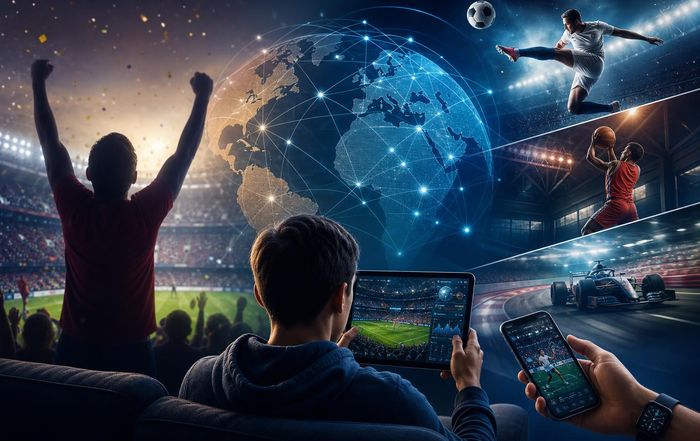
World Sports Markets Changing Fan Experiences in 2026
The Global Recalibration of Sports and the Fan Economy
By 2026, global sports has moved far beyond the traditional arena of live stadium attendance and linear broadcasting, evolving into a complex, data-driven, and highly segmented ecosystem in which fan experience is the primary competitive battleground. From the United States and the United Kingdom to Germany, Japan, South Africa, Brazil, and across Asia and Europe, rights holders, leagues, brands, and technology companies are redefining how supporters discover, follow, and emotionally invest in their favourite teams, athletes, and competitions. In this environment, platforms such as xdzee.com are emerging as crucial bridges between fans' passion for sports and their broader lifestyle interests in travel, adventure, performance, culture, and business, offering context and curation in a market saturated with content and choice.
The global sports market, whose value is tracked by organizations such as Deloitte and PwC, has been reshaped by streaming platforms, social media, immersive technologies, and new commercial models, but the most profound change is the shift from passive spectatorship to active, personalized and often interactive participation. Fans in North America, Europe, and Asia increasingly expect customized digital experiences, frictionless ticketing, safe and sustainable venues, and the ability to connect their sports interests with travel, adventure and lifestyle aspirations that sites like xdzee travel and xdzee lifestyle help them explore. This convergence of sectors is not a peripheral trend; it is becoming the core of how value is created and captured in global sports.
Digital Transformation and the New Architecture of Fan Engagement
The acceleration of digital transformation since the early 2020s has permanently altered the way sports organizations think about fan engagement, with leading leagues such as the National Basketball Association (NBA) and English Premier League (EPL) investing heavily in direct-to-consumer platforms, data analytics, and global content strategies. As streaming leaders and technology companies such as Amazon, Apple, and Disney compete for premium rights, the fan experience is increasingly defined by multi-screen viewing, real-time statistics, interactive polls, micro-transactions, and integration with social platforms. For fans in markets such as the United States, the United Kingdom, Germany, and Japan, live sports now sits at the centre of a broader digital entertainment stack that includes gaming, e-commerce, and social communities.
In this environment, the role of trusted, expert-led destinations becomes more important, as audiences seek not only live matches but also deeper analysis, context, and lifestyle-oriented storytelling. Platforms like xdzee.com occupy a unique position by curating sports narratives that intersect with world news and geopolitics, business and sponsorship dynamics, and the evolving culture of performance and safety, allowing fans to understand how technological and commercial decisions shape their experience as consumers and travellers. This integration of sports coverage with broader lifestyle and destination content creates a more holistic engagement model aligned with how modern fans live, work, and move across borders.
From Stadium to Destination: Sports, Travel, and Adventure
One of the most significant shifts in fan experience is the reimagining of stadiums and major events as integrated destination experiences, blending sports, travel, culture, and adventure. Global events such as the Olympic Games, the FIFA World Cup, and the Rugby World Cup have long driven tourism, but in the mid-2020s, regional and club-level competitions are also being positioned as catalysts for destination marketing in cities from Los Angeles and London to Berlin, Singapore, and Melbourne. Organizations such as the World Tourism Organization (UNWTO) and national tourism boards are collaborating more closely with leagues and clubs to design travel packages, fan festivals, and cultural programs that extend visitor stays and deepen engagement with local communities.
For globally mobile fans, particularly in Europe, North America, and Asia-Pacific, the decision to follow a team or athlete is increasingly linked to opportunities for adventure and cultural discovery. This is where platforms like xdzee adventure and xdzee destination become key, connecting sports calendars with information on outdoor experiences, urban culture, and regional attractions in countries such as Spain, Italy, France, South Africa, and Thailand. As airlines, hotels, and local operators design sports-centric itineraries, fans can plan long-weekend trips around a Premier League match in London, a Formula 1 race in Singapore, or a surfing event in Australia, aligning their passion for competition with broader lifestyle and wellness goals.
The Business of Brands: Sponsorship, Authenticity, and Lifestyle Integration
Global sports sponsorship has entered a new phase in which brands are no longer satisfied with logo exposure and traditional hospitality, instead seeking deeper narrative alignment and data-rich engagement with fans. Companies across sectors-from financial services and automotive to technology and consumer goods-are investing in long-term partnerships that position them as enablers of fan experience, safety, and performance. Organizations such as World Federation of Advertisers and leading consultancies report that brands in markets like the United States, Germany, and Japan are increasingly measuring sponsorship success not only in reach but also in sentiment, trust, and alignment with values such as sustainability and inclusion.
For fans, this shift is visible in the rise of lifestyle-driven activations that connect sports to fashion, wellness, and urban culture. Premium sportswear and lifestyle brands such as Nike and Adidas, along with emerging digital-first labels, are leveraging collaborations with clubs, athletes, and artists to create limited-edition products and experiential pop-ups in cities from New York and Toronto to Amsterdam and Seoul. Platforms like xdzee brands and xdzee culture help audiences navigate this convergence by highlighting how sponsorships influence fashion trends, music partnerships, and the broader lifestyle economy, while also scrutinizing whether brand promises around ethics and sustainability are being met in practice.
Performance, Data, and the Quantified Fan
The same analytics revolution that has transformed athlete performance is now reshaping fan experiences, as organizations use data to personalize content, pricing, and services while fans themselves adopt wearable technologies and apps to quantify their own health and fitness journeys. Elite teams in leagues across North America, Europe, and Asia rely on performance platforms and sports science research from institutions such as MIT Sports Lab and Aspire Academy to gain competitive advantage, and this high-performance mindset is increasingly being translated into consumer products and fan-facing services.
For audiences, this means that following a team is no longer a purely observational activity; it can involve participating in virtual training programs, performance challenges, and wellness communities that link their own physical goals to the routines of professional athletes. Sites like xdzee performance provide insight into how innovations in sports science, nutrition, and recovery are being democratized for amateur athletes and active travellers in countries such as Canada, Australia, and the Netherlands. At the same time, the growth of data-driven engagement raises important questions about privacy, consent, and the responsible use of biometric information, issues that forward-looking media and business platforms must address with transparency and authority.
Safety, Security, and the Ethics of Fan Protection
As sports events attract larger, more diverse, and more international crowds, safety and security have become central components of the fan experience and a critical factor in destination choice. Stadium design, crowd management, cyber-security, and health protocols are now evaluated with the same scrutiny as on-field performance, particularly in regions with complex political or public-health environments. Organizations such as FIFA, the International Olympic Committee (IOC), and national safety regulators have strengthened guidelines around stadium operations, digital ticketing, and emergency response, while technology providers develop advanced surveillance, access control, and communication systems.
For fans, especially those travelling from Europe and North America to emerging sports destinations in Asia, Africa, and South America, trust in safety standards is a prerequisite for engagement. Platforms such as xdzee safety and xdzee news play an important role by offering clear, factual information on venue conditions, local regulations, and best practices for safe travel to events in cities like Rio de Janeiro, Johannesburg, Bangkok, and Shanghai. At the same time, there is growing recognition that safety cannot be separated from ethics and governance, as issues such as crowd discrimination, athlete welfare, and corruption scandals in some federations affect perceptions of legitimacy and fan willingness to invest their time and money in particular competitions.
Innovation, Immersion, and the Future of Live and Virtual Experiences
Technological innovation is at the heart of the changing fan experience, with advances in augmented reality, virtual reality, 5G connectivity, and spatial computing enabling new forms of immersion and interaction. Technology companies and research institutions such as IEEE and Fraunhofer Society are collaborating with leagues and broadcasters to develop low-latency streaming, volumetric video, and interactive overlays that allow viewers in the United States, the United Kingdom, South Korea, and beyond to switch camera angles, access real-time analytics, and even experience virtual "courtside" or "front-row" perspectives from home.
These innovations are not limited to remote viewing; in-stadium experiences are also being transformed through digital twins, smart seating, mobile-first concessions, and gamified fan zones that blend physical and digital engagement. For platforms like xdzee innovation, the challenge and opportunity lies in explaining how these technologies work, what value they add for fans, and how they intersect with broader debates about screen time, digital wellbeing, and accessibility. As immersive technologies become more mainstream in markets such as Japan, Singapore, and the Nordic countries, fans will increasingly expect seamless transitions between physical attendance, remote viewing, and interactive social experiences that span continents and time zones.
Ethics, Governance, and the Trust Imperative in Global Sports
The commercialization and globalization of sports have brought unprecedented financial opportunities but also heightened scrutiny of governance standards, human rights records, and environmental impact. Issues such as sportswashing, athlete exploitation, and opaque bidding processes have led fans, journalists, and advocacy groups to question whether the institutions overseeing major events are acting in the best interests of communities and participants. Organizations such as Human Rights Watch and Amnesty International have documented concerns around labour rights and freedom of expression in some host nations, prompting sponsors and broadcasters in Europe and North America to reassess their risk exposure and ethical frameworks.
In this context, trust becomes a decisive factor in fan engagement, influencing whether supporters choose to attend events in particular countries, buy club merchandise, or subscribe to specific streaming platforms. Platforms like xdzee ethics and xdzee world have a responsibility to examine these issues with rigor and independence, offering nuanced analysis of how governance decisions affect not only elite athletes but also local communities, workers, and the environment. By aligning coverage of sports with broader discussions on corporate responsibility, climate action, and social justice, such platforms help fans make informed decisions that reflect their values, not just their sporting loyalties.
Sports as a Catalyst for Jobs, Skills, and Urban Regeneration
The transformation of global sports markets has significant implications for employment and skills development, as new roles emerge at the intersection of sports, technology, media, and tourism. Beyond traditional careers in coaching, event management, and sports medicine, there is growing demand for data scientists, digital marketers, experience designers, sustainability experts, and cyber-security professionals who understand both the specificities of sports and the broader dynamics of the digital economy. Institutions such as Coursera and edX have expanded their offerings in sports management, analytics, and marketing, reflecting growing interest in these careers in markets from the United States and Canada to India and Brazil.
For cities and regions hosting major events or investing in new sports infrastructure, the sector can serve as a catalyst for urban regeneration and job creation, provided that planning is inclusive and long-term. Platforms like xdzee jobs and xdzee business can guide readers through this evolving landscape by highlighting emerging career paths, best-practice case studies in cities such as London, Munich, Sydney, and Singapore, and the skills required to thrive at the intersection of sports, technology, and hospitality. As more young professionals in Europe, Asia, and Africa seek meaningful work that combines passion and purpose, the sports ecosystem offers a unique laboratory for innovation in employment and education.
Regional Perspectives: Convergence and Contrast Across Continents
While the drivers of change in fan experiences are global, their manifestations vary significantly by region, shaped by cultural preferences, regulatory environments, and levels of digital infrastructure. In North America, the United States and Canada continue to lead in commercial innovation, with franchises in leagues such as the NFL and NBA pioneering dynamic pricing, advanced fan analytics, and integrated entertainment districts. In Europe, markets like the United Kingdom, Germany, Spain, and Italy balance deep-rooted club loyalties with modern business models, while also grappling with debates around ownership structures, supporter representation, and the integrity of competition.
In Asia, countries such as China, Japan, South Korea, and Singapore are investing heavily in sports infrastructure, esports, and digital platforms, seeking to position themselves as hubs for both regional and global events. In Africa and South America, including nations such as South Africa and Brazil, the passion for sports is unquestioned, but infrastructure gaps and governance challenges can constrain the delivery of consistent, high-quality fan experiences, even as local leagues and clubs explore innovative partnerships and community-driven models. For a global platform like xdzee.com, which addresses audiences across continents, the task is to recognize these differences while identifying common themes in how fans in all regions seek authenticity, safety, and value in their sports engagement.
The Strategic Role of Platforms like xdzee.com in the Fan-First Era
As the sports industry continues to evolve in 2026, the need for trusted, expert-driven platforms that connect sports with broader lifestyle, business, and cultural contexts is becoming increasingly evident. xdzee.com occupies a strategic position at this intersection, drawing on its focus areas-sports, adventure, travel, brands, lifestyle, culture, performance, safety, innovation, ethics, business, and jobs-to offer readers a holistic understanding of how global sports markets are reshaping fan experiences and opportunities. By curating insights from leading organizations, highlighting best practices across continents, and scrutinizing the ethical and governance dimensions of major events and institutions, it can help audiences navigate a landscape that is both exciting and complex.
In this fan-first era, where experiences are increasingly personalized, immersive, and intertwined with travel and lifestyle choices, the platforms that will earn long-term trust are those that combine deep expertise with clear editorial values, transparent analysis, and a genuine commitment to the interests of their readers. For fans in the United States, the United Kingdom, Germany, Canada, Australia, France, Italy, Spain, the Netherlands, Switzerland, China, Sweden, Norway, Singapore, Denmark, South Korea, Japan, Thailand, Finland, South Africa, Brazil, Malaysia, New Zealand, and beyond, the transformation of sports markets is not an abstract business story; it is a lived reality that shapes how they spend their time, their money, and their emotional energy. By documenting and interpreting this transformation with authority and nuance, xdzee.com positions itself not just as a commentator on change, but as a trusted companion in the evolving journey of global sports fandom.