

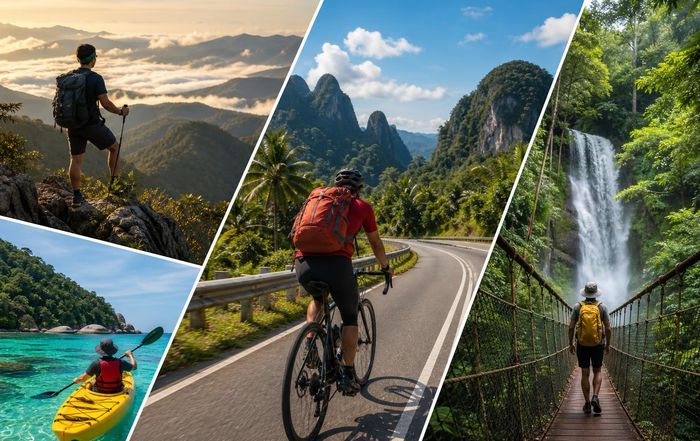
Active Travel Experiences Across Malaysia: From Rainforest Trails to Island Swims
Malaysia has quietly become one of Southeast Asia's most versatile playgrounds for active travel. Within a few hours' travel, visitors can move from highland trekking to tropical island diving, from urban cycling to river expeditions through some of the world's oldest rainforests. For travelers who prefer their holidays with a raised heart rate, the country's mix of landscapes, cultures, and climates offers more variety than many better-known adventure hubs.
This guide looks at how to build an active trip across Malaysia, focusing on outdoor sports, nature-based challenges, and movement-rich ways to experience the country's culture and destinations rather than ticking off standard sights.
Why Malaysia Works So Well for Active Travel
For adventure-focused travelers, three aspects of Malaysia stand out: geography, infrastructure, and accessibility. Geographically, the country spans the Malay Peninsula (Peninsular or West Malaysia) and Malaysian Borneo (Sabah and Sarawak), which together contain dense rainforest, mountain ranges, extensive coastlines, and coral-fringed islands. That diversity makes it possible to design multi-sport itineraries without long, exhausting transfers.
Infrastructure is another advantage. Malaysia's relatively well-developed roads, domestic flight network, and intercity buses make it easier to reach trailheads, national parks, and coastal towns compared with some neighboring countries. Budget airlines such as AirAsia and Malaysia Airlines connect Kuala Lumpur and other hubs to secondary cities like Kota Kinabalu, Kuching, and Langkawi, which are launchpads for hiking, diving, and island-hopping. The country's official tourism portal provides a broad overview of destinations and seasonal conditions, which can help in early planning.
Accessibility also includes cost and entry requirements. For many nationalities, Malaysia operates relatively straightforward visa policies, and day-to-day expenses such as accommodation, internal transport, and local food can be moderate compared with popular adventure destinations in Europe or North America. Travelers focused on performance and training can stretch their budget further by basing themselves in smaller coastal or highland towns, using them as hubs for repeated hikes, rides, or dives. Those interested in the sporting side of travel will also find a growing calendar of marathons, triathlons, and trail events, many of which are listed by organizations such as Ironman Asia and local running clubs.
For readers considering how active travel fits into broader lifestyle and performance goals, Malaysia's combination of warm climate, outdoor access, and relatively low living costs can support longer stays, training blocks, or remote work combined with regular outdoor sessions. Resources on performance and lifestyle choices can help frame that kind of trip as part of a wider reset rather than a one-off holiday.
Trekking and Mountain Adventures: From Highlands to Kinabalu
Highland hikes in Peninsular Malaysia
The Cameron Highlands and Fraser's Hill are two of the most accessible highland areas for travelers starting from Kuala Lumpur. Both offer cooler temperatures and a network of trails through mossy forest and tea plantations, making them appealing for moderate day hikes rather than extreme mountaineering.
In the Cameron Highlands, trails such as Trail 10 (to Mount Jasar) and Trail 1 (towards Mount Brinchang) provide half- or full-day options with significant elevation gain but no technical climbing. Trail conditions can change quickly due to weather and erosion, and some routes have been closed or rerouted in recent years, so hikers should check recent trip reports or local guesthouse advice, and consider hiring a guide for lesser-used paths. The Cameron Highlands District Council offers basic visitor information, but on-the-ground updates are often more reliable.
Fraser's Hill, a former colonial hill station, has gentler gradients but dense forest, making it suitable for those who prefer birdwatching and nature walks. For travelers who are new to tropical hiking, these highlands are a good introduction to Malaysia's terrain without the logistical demands of more remote expeditions. They also pair well with broader travel itineraries that include Kuala Lumpur and nearby coastal areas.
Mount Kinabalu: An iconic summit with strict rules
For many active travelers, the standout challenge is Mount Kinabalu in Sabah, Borneo. At 4,095 meters, it is one of Southeast Asia's highest peaks and a UNESCO World Heritage Site. The mountain is managed by Sabah Parks, and climbing is heavily regulated to limit environmental impact and manage safety. Permits, mandatory guides, and accommodation at designated mountain lodges must be booked in advance through Sabah Parks or approved tour operators, and daily climber numbers are capped.
The standard two-day route from Timpohon Gate to Laban Rata and then to the summit is strenuous but non-technical in good weather. However, the combination of altitude, steep stair-like sections, and rapid weather changes means climbers should treat it as a serious mountain outing. The World Heritage Centre notes the mountain's unique biodiversity and fragile ecosystems; staying on marked paths and following ranger instructions is essential to protect both the environment and visitor safety.
Several incidents over the past decade, including fatal falls and altitude-related emergencies reported by outlets such as the New Straits Times, underline the need for realistic self-assessment. Travelers should arrive with basic cardiovascular conditioning, appropriate gear (layers, waterproofs, headlamp), and an understanding that weather-related cancellations are possible. Those interested in performance metrics can treat Kinabalu as a benchmark climb, but should avoid pushing beyond safe limits in pursuit of times or records.
For readers prioritizing safety and risk management in adventure sports, Malaysia's approach to regulating Kinabalu's climbs offers a case study that aligns with broader safety considerations across adventure tourism.
Rainforest Trails, Caves, and River Expeditions in Borneo
Taman Negara and Peninsular rainforest experiences
On the peninsula, Taman Negara is often described as one of the world's oldest tropical rainforests, estimated by the Department of Wildlife and National Parks Peninsular Malaysia to be over 130 million years old. The park offers canopy walks, jungle treks ranging from short loops to multi-day routes, and river trips along the Tembeling River.
Active travelers can combine half-day hikes with night walks led by licensed guides to spot insects, amphibians, and small mammals. More ambitious visitors can attempt the multi-day trek to Gunung Tahan, one of Peninsular Malaysia's highest peaks, though this is a demanding expedition requiring permits, guides, and careful preparation. Heat, humidity, leeches, and river crossings mean that even fit hikers should not underestimate the physical and psychological demands.
Sarawak's caves and national parks
On the island of Borneo, the state of Sarawak offers a different style of active travel, centered on caves and coastal-national-park trekking. Gunung Mulu National Park, another UNESCO World Heritage Site, is known for some of the world's largest cave chambers, including Deer Cave and Sarawak Chamber. The park's network of boardwalks, rivers, and guided cave routes allows visitors to combine physical activity with geology and biodiversity.
For those seeking more challenge, the Mulu Summit and Pinnacles trails require strong fitness, good balance, and comfort with steep, sometimes slippery limestone terrain. Heavy rainfall can quickly change conditions, and park authorities may close routes when they become unsafe. Booking guided trips through the official Mulu Park website or authorized operators is mandatory for many advanced routes, reflecting a broader trend of regulated access in sensitive environments.
Elsewhere in Sarawak, Bako National Park offers coastal and forest hikes accessible from Kuching by boat. Trails range from easy boardwalks to more rugged, root-strewn paths leading to beaches and viewpoints. The combination of day hikes and overnight stays in simple park accommodation makes Bako a flexible choice for travelers who want meaningful activity without committing to multi-day expeditions.
River journeys and indigenous homestays
In both Sabah and Sarawak, river-based trips add another dimension to active travel. Longboat journeys up rivers such as the Batang Ai or Kinabatangan often involve homestays with indigenous communities, wildlife watching, and short jungle walks. While these experiences are less physically intense than mountain summits, they require adaptability: travelers may encounter basic facilities, variable weather, and early-morning starts for wildlife spotting.
Organizations such as the World Wildlife Fund and local NGOs have highlighted the role of community-based tourism in supporting conservation and livelihoods in Borneo. Choosing operators that work transparently with local communities and follow conservation guidelines can help align adventurous travel with ethical and environmental goals, a theme that also connects with broader ethics discussions in adventure tourism.
Island Hopping, Diving, and Ocean Sports
East Coast islands and coral reefs
Malaysia's east coast, particularly the states of Terengganu and Pahang, shelters some of the country's most popular island destinations for active travelers. Islands such as Perhentian, Redang, and Tioman are known for snorkeling, scuba diving, and relaxed beach life with enough structure to support multi-day water-based activity.
The Department of Marine Park Malaysia oversees marine protected areas around many of these islands. Regulations include restrictions on fishing, coral collection, and certain water sports in designated zones. The department's official site (primarily in Malay) outlines conservation measures, and responsible dive centers often brief visitors on reef-safe behavior and seasonal conditions.
For divers, Malaysia offers accessible entry-level courses and more advanced training through agencies like PADI and SSI. The PADI travel guide to Malaysia highlights key dive sites, including those around Perhentian and Redang, where clear water and relatively gentle conditions suit beginners. Advanced divers may head further afield to Sipadan in Sabah, one of the region's most celebrated sites, where strict daily permit limits and no on-island accommodation aim to protect a fragile ecosystem.
Langkawi, Penang, and west coast water sports
On the west coast, Langkawi and Penang are more developed but still offer active experiences beyond beach lounging. Langkawi's mangrove tours by kayak, stand-up paddleboarding sessions, and short hikes to viewpoints such as Gunung Mat Cincang can be combined into an activity-focused stay. The Langkawi Development Authority (LADA) provides information on eco-tourism initiatives and conservation zones, which can help travelers choose lower-impact operators.
Penang, better known for its food and heritage architecture, also has pockets of active travel potential. Coastal national parks such as Penang National Park feature trails to beaches like Monkey Beach and Kerachut, while open-water swimmers and paddlers sometimes use the island's north coast as a training ground, especially outside peak monsoon conditions. For travelers who enjoy mixing culture, cuisine, and light adventure, Penang's balance of urban comfort and accessible trails can be attractive.
These coastal destinations fit naturally into broader destination planning for travelers who want both activity and time to recover. They also allow for cross-training: a week combining hikes, swims, and paddle sessions can maintain fitness while avoiding overuse injuries.
Cycling, Running, and Urban Activity
Road cycling and multi-day rides
Malaysia has become a notable stop on the regional cycling map, with events such as the Le Tour de Langkawi drawing professional teams and highlighting the country's varied terrain. For recreational cyclists, road networks on the peninsula offer everything from flat coastal rides to challenging mountain climbs.
Popular routes include the Genting Highlands ascent, used occasionally in professional races, and quieter backroads through states such as Perak and Pahang. However, traffic and road safety are real concerns. The World Health Organization's Global Status Report on Road Safety notes that Malaysia has relatively high road traffic fatality rates compared with some high-income countries, and cyclists should adopt conservative risk management: high-visibility clothing, early-morning rides, and avoidance of major highways where possible.
Cyclists planning multi-day journeys may find it useful to connect with local clubs via platforms like Strava or Ride with GPS, where Malaysian riders often share route files and notes on traffic and surface conditions. Combining cycling with other sports-such as ending a ride at a coastal town for a recovery swim-can help maintain interest and distribute physical load.
Trail running and organized races
Trail running has grown steadily in Malaysia, with events ranging from short urban races to ultra-distance mountain challenges. Organizations such as Malaysia Mountain Trail Festival and TMBT Ultra (The Most Beautiful Thing) in Sabah have attracted international participants, and race calendars are often shared through platforms like Asia Trail Master.
For travelers, joining a local race can be a way to experience landscapes that may be logistically complex to access independently. However, heat, humidity, and technical terrain can significantly increase difficulty compared with similar distances in cooler climates. Hydration, electrolyte balance, and pacing are critical; medical studies published in journals such as the Asia-Pacific Journal of Public Health have highlighted the health impacts of heat stress in the region, reinforcing the need for cautious acclimatization.
Urban runners will find accessible promenades and parks in cities like Kuala Lumpur, Penang, and Johor Bahru. The Kuala Lumpur Marathon and other city events offer road-focused alternatives for those less interested in trail conditions but still seeking a structured challenge during their trip.
Culture, Food, and Active Recovery
Active travel in Malaysia is not limited to structured sports. The country's cultural diversity-principally Malay, Chinese, Indian, and numerous indigenous communities-means that movement often intersects with festivals, markets, and everyday routines.
In cities, walking heritage districts such as George Town in Penang or Melaka's old town can easily fill a day with low-intensity activity. These areas reward slow exploration, with street art, temples, and colonial architecture interspersed with food stalls and cafes. For travelers whose idea of adventure includes culinary exploration, this kind of movement-rich city day complements higher-intensity sessions in the mountains or water.
Food itself becomes part of the performance and recovery equation. Malaysian cuisine is often rich and flavorful, but active travelers can balance indulgence with more functional choices: rice and noodle dishes for carbohydrate replenishment, grilled fish and tofu for protein, and abundant tropical fruit for micronutrients. The country's widespread hawker centers and night markets allow for flexible, affordable fueling strategies, especially for those on longer multi-sport trips.
Cultural festivals sometimes include processions, dance, and traditional sports, offering additional opportunities for participatory movement. However, visitors should approach such events respectfully, observing local customs and dress codes. Resources on culture and world perspectives can help place these experiences in a broader context beyond simple spectacle.
Safety, Seasons, and Environmental Responsibility
Understanding monsoon patterns and climate risks
Malaysia's climate is hot and humid year-round, with two main monsoon systems affecting different coasts at different times. The Malaysian Meteorological Department (MetMalaysia) provides seasonal forecasts and weather warnings, which are essential for planning outdoor activity.
Broadly, the east coast of Peninsular Malaysia (including Perhentian, Redang, and Tioman) is affected by the Northeast Monsoon roughly from November to March, bringing heavy rain and rough seas that can close many island resorts. The west coast (Langkawi, Penang) tends to be more sheltered during this period but has its own rainy spells. Borneo experiences more complex patterns, with localized variations.
Climate change is intensifying rainfall extremes and heat waves in Southeast Asia, as documented by reports from the Intergovernmental Panel on Climate Change. For active travelers, this means greater attention to early-morning starts, hydration strategies, and flexibility in itineraries. Heat illness, dehydration, and lightning risk during storms are all genuine concerns, even for experienced athletes.
Wildlife, health, and practical precautions
Malaysia's biodiversity is one of its main draws but also introduces risks. In rainforest and rural areas, travelers should be aware of snakes, leeches, and insects, including mosquitoes that can transmit dengue fever and, in some regions, malaria. The U.S. Centers for Disease Control and Prevention (CDC) and similar national health agencies provide up-to-date advice on vaccinations, prophylaxis, and mosquito-bite prevention.
In marine environments, coral cuts, jellyfish stings, and strong currents can pose hazards. Reputable dive centers and water-sports operators should provide safety briefings and carry appropriate first-aid equipment. Travelers should be cautious about alcohol consumption before water activities and avoid swimming alone in unfamiliar conditions.
From a broader adventure and safety perspective, the same principles apply as in other active destinations: inform someone of your plans, carry basic navigation and communication tools, respect local guidance, and consider travel insurance that explicitly covers adventure sports.
Minimizing environmental impact
Active travel can support conservation and local economies, but it also risks contributing to erosion, waste, and wildlife disturbance. In Malaysia, pressure on coral reefs, mountain trails, and rainforest ecosystems has increased with tourism growth. Organizations such as Reef Check Malaysia (reefcheck.org.my) monitor reef health and advocate for sustainable practices, including reducing single-use plastics and using reef-safe sunscreen.
On land, staying on marked trails, avoiding loud noise in wildlife areas, and packing out all waste are basic expectations. Supporting community-based tourism initiatives that employ local guides and reinvest in conservation aligns with broader business and innovation trends toward more responsible models of adventure travel.
Travelers aiming for longer-term impact may also look at volunteering or citizen-science opportunities, though these should be chosen carefully to avoid "voluntourism" pitfalls. Reputable conservation organizations operating in Malaysia typically provide clear information about project goals, supervision, and the skills required.
Building an Itinerary: Linking Malaysia's Active Highlights
Designing an active trip across Malaysia is partly an exercise in sequencing climates and energy levels. Many travelers begin in Kuala Lumpur, using a day or two to adjust to the heat while exploring urban parks, short hikes like Bukit Gasing or Batu Caves, and perhaps a city run or cycle.
From there, a logical progression might be:
Highlands (Cameron Highlands or Fraser's Hill) for acclimatization hikes and cooler temperatures.
East coast islands or west coast beaches for diving, swimming, and low-impact recovery days.
Borneo (Sabah or Sarawak) for more intensive rainforest, cave, and mountain experiences, including Mount Kinabalu or Mulu if booked in advance.
Alternatively, travelers focused on a specific sport-such as diving, trail running, or cycling-can base themselves in one or two key destinations and build a training block around local events or seasonal windows. Aligning this with personal performance goals, work commitments, and rest requirements turns the trip into more than a string of activities; it becomes an integrated lifestyle experiment in a different environment.
As with any ambitious active itinerary, the most successful Malaysian trips tend to leave room for adaptation: weather changes, local recommendations, and unexpected opportunities. The country's mix of landscapes and cultures means that even a last-minute pivot-swapping a stormy island dive for a food-focused city walk, for example-can still feel like a meaningful part of the journey rather than a compromise.
For those who value movement as a way to understand places more deeply, Malaysia offers a rare combination: rainforest and reef, mountain and metropolis, high-intensity challenges and slow cultural immersion, all within a relatively compact and accessible framework.