

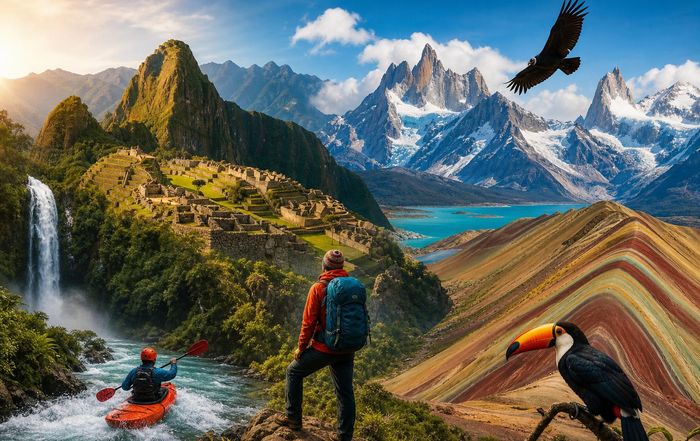
Adventure Travel Experiences Across South America
South America's New Era of Adventure
South America stands at the center of a global shift in how adventure travel is imagined, delivered, and experienced, as travelers from the United States, United Kingdom, Germany, Canada, Australia, and across Europe and Asia no longer view the continent as a distant frontier, but as a mature, sophisticated playground where high-performance experiences, cultural depth, and responsible business models converge. For xdzee.com, whose followers love sports, adventure, travel, lifestyle, performance, safety, and innovation, South America has become a living laboratory for how modern explorers can balance adrenaline with ethics, remote wilderness with digital connectivity, and local authenticity with global standards of professionalism and trust.
From the glaciated granite towers of Patagonia to the dense biodiversity of the Amazon Basin, from the Andean highlands of Peru and Bolivia to the Atlantic coasts of Brazil and Uruguay, the region offers a spectrum of adventure that appeals equally to elite endurance athletes, purpose-driven business leaders, and culturally curious travelers seeking meaningful, transformative journeys. As global tourism recovers and reshapes itself after years of disruption, organizations across South America are building new models that align with evolving expectations around sustainability, safety, and community benefit, and this alignment is precisely what makes the continent so relevant to the global readership of xdzee.com, where adventure is never just about the destination, but about performance, innovation, and long-term impact.
The New Adventure Traveler: Performance, Purpose, and Personal Growth
The profile of the adventure traveler entering South America in 2026 is markedly different from the mass tourism waves of previous decades, as visitors arriving from North America, Europe, and Asia increasingly expect their journeys to contribute to both personal performance and broader social and environmental goals. Many travelers now design itineraries that integrate high-intensity sports such as trail running, mountain biking, and technical climbing with cultural immersion, local gastronomy, and opportunities for learning about indigenous knowledge systems, climate resilience, and sustainable business practices, reflecting a holistic mindset more commonly associated with executive leadership programs and high-performance coaching than with traditional vacation planning.
For readers of xdzee.com, whose interests span sports, adventure, travel, and performance, this evolution is particularly significant, because it shows how adventure travel has become a vehicle for continuous improvement and skill development, rather than a short-lived escape from everyday life. Leading institutions such as Harvard Business Review increasingly highlight how experiential challenges in nature can enhance resilience, decision-making, and leadership under pressure, and many corporate teams now look to destinations in Chile, Argentina, Peru, and Colombia for offsite programs that blend strategic workshops with demanding outdoor pursuits. Learn more about how outdoor challenges shape leadership development on Harvard Business Review.
At the same time, the rise of remote work and location-independent careers has allowed a new generation of professionals from the United Kingdom, Germany, the Netherlands, and Scandinavia to spend extended periods in South American hubs such as Medellín, Buenos Aires, and Santiago, using these cities as bases for repeated forays into surrounding mountains, deserts, and coastlines. Platforms like World Travel & Tourism Council and UNWTO have documented how this shift toward longer, more intentional stays is reshaping local economies, encouraging investment in infrastructure that supports both community needs and high-value experiential tourism.
Iconic Landscapes: Patagonia, Andes, Amazon, and Beyond
Among all South American regions, Patagonia remains the archetypal symbol of raw wilderness and high-stakes adventure, stretching across southern Chile and Argentina with a mosaic of ice fields, fjords, steppe, and jagged peaks that continue to attract elite mountaineers, ultra-endurance athletes, and committed trekkers from across the globe. In 2026, the infrastructure around Torres del Paine, El Chaltén, and the Southern Patagonian Ice Field has evolved to balance increased demand with strict conservation measures, as national parks and private reserves collaborate with organizations like The Nature Conservancy and WWF to monitor visitor impact and protect fragile ecosystems. Travelers planning multi-day expeditions can review conservation priorities and trail guidelines through resources such as The Nature Conservancy and WWF, which provide context for understanding the ecological significance of these landscapes.
Further north, the Andean corridor that runs through Colombia, Ecuador, Peru, Bolivia, and northern Chile offers an entirely different but equally compelling set of experiences, as high-altitude trekking routes, volcano ascents, and multi-day cycling itineraries attract adventurers seeking both physical challenge and cultural immersion. In Peru, the region surrounding Cusco and the Sacred Valley has diversified beyond the classic Inca Trail to Machu Picchu, with alternative routes and community-based lodges that spread economic benefits more equitably while protecting overused trails. In Bolivia, the high-altitude deserts of the Altiplano and the surreal landscapes of Salar de Uyuni have become backdrops for adventure photography, overland expeditions, and endurance events that test equipment, logistics, and human stamina in extreme conditions, aligning closely with the performance-oriented interests of xdzee.com readers.
No discussion of South American adventure would be complete without the Amazon Basin, which extends across Brazil, Peru, Colombia, and several neighboring countries, offering vast opportunities for river expeditions, wildlife tracking, and immersive stays in remote lodges managed by indigenous communities and conservation-focused operators. The Amazon remains one of the most complex and sensitive regions on the planet, and responsible travel here requires careful attention to scientific and ethical guidance from institutions such as National Geographic and the World Resources Institute, where travelers can explore in-depth reporting on Amazonian conservation and understand deforestation trends. For visitors from Europe, North America, and Asia, the Amazon experience increasingly becomes not just an adventure, but a profound education in planetary boundaries and the urgency of climate action.
Safety, Risk Management, and Responsible Operations
As adventure travel becomes more ambitious and technically demanding, questions of safety, risk management, and operational professionalism rise to the forefront, especially for travelers and corporate groups whose risk tolerance is shaped by stringent standards in countries such as the United States, United Kingdom, Germany, Switzerland, and the Nordic region. In 2026, South American operators have made visible progress in aligning with international best practices, working with mountain guide associations, rescue services, and insurance providers to establish clearer protocols for high-altitude trekking, backcountry skiing, whitewater rafting, paragliding, and other high-risk activities.
For the audience of xdzee.com, which places strong emphasis on safety, performance, and trust, the most reliable operators are those that transparently communicate their safety frameworks, staff qualifications, and emergency response capabilities. Resources from organizations such as UIAA - International Climbing and Mountaineering Federation and IFMGA - International Federation of Mountain Guides Associations help travelers understand the significance of internationally recognized certifications and standards, and visitors are increasingly encouraged to review mountaineering safety guidelines and verify guide credentials before committing to technical ascents or remote expeditions.
Medical preparedness is another crucial dimension, particularly in high-altitude or rainforest environments where evacuation can be complex and time-consuming. International travelers from Canada, Australia, Singapore, and Japan are advised to consult health authorities such as the World Health Organization and national travel medicine centers, where they can review region-specific health recommendations, vaccination requirements, and guidance on malaria or dengue risk. For businesses organizing incentive trips or leadership retreats in South America, integrating robust risk assessments and medical support into program design is no longer optional, but a core element of responsible corporate governance.
Innovation and Technology in South American Adventure
The adventure travel landscape across South America has also become a showcase for innovation, as local entrepreneurs and global brands collaborate to integrate digital tools, advanced equipment, and data-driven planning into the exploration of remote regions. In Chile and Argentina, for example, satellite-based navigation, real-time weather modeling, and drone-supported route scouting have become part of the operational toolkit for high-end expedition companies, enabling more precise risk management and route optimization for technical climbs and multi-day traverses. Technology media such as Wired and MIT Technology Review frequently profile how outdoor industries leverage sensors, connectivity, and AI-driven analytics to improve both performance and safety, and readers can explore emerging adventure technologies to better understand the tools now shaping expeditions.
Digital platforms have also transformed how travelers discover, plan, and evaluate adventure experiences, with user-generated reviews, route-sharing applications, and geospatial data making it easier to assess difficulty levels, seasonal conditions, and environmental sensitivities. For xdzee.com, which maintains a focus on innovation and high-performance lifestyles, this convergence of technology and exploration reflects a broader global trend in which data-informed decision-making extends from boardrooms and trading floors into mountain passes and jungle rivers. At the same time, responsible operators and conservation organizations caution against overreliance on digital tools, emphasizing that local knowledge, professional guides, and respect for unpredictable natural conditions remain essential, regardless of how advanced equipment may become.
Ethics, Sustainability, and Community Impact
As the global conversation around climate change, biodiversity loss, and social equity intensifies, the ethical dimensions of adventure travel in South America have moved from the margins to the center of strategic planning for both local businesses and international brands. The carbon footprint of long-haul flights from Europe, North America, and Asia to South American gateways is now a topic of serious reflection, and many travelers actively seek ways to offset emissions, extend stays to maximize the value of each journey, and support projects that contribute to conservation and community resilience. Organizations such as UNEP - United Nations Environment Programme and Global Sustainable Tourism Council provide frameworks for understanding and implementing more responsible travel practices, and those who wish to learn more about sustainable tourism standards can use these resources to evaluate operators and destinations.
Within South America, a growing number of community-based tourism initiatives and social enterprises are redefining how adventure experiences are designed and delivered, ensuring that local residents participate in decision-making, share in economic benefits, and retain control over cultural narratives and land use priorities. Indigenous communities in Peru, Bolivia, Brazil, and Colombia, for example, have launched lodges, guiding services, and cultural immersion programs that give visitors deeper insight into traditional ecological knowledge, land stewardship practices, and historical perspectives often absent from mainstream tourism narratives. For readers interested in the ethical dimensions of travel, the ethics section of xdzee.com provides a useful lens for evaluating how personal choices in destination selection, operator partnerships, and on-the-ground behavior can contribute to positive or negative outcomes.
Sustainability also intersects with brand strategy and corporate responsibility, as multinational outdoor companies and local gear manufacturers view South America as both a proving ground and a showcase for new materials, circular business models, and low-impact product design. Reports from organizations such as Ellen MacArthur Foundation highlight how circular economy principles are entering the outdoor sector, and those who wish to explore circular business models in apparel and gear can see how innovation in product life cycles aligns with the values of environmentally conscious adventurers.
Brands, Business Models, and Jobs in the Adventure Economy
The adventure travel sector across South America has matured into a complex ecosystem of brands, operators, and service providers that collectively generate significant employment and investment opportunities, particularly in rural and previously marginalized regions. For the business-oriented audience of xdzee.com, this evolution offers insights into how experiential industries can catalyze local development while also serving demanding global markets from the United States, Europe, and Asia. In Chile and Peru, for instance, small guiding companies have grown into sophisticated multi-country operators, building partnerships with airlines, hospitality groups, and equipment manufacturers, while still maintaining strong ties to local communities and environmental organizations.
Major international brands in outdoor apparel, equipment, and adventure media increasingly view South America as a strategic region for both market expansion and product testing, with Patagonia's wind-swept valleys, the Andes' high-altitude trails, and Brazil's Atlantic forests serving as real-world laboratories for performance gear and sustainable materials. Business analysis from platforms like McKinsey & Company and Deloitte helps contextualize how consumer demand for experiences, wellness, and sustainability is reshaping the travel and leisure sectors, and readers can review industry insights on experiential economies to better understand the macroeconomic forces behind the growth of adventure tourism.
This expansion has also created a wide range of professional opportunities for local residents and international specialists, from mountain guides and river instructors to environmental scientists, digital marketers, and sustainability consultants. The jobs section on xdzee.com reflects the broader global trend in which careers in adventure, travel, and outdoor brands increasingly require cross-disciplinary skills that combine technical expertise, cultural fluency, business acumen, and ethical awareness. In countries such as Colombia, Argentina, and Brazil, universities and vocational institutions have responded by developing programs in ecotourism management, outdoor leadership, and sustainable hospitality, preparing a new generation of professionals to shape the future of the region's adventure economy.
Culture, Lifestyle, and the Human Dimension of Adventure
Beyond the physical landscapes and economic metrics, the true richness of adventure travel in South America lies in the cultural and human connections that form along the way, whether in the highland markets of Peru, the music-filled neighborhoods of Brazil, or the café-lined avenues of Buenos Aires and Santiago. For many travelers from Europe, North America, and Asia, the most enduring memories of their journeys are not the summit photos or GPS tracks, but the conversations with local guides, the shared meals in family-run guesthouses, and the spontaneous celebrations that reveal the region's diverse cultural identities. The culture section of xdzee.com explores how these human encounters deepen the meaning of adventure, transforming physical challenges into broader narratives of understanding, empathy, and shared experience.
Lifestyle trends in 2026 also show how South America has become a magnet for those seeking to integrate adventure into everyday life, rather than reserving it for rare, once-in-a-decade expeditions. Digital professionals from Germany, Sweden, Singapore, and South Korea increasingly choose cities such as Medellín, Florianópolis, and Valparaíso as semi-permanent bases, attracted by a combination of outdoor access, cultural vibrancy, and relatively affordable living costs. This convergence of lifestyle, culture, and adventure aligns closely with the editorial focus of xdzee.com, where readers interested in lifestyle, brands, and destination insights look for places that support both professional ambition and personal well-being.
Food, music, and local traditions also play a significant role in shaping the emotional texture of adventure journeys, as travelers discover how regional cuisines in Peru, Argentina, Brazil, and Colombia provide both fuel for demanding activities and windows into historical trade routes, agricultural practices, and cultural fusion. Culinary media such as Eater and Bon Appétit continue to highlight South American cities and regions as global hotspots for innovation in gastronomy, and those who wish to explore contemporary Latin American food culture can see how culinary experiences complement and enrich physically demanding itineraries.
Global Context: South America in the World of Adventure Travel
From a global perspective, South America's rise as a premier adventure destination reflects broader shifts in how travelers from North America, Europe, Asia, and beyond allocate time, resources, and attention, as traditional sun-and-sand tourism gives way to more complex, purpose-driven journeys that integrate sports, culture, sustainability, and personal growth. International organizations and data platforms such as OECD and World Bank have documented how experiential and nature-based tourism continue to outpace traditional segments, particularly among younger demographics and higher-income travelers who prioritize uniqueness, authenticity, and impact. Those interested in macro-level trends can review tourism and services data to understand how South America fits into the global competitive landscape.
In this context, xdzee.com serves as both a guide and a curator for readers who want to navigate the expanding universe of options without losing sight of core values around ethics, safety, and performance. By connecting adventure narratives with insights on business, world news, and innovation, the platform helps its international audience situate South American experiences within a larger framework that includes climate policy, geopolitical shifts, and evolving consumer expectations. As the world continues to grapple with environmental crises, economic volatility, and rapid technological change, the way people choose to travel, explore, and challenge themselves becomes a meaningful expression of their priorities and beliefs.
Well How Xdzee Frames the Future of South American Adventure and Sports
Adventure travel in South America is no longer a niche pursuit reserved for elite climbers or gap-year backpackers, but a sophisticated, multi-dimensional sector that intersects with global conversations about sustainability, ethics, business strategy, and human performance. For xdzee.com, this evolution presents a unique opportunity to provide its worldwide readership-from the United States and Canada to the United Kingdom, Germany, France, Italy, Spain, the Netherlands, Switzerland, China, Japan, South Korea, and beyond-with nuanced, actionable perspectives on how to engage with the continent in ways that are safe, responsible, and deeply rewarding.
As the website continues to expand its sweet coverage across news, travel, adventure, and performance-oriented content, it remains committed to highlighting stories and strategies that embody experience, expertise, authoritativeness, and trustworthiness. Whether profiling innovative operators in Patagonia, analyzing the business models behind community-based tourism in the Andes, or exploring how emerging technologies reshape safety protocols in the Amazon, xdzee.com positions itself as a trusted companion for those who view adventure not as an escape from reality, but as a disciplined, intentional way to engage more fully with the world.
For readers planning their next journey, South America offers an unparalleled canvas on which to test limits, expand horizons, and connect with diverse cultures and ecosystems, and by drawing on the insights, frameworks, and ethical considerations presented across the broader xdzee.com ecosystem and its homepage, they can approach these experiences with both ambition and responsibility. In doing so, they become part of a global community of adventurers, professionals, and leaders who understand that the future of travel-like the future of business and society-will be defined not just by where people go, but by how thoughtfully and courageously they choose to get there.