

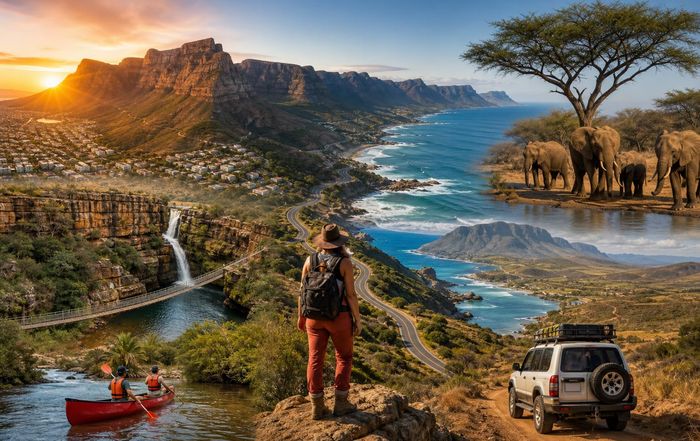
Adventure Travel Ideas Across South Africa
South Africa has long marketed itself as a place of "a world in one country," but for adventure travelers that slogan is almost literal. Within a single trip it is possible to free-climb red sandstone, dive with sharks, paddle remote estuaries, bike over high mountain passes and sleep in a treehouse listening to lions. The challenge is less about finding adventure and more about choosing the right mix of experiences, seasons and regions for your own threshold of risk and comfort.
This guide brings together some of the most compelling adventure travel ideas across South Africa's main regions, with a focus on safety, environmental impact and local culture. It is written for travelers who care as much about responsible travel and performance gear as they do about ticking off bucket-list thrills, and who may be planning multi-stop trips that blend sport, nature and time in cities. For broader destination and trip-planning context, online readers may also find the top destination and travel pages useful.
Cape Town and the Western Cape: Mountains, Coasts and Cold-Water Thrills
Cape Town is often the first stop for international visitors, and it is one of the few cities in the world where serious outdoor adventure begins inside the urban boundary. Table Mountain National Park, managed by South African National Parks (SANParks), offers more than 350 recognized routes for hiking and scrambling, from the popular Platteklip Gorge to more technical lines on the Twelve Apostles. The official SANParks Table Mountain page publishes route closures, safety guidance and fire warnings, and should be checked before any outing, especially in summer when heat and wind can turn a routine hike into a rescue.
Beyond the classic summit hikes, adventure travelers increasingly look to guided scrambling and rock-climbing routes such as India Venster or Kloof Corner Ridge. These involve exposed sections, basic climbing moves and route-finding challenges; several local operators are accredited by the Mountain Club of South Africa and adhere to national safety standards. For trail runners, the Table Mountain and Cape Peninsula network offers steep, technical singletrack with rapid weather changes-strong winds, sudden mist and winter cold fronts-so layered clothing and GPS navigation are important performance considerations.
On the Atlantic Seaboard and False Bay, ocean-based adventure has evolved beyond classic surfing. Cape Town is one of the global hubs for cold-water freediving, popularized through films like My Octopus Teacher, which was filmed in the kelp forests of False Bay. Operators in Simon's Town and Kalk Bay offer entry-level courses that follow international safety standards from agencies such as AIDA International. Wetsuits of 5-7 mm, hoods and gloves are essential in water often below 15°C, and many divers now combine freediving with marine-life photography and citizen-science projects in partnership with organizations like Sea Change Project.
For those drawn to high-adrenaline experiences, the Western Cape is also one of the world's most established locations for cage diving with great white sharks, though sightings have become less predictable over the past decade as orca predation has altered shark behavior. Gansbaai, about two hours from Cape Town, hosts several operators licensed under South Africa's Marine Living Resources Act; guidelines and permit lists are available through the Department of Forestry, Fisheries and the Environment. Conservation groups, including Shark Spotters, urge travelers to choose companies that contribute to research and avoid baiting practices that may change natural shark movements.
Further inland, the Cederberg Wilderness Area offers multi-day trekking, bouldering and rock-climbing on orange sandstone formations, with far less crowding than Table Mountain. The region is part of the Cape Floral Region World Heritage Site, and local landowners and climbers have developed access agreements designed to minimize erosion and respect sensitive rock-art sites. Climbers should keep up to date with access notes via the MCSA and local guidebooks, and be prepared for self-sufficient camping and temperature swings from hot days to near-freezing nights.
Travelers wanting to balance adventure with food, wine and culture can base themselves in Cape Town or the Winelands and plan day-trips to surf spots like Muizenberg, kiteboard in Blouberg, or mountain-bike in Stellenbosch's extensive trail networks. For broader lifestyle and performance considerations-from gear choices to recovery and training-Xdzee's performance and lifestyle coverage can be a helpful complement.
Garden Route and Eastern Cape: Multi-Sport Road Trips and Big Swings
The Garden Route, stretching roughly from Mossel Bay to Storms River, is one of South Africa's best regions for travelers who want a compact, road-trip-friendly mix of ocean and forest adventure. The coastal N2 corridor is backed by mountains and indigenous forest, with numerous detours into nature reserves, lagoons and river gorges.
Near Wilderness and Knysna, sea-kayaking and stand-up paddleboarding offer low-impact ways to explore estuaries and lagoons that form part of the Garden Route National Park. SANParks' Garden Route information pages detail zoning rules, no-wake areas and seasonal restrictions designed to protect birdlife and sensitive wetlands. Multi-day canoe trails on the Touws and Goukamma rivers combine paddling with simple overnight huts, appealing to travelers seeking self-guided micro-expeditions without heavy technical demands.
For those who prefer vertical exposure, the Bloukrans Bridge near Tsitsikamma is home to one of the world's highest commercial bridge bungy jumps, operated by Face Adrenalin. The jump height of 216 meters has been independently verified and has featured in Guinness World Records. Operators are subject to safety inspections and South African adventure tourism standards, but travelers should still check the company's current certifications and insurance, and be honest about medical conditions.
The broader Tsitsikamma region has become a hub for canopy tours, zip-lines and gorge swings, many of which run through indigenous forest and along deep ravines. While these activities are designed for a wide age range, they still involve height exposure and basic harness systems; reputable operators will use equipment conforming to European EN standards or similar, and should be able to explain their inspection cycles. The Tourism Grading Council of South Africa provides general quality-assurance frameworks, though it does not replace technical safety accreditation.
Along the coast, the Otter Trail remains one of the country's most sought-after multi-day hikes, limited to small groups with bookings opening a year in advance. The 42-kilometer route includes river crossings that can become hazardous in heavy swell or rain; SANParks publishes tide tables and crossing guidelines, and hikers are required to carry their own gear. For travelers unable to secure an Otter permit, shorter day-hikes like the Waterfall Trail give a taste of the coastal terrain without the logistics of a full thru-hike.
Farther east, the Eastern Cape offers more remote experiences, particularly along the Wild Coast between East London and Port Edward. Multi-day slack-packing routes allow hikers to walk from village to village with luggage transfers, creating direct contact with Xhosa communities and homestays. NGOs and community-based tourism initiatives, such as the Wild Coast Hiking Association and local conservancies, promote models where a significant share of fees remains in the village, aligning adventure travel with rural livelihoods and conservation. Travelers should research specific operators and look for transparent revenue-sharing and community governance structures.
Drakensberg and Lesotho Borderlands: High-Altitude Hiking and Rock
The Drakensberg Mountains-particularly the uKhahlamba-Drakensberg Park in KwaZulu-Natal-offer some of the most dramatic high-altitude trekking in Africa outside the Atlas and Ethiopian Highlands. The area is a UNESCO World Heritage Site for both its natural beauty and its San rock art, and it supports a strong culture of independent hiking, scrambling and rock-climbing.
Classic adventures include the Amphitheatre and Tugela Falls hike, which can be done as a long day or an overnight trek. Tugela Falls has been at the center of debate over whether it is the world's tallest waterfall; a 2022 study using GPS and laser rangefinders suggested it may exceed Venezuela's Angel Falls in total height, though organizations such as National Geographic note that measurement methods differ and the ranking remains contested. For adventure travelers, the more practical takeaway is that the route is steep, often muddy and subject to rapid weather changes, with winter snow and ice possible.
More committed hikers attempt Grand Traverse routes along the escarpment, spending 5-14 days above 3,000 meters and often crossing into Lesotho. These undertakings require solid navigation, cold-weather gear and experience with self-supported travel. Several guiding outfits are registered with the Adventure Guides Association of South Africa (AGASA) and follow standards endorsed by the South African Qualifications Authority for adventure guiding. Prospective clients can ask guides about their NQF-level qualifications, first-aid training and emergency planning.
Rock-climbing in the Drakensberg ranges from traditional multi-pitch climbs on basalt cliffs to sport routes in nearby valleys. The South African National Climbing Federation and local clubs publish route information, bolting policies and environmental guidelines, emphasizing minimal fixed gear in wilderness zones. Climbers are urged to respect no-bolt areas, avoid disturbing nesting raptors and minimize erosion on approach paths.
Adventure travelers focused on performance may find the Drakensberg especially appealing for altitude training, fast-packing and testing lightweight gear. However, the remoteness and lack of cell coverage in many valleys make risk management critical. Hikers should leave route plans with accommodation providers, carry satellite messengers or PLBs where possible, and be prepared to turn back in poor conditions rather than relying on rescue services that can be delayed by weather and terrain.
KwaZulu-Natal Coast: Warm-Water Diving and Migratory Spectacles
While the Western Cape dominates cold-water narratives, KwaZulu-Natal (KZN) offers a warmer, subtropical counterpart that is particularly attractive for divers and ocean-focused travelers. The iSimangaliso Wetland Park, a UNESCO site stretching from St Lucia to the Mozambican border, protects coral reefs, dune forests, lakes and estuaries, and has become a cornerstone of South Africa's marine adventure economy.
At Sodwana Bay, divers can access some of the southernmost coral reefs in the world, with high biodiversity and relatively warm waters year-round. The iSimangaliso Authority regulates boat launches, reef access and diver numbers, and promotes codes of conduct to protect coral from fin damage and anchor impacts. Dive centers typically follow CMAS, PADI or SSI training standards, and many participate in citizen-science initiatives such as Reef Check or turtle-monitoring programs, allowing visitors to combine adventure with data collection.
Between May and July, the annual sardine run off the KZN and Eastern Cape coasts can create some of the world's most intense marine-life encounters, with bait balls attracting dolphins, sharks, whales and seabirds. However, researchers at institutions like Rhodes University and Nelson Mandela University have noted that the run's timing and intensity vary significantly year to year, influenced by ocean temperatures and currents. Operators offering sardine-run diving and snorkeling emphasize flexibility, and travelers should approach it as a high-risk, high-reward expedition rather than a guaranteed spectacle.
Onshore, KZN blends wildlife and adventure through reserves such as Hluhluwe-iMfolozi Park, one of the birthplaces of modern rhino conservation. While classic game drives are not "adventure" in the same sense as climbing or diving, many reserves now offer guided walking safaris that involve tracking big game on foot under strict safety protocols. Organizations like FGASA (Field Guides Association of Southern Africa) maintain qualification standards for walking guides, including firearms proficiency and dangerous-game behavior. Prospective walkers should confirm that guides hold current FGASA Trails Guide qualifications and that group sizes are kept small.
Gauteng and Mpumalanga: Urban Edge and Canyon Country
Adventure travelers often treat Johannesburg and Pretoria purely as transit hubs, but the Gauteng region and neighboring Mpumalanga offer their own mix of adrenaline and landscape-driven experiences. Around Johannesburg, disused mine dumps and quarries have been repurposed into mountain-bike parks and climbing venues, reflecting a broader global trend of reclaiming industrial land for sport. Facilities like Northern Farm, Van Gaalen Trails (on the Gauteng-North West border), and various urban bike parks provide marked singletrack, pump tracks and technical features for riders who might not have time to reach more remote areas.
Farther east, the Mpumalanga highlands form the backdrop to the Blyde River Canyon, often cited as one of the world's largest "green" canyons thanks to its vegetated cliffs. The Panorama Route, which includes viewpoints like God's Window and the Three Rondavels, is heavily visited, but the area also supports more active pursuits: white-water rafting on the Blyde and Sabie rivers in season, kloofing (canyoning), abseiling and multi-day hikes. Operators must navigate seasonal water-level changes, and reputable companies will cancel or modify trips when flows exceed safe thresholds; travelers should be wary of outfitters that guarantee departures regardless of river conditions.
The region is also a gateway to Kruger National Park, which, while best known for vehicle-based safaris, has begun to diversify into more active experiences. SANParks offers wilderness trails that involve multi-day walking safaris with armed rangers and basic bush camps, emphasizing immersion and low impact rather than distance covered. These trails have strict age and fitness requirements and limit group size to reduce disturbance and manage safety.
The interface between urban life and adventure in Gauteng raises interesting ethical and social questions. Many activities-such as township cycling tours or inner-city graffiti walks-aim to reframe perceptions of Johannesburg and provide income for local guides. When choosing such experiences, travelers should prioritize operators with transparent community partnerships and avoid voyeuristic or "poverty tourism" framing, aligning with broader discussions around ethical travel practices.
Northern and Western Frontiers: Arid Landscapes and Remote Routes
Travelers willing to move beyond the classic circuits will find quieter, more self-reliant adventure in South Africa's northern and western regions. The Northern Cape, bordering Namibia and Botswana, is the country's largest and least densely populated province, dominated by semi-desert and savannah.
The Richtersveld Transfrontier Park, co-managed by South Africa and Namibia, offers 4x4 routes, rafting on the Orange River and rugged hiking across rocky desert. Summer temperatures frequently exceed 40°C, and the park authority, together with SANParks, emphasizes strict self-sufficiency: vehicles must carry spare fuel, water and recovery gear, and travelers are encouraged to move in small convoys rather than solo. Orange River rafting trips typically run in the cooler months and range from family-friendly paddles to more committed multi-day expeditions with wild camping.
Along the west coast, the Namaqua region is known for its spring wildflower displays, but outside peak bloom it offers solitude for bikepacking and overlanding. The Namaqua National Park and nearby conservancies have implemented 4x4 and MTB routes designed to minimize track proliferation and protect fragile soils; visitors are expected to stay on marked tracks and respect seasonal closures, particularly after winter rains when surfaces are vulnerable to damage.
In the far north, the Waterberg and Limpopo regions host a growing number of private reserves that combine conservation with adventure activities such as horseback safaris, trail running events and mountain-bike stage races. Events like Nedbank Tour de Tuli route riders through sections of Botswana, Zimbabwe and South Africa, raising funds for conservation NGO Children in the Wilderness. For independent travelers, this part of the country is ideal for those who value dark skies, quiet campsites and the sense of being far from major cities.
These frontier regions underscore a key principle for adventure travel in South Africa: as remoteness increases, so does the need for personal responsibility. Travelers should be comfortable with basic vehicle mechanics, navigation and first-aid, and should register their movements with park offices or accommodation providers whenever possible.
Safety, Ethics and Practical Planning
South Africa's adventure landscape is underpinned by a mix of formal regulation, industry associations and community norms. While the country has experienced high-profile incidents in hiking, diving and river sports, it also has a relatively mature adventure-tourism sector that increasingly aligns with international standards. Travelers can improve their safety and ethical footprint by asking a few structured questions before booking any activity.
On the safety side, guides and operators should be able to explain their qualifications, equipment standards and emergency procedures without hesitation. For mountain and river activities, look for affiliations with bodies such as AGASA, MCSA or recognized rescue organizations. In marine contexts, check that boats carry appropriate safety gear and comply with regulations from the South African Maritime Safety Authority. For any activity involving height or water, personal travel insurance that explicitly covers adventure sports is essential; many standard policies exclude high-risk pursuits unless declared in advance.
Ethically, travelers can prioritize operators who demonstrate clear conservation commitments and community partnerships. This might include contributions to local conservancies, adherence to wildlife-viewing guidelines, or transparent employment of local staff at fair wages. Resources from organizations such as the Global Sustainable Tourism Council offer frameworks for assessing sustainability claims, while South Africa's own Fair Trade Tourism certification highlights businesses meeting social and environmental standards.
Practical planning should also consider seasonality. The Western Cape's Mediterranean climate brings hot, dry summers with high fire risk and cooler, wetter winters that favor hiking and trail running. The Highveld and Drakensberg experience summer thunderstorms and winter cold, including snow at altitude. Coastal waters vary from cold upwelling in the southwest to warmer currents in the east, influencing wetsuit choices and marine-life encounters. Checking regional forecasts through the South African Weather Service and speaking with local guides can help align trip timing with specific goals, whether that is wildflowers, big surf or clear diving conditions.
Travelers interested in the broader context-how adventure tourism intersects with business, jobs and regional development-can explore additional reporting in the business, world, innovation and jobs sections, which often touch on outdoor industries, conservation employment and tourism policy.
Choosing Your Own South African Adventure
South Africa's appeal for adventure travelers lies less in a single headline activity and more in the way different landscapes and cultures intersect within manageable travel distances. One itinerary might link cold-water freediving in False Bay with sandstone climbing in the Cederberg and a multi-day hike on the Wild Coast. Another could combine Drakensberg high-routes, a Kruger walking safari and warm-water diving at Sodwana Bay. For some, the ideal trip will be a slower meander along the Garden Route, mixing trail runs, short paddles and canopy tours with time in small towns.
Whatever the configuration, the same core principles apply: respect the environment, support local communities, prepare realistically for the physical and technical demands of each activity, and choose operators whose safety and ethics are transparent rather than assumed. With that foundation, South Africa's mountains, coasts, forests and deserts offer a depth of adventure that can sustain not just one trip, but a lifetime of returns.