

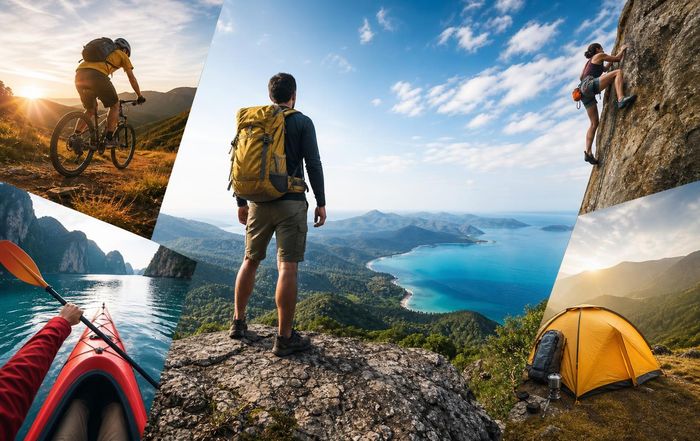
Sports Travel Ideas for Weekend Adventure Seekers
For many people, the most realistic adventures are the ones that fit between Friday evening and Sunday night. Sports-focused short breaks can deliver a genuine sense of escape without demanding long-haul flights, complex logistics, or a week of vacation time. Whether the goal is to push physical limits, discover a new destination, or simply swap screens for fresh air, a well-planned weekend can feel surprisingly expansive.
This guide explores practical, sports-centered travel ideas that work within two or three days, with options ranging from high-adrenaline pursuits to more accessible, social adventures. It focuses on trips that are feasible from major cities worldwide, highlight safety and performance basics, and can be adapted to different seasons and budgets.
For broader inspiration on active lifestyles and performance mindsets, readers can also explore the sports, adventure, and lifestyle sections here.
1. Trail Running Weekends: Fast, Light, and Immersive
Trail running weekends have grown rapidly in popularity as more runners look to escape urban routes and discover wild landscapes. Many national parks and regional reserves now host organized trail events ranging from 5 km to ultra distances, often paired with local food markets, live music, and workshops.
Destinations vary widely. In the United States, areas like Colorado's Front Range, Utah's Wasatch Mountains, and North Carolina's Blue Ridge offer well-marked trails, altitude training, and easy access from major airports. In Europe, the Alps, Scottish Highlands, and Spanish regions like the Pyrenees and Sierra Nevada are established hubs, with trail communities that welcome visiting runners. Organizations such as the International Trail Running Association provide information on global trail events and standards and can be a starting point for planning.
For a weekend format, many runners choose a simple structure: a shorter shake-out run on arrival day, a longer effort on the main day, and a recovery jog or hike before heading home. This approach allows time for local culture-cafés, hot springs, or lakeside swims-while still feeling like a performance-focused break. Apps like AllTrails and Strava's global heatmaps help identify popular and safe routes, but local trail-running clubs are often the best resource for current conditions and etiquette.
Safety is a critical consideration. Even on a short weekend, runners should check weather forecasts through national meteorological services, carry basic navigation tools (offline maps, map and compass in mountainous areas), and understand local wildlife and terrain risks. Many mountain rescue organizations, such as the U.S. National Park Service search and rescue teams and Mountain Rescue England and Wales, regularly stress the importance of proper footwear, layers, and communication plans. For readers interested in broader risk management and gear choices, the safety and performance sections offer additional context.
2. Bikepacking and Gravel Cycling Escapes
Gravel cycling and bikepacking have transformed how riders use weekends. Instead of choosing between road cycling and full-scale backpacking, cyclists can now combine moderate off-road riding with lightweight camping or small-inn stays. Routes are often designed to be completed in two days, with distances tailored to fitness levels.
Countries like the United States, Germany, France, and Australia have seen an explosion of gravel routes that link quiet farm roads, forest tracks, and small towns. The advocacy group Rails-to-Trails Conservancy maps multi-use trails across the U.S., many of which connect to campgrounds and bike-friendly lodging. In Europe, resources like EuroVelo and national cycling federations help riders find long-distance routes that can be broken into weekend segments.
A classic weekend structure might involve riding out from a city on Saturday morning, staying overnight in a rural inn or campsite, and looping back via a different route on Sunday. Gravel bikes allow flexibility: if unpaved sections become too rough or weather turns, riders can often divert to paved roads and still complete the loop. This flexibility is key to maintaining safety and enjoyment, especially for mixed-ability groups.
Preparation matters. Helmets are non-negotiable, and riders should carry basic tools, a repair kit, and enough layers to handle temperature swings. Organizations such as British Cycling and USA Cycling publish road and trail safety guidelines that are relevant even outside formal events. For those interested in the gear and innovation side of cycling-power meters, bikepacking bags, tubeless tires-Xdzee's innovation and brands pages often highlight emerging trends and products.
3. Surf-Driven City Breaks
For travelers based near coastlines, surf weekends offer a compelling mix of sport, culture, and relaxation. Many surf spots are within a few hours of major cities, making it realistic to leave after work on Friday, catch sunrise waves on Saturday, and be back at a desk on Monday.
In the United States, areas like Southern California, Oregon, and parts of the East Coast provide consistent swells and a strong surf-school infrastructure. Europe's Portugal, Spain's Basque Country, and France's Atlantic coast host well-established surf towns with board rentals and beginner-friendly breaks. The World Surf League (WSL) maintains a global calendar of professional events and surf locations, which can help travelers time visits for competitions or quieter windows.
For beginners or intermediate surfers, structured weekend camps can be particularly effective. Many schools offer two-day packages that combine lessons, equipment, and accommodation. These can accelerate skills while also emphasizing ocean safety-understanding rip currents, local break etiquette, and flag systems used by lifeguards. Organizations such as the Royal National Lifeboat Institution (RNLI) in the UK and the United States Lifesaving Association publish beach safety guidance that is relevant globally.
Surf weekends also offer a strong cultural component. Coastal towns often have distinct identities shaped by fishing, art, and music scenes. Combining dawn patrol sessions with local food, markets, and coastal walks makes the trip feel more like a rounded travel experience than a narrow sports camp. Readers interested in destination ideas that blend sport and culture can explore Xdzee's destination and culture sections for broader context.
4. Climbing and Bouldering Getaways
Climbing has shifted from a niche pursuit to a mainstream sport, especially since its inclusion in the Olympic Games. As indoor climbing gyms expand in cities worldwide, more people are using weekends to transition from plastic holds to real rock. Short trips to bouldering areas or sport-climbing crags can be highly focused and physically demanding, yet still logistically simple.
Destinations depend heavily on local geography. Urban climbers in California might head to Joshua Tree or Yosemite's outskirts, while those in Germany travel to the Frankenjura. In Japan, areas like Ogawayama attract weekend visitors from Tokyo. The International Federation of Sport Climbing (IFSC) lists competition venues and national federations, which can be useful for locating local clubs and certified guides in many countries.
For safety and ethics, outdoor climbing requires more preparation than a typical gym session. Many national and regional climbing organizations, including the American Alpine Club and the UIAA (International Climbing and Mountaineering Federation), publish best-practice guidelines covering equipment checks, belaying standards, and environmental stewardship. Weekend visitors should understand local bolting norms, access restrictions, and leave-no-trace principles, especially in fragile ecosystems.
Bouldering weekends are particularly accessible because they require minimal gear-shoes, a crash pad, and a spotter-while still offering a deep technical challenge. They also lend themselves to social travel, with groups sharing pads, beta, and meals. For those more interested in the training side, indoor/outdoor hybrid weekends, where climbers split time between a local gym and a nearby crag, can balance performance goals with the unpredictability of weather.
5. Whitewater and Paddle Sports Retreats
Rivers and coastlines provide a different kind of weekend sports travel, centered on whitewater kayaking, rafting, stand-up paddleboarding (SUP), and sea kayaking. These activities combine physical effort with technical river or ocean reading skills, and they can often be tailored to different comfort levels within the same group.
Commercial rafting trips are among the most accessible options. Outfitters on rivers such as the Colorado, Zambezi, Ottawa, and many European waterways offer half-day to two-day packages with professional guides, equipment, and safety briefings. Organizations like the International Rafting Federation maintain global standards and a directory of certified guides, which can help travelers identify reputable operators.
For more independent paddlers, weekend sea-kayaking trips along sheltered coasts or lakes can provide a quieter, nature-focused experience. National parks agencies in countries such as Canada, New Zealand, and Norway publish detailed information on water routes, camping rules, and weather hazards, which is essential for planning. SUP has also opened up urban waterways to shorter micro-adventures, from city canals to inner-harbor tours.
Water sports come with clear safety priorities: wearing appropriate personal flotation devices, understanding local regulations, and being honest about swimming ability. Hypothermia, fast currents, and changing tides can turn a casual outing into an emergency. Many national coast guard and maritime safety agencies emphasize checking marine forecasts, avoiding alcohol on the water, and traveling in groups. Readers who want to deepen their understanding of risk and decision-making around adventure sports can find more analysis in Xdzee's safety and world sections, where broader environmental and policy issues are often discussed.
6. Winter Weekends: Ski Touring, Snowshoeing, and Nordic Skiing
Winter does not have to mean an off-season for adventure. For those within reach of mountains or snowy plateaus, short breaks dedicated to ski touring, snowshoeing, or cross-country skiing can be both physically intense and deeply restorative. They also tend to be less crowded and expensive than peak alpine resort holidays centered on lift-served downhill skiing.
In Scandinavia, Central Europe, Japan, and North America, many regions maintain networks of groomed cross-country trails and winter hiking routes. National tourism boards and ski federations, such as Nordic Canada and Ski Classics in Europe, provide trail maps, event calendars, and technique resources. These networks often connect small villages, allowing travelers to combine sport with local food and sauna culture over a single weekend.
Ski touring and splitboarding-climbing uphill on skis or boards with climbing skins, then descending off-piste-offer a more backcountry-oriented experience. However, they introduce serious avalanche and weather risks. Avalanche safety centers, including Avalanche Canada, the European Avalanche Warning Services, and the U.S. National Avalanche Center, publish daily bulletins and educational content that anyone venturing into unpatrolled terrain should consult. For many weekend travelers, hiring a certified guide for one or two days is a sensible investment, especially when navigating unfamiliar snowpacks.
Snowshoeing is the most accessible of the winter options, requiring less technical skill and often following marked routes. It can be ideal for mixed-ability groups, with some members choosing more demanding ski tours and others taking gentler snowshoe walks to viewpoints and huts. Warm clothing layers, navigation tools, and an understanding of daylight hours are essential in all winter sports scenarios, even for short outings.
7. Urban Sports Weekends: Active City Breaks with a Twist
Not every weekend adventure has to involve remote wilderness. In many major cities, it is now possible to design sports-focused breaks that combine urban culture with structured physical challenges. This approach can work particularly well when travel time is limited or when traveling with companions who have different appetite levels for risk and remoteness.
One option is to anchor a weekend around a mass-participation event: a half marathon, city cycling sportive, or urban obstacle race. International calendars such as the Abbott World Marathon Majors and regional race directories list events in cities across the globe. Participants often build itineraries that include pre-race shake-out runs along riverfronts, visits to local sports museums or stadiums, and post-race recovery in parks, spas, or cafés.
Urban climbing gyms, indoor surf facilities, and artificial whitewater centers also expand possibilities. Facilities like the Lee Valley White Water Centre near London or city-based wave pools let visitors experience paddle sports or surfing without traveling to remote rivers or coasts. Combining these with bike-share explorations, rooftop yoga, or park calisthenics circuits can turn a conventional city break into a multi-sport micro-adventure.
These trips can also intersect with broader lifestyle and business interests. Sports-tech hubs in cities such as Berlin, San Francisco, and Seoul host innovation labs, gear startups, and sports-science institutes. Visitors might combine a morning track session with an afternoon tour of a performance lab or a visit to a flagship store showcasing new wearables. For readers interested in how sport intersects with business, innovation, and ethics-including sustainability and labor issues in sportswear-urban weekends can provide both physical and intellectual stimulation.
8. Planning Smart: Safety, Logistics, and Sustainable Choices
Across all these ideas-running, cycling, surfing, climbing, paddling, winter sports, and urban adventures-three themes consistently determine whether a weekend feels rewarding or stressful: safety, logistics, and impact.
From a safety perspective, authoritative organizations such as the World Health Organization and national outdoor councils emphasize gradual progression, realistic self-assessment, and adequate recovery. Even short trips can lead to overuse injuries if travelers try to compress a week's worth of activity into two days. Checking local regulations, insurance coverage (including adventure-sport clauses), and emergency numbers before departure is as important as packing the right shoes or helmet.
Logistically, the most successful weekends are often those with a simple, repeatable structure: fixed travel windows, pre-booked accommodation close to the activity site, and a clear plan for food and gear. Public transport can sometimes outperform rental cars when staying near trailheads or in compact surf towns, especially in regions with strong rail networks. Reading destination-specific advice from national tourism boards, park services, and local clubs-alongside broader travel coverage in Xdzee's travel and adventure sections-can help refine itineraries.
Sustainability and ethics are increasingly central to sports travel. International initiatives such as the UN World Tourism Organization's work on sustainable tourism and the Leave No Trace Center for Outdoor Ethics provide frameworks for minimizing environmental impact. Choosing lower-emission transport where possible, supporting local businesses, respecting wildlife and cultural norms, and avoiding overcrowded hotspots at peak times all contribute to more responsible trips. Many adventure companies now publish environmental and social responsibility statements; reading these with a critical eye can help travelers align their choices with their values.
Turning Weekends into a Season of Adventures
A single weekend trip can be memorable, but the real power of sports travel emerges when weekends become a recurring rhythm. Some people design a "season" of micro-adventures: a spring trail-running race, a summer surf road trip, an autumn gravel-cycling loop, and a winter ski-touring introduction. Others focus on mastering one discipline, returning to the same region across multiple weekends to build familiarity and community.
What matters most is not how far one travels, but how intentionally time is used. A carefully chosen destination within a few hours of home, a realistic activity plan, and a commitment to safety and respect-for landscapes, local communities, and one's own limits-can turn two days into something that feels far larger. For those looking to keep that momentum going, the broader sports, world, and news stories on xdzee can help track emerging destinations, events, and ideas that might shape the next weekend on the calendar.