

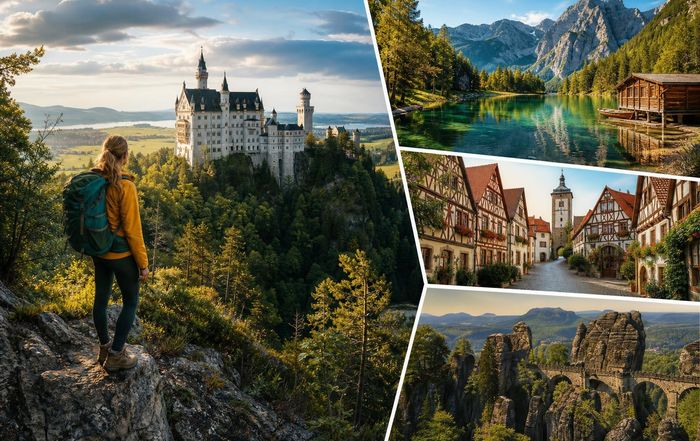
Adventure Travel in Germany: Wild Ideas Beyond the Big Cities
Berlin, Munich, and Hamburg rarely disappoint first-time visitors, but they can hide how wild Germany actually is. Step away from the major cities and the country turns into a dense patchwork of mountains, gorges, surfable rivers, cliff-lined coasts, and deep forests threaded with long-distance trails and bike routes.
For travelers who care more about performance, nature and adrenaline than museum queues, Germany can be a serious adventure destination. This guide focuses on regions, routes, and activities outside the big urban centers, with a mix of accessible thrills and more committed expeditions.
For broader context on outdoor performance and gear, readers can also explore the performance-focused coverage at Performance and safety-oriented insights at Safety.
Bavarian Alps: Via Ferrata, Ridge Hikes, and Ski Touring
The Bavarian Alps are Germany's most obvious adventure playground, but many travelers only see them on a day trip from Munich. Base yourself instead in smaller alpine towns such as Garmisch-Partenkirchen, Berchtesgaden, Oberstdorf, or Mittenwald and you unlock a dense network of high-level trails, via ferrata routes, and winter ski tours.
The summit of Zugspitze, Germany's highest peak at 2,962 meters, is accessible by cable car, but the real adventure is in the ascent routes and surrounding ridges. The Alpspitze via ferrata above Garmisch is a classic introduction to klettersteig (via ferrata) with fixed cables and ladders, giving non-climbers a taste of exposure with relatively controlled risk. More demanding lines like the Jubiläumsgrat ridge traverse between Alpspitze and Zugspitze require alpine experience, solid fitness, and good weather judgment.
In winter, the Bavarian Alps turn into a backcountry touring arena. Regions like Allgäu and Berchtesgaden offer ski touring routes that can be combined with hut stays run by the German Alpine Club (DAV). The DAV provides detailed route information, avalanche education, and hut booking, and its avalanche reports are essential reading before committing to steeper lines. Even experienced skiers should consider hiring a certified local guide, especially when venturing off-piste for the first time in the region.
Safety is a recurring theme in German mountain culture. Helmets are routinely recommended for via ferrata, and harnesses with certified shock-absorbing lanyards are standard. For those interested in how safety culture translates across different adventure sports, the Safety section offers broader context.
Saxon Switzerland: Sandstone Towers and Wild Gorges
On Germany's eastern border with the Czech Republic, the Saxon Switzerland National Park feels worlds away from the country's urban centers. Sandstone pillars, deep ravines, and forested plateaus create a labyrinth that has drawn climbers and hikers for more than a century.
This area is the birthplace of traditional "Saxon climbing," a strict style that forbids metal protection like cams and nuts. Instead, climbers use knotted slings and rely heavily on natural features. The Saxon Switzerland National Park authority outlines these rules, which are designed to protect the fragile sandstone. For visiting climbers used to sport routes, this can be a cultural as much as a technical challenge, and hiring a local guide or joining a local club can be the safest way to experience the towers.
Hikers and trail runners are spoiled with options. The Malerweg ("Painter's Way") is a roughly 116-kilometer long-distance trail that loops through the park, often cited as one of Germany's most scenic multi-day hikes. It combines forest tracks, stone staircases, cliff-edge paths and river views, with guesthouses and small hotels in villages like Bad Schandau and Kurort Rathen. The Saxon tourism board offers stage suggestions from relaxed 8-12 km days to more ambitious itineraries, making it accessible to a wide range of fitness levels.
Water adds another dimension. The Elbe River can be explored by kayak or canoe, and side valleys like the Kirnitzschtal are ideal for quieter hikes. Travelers looking to combine culture and adventure can easily link Saxon Switzerland with Bohemian Switzerland across the border in the Czech Republic, which shares similar sandstone formations and extended trail networks.
Black Forest: Bikepacking, Trail Running, and Winter Cross-Country
The Black Forest (Schwarzwald) is often marketed with cuckoo clocks and spa towns, but it is also one of Germany's best regions for bikepacking, trail running, and cross-country skiing. Stretching along the Upper Rhine in southwest Germany, it offers long ridges, deep valleys, and a dense network of trails that can be stitched together into multi-day routes without ever touching a major city.
For cyclists, the Schwarzwald-Panorama-Radweg and related long-distance routes are well mapped, but the real adventure lies in mixing official bike paths with forest roads and singletrack. The Black Forest Tourism Board publishes GPS tracks for both gravel and mountain bike tours, including multi-day loops that link towns like Freiburg, Titisee, and Baiersbronn. Many of these routes pass through areas with designated "Trekking Camps," simple wilderness campsites that allow legal overnight stays in the forest under controlled conditions.
Trail runners and fastpackers can adapt classic hiking routes like the Westweg, a 285-kilometer trail from Pforzheim to Basel, into lighter, faster adventures. The German Hiking Association recognizes several Black Forest routes as "quality trails," meaning they meet standards for waymarking, landscape variety, and infrastructure. In winter, higher plateaus around Feldberg and Hinterzarten transform into cross-country skiing hubs, with groomed Nordic trails (loipes) that can be linked for long-distance tours.
The Black Forest's infrastructure-frequent villages, public transport connections, and mountain huts-makes it ideal for travelers experimenting with self-supported trips without fully committing to remote wilderness. For lifestyle-oriented readers interested in mixing outdoor endurance with local food and wellness, the region also pairs easily with spa towns and culinary stops, themes that connect well with broader lifestyle coverage.
North Sea and Baltic Coasts: Kitesurfing, Wind, and Island Hopping
Germany's northern coasts offer a different kind of adventure: wind-driven sports, tidal flats, and island landscapes shaped by the North Sea and Baltic Sea. While beach resorts in Schleswig-Holstein and Mecklenburg-Vorpommern attract families in summer, the shoulder seasons can be prime time for kitesurfers, windsurfers, and sailors.
The Wadden Sea, a UNESCO World Heritage Site stretching along the North Sea coast, is one of the world's largest tidal flats. Guided mudflat hikes (Wattwanderungen) from islands like Sylt, Föhr, and Amrum or from the mainland near Cuxhaven allow visitors to walk across the seabed at low tide. Because tides, channels, and weather can change quickly, local national park authorities strongly recommend joining tours with licensed guides; the Wadden Sea World Heritage site lists partner organizations and safety information.
For kitesurfing and windsurfing, islands such as Fehmarn in the Baltic Sea and St. Peter-Ording on the North Sea are established spots with schools, rental centers, and competition events. The German Surfing Association (Deutscher Wellenreitverband) and kitesurfing schools provide information on local regulations, designated zones, and seasonal restrictions to protect wildlife. Even advanced riders should familiarize themselves with local rules, as some coastal sections are part of national parks with strict access limits.
Sea kayaking and sailing along the Baltic coast offer a more exploratory pace. Archipelagos around Rügen and Usedom include chalk cliffs, lagoons, and forested shores that feel far removed from the country's industrial image. While the Baltic is generally calmer than the North Sea, weather can still shift rapidly, and travelers should consult local harbor masters or German Maritime and Hydrographic Agency (BSH) forecasts before committing to longer crossings.
Harz Mountains: High Ropes, Ghost Forests, and Winter Micro-Adventures
The Harz Mountains, located roughly between Hanover and Leipzig, are often overlooked by international visitors yet remain one of central Germany's most accessible adventure regions. The range's highest peak, the Brocken (1,141 meters), is reachable via hiking trails or a historic narrow-gauge steam railway, but the surrounding forests and plateaus provide a more varied playground.
Mountain bikers have access to extensive trail networks and bike parks, particularly around Braunlage and Sankt Andreasberg. The Volksbank Arena Harz trail network, documented by regional tourism boards, offers graded routes for different skill levels, from family-friendly loops to more technical descents. In winter, the same area supports snowshoeing and cross-country skiing, turning the Harz into a year-round micro-adventure destination for residents of northern German cities.
High ropes courses and zipline parks, such as those around the Rappbode Dam, add vertical flavor. The dam is also home to one of Europe's longest pedestrian suspension bridges, and operators offer zipline rides across the reservoir. While these attractions are commercial, they provide an accessible introduction to heights and exposure for visitors who may not be ready for true alpine via ferrata.
The Harz also illustrates how climate change is reshaping adventure landscapes. Large swathes of spruce forest have suffered from drought and bark beetle damage, leaving "ghost forests" of dead trees. National park authorities and organizations such as Harz National Park frame this as an opportunity to observe ecological transition, with new trails and educational routes explaining forest regeneration. For adventure travelers, it is a reminder to treat landscapes as evolving, not static backdrops.
Franconian Switzerland and the Climbing Culture of Northern Bavaria
North of Nuremberg, the Franconian Switzerland (Fränkische Schweiz) region is a limestone paradise for climbers and a varied playground for hikers and cyclists. With more than 10,000 climbing routes documented, it is considered one of the densest sport climbing areas in the world, and a key training ground for elite climbers such as Alexander Megos.
Climbers will find everything from beginner-friendly crags to world-class testpieces. The Frankenjura online guide and printed topos document routes, access restrictions, and seasonal closures to protect nesting birds. Many crags are located near small villages, allowing for bike-accessed climbing days that combine performance with low-impact travel. Local climbing ethics emphasize respecting private land, minimizing noise, and keeping parking areas clear-issues that become more pressing as outdoor sports grow in popularity.
Beyond vertical limestone, Franconian Switzerland offers classic hiking routes through valleys like the Wiesenttal, dotted with caves, castles, and traditional breweries. Long-distance trails such as the Frankenweg pass through the region, and the mix of small guesthouses and farm stays makes it easy to plan multi-day hikes without major transfers. This blend of adventure, culture, and local food aligns closely with the kind of experience-led travel highlighted in destination coverage and culture-focused stories.
Long-Distance Trails: Thru-Hiking German Style
Germany may not have the altitude of the Alps in neighboring countries, but its long-distance trails form a web that can keep committed hikers busy for months. Unlike remote thru-hikes in North America or parts of Asia, German routes typically pass through villages and small towns, blending nature with culture and making logistics relatively straightforward.
The Rennsteig in Thuringia is one of the country's most famous long-distance trails, running around 170 kilometers along an old ridge route through the Thuringian Forest. The official Rennsteig portal outlines stage suggestions and accommodation options ranging from simple guesthouses to wellness hotels. The trail is well marked and can be tackled as a classic week-long hike or broken into shorter segments accessible by public transport.
For coastal enthusiasts, the E9 European long-distance path follows sections of Germany's Baltic Sea coast, while the E1 runs north-south through the country as part of a larger European route from Norway to Italy. The European Ramblers' Association provides overviews of these transnational trails, which can be combined with national routes such as the Rothaarsteig in North Rhine-Westphalia or the Goldsteig in Bavaria.
Thru-hiking in Germany comes with its own etiquette and legal framework. Wild camping is heavily restricted in many states, and rules vary by region. Some areas, like the Black Forest, now offer designated minimalist trekking sites as a compromise between strict bans and free camping. Hikers should consult local tourism boards and state forestry authorities before planning bivouacs, and those interested in the ethics and evolving norms of outdoor access can find broader discussions under ethics.
Urban-Adjacent Adventure: Micro-Escapes from Secondary Cities
Not every adventure traveler wants to commit to a week-long expedition. One of Germany's strengths is the number of mid-sized cities that sit directly next to serious outdoor terrain, making weekend or even day-trip adventures realistic without a car.
From Freiburg, often called Germany's "eco-capital," the Black Forest rises steeply to the east, with trailheads accessible by tram and regional trains. Dresden lies within an hour of Saxon Switzerland's sandstone cliffs, allowing climbers and hikers to base themselves in a city known for its arts scene while spending days in the national park. Innsbruck is technically in Austria but is easily reachable from southern Germany, illustrating how cross-border rail links expand adventure options.
Public transport plays a central role here. The national rail operator Deutsche Bahn and regional transit networks offer bike-friendly trains, discount passes, and detailed journey planners. For visitors who want to reduce their environmental footprint, combining trains with bikes or packrafts opens up creative itineraries, from bike-and-hike loops to river descents that start and end at small stations.
These micro-adventures fit into a broader trend of rethinking travel around shorter, more frequent escapes that integrate with everyday life rather than sitting outside it. For readers interested in how adventure, work, and lifestyle intersect-remote work weeks in mountain towns, for example-there is natural overlap with business and jobs coverage, especially as more people structure careers around location flexibility.
Safety, Access, and Environmental Responsibility
Adventure travel in Germany is shaped by a combination of strong infrastructure, detailed regulations, and growing environmental awareness. While this makes many activities accessible, it also requires visitors to understand local norms.
Mountain sports are supported by organizations like the German Alpine Club, which offers training courses, hut systems, and avalanche education. The DAV's safety resources (German-language) cover topics from crevasse rescue to via ferrata technique. On the water, regulations are overseen by bodies such as the German Canoe Federation and local authorities, who may impose seasonal restrictions on rivers to protect spawning fish or bird habitats.
Environmental impact is an increasingly central concern. National parks in the Harz, Saxon Switzerland, and the Bavarian Forest emphasize "leave no trace" principles and sometimes close trails to allow regeneration or protect wildlife. The Federal Agency for Nature Conservation (BfN) provides an overview of protected areas and guidelines for outdoor recreation, including rules on drones, camping, and off-trail travel.
In practice, responsible adventure travel in Germany often means choosing marked routes over bushwhacking, respecting quiet zones, and supporting local businesses that invest in sustainable practices. It can also mean reconsidering transport choices: using trains instead of domestic flights, or renting gear locally rather than flying with oversized baggage. For readers who see adventure as part of a broader lifestyle of conscious consumption, these themes echo across innovation and world coverage as well.
Turning Germany into Your Adventure Basecamp
Viewed through the lens of adventure rather than sightseeing, Germany becomes less a single destination and more a network of basecamps: alpine towns like Garmisch and Berchtesgaden, sandstone gateways like Bad Schandau, forest hubs such as Freiburg or Baiersbronn, island communities on the North and Baltic Seas, and mid-sized cities on the edge of mountains and national parks.
The key is to decide what kind of performance and experience you want-technical climbing, multi-day hiking, water sports, winter endurance-and then choose regions where that discipline is part of local culture rather than an afterthought. Reliable infrastructure, public transport, and clear regulations lower the barrier to entry, while varied landscapes ensure that even repeat visitors can keep discovering new terrain.
For those planning their next trip, it can be useful to think in terms of themes rather than checklists: a "sandstone and river" week in Saxon Switzerland, a "bike, beer, and limestone" loop through Franconian Switzerland, a "wind, tides, and islands" journey along the North Sea, or a "forest ridges and spa towns" itinerary in the Black Forest. Each offers a different perspective on how adventure, travel, and modern living intersect in one of Europe's most quietly diverse outdoor playgrounds.
To explore related angles-from performance gear and training to safety, culture, and emerging travel trends-readers can navigate via sports, adventure, and travel pages, using Germany as a starting point rather than the final word in their adventure planning. We hope this article provided a useful perspective. Keep the parts that matter to you and return to the ideas whenever they become relevant again.