

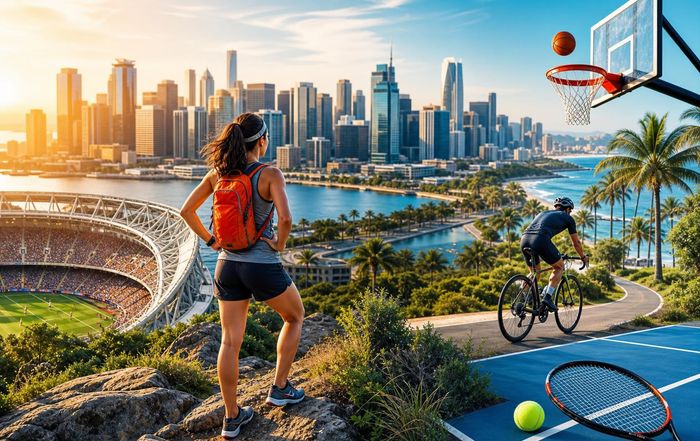
The Best Sports Cities for Active Travelers
Active travelers are no longer satisfied with being spectators; they are seeking destinations where elite competition, urban design, and lifestyle infrastructure converge to enable them to run, ride, climb, paddle, and train alongside the world's best. For the global community that turns here for day to day inspiration and insight at the intersection of sports, adventure, travel, lifestyle, and business, the rise of sports-centric cities is reshaping how people choose where to visit, where to work, and even where to live. Against a backdrop of booming sports tourism, accelerating investment in urban wellness, and a growing emphasis on safety, ethics, and performance, certain cities have emerged as benchmarks for what it means to be a true sports city for active travelers.
Sports Tourism and the New Global City Hierarchy
Sports tourism has evolved from a niche segment into one of the most dynamic pillars of the global travel economy, with organizations such as the World Travel & Tourism Council highlighting how sports events and active experiences drive visitor spending, infrastructure development, and job creation. As active travelers increasingly research destinations through specialized platforms, they are combining major events with opportunities for personal performance, whether that means joining a local marathon, cycling iconic routes, or training in state-of-the-art facilities. Those planning their next trip through the travel insights on xdzee travel are no longer asking only which city hosts the biggest match, but which city allows them to live like an athlete for a week or more.
Cities in North America, Europe, and Asia have responded by investing in integrated sports ecosystems that bring together stadiums, training centers, bike- and run-friendly infrastructure, and wellness-oriented hospitality. Institutions such as the International Olympic Committee and OECD have repeatedly stressed that this shift is not just about entertainment; it is about urban resilience, public health, and sustainable economic growth. As a result, the "best sports cities" in 2026 are those that align elite competition with daily active life, transparent governance, and inclusive access to facilities.
Criteria That Define a Top Sports City for Active Travelers
For an audience that follows xdzee sports, the definition of a great sports city extends far beyond the number of professional franchises it hosts. The most attractive destinations for active travelers combine several key dimensions: high-quality infrastructure, a culture of participation, safety and ethical standards, and a broad lifestyle offering that connects sport with food, design, and local culture.
Infrastructure remains fundamental. Leading examples in the United States, United Kingdom, Germany, Canada, Australia, and across Europe have invested heavily in multi-use paths, dedicated cycling lanes, public sports complexes, and accessible waterfronts. Organizations such as World Athletics and Union Cycliste Internationale have supported cities in designing courses and facilities that meet international standards while remaining usable for residents and visitors year-round. Active travelers increasingly evaluate destinations by how seamlessly they can move from hotel to trail, track, or stadium without relying on cars.
Equally important is a culture that welcomes participation at all levels. Reports from UNESCO and the World Health Organization emphasize that cities which embed sport and physical activity into their identity tend to deliver better health outcomes and social cohesion. This aligns directly with the editorial perspective on xdzee lifestyle, where sport is framed not just as competition, but as a daily habit linked to mental wellbeing, productivity, and creativity. For the business-minded traveler, these cities also offer robust professional ecosystems in sports technology, performance analytics, and event management, connecting directly with opportunities highlighted on xdzee jobs.
North American Powerhouses: From Stadiums to Everyday Performance
In North America, several cities have consolidated their status as premier sports destinations by blending major league excitement with world-class active experiences. In the United States, cities such as Boston, Denver, and Portland stand out for their extensive networks of running routes, cycling corridors, and access to outdoor adventure. Prospective visitors who explore xdzee performance will recognize that these cities have become living laboratories for endurance sports, high-altitude training, and urban outdoor recreation.
Boston's legacy as home of the Boston Marathon, organized by the Boston Athletic Association, continues to attract runners from around the world, but what differentiates the city in 2026 is its year-round running culture, supported by waterfront paths, community clubs, and sports medicine facilities affiliated with institutions such as Massachusetts General Hospital. Active travelers can combine participation in local races with visits to historical sites and universities, aligning cultural exploration with personal performance in a way that resonates strongly with the curiosity-driven audience of xdzee world.
Further west, Denver leverages its proximity to the Rocky Mountains to position itself as a gateway to adventure sports, from trail running and mountain biking to skiing and climbing. The city's investment in bike lanes and light-rail connectivity to mountain hubs has made it a model for integrated adventure planning, something that aligns with the themes regularly explored on xdzee adventure. At the same time, Canadian cities such as Vancouver and Toronto have strengthened their reputations as multi-sport hubs, with Vancouver in particular being highlighted by Destination Canada for its mix of ocean sports, mountain access, and urban wellness culture.
European Capitals of Sport, Culture, and Urban Design
Across Europe, the convergence of heritage, design, and public policy has created some of the most compelling sports cities for active travelers in 2026. Cities in Germany, France, Italy, Spain, Netherlands, Switzerland, Sweden, Norway, Denmark, and Finland have leveraged their long-standing commitment to public transport, cycling, and pedestrian-friendly planning to create environments where sport is woven into the urban fabric.
In Germany, Berlin and Munich stand out for their combination of elite football, athletics, and cycling infrastructure. Berlin, with its iconic marathon route that has seen multiple world records, remains a magnet for distance runners, while Munich continues to build on its Olympic legacy with modern training centers and extensive parks. The European Commission's initiatives on healthy cities have reinforced such investments, positioning these destinations as benchmarks for other urban planners who want to learn more about sustainable business practices in sport and tourism.
In Netherlands, Amsterdam exemplifies the fusion of cycling culture and tourism, with a network of bike lanes and regional routes that allow visitors to explore both the city and surrounding countryside with ease. Organizations such as Dutch Cycling Embassy have documented how this infrastructure not only supports active travel but also contributes to lower emissions and better public health, reinforcing the link between sport, environment, and long-term urban resilience. For xdzee.com, which connects adventure, lifestyle, and ethics, Amsterdam's model illustrates how policy and culture can create a sports city that is both vibrant and responsible.
Southern European cities such as Barcelona and Rome add another dimension by combining iconic football clubs like FC Barcelona and AS Roma with coastal running paths, urban beaches, and nearby mountains. These destinations appeal strongly to travelers who want to balance stadium experiences with outdoor training and cultural immersion, reflecting the cross-category interests of readers who follow both xdzee brands and xdzee culture. The presence of leading sports brands and design houses in these cities also creates opportunities for gear testing, retail experiences, and brand activations that blur the line between tourism and lifestyle.
Asia-Pacific: Innovation, Mega-Events, and Urban Wellness
The Asia-Pacific region has emerged as a powerful force in sports tourism, with cities in Japan, South Korea, China, Singapore, Thailand, Malaysia, Australia, and New Zealand investing aggressively in world-class venues and active infrastructure. These cities are not only hosting mega-events but also reshaping how residents and visitors engage with sport on a daily basis, often leveraging cutting-edge technology and data-driven planning.
In Japan, Tokyo remains a benchmark for modern sports infrastructure following its extensive upgrades for global events earlier in the decade. The city's combination of efficient public transit, well-maintained running routes such as those around the Imperial Palace, and access to mountains and coastal areas makes it an appealing destination for travelers focused on performance and precision. Organizations like Japan National Tourism Organization have promoted itineraries that integrate cultural experiences with active pursuits, aligning closely with the integrated perspective on sports and destination experiences presented on xdzee destination.
Singapore offers a different but equally compelling model, positioning itself as a compact, high-tech hub for urban wellness and sports innovation. With waterfront running paths around Marina Bay, rooftop fitness spaces, and integrated cycling routes, the city has used its limited land area to create dense, multi-functional sports environments. Government agencies highlighted by Singapore Tourism Board have actively collaborated with private operators and global sports brands to host events, conferences, and technology showcases, making the city particularly attractive to business travelers exploring opportunities in sports technology, analytics, and sustainable venue design.
In Australia and New Zealand, cities such as Melbourne, Sydney, and Auckland continue to rank highly in international quality-of-life and livability indices published by organizations like The Economist Intelligence Unit, with sport playing a central role in those rankings. The combination of stadium culture, coastal and mountain access, and a strong tradition of outdoor recreation makes these cities ideal for travelers who want to participate in local races, surf breaks, or trail runs while also connecting with local communities. This blend of high performance and relaxed lifestyle aligns closely with the editorial lens of xdzee innovation, where sport is seen as a driver of new experiences and creative business models.
Performance, Safety, and Ethics in the Modern Sports City
As active travelers become more discerning, performance alone is no longer enough; safety and ethics have become non-negotiable components of a city's appeal. Global frameworks from organizations such as the World Health Organization, UN Global Compact, and Transparency International have raised expectations around how cities manage public safety, anti-corruption measures, environmental impact, and labor standards, particularly in the construction and operation of sports venues and tourism infrastructure.
Leading sports cities in North America, Europe, Asia, and beyond are investing in safer cycling infrastructure, well-lit running paths, and transparent event management practices, while also embracing digital tools for navigation, emergency response, and crowd management. Active travelers increasingly consult independent safety assessments and government advisories, such as those published by the U.S. Department of State and UK Foreign, Commonwealth & Development Office, before committing to major trips. This focus on risk management resonates with the in-depth coverage on xdzee safety, where the intersection of adventure and responsibility is a recurring theme.
Ethically conscious travelers also scrutinize how cities handle issues such as doping, match-fixing, and athlete welfare. Bodies like the World Anti-Doping Agency and Council of Europe have been instrumental in pushing for more transparent and harmonized standards, and cities that align with these frameworks signal a deeper commitment to integrity. For xdzee.com, which maintains a dedicated focus on xdzee ethics, this ethical dimension is central to how sports destinations are evaluated and presented to readers, especially those who are also business leaders and investors.
The Business of Sports Cities: Investment, Jobs, and Brands
Behind every celebrated sports city lies a complex ecosystem of investment, employment, and brand strategy. In 2026, the business of sports cities has become a key area of interest for executives, entrepreneurs, and professionals who follow xdzee business, as they recognize that sports tourism is not only a cultural phenomenon but also a competitive economic advantage. Reports from McKinsey & Company, Deloitte, and PwC have documented how sports and active tourism can catalyze infrastructure upgrades, stimulate hospitality and retail sectors, and generate new jobs in event management, coaching, data analytics, and facility operations.
Global brands such as Nike, Adidas, Puma, and Under Armour have deepened their engagement with sports cities by sponsoring local events, opening experiential flagship stores, and partnering with municipal authorities on community initiatives. These collaborations often extend into innovation labs, performance centers, and digital platforms that gather data on how people move and train in urban environments. For readers exploring xdzee brands, these initiatives illustrate how brand strategy, urban planning, and consumer behavior intersect in the modern sports city.
At the same time, the professional opportunities associated with sports cities have expanded significantly. From sports-tech startups in Silicon Valley and London to analytics firms in Berlin and venue management companies in Singapore, the talent market around sports and active tourism has become truly global. Organizations such as LinkedIn and World Economic Forum have highlighted sports-related roles among the emerging job categories, particularly in data science, sustainability, and digital fan engagement. This trend is reflected in the growing interest in sports-related careers and entrepreneurial ventures seen in the readership of xdzee jobs, where sport is increasingly recognized as a serious business domain rather than a peripheral passion.
Culture, Lifestyle, and the Identity of Sports Cities
Beyond infrastructure and economics, what truly distinguishes the best sports cities for active travelers is the way sport is woven into their cultural identity and daily lifestyle. For cosmopolitan audiences in United States, United Kingdom, Canada, Australia, France, Italy, Spain, Netherlands, Switzerland, Japan, South Korea, Brazil, South Africa, and across Asia, Africa, North America, and South America, travel choices are increasingly shaped by a desire to experience local culture through movement, whether that means joining a community run, attending a neighborhood football match, or learning a traditional sport.
Cultural institutions and tourism boards have responded by integrating sport into broader narratives about heritage, food, and art. Initiatives highlighted by UNESCO and World Tourism Organization show how traditional games, martial arts, and outdoor festivals can be preserved and promoted as part of a city's intangible cultural heritage. For readers who regularly consult xdzee culture, these stories emphasize that the best sports cities are not just venues for competition, but living stages where local identity is expressed through physical activity.
Lifestyle trends have also shifted in favor of cities that support holistic wellbeing. The global rise of plant-based diets, mindfulness practices, and flexible work arrangements has made it easier for active travelers to maintain their routines while on the road. Urban areas that offer easy access to healthy food, recovery services, and co-working spaces near sports facilities are particularly attractive to remote professionals and digital nomads. This convergence of sport, work, and lifestyle aligns with the multidimensional coverage on xdzee.com, where readers are encouraged to see their active pursuits as integral to their professional and personal development.
How xdzee.com Curates and Interprets the Sports City Landscape
As the landscape of sports cities becomes more complex and competitive, the role of independent, trusted platforms becomes increasingly important. xdzee.com has positioned itself at the intersection of sports, adventure, travel, business, and culture, providing readers with a curated view of global developments that is grounded in experience, expertise, authoritativeness, and trustworthiness. Rather than ranking cities purely by the number of events or stadiums, the editorial approach focuses on how destinations perform across multiple dimensions: infrastructure quality, safety, ethical governance, lifestyle integration, and long-term sustainability.
Through dedicated verticals such as xdzee sports, xdzee adventure, xdzee travel, xdzee business, and xdzee lifestyle, the platform offers nuanced analysis, case studies, and on-the-ground perspectives that help readers make informed decisions. Coverage of global developments on xdzee news and xdzee world ensures that shifts in policy, technology, and consumer behavior are contextualized within broader geopolitical and economic trends. This integrated approach reflects a commitment to E-E-A-T principles, ensuring that content is not only informative but also reliable and actionable for a sophisticated international audience.
What's The Future of Sports Cities for Active Travelers?
As the world looks beyond today, the concept of the sports city will continue to evolve, driven by technological innovation, climate considerations, demographic shifts, and changing expectations around ethics and inclusion. Emerging trends such as climate-resilient venues, low-carbon travel corridors, immersive digital fan experiences, and AI-enhanced training tools will reshape how cities design and market their sports ecosystems. Organizations like the World Economic Forum and United Nations Environment Programme are already emphasizing the need for sustainable event management and infrastructure that can withstand environmental pressures while serving communities year-round.
For active travelers, this means an expanding set of options, from established hubs in Europe, North America, and Asia-Pacific to rising destinations in Africa and South America that are investing strategically in sport as a catalyst for development. For city leaders, brands, and investors, it underscores the importance of long-term planning and cross-sector collaboration, as the most successful sports cities will be those that balance commercial ambition with social responsibility and environmental stewardship.
Within this dynamic context, the sports experiential and adventure lifestyle reporting team will continue to serve as a top new guide, interpreting the interplay between sports, adventure, travel, business, and culture for a global audience that demands depth, nuance, and integrity. By highlighting not only where to go, but why these places matter and how they are changing, the platform helps active travelers choose destinations that align with their values, ambitions, and curiosity. As sports cities become ever more central to how people experience the world, the insights and perspectives curated on xdzee.com will remain an essential resource for anyone seeking to move, compete, and explore at the highest level.