

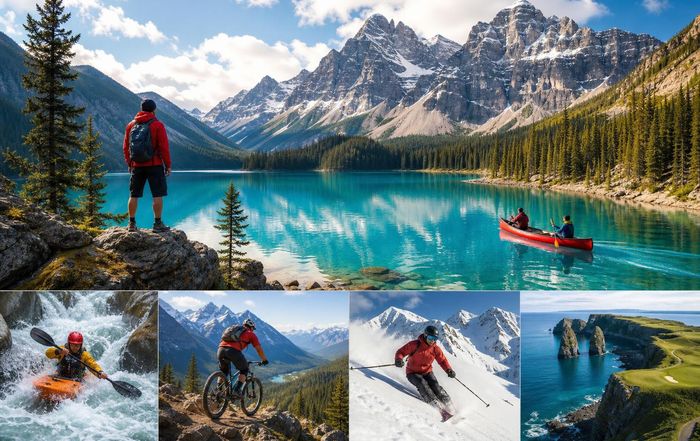
Best Canadian Destinations for Outdoor Sports Fans
From surf breaks pounded by Pacific swells to Arctic tundra where the sun barely sets, Canada is built for people who would rather be outdoors than in. Its sheer size, varied climates, and strong sporting culture mean that "outdoor sports" can mean anything from heli-skiing and ice climbing to mountain biking, sea kayaking, and multi-day trail runs.
For travellers planning their next active escape, the challenge is less "what can I do?" and more "where do I even start?" This guide focuses on a dozen standout regions across Canada that consistently deliver memorable outdoor experiences, along with practical considerations on seasons, safety, and performance.
Whistler, British Columbia: Four-Season Gravity Playground
Whistler is often the first name that comes up when people talk about outdoor sports in Canada, and for good reason. The twin peaks of Whistler Blackcomb form one of North America's largest ski areas, with over 8,000 acres of terrain and a long season that can stretch from November into May in good snow years. The resort regularly appears near the top of rankings from outlets like SKI Magazine and Powder and has hosted major events including alpine skiing at the 2010 Vancouver Winter Olympics.
In winter, skiers and snowboarders can choose from groomed cruisers, steep bowls, and gladed tree runs. Backcountry enthusiasts use Whistler as a base for ski touring and heli-skiing; operators must follow strict avalanche safety protocols, and visitors should consult the Avalanche Canada public avalanche bulletins before venturing off-piste. Nordic skiers have access to extensive cross-country trails in nearby Callaghan Valley, which served as the Olympic Nordic venue.
Summer transforms the resort into a mountain bike and trail-running destination. The Whistler Mountain Bike Park is one of the most developed bike parks in the world, with graded trails from beginner flow lines to expert-level technical descents. Trail runners and hikers can access high alpine routes via lifts, including the Peak 2 Peak gondola linking the two mountains. Climbing, zip-lining, and whitewater rafting on the nearby Elaho and Squamish rivers round out the options.
Whistler is an obvious fit for those interested in sports, performance, and adventure, but it is also a lifestyle hub, with a resort village that caters to international visitors. For official trip planning details, the Resort Municipality of Whistler maintains an up-to-date tourism site with seasonal activities, trail conditions, and safety advisories.
Squamish and the Sea-to-Sky Corridor: Climbing, Kites, and Singletrack
An hour south of Whistler and an hour north of Vancouver, Squamish has evolved from a logging town into a major outdoor sports centre. The granite monolith of the Stawamus Chief is one of the largest granite cliffs in the world, drawing rock climbers from across North America. The area offers hundreds of traditional and sport routes, as well as bouldering areas like the North Walls and Smoke Bluffs. The Squamish Access Society provides route and access information, and climbers should check its updates for closures and conservation notices.
Mountain bikers can explore a dense network of hand-built trails in the Alice Lake, Diamond Head, and Valleycliffe areas, ranging from flowy blue routes to steep, rooty descents that challenge advanced riders. Trail associations like SORCA (Squamish Off-Road Cycling Association) post trail conditions and maps that help visitors choose appropriate routes and ride responsibly.
On windy days, the Squamish Spit and Howe Sound become a training ground for kiteboarders and windsurfers, with strong thermal winds funneling along the fjord-like inlet. Sea kayakers and stand-up paddlers share the water, often combining paddling with wildlife viewing-harbour seals and bald eagles are common sights.
The Sea-to-Sky corridor also offers hiking, base jumping, backcountry skiing, and trail running, making it an all-round adventure destination that complements urban stays in Vancouver. As with any coastal mountain region, weather can shift quickly; the BC AdventureSmart program offers trip planning and safety guidance that is relevant across the province.
Banff and Lake Louise, Alberta: Iconic Peaks and High-Altitude Endurance
In the Canadian Rockies, Banff National Park is arguably the country's flagship mountain destination. Established in 1885, it is Canada's oldest national park and part of a larger UNESCO World Heritage Site. The town of Banff and the hamlet of Lake Louise serve as gateways to a network of peaks, glaciers, and turquoise lakes that are familiar from countless postcards and social media posts.
For outdoor sports fans, Banff and Lake Louise offer a mix of accessible and high-commitment activities. In winter, the "Big 3" ski resorts-Sunshine Village, Lake Louise Ski Resort, and Mt. Norquay-provide downhill skiing and snowboarding on dry, cold snow that often holds up well into spring. The area is also a base for ski touring, ice climbing on frozen waterfalls like those in Johnston Canyon and Grotto Canyon, and cross-country skiing on groomed trails maintained by Parks Canada.
Summer and early autumn are prime seasons for trail running, hiking, and road cycling. Popular routes such as the Plain of Six Glaciers and the Lake Agnes Tea House trail see heavy traffic, while more remote areas along the Icefields Parkway reward those willing to venture farther. Road cyclists often target the Bow Valley Parkway (when open to bikes) and the climb to Lake Louise as scenic training rides. Parks Canada's Banff National Park site provides detailed information on trails, seasonal wildlife closures, and camping regulations.
Altitude and rapidly changing mountain weather can affect performance, especially for visitors arriving from sea level. Carrying appropriate layers, understanding bear safety (including the use of bear spray), and respecting trail closures are essential. The Rockies are also a focal point for discussions about climate change, glacier retreat, and environmental ethics, which are increasingly central to adventure travel.
Jasper National Park, Alberta: Wilder, Quieter, and Big on Backcountry
North of Banff along the Icefields Parkway, Jasper National Park offers a wilder, less developed experience that appeals strongly to backcountry enthusiasts. The town of Jasper is smaller and more laid-back than Banff, and many of its marquee experiences involve longer distances and more self-sufficiency.
In summer, multi-day hiking and trail-running routes such as the Skyline Trail and the Tonquin Valley traverse high alpine passes with expansive views. Mountain bikers have access to both cross-country and more technical trails, while paddlers can explore lakes like Maligne and Pyramid. Wildlife encounters-elk, black bears, and occasionally caribou-are common, and visitors are expected to follow Parks Canada's wildlife viewing guidelines to reduce risk and disturbance.
Winter brings cross-country skiing, fat biking, and downhill skiing at Marmot Basin. The park's dark skies have earned it designation as a Dark Sky Preserve by the Royal Astronomical Society of Canada, and the annual Jasper Dark Sky Festival combines astronomy with outdoor culture.
For those seeking a blend of adventure and relative solitude without leaving the road network behind, Jasper is a compelling alternative or complement to Banff. As in other mountain parks, backcountry travel requires avalanche awareness, proper navigation tools, and compliance with camping permits and fire regulations.
Vancouver Island and Tofino, British Columbia: Surf, Swell, and Coastal Trails
On Canada's Pacific coast, Vancouver Island offers a different flavour of outdoor sport: surf culture, storm watching, and coastal hiking. The small town of Tofino has become an international destination for cold-water surfing, with long sandy beaches like Chesterman, Cox Bay, and Long Beach offering consistent waves year-round. Surf schools and rental shops cater to beginners, while more experienced surfers tackle heavier breaks when Pacific storms roll in.
Cold-water surfing requires appropriate gear-thick wetsuits, boots, gloves, and hoods-and awareness of rip currents and tidal conditions. The Canadian Coast Guard and local surf organizations emphasize ocean safety guidance, and visitors are encouraged to surf within their limits and respect local etiquette.
Beyond surfing, Vancouver Island is a hub for sea kayaking, stand-up paddleboarding, and sailing. The Broken Group Islands in Pacific Rim National Park Reserve are renowned for multi-day kayak trips, while the West Coast Trail is one of Canada's most famous multi-day hikes, known for its ladders, cable cars, and challenging terrain. Parks Canada maintains a dedicated West Coast Trail information page with booking procedures, required orientations, and safety requirements.
Inland, mountain bikers and trail runners can explore networks around Cumberland, Nanaimo, and the Sooke Hills. The island's mild maritime climate allows for year-round riding and running, making it a popular winter training ground for athletes from colder parts of Canada.
Quebec City and Charlevoix, Quebec: Steep Hills and Winter Culture
Eastern Canada offers its own blend of sport and culture, particularly around Quebec City and the Charlevoix region along the St. Lawrence River. Winter dominates the sports calendar here, with a strong tradition of skiing, snowshoeing, and skating woven into everyday life.
Downhill skiers and snowboarders gravitate to Mont-Sainte-Anne, Le Massif de Charlevoix, and Stoneham. Le Massif is known for having one of the largest vertical drops in Eastern Canada and dramatic views over the St. Lawrence. Cross-country skiers have extensive trail systems, including those at Camp Mercier in the Réserve faunique des Laurentides, and the Sentier des Caps network linking coastal and forest routes.
Quebec is also a centre of Nordic sports culture. Events like the Québec Winter Carnival and long-distance skate races on frozen rivers and canals highlight the way outdoor sport intersects with local traditions and culture. Fat biking, ice canoeing on the St. Lawrence, and ice climbing along frozen cliffs add to the mix.
In the warmer months, road cyclists and trail runners tackle hilly terrain along the Route 138 and within Charlevoix's network of trails and parks. The region's official tourism board, Tourisme Charlevoix, maintains a comprehensive activity guide that covers seasonal sports, safety notes, and access logistics.
The Laurentians and Mont-Tremblant, Quebec: Year-Round Resort Energy
North of Montreal, the Laurentian Mountains (Les Laurentides) offer a string of lakes, forests, and small towns that have long served as a playground for Quebecers. Mont-Tremblant anchors the region as a four-season resort with a pedestrian village, ski slopes, and a large national park nearby.
Winter sports include alpine skiing and snowboarding at Tremblant, cross-country skiing on groomed trails, snowshoeing, and fat biking. The resort's snowmaking and grooming infrastructure help maintain consistent conditions even in variable winters. For official lift, trail, and safety information, Tremblant's resort website is the primary reference.
In summer, Tremblant becomes a triathlon and endurance sports hub. It has hosted IRONMAN and IRONMAN 70.3 events, drawing athletes from across North America to its lake swim, rolling bike course, and run route that partly follows a multi-use trail. Trail runners and hikers can explore routes in Parc national du Mont-Tremblant, while paddlers take to the Diable and Rouge rivers.
The Laurentians' combination of resort infrastructure and accessible wilderness makes it a good choice for mixed-ability groups, families, or those who want to combine serious training with more relaxed lifestyle travel.
The Canadian Rockies of British Columbia: Golden, Revelstoke, and Beyond
On the western slopes of the Rockies and Columbia Mountains, towns like Golden and Revelstoke have become magnets for skiers, snowboarders, and mountain bikers who prefer a slightly more low-key, core-sport atmosphere than major resorts.
Revelstoke Mountain Resort is known for its long vertical and deep snowfall, attracting strong skiers and riders. The surrounding Selkirk and Monashee ranges are prime heli-skiing and ski-touring terrain, but avalanche risk is significant, and visitors are urged to complete Avalanche Skills Training courses and consult Avalanche Canada's forecasts before heading into the backcountry.
In summer, Revelstoke's bike park and surrounding trail networks cater to downhill and enduro riders, while road cyclists tackle the climb up Mount Revelstoke National Park's Meadows in the Sky Parkway. Golden offers similar dual-season appeal with Kicking Horse Mountain Resort, renowned for its steep terrain and alpine ridge hikes, and a growing mountain bike trail network supported by local associations.
These communities often sit at the intersection of innovation in gear and guiding techniques, with local companies and guides experimenting with new avalanche airbags, touring bindings, and route-setting approaches. They are also at the forefront of debates about how to balance tourism growth with wildlife corridors and local housing pressures.
The Canadian Shield and Cottage Country: Ontario and Manitoba's Lakes
Away from the dramatic peaks of the West, central Canada offers a different kind of outdoor playground built around lakes, forests, and rocky outcrops of the Canadian Shield. Regions like Muskoka and Haliburton in Ontario, and the lake districts of Manitoba and northwestern Ontario, are classic "cottage country" destinations that lend themselves to paddling, trail sports, and multi-sport days.
Canoeing has deep roots here, tied to Indigenous travel routes and the fur trade. Modern paddlers can follow sections of the Voyageur waterways, explore Algonquin Provincial Park, or tackle longer expeditions in Quetico Provincial Park and Manitoba's Nopiming and Whiteshell parks. Provincial park agencies such as Ontario Parks provide detailed maps and route planning tools for backcountry canoe routes, portages, and campsites.
Trail running and hiking are increasingly popular on routes like the Bruce Trail along the Niagara Escarpment and numerous local trail systems maintained by conservation authorities. In winter, cross-country skiing, snowshoeing, and ice skating on frozen lakes take centre stage, though changing freeze-thaw patterns have made ice safety more complex. The Lifesaving Society of Canada offers ice safety guidelines that are relevant across these regions.
These lake districts are well suited to active families and groups who want to mix sport with slower-paced relaxation-paddling in the morning, trail running in the afternoon, and a campfire in the evening.
The Canadian Arctic and Northern Territories: Expedition-Style Adventure
For experienced outdoor sports enthusiasts seeking something truly remote, Canada's northern territories-Yukon, Northwest Territories, and Nunavut-offer expedition-style experiences that go beyond typical resort or park trips. These are environments where planning, logistics, and risk management are as central to the "sport" as the activity itself.
In summer, long daylight hours and sparse infrastructure create ideal conditions for multi-day or multi-week canoe and rafting trips on rivers like the Yukon, Nahanni, and Coppermine. The Nahanni National Park Reserve in the Northwest Territories, for example, is a UNESCO World Heritage Site known for its canyons and Virginia Falls, and Parks Canada maintains a Nahanni trip planning portal outlining permits, required experience, and safety considerations.
Backpacking and trekking in places like Auyuittuq National Park on Baffin Island or Ivvavik National Park in the Yukon offer exposure to Arctic landscapes, but demand strong navigation skills, self-sufficiency, and awareness of polar bear safety. Winter activities include ski touring, snowmobiling, dog sledding, and even ultra-distance foot races like the Yukon Arctic Ultra, where temperatures can plunge well below -30°C.
These regions intersect strongly with discussions about world climate patterns, Indigenous leadership in land stewardship, and ethical tourism. Travellers are encouraged to work with reputable outfitters, respect local protocols, and understand the environmental footprint of flying into remote communities.
Atlantic Canada: Coastal Running, Sea Kayaking, and Winter Wind
On Canada's Atlantic coast, provinces such as Nova Scotia, New Brunswick, Prince Edward Island, and Newfoundland and Labrador provide a mix of coastal and inland sports that often fly under the radar compared to Western destinations.
Trail runners and hikers are drawn to routes like the Cape Breton Highlands' Skyline Trail, Newfoundland's East Coast Trail, and sections of the Fundy Footpath in New Brunswick, where tidal ranges among the highest in the world shape the landscape. The Bay of Fundy region, in particular, has become a focus for adventure tourism, with sea kayaking, tidal bore rafting, and cliffside trail running all tied to the extreme tides. Parks Canada's Fundy National Park page outlines key activities and safety tips, particularly around fast-changing tidal zones.
Sea kayakers and stand-up paddlers can explore sheltered bays and more exposed coastlines, with opportunities to see whales, seabirds, and seals. In winter, coastal winds create challenging conditions for kite skiing and snowkiting on frozen bays and inland lakes, though ice thickness and storm exposure require careful risk assessment.
The Atlantic provinces are also fertile ground for combining outdoor sport with cultural exploration, from Acadian music and cuisine to Mi'kmaq and other Indigenous histories. Regional tourism boards, such as Nova Scotia Tourism, provide activity-specific trip ideas that help visitors design multi-sport itineraries.
Urban Gateways: Vancouver, Calgary, and Montreal as Launchpads
Many international visitors arrive in Canada through major cities, which double as outdoor sports gateways. Vancouver, for example, sits within easy reach of North Shore mountain biking, backcountry ski touring on the North Shore and in Garibaldi Provincial Park, and urban running routes along the seawall and in Stanley Park. The city's weather and geography make it a year-round training base for runners, cyclists, and climbers.
Calgary provides quick access to the Rockies, with Banff just over an hour away and trail networks in places like Kananaskis Country even closer. Local organizations like Alberta Parks maintain trail and safety updates that are especially relevant for day trips from the city. Meanwhile, Montreal offers proximity to the Laurentians, the Eastern Townships, and an extensive network of bike paths, including sections of the province-wide Route verte cycling network.
Using these cities as bases can make logistics easier, especially for travellers combining business or jobs travel with sport, or those who want to rent gear, join guided group activities, or sample local running and cycling clubs.
Safety, Seasons, and Responsible Adventure
Canada's outdoor playground comes with real risks that visitors and locals alike must take seriously. Weather can change quickly, distances are large, and rescue resources-while professional-may be far away. Before heading into unfamiliar terrain, it is prudent to consult national and provincial resources, including:
Parks Canada's safety hub for general outdoor safety and park-specific advisories.
Avalanche Canada for backcountry winter travel forecasts and training resources.
Provincial agencies such as BC AdventureSmart and Ontario Parks for regional guidance.
Local search and rescue organizations, which often publish trip-planning checklists and incident analyses.
Seasonality also matters. Peak ski season in Western Canada typically runs from December to March, with higher-elevation resorts extending later. Summer hiking and mountain biking seasons vary with snowmelt, often starting in late May or June at lower elevations and later in the high alpine. Shoulder seasons can be rewarding but bring mixed conditions-mud, lingering snow, and higher avalanche or rockfall hazards.
Finally, there is a growing emphasis on minimizing impact and aligning outdoor sports with broader environmental and ethical considerations. Concepts like Leave No Trace, Indigenous co-management of protected areas, and debates over heli-skiing and motorized recreation are increasingly shaping how Canadians think about their landscapes. For travellers, that translates into practical choices: supporting local guides and businesses, respecting closures and cultural sites, and being honest about one's skill level to avoid putting rescuers at risk.
Canada offers a rare combination of scale, diversity, and access for outdoor sports fans. Whether the goal is to chase powder in Revelstoke, surf winter swells in Tofino, run ridgelines above Lake Louise, or paddle a quiet northern lake at sunset, there is a region that fits nearly every appetite for adventure. With careful planning, respect for the environment, and attention to safety, those landscapes can become the backdrop for some of the most memorable days an athlete or adventurer will ever have. For more ideas on where sport, travel, and modern living intersect, explore the new and unique travel, destination, and safety pages across the site.