

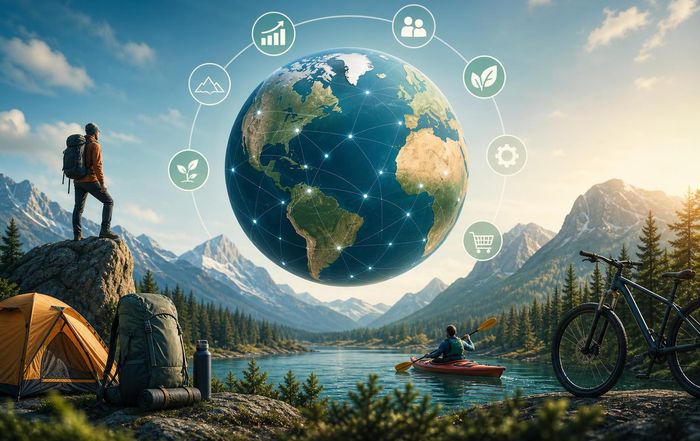
Business Trends in Global Outdoor Adventure Recreation
The New Economics of the Outdoors
Outdoor sports recreation has moved from a niche leisure category to a central pillar of the global experience economy, reshaping how consumers spend, how brands compete and how governments think about health, tourism and regional development. The sector now spans performance sports, adventure travel, lifestyle brands, cultural experiences and sustainable destinations, intersecting directly with the core interests of the xdzee.com audience across sports, adventure, travel, brands, lifestyle, culture, destination, news, world affairs, performance, safety, innovation, ethics, business and jobs. What once revolved around camping and hiking has evolved into a complex ecosystem driven by digital platforms, climate realities, demographic change and a new expectation that outdoor experiences must deliver not only enjoyment but also performance, safety, meaning and measurable impact.
The World Economic Forum has repeatedly highlighted how experience-centric sectors are outpacing traditional goods-based industries, and outdoor recreation sits near the center of this shift, blending tourism, wellness, sports and technology into a single, rapidly evolving marketplace. At the same time, data from organizations such as the OECD and UNWTO indicates that outdoor-oriented tourism has become a key growth engine for both advanced economies in North America and Europe and emerging destinations across Asia, Africa and South America, as travelers search for authentic, nature-based experiences that feel safer, healthier and more purposeful than crowded urban itineraries. Against this backdrop, xdzee.com positions itself as a guide and curator, helping global readers navigate not only where to go, but how to understand the business forces reshaping the outdoor world they love.
From Gear to Experiences: How Consumer Demand Has Shifted
One of the most significant trends in 2026 is the clear migration from product-centric to experience-centric value propositions. While technical gear and apparel remain essential, growth is increasingly driven by integrated experiences that combine equipment, digital services and curated itineraries. Consumers in the United States, United Kingdom, Germany, Canada and Australia, as well as in fast-growing markets such as China, South Korea and Brazil, are less interested in owning more equipment and more focused on accessing high-quality, safe and personalized outdoor experiences that can be shared across social platforms and revisited through digital communities.
This shift is visible in the strategies of leading global brands such as Patagonia, The North Face and Decathlon, which have expanded beyond traditional retail into experience design, guided trips, skills education and community events, often supported by digital platforms and subscription models. Industry analysis from McKinsey & Company underscores how experience-led growth is driving higher customer loyalty and lifetime value, as outdoor participants seek brands that can accompany them across multiple life stages and activities, from first-time hikers to elite endurance athletes. For readers exploring the evolving role of brands in this space, the dedicated coverage on outdoor and lifestyle brands at xdzee.com offers a tailored lens on how these strategies play out across markets and demographics.
The Rise of Hybrid Athletes and Performance Cultures
Outdoor recreation in 2026 is no longer neatly segmented between casual hikers, adventure travelers and high-performance athletes. A new hybrid athlete culture has emerged, blending trail running, cycling, climbing, backcountry skiing, open-water swimming and functional fitness into fluid, year-round training and exploration routines. This evolution has been accelerated by the global popularity of endurance events, adventure races and multi-sport challenges, supported by organizations such as IRONMAN Group and UTMB Group, and amplified by the content ecosystems of platforms like Strava and Garmin.
Performance-focused consumers in Europe, North America and Asia increasingly demand data-rich, scientifically validated training insights, safe and well-maintained outdoor infrastructures and gear that combines elite performance with sustainability and style. Research from the American College of Sports Medicine and UK Sport highlights how outdoor training is now recognized not only for its physical benefits but also for its mental health advantages, contributing to corporate wellness programs and public health strategies. For those tracking the intersection of performance, health and outdoor sport, xdzee.com offers focused analysis through its performance coverage and sports insights, connecting elite trends with everyday participation across continents.
Safety, Risk Management and the Professionalization of Adventure
As participation in outdoor activities has grown, especially in high-consequence environments such as alpine terrain, open oceans and remote wilderness areas, safety has become a central business differentiator rather than a compliance afterthought. In 2026, successful operators in adventure tourism, guiding services and outdoor events treat safety as a core element of brand equity, investing heavily in training, protocols and technology. Organizations like the International Climbing and Mountaineering Federation (UIAA) and the Adventure Travel Trade Association have advanced global standards for guiding, equipment and emergency response, while national bodies such as the U.S. National Park Service and Mountain Rescue England and Wales provide increasingly sophisticated public safety frameworks.
Technology plays a critical role in this professionalization, with satellite communication devices, advanced avalanche beacons, AI-enhanced weather forecasting and real-time risk assessment tools becoming standard in many operations. At the same time, insurers and regulators in markets from Switzerland and Norway to Japan and New Zealand are demanding higher levels of documentation and training for commercial operators, reshaping cost structures and competitive dynamics. For readers seeking to understand how safety and risk management influence outdoor business models, xdzee.com maintains dedicated reporting on safety trends and best practices, highlighting both innovations and ethical considerations in this critical area.
Digital Platforms, Data and the Connected Outdoors
The digitalization of outdoor recreation has accelerated dramatically, transforming how people discover, plan, book and share their experiences. In 2026, consumers routinely rely on mapping and route-planning platforms, user-generated content, real-time conditions data and community recommendations before setting foot on a trail or booking an adventure trip. Companies like AllTrails, Komoot and Outdooractive have built large, global user communities that blur the lines between navigation tools, social networks and marketplaces, while major travel platforms such as Booking.com and Airbnb have expanded their offerings to include outdoor and adventure experiences curated for diverse budgets and skill levels.
This connected ecosystem generates vast amounts of behavioral and environmental data, enabling more precise demand forecasting, dynamic pricing, personalized marketing and improved resource management. However, it also raises questions about data privacy, overtourism, environmental impact and the commercialization of previously informal or community-managed outdoor spaces. The European Commission and national data protection authorities in regions such as the EU, the United States and Singapore are increasingly attentive to how location and health data from outdoor apps is collected and monetized. For professionals tracking these developments, xdzee.com provides ongoing innovation coverage, examining how technology companies, outdoor brands and regulators negotiate the balance between digital opportunity and responsible practice.
Sustainability, Climate Risk and Ethical Imperatives
No discussion of outdoor recreation in 2026 can ignore the profound influence of climate change, biodiversity loss and resource scarcity on the sector's long-term viability. Rising temperatures, unpredictable weather patterns, shrinking snowpacks and increased wildfire risk are disrupting traditional seasons and destinations in regions from the Alps and Rockies to the Japanese and New Zealand highlands, forcing businesses to rethink product lines, operating calendars and investment horizons. Reports from the Intergovernmental Panel on Climate Change (IPCC) and organizations such as WWF and IUCN underscore the vulnerability of the very landscapes upon which the outdoor economy depends, while also highlighting the potential for nature-based solutions and sustainable tourism to contribute to climate adaptation and mitigation.
In response, leading organizations across Europe, North America and Asia-Pacific are embedding sustainability and ethics into core strategy rather than treating them as peripheral marketing themes. Many are aligning with frameworks from the UN Global Compact, adopting science-based emissions targets and investing in circular product design, regenerative tourism models and community partnerships that prioritize local livelihoods and cultural preservation. The rise of carbon-conscious travelers, particularly among younger demographics in markets such as Germany, the Netherlands, Sweden and South Korea, is reinforcing this strategic shift. For readers interested in how ethical frameworks and sustainability commitments shape the future of outdoor business, xdzee.com offers in-depth perspectives through its ethics reporting, connecting global policy trends with on-the-ground industry practices.
Global Destinations and the Competition for Outdoor Travelers
Outdoor recreation has become a central pillar of national and regional tourism strategies, as destinations compete for visitors seeking nature, adventure, culture and wellness in integrated experiences. Countries such as Canada, New Zealand, Norway and Switzerland have long built their brands around pristine landscapes and outdoor lifestyles, but new players across Asia, Africa and South America are investing in trails, parks, marine reserves and adventure infrastructure to attract international travelers. Organizations like UNWTO and the World Travel & Tourism Council document how nature-based tourism is growing faster than many other segments, with strong contributions to employment and regional development in both developed and emerging economies.
At the same time, established destinations in the United States, United Kingdom, France, Italy and Spain are rebalancing their tourism portfolios to manage overtourism in iconic urban centers and direct visitors toward lesser-known outdoor regions, where the economic impact can be more widely shared and environmental pressure better managed. This reorientation requires thoughtful destination management, stakeholder engagement and robust safety and infrastructure planning, especially in fragile ecosystems and culturally sensitive areas. For travelers, investors and policymakers exploring these dynamics, xdzee.com curates global perspectives on travel and destination strategy, connecting macro trends with specific regions and communities across Europe, Asia, Africa and the Americas.
The Convergence of Lifestyle, Culture and Outdoor Identity
Outdoor recreation in 2026 is as much a cultural and lifestyle phenomenon as it is a set of activities. From urban running crews in London, Berlin and New York to surf communities in Australia, Brazil and South Africa and climbing cultures in Tokyo, Seoul and Barcelona, the outdoors has become a key arena where identity, fashion, music and social values intersect. Collaborations between performance brands and high-end fashion labels, the rise of outdoor-inspired streetwear and the integration of nature themes into contemporary art and design all reflect this convergence, which extends far beyond traditional outdoor enthusiast circles.
Media and entertainment have amplified this cultural shift, with streaming platforms, social media creators and documentary filmmakers bringing stories of adventure, resilience and environmental stewardship to global audiences. Institutions like National Geographic and BBC Studios have expanded their coverage of outdoor exploration, climate narratives and human-nature relationships, shaping public perception and aspiration. For the xdzee.com community, which spans lifestyle, culture and sports interests, this convergence is particularly relevant, and the platform's lifestyle and culture sections explore how outdoor identities influence consumer behavior, urban design and even workplace expectations in sectors far beyond the recreation industry itself.
Business Models, Jobs and Skills in the Outdoor Economy
As the outdoor recreation sector matures, its business models are diversifying and professional roles are becoming more specialized. Traditional retail and tour operations are now complemented by subscription-based services, digital platforms, equipment rental and sharing schemes, corporate wellness programs and public-private partnerships for trail and park management. Research from the World Bank and ILO suggests that outdoor recreation and nature-based tourism generate significant employment opportunities, particularly in rural and peripheral regions, while also catalyzing entrepreneurship among guides, instructors, content creators and small-scale hospitality providers.
However, the sector also faces skills gaps and workforce challenges, from seasonal volatility and safety-critical training requirements to the need for digital literacy and cross-cultural competence in customer-facing roles. Governments in regions such as the European Union, Canada and Singapore are beginning to recognize outdoor recreation as a strategic employment domain, integrating it into skills development, youth employment and regional innovation programs. For professionals and job seekers examining career paths in this evolving landscape, xdzee.com maintains dedicated jobs coverage, highlighting emerging roles at the intersection of sports, adventure, travel, technology and sustainability, and offering insights into how individuals can build resilient, purpose-driven careers in the outdoor economy.
Innovation, Investment and the Next Wave of Growth
Innovation in outdoor recreation now extends well beyond incremental gear improvements into fields such as biomaterials, wearable technology, renewable energy, smart infrastructure and immersive digital storytelling. Venture capital and corporate investment are flowing into startups that develop advanced fabrics, sustainable packaging, autonomous trail maintenance solutions, AI-driven route planning, safety analytics and platforms that blend physical and virtual experiences, such as augmented reality trail guides and remote coaching services. Reports from PwC and Deloitte indicate that investors increasingly view the outdoor sector as a strategic gateway to broader consumer, health and sustainability markets, particularly in fast-growing regions such as Asia-Pacific and Latin America.
This innovation wave is also reshaping partnerships and competitive dynamics, as traditional outdoor brands collaborate with technology firms, mobility providers, health systems and educational institutions to create integrated offerings that span gear, services and content. Public-sector actors, including city governments and national park agencies, are experimenting with smart infrastructure, digital permitting and real-time visitor management to enhance safety and sustainability while improving user experience. For stakeholders tracking these developments, xdzee.com's business reporting and innovation insights provide a vantage point on how capital, policy and consumer behavior interact to shape the next decade of outdoor growth.
Governance, Ethics and the Role of Media Platforms
As the economic and cultural importance of outdoor recreation grows, so too does scrutiny of how it is governed, represented and debated in the public sphere. Issues such as access and equity, Indigenous rights, land use conflicts, environmental justice and the commercialization of public spaces are prompting intense discussion across the United States, Canada, Australia, Europe and beyond. Organizations such as Leave No Trace, The Nature Conservancy and national park agencies are working with communities, businesses and policymakers to develop frameworks that balance access with conservation, economic opportunity with cultural respect and innovation with ethical responsibility.
Media platforms play a critical role in shaping these conversations, influencing how outdoor spaces and communities are portrayed and how risks and responsibilities are framed. In this context, xdzee.com positions itself not only as a source of news and analysis but also as a convener of perspectives across sports, adventure, travel, culture and business, helping readers interpret complex developments from a global, multi-stakeholder standpoint. Its world news and analysis and news coverage connect regional stories from the United States, United Kingdom, Germany, China, South Africa, Brazil and beyond, situating outdoor recreation within broader economic, political and social dynamics that will shape its future trajectory.
Outlook: Building a Resilient and Responsible Outdoor Sports Future
Running ahead, the outdoor recreation sector faces both extraordinary opportunity and profound responsibility. Demographic trends, urbanization and rising interest in health, wellness and meaningful travel suggest that participation will continue to grow across North America, Europe, Asia-Pacific, Africa and South America, bringing new markets, investment and innovation. At the same time, climate risk, biodiversity loss, social inequality and geopolitical instability pose significant challenges to the landscapes, communities and infrastructures that underpin the outdoor economy.
Organizations that succeed in this environment will be those that combine deep expertise in performance, safety and experience design with authentic commitments to ethics, sustainability and community partnership, leveraging technology and data without losing sight of the human and environmental foundations of their business. They will need to operate with transparency, engage with diverse stakeholders and continuously adapt to shifting regulatory, environmental and cultural conditions across multiple countries and regions. As these dynamics unfold, xdzee.com will continue to serve as a trusted, globally oriented platform, drawing on its focus areas in sports, adventure, travel, brands, lifestyle, culture, destinations, performance, safety, innovation, ethics, business and jobs to help readers, professionals and decision-makers navigate the evolving business trends in global outdoor recreation and make informed, responsible choices in the years to come.