

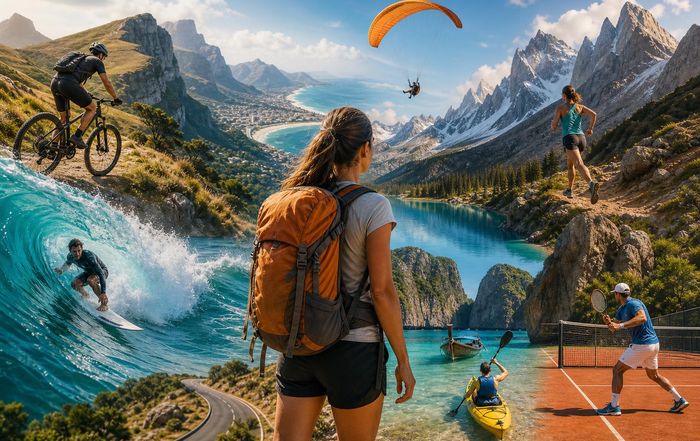
Best Global Sports Destinations for Active Travelers
For many travelers, the ideal trip is measured less in museum tickets and more in heart rate, elevation gain, or time on the water. Around the world, cities and wild landscapes have quietly become playgrounds for runners, climbers, surfers, cyclists, and multisport adventurers who want their holidays to feel like a training block and a cultural immersion at the same time.
This guide focuses on destinations where sport is deeply woven into local life, infrastructure supports active visitors, and the surrounding culture and landscape make every session memorable. It is not a ranking, but a curated set of hubs that work particularly well for international travelers who want to move, explore, and push themselves.
Along the way, you'll find links to resources for planning, safety, and performance, plus internal pointers to more coverage of sports, adventure, travel, safety, and destination themes.
Chamonix, France: Alpine playground for climbers, skiers, and trail runners
Few places condense so much mountain sport into one valley as Chamonix-Mont-Blanc. Bordered by France, Italy, and Switzerland, it has become a pilgrimage site for alpinists, trail runners, and skiers who want direct access to technical terrain, but also lifts, guides, and a town that understands why you're there.
In winter, Chamonix is famous for off-piste and backcountry skiing, with the Aiguille du Midi cable car giving access to high-alpine routes like the Vallée Blanche. The area is not a resort in the manicured sense: much of the terrain is glaciated and serious, and local guides stress avalanche awareness and crevasse rescue. The Compagnie des Guides de Chamonix, founded in 1821, remains one of the most respected guiding organizations in the Alps, and its website is a useful starting point for those considering technical routes or off-piste itineraries. The European Avalanche Warning Services network and national avalanche bulletins, such as Météo-France's avalanche forecasts, are essential daily reading in season.
Summer shifts the focus to trail running, hiking, rock climbing, and alpinism. The UTMB Mont-Blanc trail race, often described as the unofficial world championship of ultra-trail running, has helped turn the valley into a global hub for long-distance runners. Many of the UTMB trails are accessible to fit hikers and runners outside race week, and local tourism offices publish detailed maps and GPX tracks. For those new to high-alpine environments, the Office de Haute Montagne in Chamonix provides free information on route conditions and safety; it is widely regarded as one of the best mountain information centers in Europe.
Beyond the physical challenge, Chamonix works well for active travelers because the town is compact, walkable, and geared toward people who will spend their days outside and evenings refueling. It is straightforward to combine a week of hard days in the mountains with easier cultural excursions to Annecy, Geneva, or even a recovery day in Italian thermal baths via the Mont-Blanc tunnel. For readers planning multi-destination adventure itineraries, Chamonix pairs naturally with other European performance and lifestyle hubs.
Queenstown and Wanaka, New Zealand: Southern Hemisphere adventure capitals
On New Zealand's South Island, Queenstown and Wanaka have built a reputation as year-round adventure bases. The marketing language often focuses on bungee jumps and jet boats, but for active travelers the real draw is the density of trail networks, lakes, and ski areas within an hour's drive.
In winter, nearby ski fields such as The Remarkables, Coronet Peak, Cardrona, and Treble Cone provide a mix of groomed runs and freeride terrain. The New Zealand Mountain Safety Council offers detailed guides on alpine and backcountry safety, including avalanche awareness courses and trip-planning tools. Because the Southern Hemisphere seasons are reversed, Queenstown and Wanaka are particularly attractive for Northern Hemisphere skiers and snowboarders looking to extend their winter.
Summer shifts to trail running, hiking, mountain biking, and water sports. Multi-day routes like the Routeburn Track and Kepler Track are part of the country's Great Walks network, managed by the Department of Conservation (DOC). These tracks are well maintained but popular, and DOC's booking system for huts and campsites requires advance planning. Lake Wanaka and Lake Wakatipu offer stand-up paddleboarding, open-water swimming, and kayaking, with local operators increasingly emphasizing Leave No Trace principles to reduce environmental impact.
Queenstown's tourism economy means there is no shortage of outfitters, but active travelers should pay attention to the difference between short, thrill-oriented experiences and more serious, self-propelled adventures. Multi-day backcountry trips require route-finding skills, weather awareness, and appropriate gear; DOC's trip planning advice and New Zealand's MetService mountain forecasts are essential tools. For those who want to balance hard days on the trail with wine tasting or rest days, nearby Central Otago vineyards and the Queenstown Trail cycling route provide lower-intensity options.
Boulder, Colorado, USA: Endurance and outdoor culture at altitude
Within the United States, Boulder, Colorado has become synonymous with endurance sport. Sitting at about 1,655 meters (5,430 feet), the city combines altitude, extensive trail networks, a strong cycling culture, and a concentration of coaches and sports science services that attract runners, triathletes, and climbers from around the world.
The Boulder Open Space and Mountain Parks system maintains more than 240 kilometers of trails, ranging from mellow creek paths to steep climbs up Green Mountain, Bear Peak, and Mount Sanitas. These routes are heavily used by local and visiting runners; the combination of sustained gradients and altitude makes them valuable training grounds for those preparing for mountain races or marathons at lower elevations. The City of Boulder provides detailed trail maps and regulations online, including information on seasonal closures and wildlife considerations.
Cyclists gravitate to classic road routes like the climbs up Flagstaff Mountain and Lefthand Canyon, as well as gravel and mountain bike trails in nearby Nederland and Golden Gate Canyon. The Colorado Department of Transportation and organizations such as Bicycle Colorado publish cycling safety and route guidance that are worth reviewing, particularly for visitors unfamiliar with high-altitude riding and rapidly changing weather. For triathletes, the Boulder Reservoir offers open-water swimming in season, and the city hosts multiple triathlon events, including historically significant Ironman-branded races.
Boulder's appeal is not purely about training metrics. The town's café and brewery culture, proximity to Rocky Mountain National Park, and easy access to Denver International Airport make it a practical base for combining sport with broader travel and lifestyle experiences. However, visitors should be realistic about altitude effects; the Centers for Disease Control and Prevention (CDC) provides guidance on altitude sickness that is relevant for anyone flying directly from sea level.
Tokyo and the Japanese Alps: Urban energy meets mountain endurance
Japan offers a distinctive blend of dense urban running routes, organized sports culture, and surprisingly wild mountains. Tokyo stands out as a city where active travelers can move easily between early-morning laps around the Imperial Palace and weekend trail runs or ski days in the Japanese Alps.
Within Tokyo, the 5-kilometer loop around the Imperial Palace is one of the world's best-known city running circuits, with dedicated running stations that offer lockers and showers. The Tokyo Metropolitan Government promotes active commuting and publishes information on cycling routes and rules, though visitors should be aware that cycling infrastructure is still developing compared with some European cities. Organized races, from local 10Ks to the Tokyo Marathon, reflect a deep national interest in distance running and team relay races (ekiden).
Beyond the capital, regions such as Nagano, Toyama, and Gifu provide access to the Northern Alps and ski areas including Hakuba Valley and Nozawa Onsen. These resorts have drawn increasing numbers of international skiers and snowboarders, attracted by consistent snowfall and tree skiing. The Japan National Tourism Organization (JNTO) offers detailed regional guides covering ski resorts, hiking routes, and transport logistics, including the extensive rail network that makes weekend mountain trips feasible from major cities.
Culturally, Japan rewards travelers who are willing to adapt to local norms around bathing, noise, and shared spaces. Many mountain towns revolve around onsen (hot springs), which play a role in post-exercise recovery and social life; the Ministry of Health, Labour and Welfare provides guidance on public bath hygiene and etiquette that is worth reviewing. For trail users, organizations like the Japan Alpine Club and local authorities are gradually expanding English-language information on route conditions and safety, but some areas still require more self-reliance than comparable European or North American destinations.
Cape Town, South Africa: Mountains, oceans, and multisport days
Few cities can match Cape Town for the sheer variety of sports accessible within a short radius. The city is framed by Table Mountain, the Atlantic Seaboard, and False Bay, enabling combinations of trail running, surfing, kitesurfing, road cycling, and diving in a single trip.
Table Mountain National Park, a UNESCO World Heritage Site, offers a dense network of hiking and running routes. Popular ascents such as Platteklip Gorge and Lion's Head are well trafficked but still demand respect: steep gradients, heat, and rapidly changing weather can catch visitors off-guard. SANParks, the South African National Parks authority, provides official information on routes, safety, and permits and strongly encourages hikers to travel in groups and carry adequate water. Trail running has grown significantly, with events like the Ultra-Trail Cape Town drawing international elites.
On the water, Muizenberg is a major surf learning spot, while Bloubergstrand and Langebaan are globally recognized kitesurfing destinations thanks to consistent summer winds. The World Surf League and local surf organizations publish guidance on local breaks and conditions, though visitors should also be aware of rip currents and cold-water exposure; South Africa's National Sea Rescue Institute (NSRI) maintains beach safety resources. Road cyclists gravitate toward the Chapman's Peak Drive and the route of the Cape Town Cycle Tour, one of the world's largest timed cycling events.
Cape Town also raises questions about safety and inequality that active travelers should take seriously. While many outdoor areas are heavily used and generally safe in daylight, reputable local advice on neighborhoods, transport, and gear security is important. Several universities and NGOs in South Africa, including the Institute for Security Studies, publish crime and safety analyses that can help put risks in context. For those interested in the intersection of sport, culture, and social change, community surf and running programs in townships offer a more complex view of how outdoor activities intersect with local realities.
Interlaken and the Bernese Oberland, Switzerland: Precision-run adventure infrastructure
Switzerland's Interlaken region has long marketed itself as an adventure hub, but what sets it apart for active travelers is the combination of reliable transport, clear signage, and safety-oriented regulation layered onto dramatic mountain terrain. The twin lakes of Thun and Brienz, alongside easy access to Jungfrau, Mürren, and Grindelwald, make it possible to design multi-sport days that still start and end on a precise train schedule.
The Swiss Alpine Club (SAC) manages an extensive network of mountain huts, marked trails, and via ferrata routes. Its website and guidebooks provide detailed route descriptions, difficulty ratings, and safety information, and many hut wardens offer up-to-date advice on conditions. For hikers and trail runners, the color-coded Swiss trail system (yellow for hiking, white-red-white for mountain trails, white-blue-white for alpine routes) gives a quick visual indication of technical difficulty, though visitors must still assess their own ability realistically.
Water sports on the lakes include stand-up paddleboarding, kayaking, and swimming, with water quality that is among the highest in Europe. The Swiss Federal Office for the Environment publishes data on water quality and temperature, which can be useful for planning open-water sessions. In winter, nearby ski areas such as Jungfrau Ski Region and Schilthorn offer a mix of groomed runs and off-piste options, and Switzerland's national avalanche bulletin from the WSL Institute for Snow and Avalanche Research SLF is considered one of the most detailed in the world.
Switzerland's reputation for order extends to its approach to liability and insurance. International visitors planning higher-risk activities should review their travel insurance policies carefully, paying attention to exclusions related to off-piste skiing, mountaineering above certain altitudes, or use of ropes and crampons. For readers interested in the business side of mountain tourism, the region also offers a case study in how innovation and rail-based access can shape sustainable adventure economies.
Costa Rica's Pacific Coast: Surf, jungle, and soft-adventure balance
For travelers who want active days in a tropical setting without highly technical demands, Costa Rica's Pacific Coast offers a blend of surfing, jungle trekking, and wildlife watching that can be dialed up or down depending on fitness and skill. Regions such as Guanacaste, Nicoya Peninsula, and the area around Dominical and Uvita have become established surf and yoga hubs with eco-tourism infrastructure.
Surf spots range from beginner-friendly beach breaks like Tamarindo and Nosara to more powerful waves at Playa Hermosa near Jacó. The Costa Rican Tourism Institute (ICT) maintains official information on surf regions and seasons, while independent surf forecasting sites provide day-to-day data on swell and wind. Many surf schools emphasize safety briefings on rip currents, reef hazards, and board handling, which is particularly important for first-time surfers.
Beyond the waves, national parks such as Manuel Antonio, Marino Ballena, and Corcovado offer hiking and wildlife viewing. The National System of Conservation Areas (SINAC) oversees these parks and provides guidance on permitted activities, trail conditions, and conservation rules. While most marked trails are accessible to moderately fit visitors, heat, humidity, and insects can make distances feel longer than they appear on paper; starting early and carrying sufficient water is non-negotiable.
Costa Rica has positioned itself as a leader in eco-tourism, with government and private initiatives around carbon neutrality and forest conservation. However, active travelers should still scrutinize the claims of individual operators. Certifications such as the Certification for Sustainable Tourism (CST), administered by ICT, and third-party standards like Rainforest Alliance can provide additional assurance, but they are not guarantees. Balancing surf sessions with low-impact wildlife tours and respect for local communities aligns with broader ethics conversations around adventure travel.
How to choose the right sports destination for your trip
The destinations above highlight different combinations of terrain, infrastructure, and culture. Choosing the right one depends on more than just the sport you want to pursue. A few factors consistently shape whether an active trip feels rewarding or frustrating.
First, match the technical level and objective risk of the destination to your current skills and appetite for learning. High-alpine environments like Chamonix or Interlaken can be transformative but demand avalanche awareness, crevasse knowledge, and route-finding experience, or the willingness to hire certified guides. Organizations such as the International Federation of Mountain Guides Associations (IFMGA) maintain directories of accredited guides that can help you avoid unqualified operators. Softer-adventure hubs like Costa Rica or urban running bases like Tokyo may be better starting points for those newer to outdoor sports.
Second, consider seasonality and climate carefully. Many of the world's best sports destinations have pronounced peak seasons with crowded trails, busy lifts, and higher prices. Shoulder seasons can offer quieter experiences but may come with unstable weather, closed facilities, or limited public transport. National meteorological agencies, from Météo-France and MetService New Zealand to the Japan Meteorological Agency, provide long-range and mountain-specific forecasts that are more reliable than generic weather apps for planning.
Third, think about how sport intersects with local culture and economics. In some places, such as Boulder or Queenstown, outdoor recreation is a central part of identity and business. In others, like parts of rural Japan or South Africa, visitors may be moving through communities where tourism is just one of several economic pressures. Engaging local guides, respecting access agreements, and supporting small, locally owned businesses can help ensure that adventure travel contributes positively rather than displacing existing livelihoods. For those interested in the broader business of sports tourism, reports from organizations like the World Tourism Organization (UNWTO) on adventure and nature tourism trends provide useful context.
Finally, build in time and flexibility for rest and unexpected opportunities. Over-scheduling back-to-back high-intensity days, especially at altitude or in heat, increases injury risk and can undermine the enjoyment that makes active travel appealing in the first place. Many of the destinations highlighted here are also strong cultural or culinary centers; leaving space for a night market in Tokyo, a vineyard visit near Queenstown, or a museum afternoon in Geneva can turn a training-focused trip into a more rounded experience.
Active travel is ultimately about aligning where you go with how you want to move through the world. Whether your idea of a perfect day is a tempo run at sunrise and a mountain hut dinner at dusk, or a first surf lesson followed by a slow walk through a coastal town, the growing ecosystem of global sports destinations makes it possible to design trips that prioritize motion and meaning in equal measure.