

Smart Recovery After Intense Outdoor Adventures: What Really Works
Long trail runs, alpine climbs, surf marathons, backcountry ski days, or multi-pitch routes deliver the kind of fatigue you feel in your bones. The difference between thriving and breaking down often comes not from how hard you go, but from how well you recover.
Recovery is not passive time off. It is an active process that restores muscle function, regulates your nervous system, reduces injury risk, and prepares you for the next session. For people who build their lives around sport, adventure, and travel, a smart recovery plan is as important as gear choice or route planning.
This guide brings together current sports science, practical field experience, and safety considerations to outline the most effective ways to recover after intense outdoor activities-whether you're pushing big mileage in the mountains, logging long days in the surf, or stacking sessions on a destination trip.
For related performance and safety coverage, you can also explore Xdzee's sections on sports, adventure, performance, safety, and travel.
Start with the basics: Hydration, electrolytes, and energy
Intense outdoor sessions often combine high exertion with heat, cold, altitude, or humidity. That makes fluid and electrolyte balance one of the most critical elements of recovery.
Research from the American College of Sports Medicine suggests that even a 2% loss of body mass from dehydration can impair performance and cognitive function, while more severe losses increase the risk of heat illness and cardiac strain. After long or hot efforts, your first recovery goal is to gradually restore fluid balance without overdoing it.
Plain water is often enough for sessions under about 60-90 minutes in moderate conditions. After longer or hotter efforts, or anything with heavy sweating (desert hikes, summer trail ultras, tropical surf trips), you'll usually recover better by combining water with sodium and some carbohydrate. Sports nutrition guidelines from organizations such as Gatorade Sports Science Institute and UK Sport recommend including sodium in post-exercise fluids to help retain water and restore plasma volume, especially for heavy sweaters or those prone to cramps.
A practical approach is to drink to thirst over the first few hours post-activity rather than forcing large volumes at once. If you have access to a scale, checking pre- and post-activity body weight can help you gauge fluid loss and guide replacement, though this is less practical on remote expeditions. Urine color is a rough but useful field indicator: pale straw usually suggests adequate hydration, while dark, strong-smelling urine may indicate dehydration.
Energy replenishment is equally important. Glycogen-the stored carbohydrate in your muscles and liver-fuels most moderate-to-high intensity efforts. Studies summarized by the International Olympic Committee indicate that consuming carbohydrate soon after exercise (especially within the first 2 hours) accelerates glycogen resynthesis, particularly when intake is repeated across the recovery window. That matters if you have another demanding day coming up, such as back-to-back ski touring or multi-day trekking.
In practical terms, that could mean a combination of real food (rice, potatoes, pasta, bread, fruits) and liquids (recovery shakes, smoothies, chocolate milk) that are easy to digest when appetite is low. Adventure athletes often underestimate how many calories they've burned, especially in cold or high-altitude environments where the body works harder to maintain temperature, so deliberate refueling is essential.
Protein timing and muscle repair
Intense outdoor activities-steep climbs, technical descents, long runs, or heavy pack carries-produce microscopic muscle damage. Recovery is the period when that damage is repaired and, with consistent training, leads to adaptation and strength gains. Protein intake is central to that process.
Consensus statements from the American College of Sports Medicine and International Society of Sports Nutrition indicate that most active people benefit from daily protein intakes around 1.2-2.0 grams per kilogram of body weight, with higher ranges more relevant during heavy training blocks or energy deficits. For endurance and adventure athletes, the goal is not body-building but supporting muscle repair, immune function, and resilience.
The so-called "anabolic window" after exercise is now understood to be more flexible than once thought, but there is still an advantage to distributing protein intake across the day and including a dose in the hours after intense work. A post-activity meal or snack with around 20-40 grams of high-quality protein (depending on body size) supports muscle protein synthesis. This can come from whole foods-eggs, dairy, fish, poultry, legumes, tofu-or from convenient options like whey or plant-based protein powders when you're traveling or camping.
For multi-day expeditions, planning protein sources can be challenging due to weight and storage constraints. Dehydrated meals, jerky, powdered dairy or soy, and shelf-stable tofu or tuna packets can help. Under-fueling protein on long trips is associated with muscle loss, slower recovery, and impaired immune function, which can increase susceptibility to infections-a concern in remote environments where medical help is limited.
Sleep: The most underrated performance enhancer
No recovery strategy can compensate for chronic sleep deprivation. During sleep, the body releases growth hormone, consolidates motor learning, and orchestrates immune and hormonal processes critical for adaptation. Studies reviewed by organizations like the Sleep Foundation and NCAA Sport Science Institute show that restricting sleep undermines reaction time, decision-making, mood, and injury risk-all key factors for complex outdoor environments.
For most adults, 7-9 hours per night is the baseline recommendation, but adventure athletes often need more during heavy training or multi-day objectives. Quality matters as much as quantity. Fragmented sleep in noisy hostels, cramped vans, or high-altitude huts can erode recovery even if total time in bed looks acceptable.
Practical strategies include prioritizing a consistent wind-down routine, minimizing late-night screen exposure, and managing caffeine intake earlier in the day. On expeditions, simple interventions-earplugs, eye masks, warm sleep systems, and a stable pre-sleep snack-can significantly improve rest. Cold, hunger, and anxiety about the next day's objective are common sleep disruptors; planning gear and food carefully, and debriefing with partners, can reduce those stressors.
Short naps (20-30 minutes) can be helpful during intense training blocks or travel days, but they should complement, not replace, adequate night-time sleep. Longer daytime naps close to bedtime can interfere with night sleep and undermine overall recovery.
Active recovery vs. total rest
After a brutal mountain run or a long day on steep terrain, it can be tempting to collapse and avoid movement altogether. Yet evidence from sports science suggests that light activity on the following day often supports better recovery than complete rest, particularly for reducing delayed onset muscle soreness (DOMS) and restoring range of motion.
Active recovery typically involves low-intensity movement that increases blood flow without adding significant stress: easy cycling, gentle swimming, relaxed hiking, or mobility circuits. A paper in the Journal of Sports Sciences notes that such activity can help clear metabolic byproducts and support tissue healing, though it does not magically eliminate muscle damage.
The key is intensity control. Many endurance athletes turn "easy" days into stealth workouts, blurring the line between recovery and training. For adventure and outdoor sports, where terrain can be unpredictable, it may be smarter to use controlled environments-flat bike paths, mellow pools, or simple body-weight mobility sessions-on designated recovery days to avoid accidental overexertion.
There are times when full rest is appropriate, particularly after very long events (ultra-distance races, multi-day alpine pushes) or when there are signs of significant strain: persistent joint pain, extreme fatigue, elevated resting heart rate, or disturbed sleep. Knowing when to move and when to truly stop is a skill that develops with experience and, when in doubt, can be guided by sports medicine or physiotherapy input.
Heat, cold, and compression: What the evidence says
Outdoor athletes are increasingly surrounded by recovery tools: ice baths, saunas, compression boots, massage guns. Many of these can be useful, but their effects are often more modest and context-dependent than marketing suggests.
Cold water immersion (CWI) and ice baths are widely used to reduce soreness and perceived fatigue after intense sessions. Reviews in journals such as the Scandinavian Journal of Medicine & Science in Sports suggest that CWI can reduce DOMS and help athletes feel more recovered in the short term. However, some studies indicate that frequent use of intense cold immediately after resistance or strength-focused sessions may blunt long-term training adaptations by dampening inflammatory signaling that drives muscle growth. For outdoor endurance activities, occasional cold exposure-such as a river dip after a long run-may be more about comfort and short-term function than long-term gains, but it is worth being cautious about overuse if strength development is a priority.
Heat therapies, including saunas and hot baths, can promote relaxation, increase blood flow, and may support cardiovascular adaptations. Research on heat acclimation shows that repeated sauna sessions can improve thermoregulation and plasma volume, which may benefit athletes training in hot environments. Organizations like USA Triathlon and Australian Institute of Sport have published guidelines on using heat for acclimation and recovery, emphasizing gradual exposure and hydration.
Compression garments and pneumatic compression devices are another popular option. Systematic reviews, including work summarized by World Athletics and various sports medicine bodies, indicate that compression may modestly reduce perceived muscle soreness and improve subsequent performance in some contexts, though effects vary and are often small. For traveling athletes, compression socks can also help reduce leg swelling and lower the risk of deep vein thrombosis on long flights, especially when combined with regular movement.
These modalities are best seen as optional tools layered on top of fundamentals-nutrition, sleep, and smart training-rather than magic solutions. They can be particularly helpful during dense competition or expedition schedules when subjective freshness matters, but they should not distract from core recovery practices.
Mobility, stretching, and myofascial work
Outdoor activities often involve repetitive movement patterns-running, pedaling, skinning uphill-or sustained positions like gripping rock holds or crouching on a board. Over time, these can create stiffness, imbalances, and reduced range of motion if not countered with mobility work.
Static stretching after intense exercise can temporarily reduce muscle strength and power, so performance-focused athletes now tend to prioritize dynamic warm-ups before activity. For recovery, however, gentle static stretching and mobility work can support comfort, joint health, and relaxation, particularly when combined with breathing exercises.
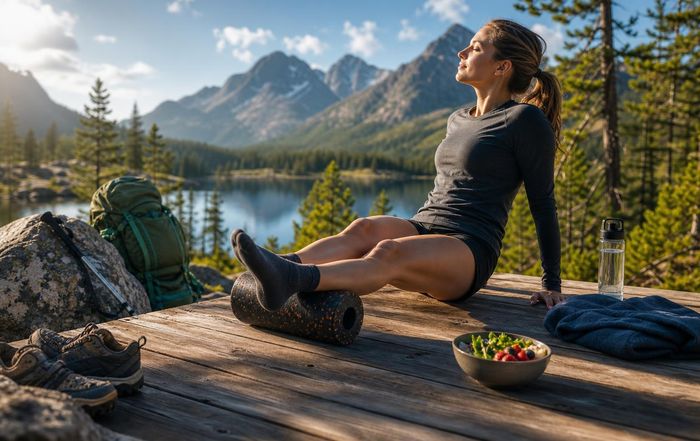
Foam rolling and other forms of self-myofascial release have gained popularity for managing soreness and tightness. Reviews in journals such as Sports Medicine suggest that foam rolling can modestly reduce DOMS and improve short-term range of motion, though mechanisms are not fully understood and benefits are not huge. Still, many athletes find these techniques subjectively helpful, and they can be integrated into evening routines or travel days.
For adventure enthusiasts tackling technical sports, targeted mobility can also be a safety tool. Adequate ankle dorsiflexion supports stable descents; hip mobility aids scrambling, skiing, and climbing; shoulder mobility helps paddlers and climbers maintain efficient form. Incorporating short, consistent mobility sessions a few times per week-rather than sporadic, long stretching marathons-tends to produce better results and is easier to maintain when on the road.
Managing inflammation and pain safely
Inflammation is a normal, necessary part of adaptation. Completely blocking it is neither possible nor desirable. The challenge for outdoor athletes is managing pain and excessive inflammation without undermining long-term progress or masking serious injury.
Non-steroidal anti-inflammatory drugs (NSAIDs) like ibuprofen are widely used in endurance and mountain sports, sometimes casually during events or expeditions. However, guidance from bodies such as UK Athletics, World Anti-Doping Agency (WADA), and Mayo Clinic highlights important risks: gastrointestinal bleeding, kidney stress (especially when dehydrated), and potential interference with tendon and bone healing. Using NSAIDs prophylactically or in high doses during ultra-endurance events has been associated with increased rates of complications.
For most athletes, it is safer to reserve NSAIDs for short-term use under medical guidance, rather than as routine training or racing tools. Non-drug strategies-ice for acute injuries, compression and elevation for swelling, gentle movement, and appropriate rest-should be first-line responses. If pain persists, worsens, or is associated with swelling, instability, or systemic symptoms (fever, night sweats, unexplained weight loss), evaluation by a sports medicine professional is essential.
Nutritional strategies for managing chronic low-grade inflammation are an active area of research. Diets rich in fruits, vegetables, whole grains, and omega-3 fats-from sources like fatty fish, flaxseeds, and walnuts-are associated with lower inflammatory markers in the general population, according to organizations such as the Harvard T.H. Chan School of Public Health. While no single food will "cure" soreness, a generally anti-inflammatory eating pattern supports overall health, which in turn improves recovery capacity.
Mental recovery and nervous system reset
High-intensity outdoor activities are not just physically demanding; they are mentally and emotionally taxing. Long days of route-finding, avalanche assessment, big-wave judgment calls, or high-consequence climbing require sustained focus. Cognitive fatigue can degrade decision-making, increasing risk in environments where mistakes have real consequences.
Sports psychologists and organizations like the American Psychological Association emphasize the importance of deliberate mental recovery: periods where the brain is not processing complex tasks or performance pressure. For adventure athletes, this might mean scheduling low-stakes days with easy terrain, unstructured play sessions (surfing mellow waves, casual rides), or time completely away from sport.
Breathwork, meditation, and mindfulness practices can help shift the nervous system from a sympathetic "fight-or-flight" state toward a more parasympathetic "rest-and-digest" mode. Simple techniques-such as slow, diaphragmatic breathing or box breathing-are easy to learn and can be used immediately after intense efforts, during travel, or before sleep to aid down-regulation.
Social connection is another critical but often overlooked factor. Debriefing big days with partners, sharing meals, or simply spending time with non-sport friends and family can buffer stress and reduce the risk of burnout. Adventure culture sometimes glorifies constant grind and solitude, but long-term performance and enjoyment usually depend on a more sustainable rhythm.
Recovery on the road: Travel, time zones, and destination logistics
Many outdoor athletes and enthusiasts travel extensively, chasing seasons, routes, and conditions. Travel itself can be a major stressor: cramped flights, jet lag, disrupted meals, and irregular sleep all undermine recovery.
Sports performance institutes, including the Australian Institute of Sport, provide practical guidance for managing jet lag and travel fatigue. Key strategies include gradually shifting sleep and meal times toward the destination schedule before departure, staying hydrated during flights, moving regularly in the cabin, and exposing yourself to daylight at appropriate times upon arrival to help reset circadian rhythms.
Nutritionally, travel days often default to processed airport food and irregular snacking. Packing simple, portable options-nuts, dried fruit, whole-grain crackers, protein bars, powdered electrolytes-can keep energy and hydration more stable. For athletes with competitions or big objectives soon after arrival, planning where and how to access balanced meals at the destination should be part of trip logistics, not an afterthought.
For those interested in integrating travel and performance more intentionally, Xdzee's destination and lifestyle coverage often explores how to align adventure trips with sustainable routines rather than short, exhausting bursts.
Recognizing when you're under-recovered or overtrained
Occasional heavy fatigue is normal after big efforts. Persistent under-recovery is different and can slide toward overtraining or relative energy deficiency if ignored. Sports medicine organizations such as World Athletics and the International Olympic Committee highlight several warning signs that warrant attention:
Noticeable performance decline over weeks despite continued hard training, disrupted sleep, unusually high resting heart rate or heart rate variability changes, persistent muscle soreness or joint pain, frequent minor illnesses, mood shifts (irritability, low motivation, anxiety), and in some cases menstrual irregularities in women or reduced libido and low energy in men.
When multiple signs cluster, the safest response is to reduce training load, prioritize rest and nutrition, and, if possible, consult a sports physician or experienced coach. For adventure athletes preparing for major expeditions or races, ignoring these signals can lead to injury or burnout that jeopardizes the very goals they're chasing.
Long-term, building structured training cycles with planned recovery weeks, rather than always pushing to the limit, is one of the most effective ways to stay healthy. Periodization is not just for elite road cyclists or track athletes; it applies just as much to climbers, trail runners, skiers, and paddlers who want to enjoy their sports for decades.
Building your personal recovery system
There is no single "best" recovery protocol that works for every outdoor athlete. Genetics, training history, age, sex, environment, nutrition, and life stress all shape how someone responds to load and rest. The most sustainable approach is to treat recovery as an experiment, guided by evidence but tuned by personal feedback.
A practical way to start is to focus on a few pillars:
Prioritize consistent sleep and nutrition, especially around intense sessions. Use active recovery and mobility work to stay moving without adding excessive stress. Add optional tools-cold, heat, compression, massage-based on how they make you feel and how they fit your schedule and budget. Pay attention to mental fatigue and emotional load, not just physical soreness. Track simple indicators over time: mood, sleep quality, resting heart rate, perceived fatigue, and performance on key routes or runs.
As your training and adventures progress, revisiting your recovery strategy is as important as upgrading gear or refining technique. For more on balancing performance, safety, and lifestyle in sport and adventure, Xdzee's sections on innovation, culture, world, and even business and jobs offer perspectives on how people are integrating high-level outdoor pursuits into modern life.
Recovery is not the opposite of adventure; it is what makes sustained adventure possible.