

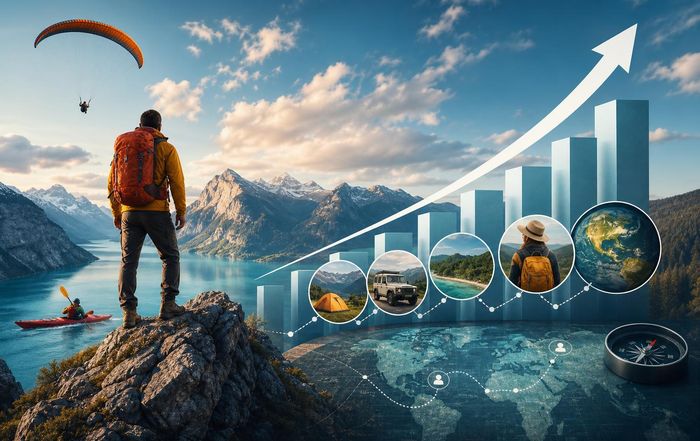
The Business Models Behind Adventure Travel Growth
Adventure Travel's Transformation into a Global Business Engine
Adventure travel has evolved from a niche pursuit into a sophisticated global industry that blends high-performance experiences, lifestyle aspirations, and responsible business practices, and xdzee.com sits at the intersection of these trends by curating stories, insights, and analysis for audiences who care about sports, travel, culture, innovation, and performance. As demand has surged from travelers in the United States, Europe, Asia-Pacific, and beyond, the sector has been reshaped by new business models that combine digital platforms, brand ecosystems, sustainability frameworks, and safety-driven operations, turning adventure from a personal passion into a structured, scalable, and investable segment of the broader travel and lifestyle economy.
The modern adventure traveler in 2026 expects more than a challenging hike in the Alps or a surf camp in Australia; they seek integrated experiences that align with their values on ethics, environmental impact, and cultural respect while still delivering the adrenaline, performance metrics, and storytelling opportunities that can be shared across social media and professional networks. This convergence of expectations has forced operators, brands, and destination leaders to rethink how they design products, manage risk, and build trust, and it has created space for premium adventure sport websites like this to connect audiences with authoritative perspectives on travel, adventure, and business strategy.
Market Dynamics Driving Adventure Travel Growth
The expansion of adventure travel is underpinned by macroeconomic, demographic, and cultural forces that have been tracked by organizations such as the Adventure Travel Trade Association and global consultancies. As incomes rise among middle and upper-middle classes in regions such as North America, Western Europe, and parts of Asia, discretionary spending increasingly flows toward experiences rather than possessions, and this shift is well documented in consumer research from firms like McKinsey & Company, which has highlighted the growing preference for "experience-first" lifestyles among younger cohorts. Learn more about how experience-driven consumption is reshaping global tourism on McKinsey's travel insights hub.
In parallel, the global recovery of tourism after the disruptions earlier in the decade has been steered by a stronger emphasis on resilience, health security, and diversified offerings, with the World Travel & Tourism Council noting that outdoor and nature-based experiences have outpaced many traditional city-break segments in growth. The World Tourism Organization (UNWTO) has similarly reported that destinations in Europe, North America, and emerging adventure hubs in Latin America and Asia have leveraged hiking, cycling, skiing, diving, and wildlife experiences to rebuild visitor numbers while spreading tourism more evenly across regions and seasons; their analysis of tourism trends offers valuable context for understanding the long-term trajectory of the sector.
From a consumer standpoint, adventure travel has benefited from the convergence of fitness culture, wellness trends, and digital performance tracking, with enthusiasts in Germany, the United Kingdom, Canada, and Japan increasingly using wearables and apps to monitor altitude gains, heart rates, and recovery metrics as part of their trips. Reports from the World Economic Forum on the future of travel and work, which explore how people blend vacations with remote working and personal development, help explain why adventure itineraries that combine physical challenge with mental reset have become particularly attractive for professionals in major business hubs; further insights can be explored through the Forum's resources on travel and tourism.
Experience-Centric and Tiered Pricing Models
At the core of the adventure travel boom are business models that place the experience, rather than the itinerary alone, at the center of value creation. Operators increasingly design tiered offerings that range from entry-level soft adventure, such as guided coastal hikes in Spain or kayaking in Canada, to high-intensity expeditions like mountaineering in the Alps or backcountry skiing in Norway, each priced according to risk, logistics complexity, and the degree of personalization. This model allows companies to capture a broader audience across different income segments and fitness levels while building long-term relationships as customers "graduate" from one tier to the next.
Many of the most successful adventure brands structure their pricing around inclusive packages that bundle guiding, equipment, accommodation, insurance, and safety protocols, thereby providing cost transparency and reducing friction for travelers who may be unfamiliar with local conditions. In markets such as the United States and Australia, where liability expectations are high, operators often integrate coverage from specialized insurers and follow guidelines aligned with best practices shared by organizations like the Outdoor Industry Association and national safety bodies, whose work is frequently referenced in discussions about adventure safety standards. For xdzee.com readers interested in how these models influence consumer choice, the emphasis on clarity and trust in pricing is as important as the physical challenge itself, and it shapes the stories featured in sections such as performance and safety.
These experience-centric models are also increasingly dynamic, with operators using data on seasonality, demand surges, and regional events to adjust pricing in real time. Similar to airline and hotel revenue management systems, advanced operators rely on analytics platforms and booking engines to optimize margins, and they benchmark their strategies against the broader tourism sector using resources from entities like the OECD and national tourism boards, which publish reports on tourism economics and demand patterns. The sophistication of these models underscores how far adventure travel has moved from improvised, small-scale operations to disciplined businesses that speak the language of yield management and lifetime customer value.
Platform Ecosystems and Digital Distribution
Digital transformation has been one of the most decisive factors in the growth of adventure travel, and it has fundamentally altered how experiences are discovered, evaluated, and booked. Major global platforms such as Booking Holdings and Expedia Group have expanded their inventories of tours and activities, while specialized marketplaces like GetYourGuide and Viator have provided adventure operators in countries from Italy and Thailand to Brazil and South Africa with access to worldwide audiences. For a deeper understanding of how online travel agencies shape distribution strategies, readers can explore industry analyses from Phocuswright, which regularly examines the tours and activities segment.
In parallel, direct-to-consumer models have gained strength as operators invest in their own websites, apps, and content channels, often supported by robust search engine optimization and partnerships with media platforms such as xdzee.com, where curated editorial coverage helps travelers navigate a crowded marketplace. This dual-channel approach allows adventure businesses to balance the reach and convenience of large platforms with the higher margins and brand control associated with direct bookings, and it encourages experimentation with subscription models, loyalty programs, and personalized recommendations based on past activities and stated preferences.
The role of social media and creator-driven content is equally important, as adventure travelers increasingly rely on video-based storytelling, long-form trip reports, and performance breakdowns to make decisions. Platforms like YouTube and Instagram have become de facto research tools, and many operators now allocate significant marketing budgets to collaborations with athletes, photographers, and micro-influencers who can authentically demonstrate the challenge, safety protocols, and cultural depth of a given itinerary. For a broader view of how digital ecosystems influence travel behavior, the Pew Research Center provides valuable data on social media usage and online trust, which in turn informs how brands design their digital presence.
Brand Partnerships and Lifestyle Ecosystems
Adventure travel's commercial expansion has been accelerated by the integration of brands from adjacent sectors such as sportswear, outdoor equipment, nutrition, and technology, leading to ecosystem-based business models that extend far beyond a single trip. Global companies like Patagonia, The North Face, Salomon, and Garmin have long recognized that their products are not merely functional gear but symbols of identity and aspiration, and they increasingly partner with tour operators, mountain guides, and destination organizations to co-create experiences that showcase new equipment, training methodologies, and sustainability initiatives. Learn more about how outdoor brands are embedding sustainability and adventure into their strategies through insights from Harvard Business Review, which frequently analyzes purpose-driven business models.
These partnerships often manifest as branded expeditions, skills clinics, or "test and learn" camps where participants in Switzerland, Norway, or New Zealand can try new skis, trail-running shoes, or navigation devices under real conditions, guided by experts and supported by detailed safety frameworks. For xdzee.com, which covers brands and lifestyle trends, these collaborations provide rich narratives about how performance, innovation, and ethics intersect, particularly when companies commit to responsible sourcing, circular product design, and long-term community engagement in the destinations they promote.
The lifestyle ecosystem model also extends into nutrition and wellness, with partnerships between adventure operators and companies producing energy foods, hydration systems, and recovery products, as well as with fitness platforms that provide pre-trip conditioning programs and post-trip analytics. This integrated approach reinforces customer loyalty by framing adventure not as a one-off escape but as part of a continuous lifestyle journey, aligned with personal health goals, professional resilience, and cultural exploration, and it helps operators stabilize demand by engaging their audience throughout the year rather than only at booking moments.
Safety, Risk Management, and Trust as Strategic Assets
In adventure travel, safety and risk management are not merely operational necessities but central pillars of the business model that directly influence brand reputation, pricing power, and regulatory acceptance. Operators working in high-risk environments such as alpine climbing in France, backcountry snowboarding in Japan, or deep diving in Thailand must adhere to stringent protocols that cover guide qualifications, equipment maintenance, weather monitoring, emergency communication, and evacuation planning, and many align their practices with guidelines from organizations like the International Climbing and Mountaineering Federation (UIAA) or national alpine clubs. For a deeper understanding of mountain safety standards, the UIAA's resources on safety and equipment norms provide a useful reference point.
Insurance and liability frameworks play a critical role, especially in markets like the United States, Canada, and the United Kingdom where legal expectations are high, and the availability of specialized adventure insurance products has enabled operators to scale more confidently. Global insurers and reinsurers, often guided by risk assessments from entities like Lloyd's of London, evaluate incident data, climate risks, and regional infrastructure to design coverage that balances affordability with comprehensive protection. Industry insights on risk and specialty insurance from Lloyd's illustrate how financial instruments underpin the viability of adventure business models.
Trust is further reinforced through transparency, third-party certifications, and external audits. Certifications related to safety, environmental management, and quality, such as ISO standards or adventure-specific schemes, provide assurance to travelers from Germany, the Netherlands, or Singapore who may be comparing operators across continents. For xdzee.com, whose readers frequently explore content in the safety and ethics sections, the presence of robust safety governance is often a key criterion in evaluating which companies and destinations to feature, as it reflects deeper organizational commitments to professionalism and accountability.
Sustainability, Ethics, and Regenerative Models
The rapid growth of adventure travel has inevitably raised questions about environmental impact, cultural sensitivity, and local equity, and these concerns have catalyzed a shift from traditional sustainability rhetoric toward more rigorous and measurable regenerative models. Organizations like the Global Sustainable Tourism Council (GSTC) have developed frameworks that help destinations and operators align with best practices in areas such as carbon management, biodiversity protection, community engagement, and labor standards, offering a blueprint for businesses that wish to move beyond minimal compliance. Learn more about sustainable tourism principles through the GSTC's resources on responsible destination management.
Many adventure operators now incorporate carbon accounting into their business models, either by integrating offset programs or, more ambitiously, by redesigning itineraries to minimize emissions through slower travel, local sourcing, and longer stays that reduce the frequency of flights. Studies by organizations such as the International Energy Agency (IEA) on transport emissions and climate pathways have heightened awareness of the climate implications of long-haul travel, prompting innovation in rail-based adventure itineraries in Europe, low-impact sailing expeditions, and domestic micro-adventures that appeal to environmentally conscious travelers in markets like Sweden, Denmark, and New Zealand.
Ethical considerations extend to labor practices and community benefit, as adventure travel often takes place in regions where local economies have historically been marginalized or dependent on volatile seasonal work. Fair wage policies, local ownership stakes, and co-created product design with indigenous and rural communities are increasingly seen as differentiators that enhance brand reputation and long-term license to operate. For authoritative perspectives on business and human rights, resources from the UN Global Compact and the OECD Guidelines for Multinational Enterprises provide guidance on responsible business conduct. These frameworks resonate strongly with xdzee.com's editorial focus on ethics and culture, where stories often examine how adventure businesses navigate the balance between commercial success and social responsibility.
Innovation, Technology, and Performance Analytics
Innovation in adventure travel is increasingly driven by technology that enhances safety, personalization, and performance measurement, turning trips into data-rich experiences that can be analyzed, shared, and optimized. Wearable devices from companies like Garmin, Suunto, and Apple track altitude, heart rate variability, sleep, and recovery, while satellite communication tools provide connectivity in remote regions of South Africa, Chile, or the Himalayas, enabling real-time adjustments to routes and rapid response in emergencies. For insights into how technology is transforming sports and outdoor performance, the MIT Sloan Sports Analytics Conference and similar forums discuss trends in sports data and analytics.
Artificial intelligence and predictive analytics are beginning to influence itinerary design and risk assessment, with some operators using machine learning models to analyze weather patterns, trail conditions, and historical incident data in order to recommend suitable activities for different client profiles. These tools can segment travelers by fitness level, risk tolerance, and previous experience, allowing for more tailored adventures that still operate within clearly defined safety margins. The broader context of AI in travel and mobility is explored by organizations like the World Economic Forum and OECD, whose reports on AI and the future of work and services help executives understand the regulatory and ethical dimensions of deploying such technologies.
For xdzee.com, which highlights innovation and performance, these technological advances are not merely tools but narrative drivers that influence how stories are told and how audiences evaluate destinations and operators. Detailed performance data, interactive maps, and immersive media allow readers to visualize the demands and rewards of specific adventures, making it easier for them to select experiences that align with their capabilities and aspirations while appreciating the expertise that underpins safe execution.
Talent, Jobs, and Professionalization of the Sector
The expansion and sophistication of adventure travel business models have created new career pathways and professionalization opportunities across the value chain, from guides and safety specialists to digital marketers, sustainability officers, and experience designers. In destinations such as Switzerland, Canada, and New Zealand, guide certification programs have become more structured and internationally recognized, often including components on wilderness medicine, risk assessment, cultural interpretation, and customer experience management, reflecting the multifaceted expectations of modern travelers. For those exploring career options, platforms and resources like LinkedIn and national skills councils provide insights into jobs in tourism and outdoor industries.
At the same time, the industry has begun to address long-standing challenges related to seasonality, precarious employment, and gender and diversity gaps, especially in high-profile guiding roles. Some operators and destination organizations now offer year-round contracts, cross-training opportunities, and leadership development programs designed to retain talent and ensure continuity of expertise, while international bodies such as the International Labour Organization (ILO) provide guidance on decent work in tourism that can be adapted to the adventure context. For readers of xdzee.com exploring jobs and career trajectories, these developments signal that adventure travel is not only a consumer trend but also a serious professional domain requiring advanced skills and ethical commitment.
The professionalization of the sector is further reinforced by academic programs in adventure tourism management, outdoor leadership, and sustainable destination development, offered by universities in the United Kingdom, Australia, Scandinavia, and North America. Collaboration between academia, industry, and policy makers has accelerated research on topics such as visitor carrying capacity, climate adaptation, and behavioral safety, and many of these insights are disseminated through journals and think tanks that influence strategic decision-making at both corporate and governmental levels.
The Role of xdzee.com in a Converging Adventure Ecosystem
In this complex and rapidly evolving landscape, xdzee.com positions itself as a trusted, experience-driven platform that connects audiences with authoritative perspectives on adventure, business, and culture, while curating stories that reflect the diversity of destinations from North America and Europe to Asia, Africa, and South America. By integrating positive inspiring coverage across sports, adventure, travel, world affairs, and business, the platform acknowledges that adventure travel is not an isolated niche but a nexus where performance, lifestyle, ethics, innovation, and economic development meet.
For executives, entrepreneurs, and professionals who follow xdzee.com, understanding the business models behind adventure travel growth in 2026 is essential for making informed decisions about investment, partnerships, and personal engagement with this sector. The integration of experience-centric pricing, digital platforms, brand ecosystems, rigorous safety frameworks, regenerative practices, technological innovation, and professional talent development has transformed adventure travel into a mature, globally relevant industry, one that offers not only unforgettable journeys but also valuable lessons in resilience, adaptability, and responsible growth.
As the industry continues to evolve, with new destinations emerging, climate and geopolitical uncertainties reshaping risk landscapes, and consumer expectations rising, the organizations that succeed will be those that combine deep expertise with transparent governance and genuine respect for the environments and communities that make adventure possible. In chronicling these developments and offering a lens that spans performance, safety, culture, and ethics, xdzee.com aims to remain a good news reference point for readers worldwide who see adventure not just as a leisure activity, but as a meaningful, carefully considered part of their lives and their engagement with the world.