

Outdoor Adventure Experiences Across Finland
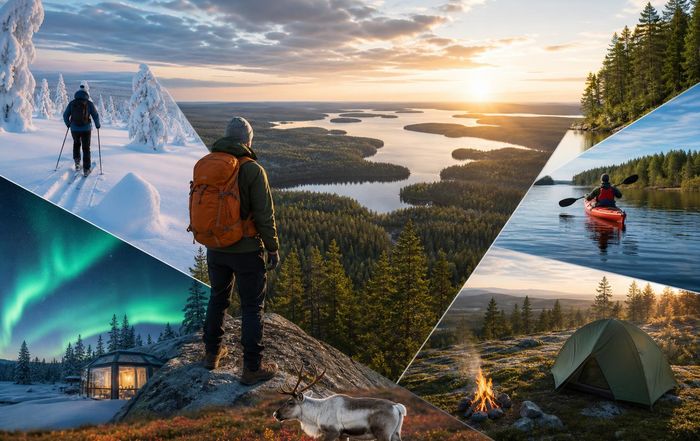
Finland's reputation for quiet forests, shimmering lakes, and long winters hides a more dynamic truth: it is one of Europe's most versatile outdoor adventure playgrounds. From Arctic ski touring and ice-climbing to packrafting through lake country and bikepacking under the midnight sun, the country offers year-round experiences that balance raw nature with a strong culture of safety and sustainability. Come and look at Finland's key adventure regions and the most compelling activities in each season, with practical context for travelers who want more than a scenic viewpoint.
Why Finland Works So Well for Outdoor Adventure
Finland's geography and culture combine to create unusually good conditions for human-powered exploration. Over 75% of the country is covered in forest and it has around 188,000 lakes, according to Statistics Finland. That density of water and woodland allows paddling, hiking, and backcountry skiing without long transfers between regions. At the same time, Finland's "Everyman's Right" (jokamiehenoikeus) gives people broad legal freedom to move through nature on foot, skis, or bicycle and to camp temporarily, provided they respect private property and the environment. The Finnish government's environment administration outlines these rights and responsibilities in detail.
This legal framework is complemented by extensive infrastructure: marked trails, lean-to shelters, wilderness huts, and well-maintained national parks managed by Metsähallitus, the state enterprise responsible for parks and forestry. The official National Parks Finland site offers maps, hut information, and route suggestions for both beginners and experienced expedition travelers. For those focused on performance and safety in remote conditions, this combination of access, information, and infrastructure can significantly reduce objective risk compared with less regulated wilderness destinations.
Culturally, outdoor activity is mainstream rather than niche. Families hike, ski, and ice-fish as part of everyday life, and outdoor skills are taught from a young age. That means guides, rental shops, and local operators are widely available even in small towns, and safety standards are generally high. For travelers planning multi-sport itineraries that mix adventure with local lifestyle and culture, this integration of nature into daily life is a distinctive part of the Finnish experience.
For readers interested in how Finland's approach compares with other adventure destinations, the broader themes of adventure and destination coverage can be a useful reference.
Lapland: Arctic Adventures Above the Arctic Circle
Northern Finland, commonly referred to as Lapland, is where the country's adventure narrative often begins. Vast roadless areas, sub-Arctic tundra, and long winters support activities that are hard to replicate further south.
Winter: Backcountry Skiing, Snowshoeing, and Aurora Nights
From roughly December to April, Lapland is dominated by snow. Resorts like Levi, Ylläs, Ruka, and Pyhä-Luosto provide lift-served downhill skiing and snowboarding with modern infrastructure. Their official sites, such as Levi Ski Resort, publish up-to-date snow reports, avalanche information, and open run status, which are essential for performance-oriented riders looking for reliable conditions.
Beyond the resorts, national parks such as Pallas-Yllästunturi, Urho Kekkonen, and Oulanka offer extensive cross-country skiing and ski-touring terrain. Marked winter trails, open wilderness huts, and route descriptions on National Parks Finland's Lapland pages make multi-day journeys accessible to experienced skiers. Snowshoeing is a lower-skill alternative that allows access to deep snow forests and fells without technical ski ability.
Lapland is also one of the most accessible places in the world to combine adventure sports with northern lights viewing. The Finnish Meteorological Institute's space weather service offers aurora forecasts, and many guides integrate short ski or snowshoe tours with late-night sky watching. For those balancing performance with lifestyle, this mix of physical effort and spectacle is a key draw.
Readers exploring winter sports more broadly can find additional context in Xdzee's sports and performance sections.
Multi-Day Arctic Expeditions and Safety Considerations
For advanced travelers, Lapland supports expedition-style adventures: pulk sled hauling across frozen lakes, ski traverses between wilderness huts, or fatbike journeys on snow-packed trails. Operators in towns like Saariselkä, Kilpisjärvi, and Inari offer logistics, rentals, and guiding.
However, Arctic conditions demand serious attention to safety. Winter temperatures can drop below -30°C, and weather changes rapidly. The Finnish Meteorological Institute provides detailed regional forecasts and warnings, and checking these is non-negotiable before committing to remote routes. Hypothermia, frostbite, and navigation errors in whiteout conditions are real risks, particularly for visitors unfamiliar with polar environments.
Travelers considering self-guided expeditions should have prior cold-weather experience, robust layering systems, and contingency plans. For many, hiring a local guide or joining a small group trip is a responsible way to access more committing terrain while managing risk. Those interested in broader safety themes around adventure travel can also refer to Xdzee's safety coverage.
Summer and Autumn: Packrafting, Bikepacking, and Trail Running
When the snow melts, Lapland transforms into a landscape of open fells, birch forests, and rivers. The midnight sun period, roughly from June to early August above the Arctic Circle, offers nearly continuous daylight. This allows long, flexible days for activities like bikepacking, trail running, and packrafting.
Rivers such as the Oulankajoki and Ivalojoki support multi-day packrafting or canoe trips that combine hiking and paddling. Oulanka National Park, home to parts of the Karhunkierros ("Bear's Trail"), is particularly popular. The 82-kilometre route is one of Finland's best-known long-distance hikes, and the official Oulanka National Park page outlines routes, camping rules, and seasonal conditions.
Bikepacking is growing quickly in Finland, and Lapland's gravel roads, snowmobile tracks, and forest trails provide varied terrain. Local tourism boards, such as Visit Rovaniemi and Inari-Saariselkä Tourism, publish route ideas and highlight services like bike-friendly accommodations and shuttle transfers. Autumn, with its intense ruska (fall foliage), is a particularly photogenic time for multi-day rides and runs, though temperatures can drop quickly at night.
Lakeland: Paddling and Island Hopping in the Finnish Lake District
Central and eastern Finland form a vast Lakeland region where water dominates the map. For paddlers, swimmers, and anyone who enjoys journeys that blend travel and relaxation, this is one of Europe's most compelling freshwater playgrounds.
Sea Kayaks on Lakes: Multi-Day Paddling Routes
Lakes such as Saimaa, Päijänne, and Kallavesi offer intricate shorelines, sheltered bays, and thousands of islands. The Saimaa area is also home to the critically endangered Saimaa ringed seal, one of the world's rarest seals. The Finnish Environment Institute provides background on conservation efforts and guidelines for minimizing disturbance, especially during the breeding season.
Multi-day canoe or kayak trips are straightforward to organize thanks to frequent campsites, lean-to shelters, and rental operators in lakeside towns. National parks like Päijänne, Linnansaari, and Kolovesi are designed with paddlers in mind, with designated landing spots and marked water routes. The Päijänne National Park pages, for example, outline island-to-island itineraries suitable for a range of skill levels.
For adventure travelers used to ocean environments, the relative shelter of Finnish lakes can be appealing, but weather can still change quickly. Sudden winds can create steep, short-period waves that challenge small craft, and hypothermia remains a concern in spring and autumn. Wearing a properly fitted PFD and planning conservative daily distances are basic safety measures that local operators and organizations such as the Finnish Canoeing and Rowing Federation emphasize.
SUP Touring, Packrafting, and Lakeside Cycling
Stand-up paddleboarding (SUP) has become widely available across Finland, and Lakeland's calm bays are ideal for longer touring days that link small towns, islands, and nature reserves. Some operators now offer overnight SUP expeditions with dry-bag transport and lightweight camping gear, appealing to those who prefer minimalist travel.
Packrafts allow flexible itineraries that combine hiking and paddling. It is possible, for example, to hike between lakes on forest trails and then inflate a packraft for crossings or shoreline exploration. This aligns well with Finland's Everyman's Right, but paddlers still need to respect private dwellings and follow local camping rules.
Cycling is another natural way to explore Lakeland. Quiet secondary roads and gravel tracks connect villages, trailheads, and harbors. The national cycling route network, documented on resources like Bikeland.fi, includes multi-day itineraries that can be combined with ferries and short paddling sections. For readers interested in how cycling fits into wider lifestyle and mobility trends, the lifestyle and innovation content pages offer broader context.
The Coast and Archipelago: Sailing, Sea Kayaking, and Island Trails
Finland's long Baltic Sea coastline, particularly the Archipelago Sea and Åland Islands, offers a different flavor of adventure: maritime rather than inland, but still relatively sheltered compared with open-ocean environments.
Sea Kayaking in a Labyrinth of Islands
The Archipelago Sea between Turku and Åland is one of the world's densest archipelagos, with tens of thousands of islands and skerries. This geography creates a complex paddling environment with short crossings, narrow channels, and constantly changing scenery. The Visit Åland website highlights sea kayaking routes and guiding services, including multi-day trips that combine wild camping with stays at small guesthouses.
Although the waters are generally sheltered, Baltic conditions demand respect. Water temperatures remain cool even in early summer, and weather can shift quickly. The Finnish Transport and Communications Agency (Traficom) provides up-to-date maritime safety information including charts and boating regulations, which are relevant to paddlers as well as sailors.
Sailing, Island Hopping, and Coastal Hiking
For sailors, Finland's coast offers an intricate cruising ground with well-marked channels, guest harbors, and traditional wooden village harbors. Charter companies in Helsinki, Turku, and Mariehamn provide bareboat and skippered options. Many itineraries combine day sailing with shore-based hiking on islands that have marked nature trails and birdwatching platforms.
On land, the Archipelago Trail near Turku links islands with ferries, bridges, and causeways, allowing cyclists and road-trippers to experience archipelago life without a private boat. Short hiking routes on islands like Korpo, Nagu, and Iniö showcase coastal forests and smooth glacial rock formations that are characteristic of the region.
The Baltic coast also intersects with cultural and ethical questions around environmental change. The sea is affected by eutrophication and warming, and organizations such as the Baltic Sea Action Group and HELCOM (the Helsinki Commission) document ecological challenges and restoration efforts. For readers interested in how adventure tourism intersects with environmental ethics, the ethics and world media can provide a broader lens.
Forests and Fells of Central and Southern Finland
While Lapland and the archipelago often grab headlines, central and southern Finland quietly host some of the country's most accessible adventure areas, especially for visitors arriving via Helsinki.
National Parks Within Reach of the Capital
Parks such as Nuuksio, Sipoonkorpi, and Repovesi are within a few hours of Helsinki by public transport or car. They offer marked hiking and trail running routes, climbing crags, and lake systems suitable for short paddling trips. Nuuksio, in particular, has become a testing ground for urban-adjacent wilderness experiences, from night-time trail runs to packrafting courses.
The official Nuuksio National Park pages include route maps, public transport access, and information on campfire rules and seasonal restrictions. These details matter because high visitor numbers can increase fire risk and trail erosion, and the park management has introduced specific regulations to mitigate impacts.
Climbing, Trail Running, and Bike Trails
South-central Finland has a growing network of mountain bike and gravel routes, with trail centers in towns like Lahti, Jyväskylä, and Tampere. Local clubs and municipalities work together to maintain these networks, and information is often shared via regional tourism sites and trail apps.
Rock climbing in Finland is mostly on granite crags and boulders. Areas like Olhava in Repovesi National Park are known for their trad routes above a lake, while bouldering areas are scattered across southern Finland. The Finnish Climbing Association (Suomen Kiipeilyliitto) provides guidelines on access and safety (in Finnish, with some English), emphasizing respect for nesting birds, private land, and local regulations.
Trail running events, such as the Nuuksio Classic Trail Marathon and Karhunkierros Trail Run, have helped popularize technical forest and fell trails among both domestic and international runners. For performance-driven athletes, these races offer a structured way to experience Finnish terrain while benefiting from marked routes, aid stations, and medical support.
Seasonal Planning: When to Go and What to Expect
Finland's adventure potential is tightly linked to its seasons, which are more pronounced than in much of Western Europe. Timing a trip around specific conditions can make the difference between a memorable experience and a logistical struggle.
Winter (December-March): Snow and Polar Night
In most of Finland, reliable snow cover is present from late December through March, with Lapland's season often stretching from November into April. This is prime time for cross-country skiing, snowshoeing, and resort-based downhill sports. In northern Lapland, the polar night period brings very short days or continuous twilight, which affects route planning and safety. Headlamps, reflective clothing, and a conservative approach to daily distances are essential.
Ice safety is a critical winter issue. Lakes and coastal areas may appear solid but can have weak spots near inlets, outlets, and currents. The Finnish Ice Conditions Service within the Meteorological Institute publishes ice charts and bulletins, which are a valuable reference for anyone considering ice-skating, snowmobiling, or ski touring on frozen water.
Spring and Early Summer (April-June): Shoulder Season Complexity
Spring can be a transitional and sometimes tricky period. In the south, trails become muddy and icy, while in the north, snowpack can be unstable and river ice may be breaking up. On the other hand, late spring in Lapland can offer excellent "crust skiing," where firm snow surfaces allow fast travel.
By late May and June, most hiking trails in southern and central Finland are open, and lakes are ice-free. This is a good time for early-season paddling and bikepacking, but travelers should be prepared for mosquitoes, especially in forest and wetland areas. Lightweight head nets and appropriate clothing can make a big difference to comfort and performance.
High Summer (July-August): Midnight Sun and Warm Water
Summer brings long days, warmer water, and the most stable period for multi-day paddling, hiking, and cycling. In southern Finland, lake temperatures can reach 20-24°C, making swimming a normal part of daily life. Popular areas can be busy, and campsites in well-known national parks may require advance booking for huts or designated tent areas.
This is also the main season for cultural events and festivals, allowing travelers to combine outdoor days with evenings focused on local food, music, or design. For those interested in how adventure and culture intersect, our culture and travel features offer broader perspectives.
Autumn (September-November): Ruska Colors and Early Snow
September is often considered a favorite month among Finnish outdoor enthusiasts. Cooler temperatures, fewer insects, and vivid foliage create excellent conditions for hiking and bikepacking. In Lapland, the ruska period is relatively short but intense, typically peaking in early to mid-September.
By October and November, conditions become more unpredictable. Snow may arrive in the north while southern trails turn wet and dark. This can still be a rewarding time for those comfortable with variable weather and shorter days, but it demands flexible planning and appropriate gear.
Safety, Ethics, and the "Everyman's Right"
Finland's outdoor freedom comes with responsibilities that are increasingly important as adventure tourism grows.
Understanding Everyman's Right
Everyman's Right allows people to move through nature and camp temporarily without landowner permission, but there are clear limits. You cannot, for example, camp on someone's yard, damage trees, disturb wildlife, or light open fires when there is a forest fire warning. The Ministry of the Environment's guidance on Everyman's Rights outlines what is allowed and what is prohibited.
For international visitors, this can be a cultural adjustment: the freedom to roam is generous, but it depends on mutual trust. Leaving no trace, minimizing noise near cabins, and giving reindeer, birds, and other wildlife space are all part of maintaining that trust.
Safety Culture and Rescue Services
Finland has a well-developed safety culture, but remoteness remains a factor in many regions. Mobile phone coverage is generally good, yet there are still dead zones in deep valleys and far-northern areas. The Emergency Response Centre Agency coordinates rescue operations, and the emergency number 112 is used nationwide. The agency's 112 Suomi app can transmit location data to dispatchers, which is particularly valuable in remote environments.
Adventure travelers are expected to be self-reliant within reason: carrying appropriate clothing, navigation tools, first-aid supplies, and enough food and water. Guides and rental operators will often ask about prior experience before allowing access to more technical equipment, reflecting a preventative approach to accidents.
For those thinking about how personal risk management fits into broader adventure planning, Xdzee's safety and adventure reporting provides additional frameworks.
Balancing Adventure, Culture, and Everyday Finnish Life
One of Finland's strengths as an outdoor destination is the way serious adventure can coexist with everyday comfort. It is possible to spend a day ski touring or paddling in a remote-feeling landscape and then return to a lakeside sauna, a small town restaurant, or a design-focused hotel. This balance appeals to travelers who want demanding days outside but also value sleep, nutrition, and recovery-key elements of sustainable performance over multi-week trips.
Sauna culture is perhaps the most visible bridge between outdoor exertion and local lifestyle. After winter sports or cold-water swimming, Finns routinely use sauna to warm up and relax. The Sauna from Finland association and UNESCO's recognition of sauna culture as intangible cultural heritage underline how central this ritual is to national identity. For visitors, participating respectfully-following local etiquette on nudity, quiet conversation, and cooling-off breaks-is part of understanding the country beyond its landscapes.
Food also reflects a close relationship with nature: seasonal berries, mushrooms, freshwater fish, and game appear in both home cooking and restaurant menus. For multi-day trips, this can translate into simple but satisfying camp meals that draw on regional ingredients, whether purchased in local markets or foraged within the rules set out by Everyman's Right.
For travelers planning a broader itinerary that mixes outdoor days with urban stops in Helsinki, Tampere, or Turku, our travel and destination fresh and updated pages offer additional ideas on how to weave adventure into a wider exploration of Finnish culture and innovation.
Finland's outdoor experiences are not defined by a single headline activity but by the cumulative effect of many well-designed possibilities: Arctic ski traverses, lake-to-lake paddling journeys, archipelago island hopping, forest trail running, and everyday access to nature even near cities. For travelers willing to engage with the seasons, respect local rights and responsibilities, and embrace both challenge and quiet, the country offers a depth of adventure that can unfold over repeated visits rather than a single checklist trip.