

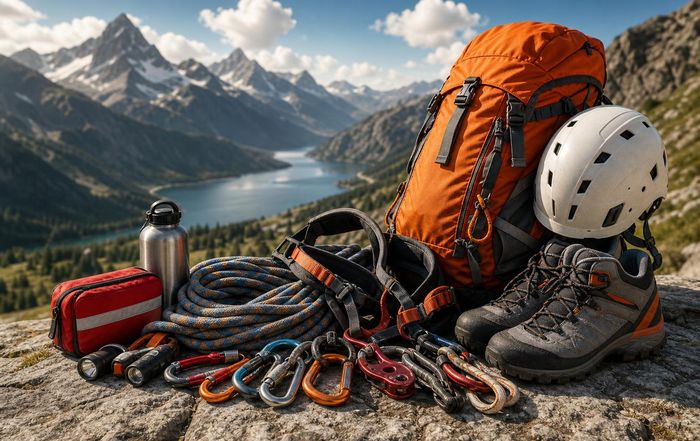
How to Choose Safe Gear for Adventure Sports
Adventure sports promise intensity, freedom, and a break from routine-but the margin for error is often slim. Whether it is climbing, mountain biking, whitewater kayaking, backcountry skiing, or skydiving, the gear you pick can quietly tilt the odds toward a great day out or a serious incident. Choosing safe equipment is not just about buying the most expensive helmet or the latest gadget; it is about understanding standards, fit, maintenance, and how each piece works within a system.
This guide focuses on how to evaluate safety gear across a range of adventure sports, what certifications to look for, how to balance weight and performance against protection, and how to avoid some of the most common mistakes people make when they gear up for risk-heavy activities.
For people exploring specific disciplines, you can find more sport-focused coverage in our sports, adventure, and performance sections, as well as broader safety perspectives in safety and destination.
Start with the risk profile of your sport
Before choosing gear, it helps to be clear about what you are actually protecting yourself from. Different adventure sports expose participants to different primary risks: high-speed impacts, falls from height, cold-water immersion, rockfall, avalanche, or prolonged exposure to cold and altitude.
Organizations such as the UIAA (International Climbing and Mountaineering Federation) and national mountain safety bodies like the American Alpine Club and British Mountaineering Council regularly publish incident reports and analyses that show patterns in accidents. These reports often reveal that injuries cluster around a few predictable mechanisms: head trauma, spinal injuries, lower-limb fractures, hypothermia, and drowning. A similar pattern emerges in ski and snowboard injury data compiled by the International Society for Skiing Safety and in surf and water sports safety research from Surfing Australia and other national bodies.
Understanding the main injury mechanisms in your sport should shape your priorities. A downhill mountain biker might focus on full-face head protection and spine coverage, while a canyoner or kayaker might prioritize helmets that disperse point impacts and PFDs (personal flotation devices) designed for turbulent water. A climber heading into alpine terrain has to consider both fall protection and environmental exposure-insulation, windproofing, and avalanche preparedness.
When you know what is most likely to go wrong, you can more rationally evaluate which pieces of gear are critical, which are nice-to-have, and where shaving weight or budget is genuinely acceptable.
Learn the safety standards that actually matter
Most serious adventure-sport equipment is tested against formal standards, which specify how gear must perform under controlled conditions. These standards are not perfect, but they are a baseline. For many categories, buying non-certified gear for serious use is a calculated risk.
Some of the most important standards and bodies include:
Helmets
Climbing and mountaineering: UIAA 106 and EN 12492, focusing on impact and penetration from falling objects and falls.
Cycling and mountain biking: EN 1078 in Europe, CPSC in the United States, and additional downhill standards like ASTM F1952 for full-face MTB helmets.
Skiing and snowboarding: ASTM F2040 and EN 1077.
Whitewater: EN 1385 for water-sports helmets.
Ropes, harnesses, and hard goods
Climbing ropes: EN 892 / UIAA 101 for dynamic ropes; EN 1891 for low-stretch ropes.
Harnesses: EN 12277 and UIAA 105.
Carabiners and hardware: EN 12275, EN 362, and corresponding UIAA standards.
Buoyancy and flotation
Lifejackets and PFDs: ISO 12402 series and regional approvals such as USCG (U.S. Coast Guard) Type I-V classifications.
Surf vests and impact vests: often follow variants of EN or ISO buoyancy standards, but usage can be more discipline-specific.
Avalanche safety
Transceivers (beacons): must comply with EN 300 718 and operate at 457 kHz, the global standard frequency.
Airbag packs: tested under standards such as EN 16716 for avalanche airbag systems.
When you evaluate gear, look for explicit references to these standards on product labels, manuals, or manufacturer websites. Major organizations like the UIAA Safety Label program maintain searchable lists of certified equipment, which can be particularly useful if you are buying from a lesser-known brand or in a new market.
If a piece of critical safety gear does not list any recognizable standard, or relies only on vague language such as "tested to industry norms" without specifics, treat that as a warning sign.
Fit and comfort: the often-overlooked safety factor
A certified helmet that does not fit your head is effectively unsafe. The same is true for harnesses that ride too high, PFDs that slip over your chin in the water, and climbing shoes so painful that they alter your movement.
Fit affects safety in several ways. Poorly fitting helmets may rotate on impact, exposing parts of the skull, or transfer force to the neck. Ill-fitting harnesses can concentrate load in the wrong place during a fall, increasing the risk of injury. Oversized PFDs may ride up in the water, making it harder to keep airways clear. And boots or bindings that do not match your stance or foot shape can cause fatigue and slower reactions, which matter in high-speed sports like skiing, snowboarding, and mountain biking.
Most governing bodies, including the International Ski Federation and national outdoor councils, emphasize the importance of professional fitting for helmets, boots, bindings, and harnesses. In practice, that means taking time to try on multiple models, adjusting straps and buckles fully, and, where possible, working with an experienced technician or guide who understands both the equipment and the demands of the specific activity.
Comfort is not a vanity metric here. If a piece of safety gear is so uncomfortable that you are tempted to loosen it, remove it, or avoid wearing it altogether, its protective value disappears precisely when you need it most.
Balancing weight, performance, and protection
Modern adventure sports gear is heavily influenced by performance culture: lighter, faster, more breathable. That is a legitimate pursuit-weight savings and improved mobility can increase safety by reducing fatigue and allowing more precise movement. But there are trade-offs.
In climbing and mountaineering, for example, ultralight helmets and harnesses often use thinner shells and less padding. They still meet minimum standards like EN 12492 and EN 12277, but they may be more vulnerable to repeated impacts, abrasion, or off-axis forces than heavier models. Similarly, minimalist ski-touring boots and bindings can sacrifice some downhill control and retention compared with alpine setups, which matters in variable snow or at high speed.
Mountain-bike and gravity-sport communities have seen a similar debate between lighter trail helmets and more protective full-face or enduro designs that meet stricter downhill standards such as ASTM F1952. Data from organizations like Trails and Greenways Alliance partners and IMBA suggest that higher-speed, technical terrain is associated with more severe head and facial injuries, which supports the argument for more comprehensive protection in those environments.
The key is to match the level of protection to the realistic risk profile of your activity, not the idealized version. If you frequently ride bike parks or steep enduro trails, weight should not be the primary driver of your helmet choice. If you mostly climb single-pitch sport routes at roadside crags, an ultralight alpine harness may be overkill and less comfortable than a more padded model designed for hanging belays.
Evaluating materials and construction quality
Beyond certifications, the construction details of gear tell you a lot about its likely durability and performance in the field. Adventure sports often involve repeated small impacts, abrasion, UV exposure, and moisture, all of which can degrade materials over time.
For helmets, there are two main construction types: in-mold designs that fuse a thin polycarbonate shell to an EPS foam liner, and hard-shell designs with a thicker ABS outer layer. In-mold helmets are typically lighter and more ventilated, making them popular for cycling and climbing, but hard shells can be more resistant to repeated knocks, which is why they remain common in rental fleets and water sports. Some manufacturers also use expanded polypropylene (EPP) foam, which can better tolerate multiple minor impacts, although it still has limits.
Climbing ropes are usually made of nylon, with different sheath weaves and treatments. UIAA tests for dynamic ropes include fall ratings, impact force, and elongation, but sheath thickness and construction affect how well a rope resists abrasion and sharp edges. Technical documents from manufacturers like Petzl, Mammut, and Edelrid, as well as UIAA rope safety notes, offer useful insight into how different constructions behave in real-world use.
In water sports, materials like neoprene, PVC, and various foams vary widely in durability and UV resistance. Reports from organizations such as the Royal National Lifeboat Institution and national coast guards emphasize that damaged or degraded buoyancy material can significantly reduce flotation, even if the garment still "looks" functional.
When inspecting gear, look at stitching quality, reinforcement in high-wear areas, smoothness of moving parts like buckles and cams, and whether the manufacturer provides clear guidelines on lifespan and retirement. Vague or absent guidance is not a good sign for critical equipment.
New technologies: useful advances or marketing noise?
Adventure sports gear has seen a wave of new technologies: MIPS and other rotational-impact systems in helmets, avalanche airbags, electronic climbing devices, GPS-enabled beacons, smartwatches with fall detection, and more. Some of these have strong evidence behind them; others are still being studied or are more about convenience than safety.
In helmet design, systems like MIPS (Multi-directional Impact Protection System) aim to reduce rotational forces transmitted to the brain during angled impacts by allowing the shell to move slightly relative to the head. Independent testing programs such as Virginia Tech's helmet ratings for cycling and snowsports have found that some rotational systems can reduce measured rotational acceleration in lab tests, although these ratings are not formal safety certifications and do not replace standards like CPSC or EN 1078.
Avalanche airbags have become common in backcountry skiing and snowboarding. Studies summarized by the Swiss Federal Institute for Forest, Snow and Landscape Research (WSL/SLF) and organizations like the Avalanche Canada suggest that airbags can reduce burial depth and mortality in certain avalanche types, but they are far from a guarantee. Importantly, they only help if deployed in time, and they must be paired with traditional rescue gear: transceiver, probe, and shovel.
Electronic belay devices, GPS trackers, and smartphone-based emergency apps can improve communication and rescue times. However, rescue services such as Mountain Rescue England and Wales and the U.S. National Park Service consistently stress that technology can fail: batteries die, signals drop, and devices break. They should support, not replace, foundational skills in navigation, avalanche assessment, ropework, and self-rescue.
When evaluating new tech, look for independent testing, peer-reviewed research, or endorsement from credible bodies rather than relying solely on brand marketing. Ask whether the technology addresses a real, frequent problem in your sport-or mainly adds complexity, cost, and potential failure points.
Buying used or discounted gear: where to draw the line
Adventure sports are expensive, and the second-hand market or deep discounts can be tempting. In some categories, buying used can be relatively low risk; in others, it is a bad idea.
Generally, it is safer to buy used for items where:
You can visually and functionally inspect the product thoroughly (e.g., skis, bikes, outerwear).
The consequences of hidden damage are less catastrophic.
The seller can provide a clear history of use and storage.
But for critical life-safety items, most experts advise caution or outright avoidance. This includes:
Climbing ropes, harnesses, slings, and soft goods with unknown history.
Helmets that may have experienced impacts.
Avalanche transceivers with unclear service history or outdated firmware.
PFDs and lifejackets where internal foam degradation is hard to detect.
The UIAA, Petzl, and other major manufacturers all explicitly warn against using second-hand PPE (personal protective equipment) unless you can fully verify its history and condition. Many professional guides and rescue organizations follow the same principle.
Discounted new gear from reputable retailers is a different story. Older models and colorways often go on sale when new lines are launched. Provided the product still meets current safety standards, has not exceeded any manufacturer-stated shelf life, and has been stored correctly, it can be a safe and cost-effective option. Check manufacturer websites for any recall notices or safety alerts before buying heavily discounted items, especially online.
Matching gear to environment and destination
The same sport can require very different equipment depending on where you practice it. A via ferrata route in the Dolomites, a big-wall climb in Yosemite, and an indoor gym session all involve climbing, but the gear choices and safety considerations differ substantially.
Destination-specific factors include altitude, temperature, humidity, remoteness, local rescue infrastructure, and terrain type. For example, trail runners in the Scottish Highlands are more likely to face cold, wet, and rapidly changing conditions than runners on well-marked desert trails in the American Southwest, which shifts the emphasis toward waterproof layers, emergency insulation, and navigation tools.
International mountaineering and trekking organizations such as the UIAA Mountain Medicine Centre and International Climbing and Mountaineering Federation partners provide guidance on altitude illness, cold injuries, and appropriate clothing systems. For water-based destinations, national coast guards and surf lifesaving organizations offer region-specific advice on currents, water temperature, and recommended gear.
When planning trips, especially to remote regions or new countries, it is worth checking local regulations and norms. Some European via ferrata routes, for example, explicitly require EN 958-certified via ferrata lanyards, not improvised systems. Certain national parks mandate specific PFD types for river sections. Backcountry ski areas in parts of Europe and North America strongly recommend, or effectively require, carrying avalanche gear during certain seasons.
Readers looking to combine gear choices with destination planning can explore regional overviews in our travel and destination coverage, which often highlight local regulations and typical conditions.
Skills, training, and the limits of equipment
No matter how advanced or carefully chosen, gear cannot compensate for gaps in judgment, fitness, or technical skills. Accident analyses across climbing, snow sports, paddling, and other disciplines repeatedly show that human factors-route choice, group dynamics, overconfidence, poor communication-play a central role, even when equipment functions as designed.
Organizations such as the American Institute for Avalanche Research and Education (AIARE), Avalanche Canada, the American Canoe Association, and national climbing and mountaineering councils all stress that safety gear is effective only when paired with formal instruction and regular practice. An avalanche transceiver is useless if you cannot perform a search quickly under stress; a rescue throw bag is dead weight if you have never practiced river rescues.
For many adventure sports, a sensible progression involves:
Introductory courses that cover basic movement skills, hazard recognition, and gear use.
Supervised practice with guides or experienced mentors.
Gradual increase in objective difficulty, not just technical grade or speed.
Regular refreshers on emergency procedures, including first aid and rescue scenarios.
From a gear perspective, this means choosing equipment that you can realistically operate under pressure. Complex binding systems, multi-mode belay devices, or feature-heavy GPS units can be powerful tools, but only if you have taken the time to understand them deeply before heading into consequential terrain.
Building a practical safety gear checklist
While every sport and trip is different, it helps to think of safety gear in categories rather than as a random pile of products. A basic framework might include:
Impact and fall protection: helmets, harnesses, ropes, carabiners, quickdraws, belay devices, pads, body armor.
Buoyancy and water safety: PFDs, throw bags, leashes, wetsuits or drysuits, helmets rated for water.
Environmental protection: layered clothing systems, gloves, goggles, sun protection, emergency bivy or shelter.
Navigation and communication: maps, compasses, GPS devices, satellite messengers, whistles, headlamps.
Rescue and medical: first-aid kits tailored to the activity, repair kits, multi-tools, avalanche gear (transceiver, probe, shovel, and possibly airbag).
Redundancy and backup: spare batteries, extra layers, backup belay or rappel options, additional food and water.
As you refine your checklist for specific activities, cross-reference with recommendations from sport-governing bodies, guide services, and rescue organizations. Many provide downloadable or printable lists for climbing, backcountry skiing, paddling, and more, which you can adapt to your own needs.
Our safety, adventure, and world sections regularly highlight how these categories play out in real incidents and expeditions, offering additional context for building your own systems.
When to retire or upgrade your gear
One of the most overlooked aspects of gear safety is knowing when to say "enough" and retire equipment. Manufacturers usually provide guidelines on shelf life (how long unused gear can remain in storage) and service life (how long it can be used in the field). For example, many climbing soft goods are rated for a maximum of 10 years from manufacture under light use, but intensive or harsh use can shorten that dramatically. Helmets often have recommended replacement intervals of 3-10 years, depending on materials and usage, and must be replaced immediately after a significant impact.
Visual inspection is essential but not always sufficient. UV damage, chemical exposure, and micro-cracks can be invisible. Safety bulletins from the UIAA and major manufacturers often include case studies where gear that looked fine failed under load due to hidden degradation.
It is also worth considering upgrades when standards or technology change meaningfully. For example, if you still use an analog avalanche beacon or an early digital model with limited search capabilities, upgrading to a modern three-antenna transceiver can materially improve search speed and range. Similarly, older PFDs that no longer meet current buoyancy standards or lack crotch straps where recommended may be worth replacing, even if they appear intact.
Budget constraints are real, but when you consider the cost of medical treatment, rescue operations, and lost work time after an accident, timely replacement of critical gear is often a rational investment rather than an indulgence.
Integrating safety into your adventure mindset
Choosing safe gear for adventure sports is not a one-time shopping exercise; it is an ongoing process of learning, evaluating, maintaining, and occasionally retiring equipment. It sits alongside route planning, partner choice, and self-awareness as a core part of how people manage risk in high-consequence environments.
For those pushing into new disciplines or destinations, it can be useful to think of gear as part of a broader performance and lifestyle system, not a separate add-on. Well-chosen equipment can make it easier to focus on movement, enjoy the landscape, and stay present with partners, rather than constantly worrying about what might fail.
As you refine your own approach, draw on multiple sources: formal standards, manufacturer documentation, independent testing, guide advice, and the hard-earned lessons shared in accident reports and rescue analyses. And remember that the most important safety gear is the judgment that decides when, where, and how to use everything else.
For more perspectives on risk, performance, and modern adventure culture, you can explore related daily reporting across our lifestyle, innovation, and ethics pages, where questions about responsibility, technology, and the changing nature of outdoor sports continue to evolve.