

Innovation in Wearable Technology for Athletes: Performance, Safety, and the Next Competitive Edge
The New Competitive Frontier in Global Sport
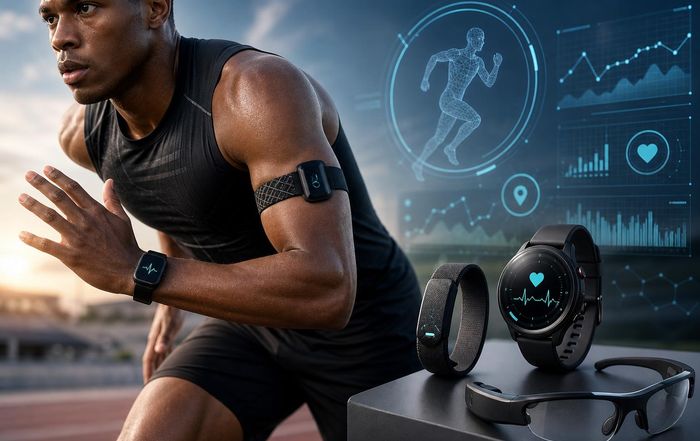
Wearable technology has moved from experimental curiosity to strategic necessity across elite and recreational sport, reshaping how athletes train, compete, recover, and even negotiate contracts. From the packed stadiums of the United States and United Kingdom to high-altitude training centers in Kenya and cutting-edge performance labs in Germany, data-driven insight has become as valuable as physical talent. For the global audience of xdzee.com, whose interests span sports, adventure, travel, lifestyle, performance, safety, innovation, ethics, and business, this transformation is not merely about gadgets on wrists; it is about a profound shift in how human potential is understood, measured, and monetized.
Wearable technology now extends well beyond basic fitness trackers. Smart fabrics, instrumented footwear, AI-powered mouthguards, connected helmets, and sensor-embedded compression garments are redefining the athlete's relationship with their own body. Organizations such as FIFA, World Athletics, the National Basketball Association (NBA), and the International Olympic Committee (IOC) are adapting regulations to accommodate and govern these tools, while technology leaders including Apple, Garmin, Whoop, Catapult Sports, and Polar are racing to push the boundaries of what can be measured in real time. As the industry matures, the conversation has shifted from "Can this be done?" to "How can it be done safely, ethically, and profitably?"
In this landscape, xdzee.com occupies a distinctive position as a platform that connects performance-focused readers with broader perspectives on sports, adventure, travel, lifestyle, and business, enabling a holistic understanding of how wearable innovation is reshaping both athletic careers and everyday active lives.
From Heart Rate to Holistic Biometrics
The evolution of wearables in sport can be traced from simple step counters to sophisticated, medically adjacent systems capable of continuous multi-parameter monitoring. Early generations focused on basic metrics such as steps, heart rate, and calories burned, but advances in sensor miniaturization, battery efficiency, and wireless connectivity have made it possible to capture an integrated picture of an athlete's internal and external load.
Modern devices from companies like Garmin and Polar now provide high-resolution heart rate variability, advanced sleep staging, respiration rate, blood oxygen saturation, and training load scores, while platforms such as Whoop emphasize recovery and strain as core metrics. Readers interested in the underlying science can explore how organizations like the Mayo Clinic explain heart rate variability and athletic performance. At the same time, GPS and inertial measurement units deliver precise speed, distance, acceleration, and positional data, allowing coaches in professional leagues across Europe, North America, and Asia to quantify every sprint, deceleration, and change of direction.
For xdzee.com's audience of performance-focused travelers and adventure enthusiasts, these developments are not confined to stadiums. Endurance athletes preparing for marathons in London, cycling tours in France, ski expeditions in Switzerland, or trail runs in New Zealand now routinely use the same class of devices as professionals to manage training load and reduce injury risk. This convergence of elite and everyday technology underpins a new culture of self-quantification, in which individuals can access insights previously reserved for national teams and leading sports institutes.
Smart Fabrics, Embedded Sensors, and the Disappearing Device
One of the most significant shifts since 2020 has been the move from visible devices to invisible systems integrated directly into clothing and equipment. Smart textiles and flexible electronics allow sensors to be woven into compression garments, socks, and base layers, capturing muscle activation patterns, joint angles, and impact forces without adding weight or restricting movement.
Research institutions such as MIT and ETH Zurich have made substantial progress in conductive fibers and washable sensor arrays, and readers can learn more about smart textiles and e-textiles research through their public updates. In parallel, companies like Catapult Sports have pioneered GPS-enabled vests that are now standard in top-tier football clubs across Spain, Italy, Germany, and England, where every movement in training and competition is tracked and analyzed.
For athletes in high-risk adventure sports covered on xdzee.com/adventure, such as alpine climbing, backcountry skiing, or ocean sailing, embedded sensors in jackets, helmets, and boots are becoming essential safety tools. They monitor temperature, altitude, and fall impacts, and can trigger alerts in case of dangerous events. This trend aligns with xdzee.com's focus on safety, as technology becomes a silent partner in risk management for expeditions from the Himalayas to the Andes and the Arctic.
The long-term trajectory points toward the "disappearing device," where the distinction between clothing, equipment, and wearable technology fades, and athletes simply wear performance-optimized gear that continuously collects and transmits data to cloud-based analytics platforms.
Performance Analytics: Turning Data into Competitive Advantage
The true value of wearables lies not in raw data collection but in the ability to transform that data into actionable insight. In 2026, high-performance programs in Australia, Canada, Japan, and South Korea rely on integrated analytics platforms that combine wearable data with video analysis, subjective wellness reports, and contextual information such as travel schedules, altitude, and climate.
Organizations like FIFA and World Rugby have collaborated with technology providers to standardize certain data formats, enabling more consistent benchmarking across leagues and tournaments. For a deeper understanding of these trends, readers may explore how global sports bodies approach data and technology in modern competition. At the club level, data scientists and performance analysts work alongside coaches to identify subtle patterns: a slight drop in high-intensity running in the final 15 minutes, a progressive decline in sleep quality during congested fixture periods, or increased asymmetry in ground contact time after a minor injury.
For the xdzee.com community, which often blends professional ambition with adventurous lifestyles, this analytical shift offers a template for self-management. Endurance athletes, weekend warriors, and adventure travelers can apply similar principles to optimize their training before major trips, whether preparing for trekking in Nepal, surfing in Australia, or cycling across the Netherlands. The same analytics that help a professional footballer in Spain avoid overtraining can help a business traveler maintain energy and health during a demanding international schedule, an intersection that aligns with xdzee.com's integrated coverage of performance, lifestyle, and travel.
Injury Prevention, Safety, and Long-Term Health
Perhaps the most important contribution of wearable innovation lies in the realm of safety and long-term health. Concussion awareness, sudden cardiac events, heat illness, and overuse injuries have all driven demand for technology that can detect risk earlier and intervene more effectively.
In contact sports such as American football, rugby, and ice hockey, instrumented mouthguards and helmet sensors from companies like Prevent Biometrics and Riddell measure head impact forces and frequencies, providing data that helps medical staff and governing bodies refine protocols. Organizations such as the Centers for Disease Control and Prevention (CDC) offer guidance on concussion safety in youth and professional sport, and wearable data is increasingly incorporated into these frameworks.
Cardiac monitoring has also become more sophisticated. Smartwatches from Apple, Samsung, and Garmin can now detect irregular heart rhythms and provide ECG-like readings, which have already led to documented life-saving interventions for athletes and active individuals. For readers seeking a deeper medical perspective, institutions such as the Cleveland Clinic explain how wearables support heart health monitoring.
In hot and humid environments, particularly relevant in regions like Thailand, Singapore, Brazil, and parts of Africa, wearables that track core temperature, sweat rate, and hydration status help mitigate the risk of heatstroke and performance decline. Military research, including studies shared by the U.S. Department of Defense, has influenced the design of such systems, which are now being adapted for civilian sport and adventure use.
This emphasis on safety resonates strongly with xdzee.com's commitment to responsible performance and ethical adventure. As more readers engage in demanding activities across diverse climates and terrains, integrating wearables into personal risk management strategies becomes a logical extension of informed travel and training planning.
Ethics, Data Privacy, and the Athlete's Digital Identity
The rapid growth of wearable technology has raised complex ethical and legal questions about data ownership, privacy, and consent. Athletes at all levels now generate continuous streams of sensitive biometric information, which can reveal not only current performance capacity but also injury risk, mental fatigue, and long-term health trajectories.
In professional sport, player unions and governing bodies in regions such as Europe, North America, and Australia are negotiating frameworks that determine who owns wearable data, how it can be used in contract discussions, and what protections exist against misuse. Legal experts and organizations like the Electronic Frontier Foundation (EFF) discuss digital privacy and biometric data in a broader civil rights context, and these conversations are increasingly relevant to sports technology.
For readers of xdzee.com, whose interests include ethics, business, and jobs, these developments present both risks and opportunities. Sports technology companies must establish robust governance policies, transparent data practices, and clear communication with users. At the same time, new career paths are emerging in sports data compliance, ethical AI, and athlete data advocacy.
The European Union's regulatory initiatives, including the General Data Protection Regulation (GDPR) and evolving AI governance frameworks, influence how wearable companies operate globally. Readers can learn more about European data protection rules to understand how athletes in Germany, France, Italy, Spain, and the Netherlands benefit from stronger protections. For xdzee.com, which serves a worldwide audience, highlighting these regulatory differences supports more informed decision-making for athletes, coaches, and adventurous travelers who use wearables across borders.
Business, Brands, and the Global Sports Technology Economy
The economic impact of wearable innovation in sport has been profound. Market analysts estimate that the global sports and fitness wearable market will continue to grow significantly through the late 2020s, driven by increased participation in recreational sport, the expansion of elite leagues in Asia and Africa, and the integration of wearables into corporate wellness and insurance programs.
Major technology brands such as Apple, Google, Samsung, and Huawei compete alongside specialized sports companies like Garmin, Suunto, Whoop, and Catapult Sports. Traditional performance brands including Nike, Adidas, Puma, and Under Armour are embedding sensors into footwear and apparel, blurring the line between fashion, function, and data. Those interested in the business dimension can explore industry reports and market analyses from firms like McKinsey & Company, which track investment flows and strategic partnerships.
For xdzee.com, which maintains a dedicated focus on brands and business, this convergence of technology and sport represents a rich narrative space. New sponsorship models are emerging where brands not only provide equipment but also data platforms and performance services. Insurance companies in Canada, Sweden, and Singapore are piloting programs that offer premium reductions for policyholders who share wearable data demonstrating consistent physical activity and healthy sleep patterns, creating powerful incentives for adoption.
In parallel, start-ups in hubs such as Berlin, London, San Francisco, Toronto, and Singapore are building niche solutions for specific sports, from rowing and cricket to climbing and ultra-endurance events. These companies often rely on cloud infrastructure from providers like Amazon Web Services (AWS) and Microsoft Azure, which offer scalable platforms for processing and analyzing large volumes of sensor data. Readers can learn more about cloud-based sports analytics to understand how infrastructure underpins performance insights.
Jobs, Skills, and the Emerging Sports-Tech Workforce
The growth of wearable technology has created a new ecosystem of jobs that sits at the intersection of sport, data science, engineering, and health. Performance analysts, sports data scientists, biomechanists, UX designers, firmware engineers, sports physicians, and ethical AI specialists are now integral to the operations of clubs, federations, and technology companies in North America, Europe, and Asia-Pacific.
Universities in the United States, United Kingdom, Australia, and Netherlands are expanding programs in sports analytics, biomechanics, and human performance engineering, while online platforms and professional associations offer continuing education for coaches and practitioners. Organizations such as the National Strength and Conditioning Association (NSCA) and UK Sport provide guidance on integrating technology into evidence-based coaching practices, and interested readers can explore professional development resources to understand how credentials adapt to a data-rich environment.
For the xdzee.com audience, which has a strong interest in jobs and career mobility, this sector offers attractive opportunities. Professionals with backgrounds in software development, machine learning, physiology, or sports coaching can transition into roles that blend passion for sport with cutting-edge innovation. As remote collaboration becomes more common, specialists in Finland, Denmark, South Africa, or Brazil can contribute to global projects without relocating, reinforcing the truly worldwide character of this industry.
Culture, Lifestyle, and the Athlete-Explorer Identity
Wearables are also reshaping cultural narratives around sport and active living. The boundary between "athlete" and "adventurer," "professional" and "enthusiast," is becoming more fluid, as people in Japan, Italy, Canada, and New Zealand use wearables to structure their training, document their journeys, and share performance milestones with global communities.
Social platforms and training apps integrate wearable data to create virtual challenges, remote coaching programs, and digital leaderboards that span continents. A runner in Berlin can compete with a cyclist in Sydney or a hiker in Cape Town, linking personal goals to global communities. This dynamic aligns closely with xdzee.com's role as a hub for culture, destination, and world coverage, where sport, travel, and lifestyle intersect.
At the same time, there is growing recognition of the need for balance. Constant measurement can create pressure and anxiety, particularly among younger athletes and high-achieving professionals. Health organizations such as the World Health Organization (WHO) provide guidance on healthy physical activity and mental well-being, reminding users that technology should support, not dominate, active lifestyles. For xdzee.com's readers, who often juggle demanding careers, family responsibilities, and ambitious adventure plans, the challenge is to use wearables as tools for awareness and improvement rather than sources of constant self-judgment.
Innovation Pathways: AI, Personalization, and the Next Wave
Looking ahead from 2026, the next phase of innovation in athletic wearables will be defined by artificial intelligence, personalization, and seamless integration across devices and environments. AI-driven coaching systems are already analyzing wearable data in real time to adjust training sessions, recommend recovery strategies, and flag early signs of overtraining or illness, and platforms like Strava and TrainingPeaks are incorporating more predictive analytics into their services.
As edge computing becomes more powerful, more processing will occur directly on devices, reducing latency and enhancing privacy. This is particularly important for safety-critical applications such as fall detection in mountain sports or real-time heart monitoring during high-intensity competition. Companies and research labs are experimenting with non-invasive glucose monitoring, advanced lactate estimation, and continuous blood pressure tracking, which could transform endurance training and health management if brought to market successfully. Readers can learn more about emerging biosensing technologies through scientific outlets like Nature that track progress in this field.
For xdzee.com, the evolution of wearable innovation aligns directly with its editorial focus on innovation, performance, and safety. As the platform continues to cover new destinations, sporting events, and adventure trends, wearables will feature not only as products but as integral components of how readers plan, execute, and reflect on their experiences, whether navigating ultra-marathons in South Africa, ski touring in Norway, or urban cycling in Amsterdam.
Positioning Xdzee in the Wearable-Enabled Future of Exciting Sport News
In this rapidly evolving environment, xdzee.com is well positioned to serve as a trusted guide for readers who wish to harness wearable technology intelligently and responsibly. By connecting insights from elite sport, global business, ethical governance, and cultural trends, the platform can help athletes, adventurers, and professionals make informed decisions about which technologies to adopt, how to interpret their data, and how to balance ambition with long-term health.
As the lines between local and global, amateur and professional, sport and lifestyle continue to blur, wearables will remain central to how individuals understand their bodies, manage risk, and pursue performance. For a worldwide audience spanning the United States, United Kingdom, Germany, Canada, Australia, France, Italy, Spain, Netherlands, Switzerland, China, Sweden, Norway, Singapore, Denmark, South Korea, Japan, Thailand, Finland, South Africa, Brazil, Malaysia, and beyond, the story of innovation in wearable technology for athletes is ultimately a story about human potential, informed by data yet grounded in experience.
Through continuous coverage across news, world, sports, and lifestyle, xdzee.com can accompany its readers on this journey, helping them integrate cutting-edge tools into meaningful, safe, and inspiring pursuits, wherever in the world their next performance or adventure may unfold.