

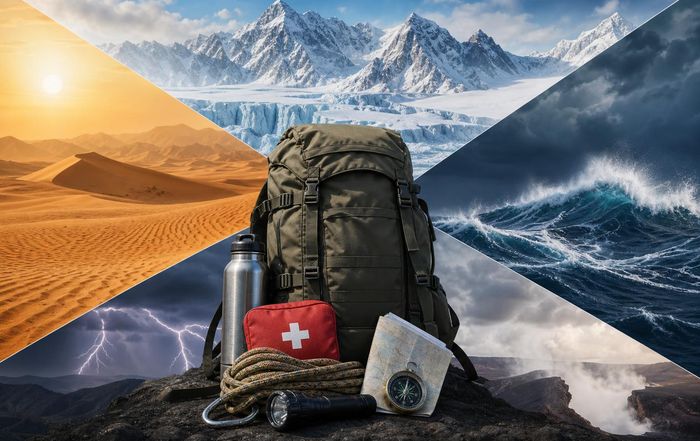
Travel Safety Discussion and Lessons From Extreme Environments
Why Extreme Environments Matter to Everyday Travelers
Global travel has not only rebounded but diversified, as more travelers from North America, Europe, Asia and beyond pursue experiences that push the limits of comfort and geography, from winter expeditions in Norway and Finland to desert treks in the United States and the Middle East, high-altitude adventures in South America and the Alps, and remote island escapes across Southeast Asia and the Pacific. While the active subscribing members and visiting non-members here drawn to sports, adventure, performance and the thrill of new destinations, the most valuable lessons often come from the world's harshest environments, where survival depends on disciplined preparation, rigorous safety culture and an unwavering respect for nature's power. These lessons, refined in polar regions, high mountains, deep wilderness and conflict-affected zones, are increasingly relevant to business travelers, leisure tourists and digital nomads who may never set foot in Antarctica but who still face complex risks in a rapidly changing world.
Extreme environments function like a high-intensity training ground for travel safety, compressing risks that exist everywhere-weather volatility, health emergencies, technology failures, geopolitical shifts-into conditions where mistakes have immediate consequences. Organizations such as NASA, polar research institutes, elite mountaineering teams and global expedition operators have developed robust frameworks that can guide the modern traveler, whether planning a ski trip to Switzerland, a surf holiday in Australia, a cultural immersion in Japan or a business conference in the United Kingdom. For top readers of xdzee, who navigate an intersection of moderated and curated lifestyle, brands, performance and global mobility, understanding these principles is not about becoming an explorer; it is about adopting an expert mindset that transforms travel from reactive improvisation into proactive risk management, without losing the sense of wonder that makes exploration meaningful.
The Psychology of Risk: Mindset Before Equipment
The most important safety lesson from extreme environments is psychological rather than technical: in polar crossings, Himalayan ascents or deep-desert expeditions, successful teams cultivate a mindset that treats risk as a dynamic variable to be monitored, not an obstacle to be ignored or conquered. Research from organizations such as the American Psychological Association shows that cognitive biases like overconfidence, groupthink and optimism bias can undermine decision-making under stress, especially when travelers assume that technology or tour operators will automatically keep them safe. Learning to recognize these biases is as essential for a weekend hiking trip in Canada as it is for an ice-climbing expedition in Iceland.
This mindset begins with pre-mortem thinking, a technique used by high-reliability organizations and recommended in risk management literature from institutions such as Harvard Business Review, where teams imagine a future failure and work backward to identify what went wrong. Applied to travel, this means systematically asking how plans might fail-lost luggage, missed connections, extreme weather, medical emergencies, civil unrest-and building layered contingencies rather than relying on a single optimistic scenario. Travelers who embrace this approach are better prepared to adapt routes in response to real-time data from trusted sources such as the World Meteorological Organization, aviation authorities or national travel advisories, and they are less likely to be paralyzed by surprise when conditions change.
For an audience that values performance and adventure, this psychological discipline does not diminish spontaneity; instead, it creates a foundation that allows for informed improvisation. By approaching every journey with the seriousness of an expedition briefing, readers of xdzee.com can integrate safety into their travel identity in the same way athletes integrate injury prevention into training, transforming caution from a constraint into a competitive advantage in how they experience the world.
Environmental Intelligence: Reading Weather, Terrain and Climate Signals
Expedition leaders in Antarctica, the Arctic or high mountain ranges in the Alps and Himalayas treat environmental awareness as a core professional skill, not a background concern delegated to apps or guides. They study weather systems, terrain features and seasonal patterns through authoritative sources such as the National Oceanic and Atmospheric Administration and the UK Met Office, and they cross-check forecasts with on-the-ground observations. This level of environmental intelligence is increasingly important for mainstream travelers, as climate change amplifies the frequency of heatwaves, storms, wildfires and flooding events across Europe, North America, Asia and Africa.
In practice, environmental intelligence for travelers begins with understanding the specific vulnerabilities of each destination rather than relying on generic advice. A summer trip to Spain or Italy may now involve exposure to extreme heat, requiring strategies for hydration, shade and schedule management, while a winter sports holiday in Switzerland or Austria demands awareness of avalanche conditions and snowpack stability, where local avalanche bulletins and mountain rescue services provide critical insights. Travelers heading to tropical destinations such as Thailand, Malaysia or Brazil must consider monsoon seasons, cyclone risks and vector-borne diseases, using resources like the World Health Organization to track health-related environmental alerts and recommended precautions.
Readers of xdzee.com who are passionate about adventure and destinations can deepen their engagement by treating environmental research as part of the experience rather than a bureaucratic hurdle. By exploring specialized portals before departure and following regional meteorological services, travelers gain not only safety advantages but also a richer appreciation of local geography and climate patterns, aligning with the platform's emphasis on informed, culturally aware exploration that respects both natural systems and host communities.
Equipment Lessons: Redundancy, Simplicity and Smart Technology Use
In extreme environments, equipment strategy is guided by three principles: redundancy, simplicity and appropriate technology. Polar explorers, for example, do not rely on a single navigation tool; they carry GPS devices, traditional compasses and physical maps, understanding that batteries fail in cold temperatures and that digital systems can be disrupted. This layered approach to redundancy can be applied directly to modern travel, where smartphones often serve as the sole repository for boarding passes, hotel confirmations, visa documents and navigation tools. When that single point of failure is lost, stolen or damaged, the traveler's entire journey is compromised.
A safety-oriented traveler in 2026 mirrors expedition practice by carrying critical backups: printed copies of key documents, offline maps, contact lists stored separately from the primary device and, where appropriate, secondary communication tools such as satellite messengers for remote trekking in regions like Norway, New Zealand or South Africa. Guidance from organizations like REI Co-op and The Mountaineers emphasizes that essential gear should be durable, easy to operate under stress and chosen for reliability rather than novelty. This translates into broader travel decisions, from selecting luggage that can withstand rough handling to choosing travel clothing that balances performance, cultural appropriateness and safety visibility in low-light conditions.
At the same time, technology remains a powerful ally when used intentionally. Location-sharing features, medical ID functions on smartphones, real-time translation tools and digital health records can dramatically improve safety outcomes if configured before departure. Cybersecurity guidance from agencies such as the U.S. Cybersecurity and Infrastructure Security Agency underscores the importance of securing devices on public Wi-Fi networks, especially for business travelers who carry sensitive corporate data. For readers of xdzee.com interested in the intersection of brands, innovation and lifestyle, the challenge is to curate a personal technology ecosystem that supports resilience, rather than chasing every new gadget without assessing its failure modes or integration into an overall safety plan.
Human Factors: Team Dynamics, Leadership and Communication
Extreme environment incidents, from mountaineering accidents to polar expedition crises, frequently reveal that human factors-communication breakdowns, unclear leadership, fatigue-induced errors-play a more decisive role than raw environmental conditions. Analyses conducted by organizations such as the National Transportation Safety Board and the European Union Aviation Safety Agency consistently show that structured communication protocols and clearly defined roles reduce accidents in high-risk domains. These insights translate directly into group travel, whether for sports tours, corporate retreats, adventure holidays or multi-country backpacking trips.
Effective teams in harsh conditions establish explicit expectations before departure: who leads decision-making on route changes, who carries which safety equipment, how often check-ins occur, and what signals trigger a decision to turn back or seek shelter. They practice closed-loop communication, repeating critical instructions to confirm understanding, and they encourage psychological safety so that less experienced members can voice concerns without fear of ridicule. Travelers can borrow these concepts by holding a short "expedition briefing" at the start of a trip, even if the destination is a city like London, Tokyo or New York, and by agreeing on simple protocols for separation, meeting points and emergency contact procedures.
For the global community that turns to xdzee.com for perspectives on sports, performance and culture, there is a strong parallel between high-functioning travel teams and elite sports organizations, where clarity of roles and communication is fundamental. The same principles that keep mountaineers safe on a ridge in the French Alps can prevent confusion during a sudden transport disruption in Germany or a medical emergency on a remote road in Australia. By integrating these human-factor lessons, travelers transform their companions from a loose collection of individuals into a coordinated safety network.
Medical Preparedness: Lessons from Expedition Medicine
Medical planning in extreme environments is built on the assumption that professional help may be delayed or unreachable, which compels teams to develop first-response capabilities and robust self-care strategies. Organizations such as Wilderness Medical Society and Médecins Sans Frontières (Doctors Without Borders) have codified best practices for operating in low-resource, high-risk settings, emphasizing early recognition of problems, conservative decision-making and improvisation with limited tools. While most travelers will have faster access to healthcare, the principles of expedition medicine remain highly relevant, particularly for journeys to remote parts of Canada, the United States, Scandinavia, Africa or South America.
Practical application begins with a realistic assessment of personal health status, pre-existing conditions and destination-specific risks, followed by consultation with a travel medicine clinic or reliable sources like the U.S. Centers for Disease Control and Prevention and the European Centre for Disease Prevention and Control. A customized medical kit, tailored to the trip's environment and duration, should go beyond basic bandages to include medications for pain, infections, altitude sickness where relevant, and allergic reactions, along with clear instructions and, ideally, basic training in their use. For travelers engaging in adventure sports, from skiing in Switzerland to diving in Thailand, awareness of sport-specific injury patterns and local rescue capabilities is essential.
Given the growing emphasis on lifestyle, wellness and performance among xdzee.com readers, medical preparedness can be framed not as a pessimistic exercise but as an extension of personal health optimization. Just as athletes monitor recovery and nutrition, travelers can adopt pre-trip conditioning, vaccination planning and sleep management strategies that reduce vulnerability to illness and fatigue, enhancing both safety and enjoyment across demanding itineraries that span multiple time zones and climates.
Ethical and Cultural Dimensions of Safety
One of the most significant lessons from expeditions in fragile ecosystems and sensitive regions is that safety cannot be separated from ethics and cultural respect. In polar regions, high mountains and indigenous territories, responsible organizations follow strict protocols to minimize environmental impact, respect local communities and avoid overburdening limited rescue resources. Bodies such as the International Union for Conservation of Nature and the United Nations Educational, Scientific and Cultural Organization have highlighted the interconnectedness of tourism, conservation and community resilience, especially as climate change and mass tourism place increasing pressure on destinations from the Alps and Dolomites to Thailand's islands and South Africa's wildlife reserves.
For travelers, this ethical dimension means recognizing that personal safety is partly dependent on the health of local systems-emergency services, infrastructure, ecosystems and social cohesion. Learning more about sustainable business practices and responsible tourism models can guide decisions about which operators, hotels and brands to support, favoring those that invest in local capacity building, fair employment and environmental stewardship. On xdzee.com, where ethics, culture and business intersect, this perspective reinforces the idea that travel choices are not neutral; they either strengthen or weaken the safety and resilience of host destinations.
Cultural intelligence is equally vital. Misunderstandings around local norms, law enforcement practices or political sensitivities can escalate into safety issues, particularly in regions with complex histories or current tensions. Resources such as the UK Foreign, Commonwealth & Development Office and national foreign ministries provide nuanced country briefings that cover not only crime and terrorism risks but also legal frameworks and cultural expectations. By integrating this research into trip planning, travelers demonstrate respect, reduce friction and position themselves as welcomed guests rather than unprepared outsiders.
Business Travel and Corporate Duty of Care
Extreme environment safety frameworks have been widely adopted in corporate risk management, especially by multinational companies that send employees to high-risk regions or operate in sectors such as energy, mining, logistics and global sports events. Corporate duty-of-care standards, informed by organizations like International SOS and the International Labour Organization, require employers to anticipate risks, provide training, maintain communication channels and support employees during crises. As business travel resumes at scale in 2026 across the United States, Europe, Asia and Africa, these principles are increasingly relevant even for companies not traditionally associated with high-risk operations.
Business travelers can learn from expedition planning by insisting on clarity around support structures: access to medical and security assistance, clear escalation paths during emergencies, and pre-trip briefings tailored to specific destinations. For firms that follow xdzee.com for business and jobs insights, integrating travel risk management into broader corporate governance is both a moral obligation and a strategic necessity, as reputational damage from poorly handled incidents can be severe. Aligning internal policies with international best practices and leveraging specialized providers can significantly reduce exposure, while also demonstrating a commitment to employee well-being that strengthens employer branding in competitive talent markets.
The convergence of business and adventure travel, as professionals extend trips for leisure or work remotely from diverse destinations, further blurs traditional boundaries. This makes it essential for individuals to apply the same disciplined approach to safety during personal extensions as during official travel, recognizing that risks do not respect corporate calendar boundaries and that personal decisions can have professional consequences if crises unfold.
Learning from Incidents: Case-Based Improvement
In mountaineering, aviation, polar exploration and other high-risk arenas, incident reporting and transparent analysis are central to continuous improvement. Organizations such as the American Alpine Club publish annual accident reports that dissect what went wrong in climbing incidents, while aviation safety databases track patterns that inform future regulations and training. This culture of learning from failure, without defaulting to blame, is a powerful model for travelers and travel businesses alike, encouraging reflection after each journey to identify near misses, weak points and successful strategies.
For individual travelers and the small but growing community around xdzee.com, adopting a similar debrief mindset can be transformative. After returning from a ski trip in Canada, a trekking journey in Nepal or a cultural tour in Japan, travelers can review what surprised them, what equipment they did not use, where communication broke down and which contingency plans proved valuable. Over time, this practice builds a personal safety playbook, tailored to one's preferred activities-sports, adventure, lifestyle exploration or business travel-and informed by real experience rather than abstract theory. Sharing such insights within communities, whether through super sites like xdzee.com or professional networks, amplifies the benefit, creating a collective intelligence that raises standards across the travel ecosystem.
How we Integrate Extreme Lessons into Everyday Travel
As a premium publishing website that floats at the intersection of sports, adventure, travel, brands, lifestyle, performance, safety and business, xdzee.com is uniquely positioned to translate the demanding lessons of extreme environments into practical guidance for a global audience. By curating insights that connect the thrill of exploration with rigorous safety frameworks, the platform helps readers see that the same mindset that keeps a climber safe on a remote ridge can enhance a family holiday in France, a surf trip in Australia, a city break in the Netherlands or a business conference in Singapore.
Within its dedicated daily updated sections on travel, adventure and destination, xdzee.com highlights how route planning, environmental intelligence and cultural awareness can transform itineraries into resilient experiences that respect both personal limits and local realities. Coverage in sports and performance explores the parallels between athletic preparation and travel readiness, while the safety and innovation sections examine emerging technologies, gear and practices that support smarter risk management. For readers focused on business and jobs, the platform connects travel safety with corporate strategy, talent mobility and brand reputation, reinforcing the idea that responsible travel is a core component of modern leadership.
By weaving ethics and culture into its editorial perspective through areas like ethics and culture, xdzee.com underscores that safety is not only about avoiding harm but about traveling in a way that strengthens the destinations and communities that welcome visitors. In a world where global mobility continues to expand across continents-from the United States and United Kingdom to Germany, China, South Africa, Brazil and more, the platform's awesome mission is to help travelers internalize the best practices of extreme environments so that every journey, whether routine or extraordinary, is approached with the expertise, fresh originality that define true modern explorers.