

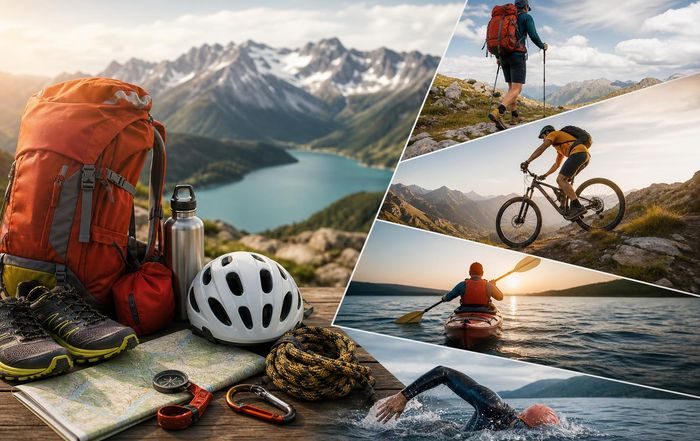
How to Prepare for an Exciting Multi-Sport Adventure Trip?
Multi-sport adventure trips promise a lot in a short time: one day you are hiking a ridgeline, the next you are paddling a river or riding singletrack through a new country. The payoff can be huge, but so can the complexity. Packing for a single activity in one climate is straightforward; coordinating gear, fitness, safety, and logistics for several sports across changing environments is not.
This guide walks through how to plan and prepare for a multi-sport adventure, from choosing the right itinerary and training smart, to packing efficiently and managing risk. It is written with global destinations in mind and applies whether you are combining trail running and surfing in Portugal, trekking and mountain biking in Peru, or kayaking and glacier hiking in New Zealand.
Along the way, you'll find links to deeper resources on adventure sports, travel, safety, and performance that can help refine your plans.
Clarify your trip style and objectives
Before booking anything, define the kind of experience you want and what you are realistically prepared for. "Multi-sport adventure" covers a wide range of trips, including:
Guided commercial itineraries offered by operators such as Backroads, REI Adventures, Intrepid Travel, or G Adventures, where logistics, equipment, and some meals are handled for you. These often combine cycling, hiking, and kayaking in regions like the Alps, Patagonia, or Southeast Asia. Reputable operators usually follow standards from bodies like the Adventure Travel Trade Association and may publish detailed difficulty ratings and gear lists.
Self-guided packages, where a company books accommodations, transports luggage, and supplies route notes, but you move independently. This format is common for cycling-plus-hiking trips in Europe and New Zealand and demands more navigation and self-reliance.
Fully independent expeditions, where you design the route, arrange permits, rent or bring gear, and manage all risk. Combining sports at this level-say, packrafting and backcountry ski touring in Alaska or bikepacking and climbing in the Alps-requires strong planning skills and familiarity with each activity.
Once you know the format, be explicit about your priorities. Some travelers want maximum adrenaline and remote terrain. Others want a balance of effort and comfort, with good food, cultural experiences, and rest days built in. Being honest about whether you are chasing performance, exploration, or a lifestyle reset helps you choose the right route, pace, and partners.
Assess your baseline fitness and technical skills
Multi-sport days can be deceptively demanding. Even if each activity is at a moderate level, stacking them back-to-back-cycling in the morning and paddling in the afternoon, for example-adds up. Research on exercise recovery and cumulative fatigue from the American College of Sports Medicine highlights how repeated days of sub-maximal effort can eventually feel like a single high-intensity event.
Start by evaluating:
Cardiovascular base: Can you comfortably sustain 60-90 minutes of continuous activity (running, cycling, brisk hiking) several times a week without excessive fatigue? If not, you will want to build that base before adding sport-specific work.
Sport-specific skills: Each sport on your itinerary demands a minimum technical level. For whitewater kayaking, the American Canoe Association offers skill progression guidelines and safety standards. For climbing and mountaineering, the UIAA and national alpine clubs publish recommended competencies. Even seemingly simple activities like "flatwater paddling" or "introductory mountain biking" can become serious in wind, rain, or remote terrain.
Movement literacy: Being comfortable moving over uneven surfaces, balancing with a pack, and handling slippery rocks or loose gravel matters across hiking, canyoning, scrambling, and even approaches to climbing routes. Trail running, yoga, and strength work all help.
If you are booking with a guide, use their difficulty ratings honestly. Many operators align with systems like the Yosemite Decimal System for hiking and scrambling or local whitewater grading. When in doubt, call and describe what you currently do in a typical week rather than what you hope to do.
Build a targeted training plan
Once you know the demands of your trip, create a 8-12 week preparation block that blends endurance, strength, and technical practice. The goal is not elite performance but resilience: you want to handle multiple moderate days without breaking down.
A practical framework:
Endurance foundation: Aim for 3-4 aerobic sessions a week, mixing your primary sports where possible. If your trip is cycling-heavy with some hiking and paddling, prioritize bike time but keep at least one hike or stair session weekly. Research summarized by British Cycling and other federations suggests that consistent, moderate-intensity riding builds the best base for multi-day efforts.
Strength and durability: Two short strength sessions per week focusing on posterior chain (glutes, hamstrings), core stability, and shoulders will pay off across almost every adventure sport. Resources from the National Strength and Conditioning Association emphasize injury prevention benefits, especially for older or returning athletes.
Sport-specific skills: Schedule time in the environments you will encounter. Take a whitewater or sea kayak course if paddling is new; visit a bike park or local trails to get used to technical descents; practice hiking with the pack weight you expect to carry. Many national parks and outdoor centers post introductory routes and safety tips on their official sites, such as U.S. National Park Service trail guidance.
Recovery and adaptation: Include at least one low-intensity week every three or four weeks, cutting total volume by 20-30 percent. Multi-sport trips stress joints, tendons, and connective tissue; building in recovery now reduces the risk of overuse injuries when you are far from home.
If you are preparing for a high-altitude component, such as trekking in Nepal or the Andes, remember that general fitness does not guarantee altitude tolerance. Organizations like the UIAA Medical Commission provide evidence-based advice on acclimatization and altitude illness prevention. Consider staged ascent, extra acclimatization days, and, for very high trips, medical screening.
Choose the right destination and season
Where and when you go shapes almost every other decision. A European summer trip that mixes cycling, via ferrata, and lake paddling demands very different equipment and risk management than a Patagonian shoulder-season itinerary combining trekking and glacier travel.
When comparing destinations, consider:
Seasonal reliability: Check not just average temperatures but wind, rainfall, and storm patterns. Government meteorological agencies such as the UK Met Office or NOAA provide long-term climate normals and seasonal outlooks. Shoulder seasons can be quieter and cheaper, but some sports-like high-alpine trekking or canyoning-may be constrained by snowmelt or river levels.
Infrastructure and access: For self-planned trips, look for regions with established trail networks, clear maps, and reliable transport between activity hubs. Countries like Switzerland and New Zealand, for example, combine dense public transit with marked hiking and biking routes, making multi-sport link-ups easier.
Regulations and permits: National and regional authorities may require permits for activities such as backcountry camping, climbing, or paddling certain rivers. The U.S. National Park Service, Parks Canada, and many European and Asian park systems publish this information online. Some countries also regulate commercial guiding and adventure tourism more tightly than others.
Local risk profile: Consider objective hazards such as avalanche risk, river levels, heat waves, or political instability. The International Federation of Red Cross and Red Crescent Societies and national foreign offices publish risk advisories that can inform your planning, especially for remote or developing regions.
If you are new to multi-sport travel, starting in a region with strong infrastructure, clear signage, and easy access to medical care can make the learning curve more forgiving.
Plan logistics across multiple sports
Logistics are where many ambitious itineraries fall apart. Even if you are joining a guided trip, understanding the moving parts helps you pack better and manage expectations.
Transport between activities: Will you be shuttled by van, using public transport, or self-driving? If bikes or kayaks are involved, confirm how they will be transported and whether you need to assemble or disassemble your own gear. In some countries, trains require bike reservations or only allow a limited number of bikes per carriage.
Gear storage and transitions: Multi-sport days often mean leaving equipment at trailheads, docks, or accommodations. Clarify where and how gear will be stored, and whether you need separate bags for different segments. For self-planned trips, dry bags, lightweight locks, and a simple labeling system help keep chaos under control.
Accommodation and food: Back-to-back sports require reliable refueling and rest. Consider whether you want hut-to-hut systems (common in the Alps and Scandinavia), camping, or guesthouses. Regions with strong outdoor cultures often have established networks of mountain huts or refuges; national alpine clubs and tourism boards usually list them, such as the Swiss Alpine Club hut system.
Contingency days: Build at least one buffer day into any trip longer than a week. Weather, transport delays, and minor injuries are common. A flexible day can be used for rest, cultural exploration, or to repeat a favorite sport if everything goes smoothly.
If you are traveling with others, agree in advance on how you will handle delays, illness, or a teammate deciding to skip an activity. Having a shared plan reduces friction when plans inevitably shift.
Pack strategically for multiple disciplines
Packing for a multi-sport adventure is an exercise in trade-offs. You want enough equipment to be safe and comfortable, but not so much that you are weighed down between activities. The solution is to prioritize versatile, layered systems and shared gear.
Clothing and layering: Choose moisture-wicking base layers and mid-layers that work across sports. A lightweight synthetic or merino long-sleeve can serve for cool-weather cycling, hiking, and even as a sleep layer. A single high-quality waterproof shell often covers both biking and trekking needs. For water sports, pack a compact towel and consider a thin neoprene top or shorty wetsuit if conditions warrant.
Footwear: This is often the hardest compromise. Dedicated shoes for each sport perform best, but carrying three or four pairs is rarely practical. Many travelers combine a sturdy trail running shoe or light hiker for trekking and general wear, a clipless or flat pedal shoe for more serious cycling, and lightweight sandals or water shoes for paddling and camp. On trips where one sport dominates, prioritize that footwear and accept small compromises elsewhere.
Safety and navigation: Regardless of the mix of sports, a core safety kit should travel with you: a small first-aid kit, headlamp, whistle, emergency blanket, and navigation tools. While many rely on smartphones, consider a dedicated GPS device or at least downloaded offline maps from services like Gaia GPS or AllTrails, particularly in areas with poor reception.
Specialized gear: Helmets, harnesses, PFDs, and technical equipment like ice axes or crampons should meet relevant safety standards (look for CE, UIAA, or national certifications). If renting, ask operators what brands and models they use and how often gear is inspected. For higher-risk sports, organizations such as the European Committee for Standardization (CEN) set equipment norms that reputable providers follow.
Weight management: Keep a digital scale handy when packing at home. Weighing your bag encourages disciplined choices. Group items into "must-have for safety," "strongly recommended for comfort," and "nice-to-have." When you need to cut weight, start from the last category.
For more ideas on balancing performance and comfort, see our broader adventure and lifestyle coverage, where packing strategies often surface in destination and gear discussions.
Understand risk and safety standards for each sport
Multi-sport trips string together different risk profiles. A mellow cycling day on quiet roads is not equivalent to a guided glacier walk or a class III whitewater section, even if they appear side-by-side in a brochure.
To prepare responsibly:
Research sport-specific hazards: Mountain biking injuries often involve falls and collisions; paddling risks include cold-water shock, entrapment, and capsizing; mountaineering adds rockfall, crevasses, and weather exposure. National safety bodies and sport federations, such as AdventureSmart UK or Paddle Australia, publish accessible safety guidelines.
Check guide and operator qualifications: In many countries, professional guides must hold qualifications from recognized bodies like the International Federation of Mountain Guides Associations (IFMGA) or national canoe/kayak federations. Ask who will be leading each activity, what certifications they hold, and what their guide-to-client ratios are.
Review emergency plans: For each major segment, understand how rescue would work. Is there mobile coverage? Are there staffed huts or ranger stations? Does the operator carry satellite communication devices and first-aid kits? In remote regions, consider carrying your own satellite messenger (e.g., inReach, SPOT) and sharing your itinerary with a trusted contact at home.
Learn basic self-rescue: Even on guided trips, knowing how to stop bleeding, treat blisters, recognize hypothermia, or perform a simple river swim can make a difference. Organizations like the Red Cross and St John Ambulance offer outdoor-oriented first-aid courses that go beyond urban scenarios.
If you are interested in the broader ethics and responsibilities of adventure tourism-such as environmental impact and local community safety-our ethics and culture sections regularly examine those dimensions.
Get your paperwork, insurance, and health checks in order
Administrative preparation is less glamorous than gear shopping, but it is crucial, especially for international trips involving higher-risk sports.
Travel and evacuation insurance: Standard policies often exclude "hazardous activities" or limit coverage above certain altitudes or in remote areas. Look for providers that explicitly cover trekking, climbing, cycling, paddling, and other planned activities. Organizations like the International Association for Medical Assistance to Travellers and mountaineering clubs often outline what to look for in policies that include rescue and evacuation.
Medical and dental check-ups: A lingering knee issue or tooth problem can derail a trip. If you have chronic conditions-cardiovascular disease, asthma, diabetes-discuss your plans with a physician familiar with exercise and travel medicine. The Centers for Disease Control and Prevention's travel health site and the World Health Organization provide country-specific vaccine and health guidance.
Visas and permits: Some countries require special permits for trekking in restricted regions, climbing certain peaks, or visiting national parks. Local tourism boards and park authorities are usually the most reliable sources. For example, Nepal's Department of Immigration and Peru's SERNANP outline rules for popular trekking regions.
Documentation back-ups: Store digital copies of passports, insurance policies, prescriptions, and key contact numbers in secure cloud storage and offline on your phone. Carry paper copies of critical permits and emergency instructions in a waterproof bag.
This administrative layer is not exciting, but it underpins the freedom to focus on the adventure itself.
Fuel, hydration, and recovery on the move
On multi-sport days, energy management becomes as important as route choice. Under-fueling early in a trip leads to compounding fatigue, poor decision-making, and higher injury risk.
Plan to:
Eat early and often: Aim for regular carbohydrate intake during activity-sports nutrition research summarized by the Gatorade Sports Science Institute and others typically recommends 30-60 grams of carbohydrate per hour for moderate endurance efforts, adjusted to your body size and tolerance. Real food (sandwiches, fruit, trail mix) can work as well as gels and bars, especially at lower intensities.
Hydrate with context: Fluid needs vary widely with heat, humidity, altitude, and individual sweat rates. The European Food Safety Authority and similar bodies publish general guidelines, but on the trail, simple rules help: drink to thirst, monitor urine color, and increase intake in hot or high conditions. For long, sweaty days, include electrolytes to replace sodium and other minerals.
Prioritize post-activity recovery: Within an hour of finishing a demanding session, aim for a mix of carbohydrates and protein to support muscle repair, along with rehydration. Light stretching, walking, or an easy spin can reduce stiffness before the next day's activities.
Sleep as a performance tool: Multi-sport trips often involve early starts, late dinners, and noisy accommodations. Earplugs, an eye mask, and a simple pre-sleep routine can improve sleep quality. Research from organizations such as the Sleep Foundation underscores how even modest sleep restriction impairs coordination and reaction time-key for technical sports.
The more ambitious your itinerary, the more conservative you should be with fueling and rest. Treat recovery as integral, not optional.
Respect local environments and communities
Multi-sport travel often weaves through wild spaces and local communities in quick succession: a morning on a remote trail, an afternoon in a small town, an evening in a family-run guesthouse. How you move through those spaces matters.
Environmental impact: Follow Leave No Trace principles, adapted for each sport. The Leave No Trace Center for Outdoor Ethics outlines sport-specific guidance, from minimizing trail erosion while biking to avoiding wildlife disturbance while paddling or climbing. In fragile environments-alpine tundra, coral reefs, desert crusts-even small off-trail detours can cause outsized damage.
Cultural sensitivity: Dress and behave in ways that respect local norms, especially in conservative regions. Ask before photographing people, support local businesses where possible, and learn basic phrases in the local language. Tourism ministries and cultural organizations often publish etiquette guidelines that can be more nuanced than generic travel advice.
Economic fairness: When choosing operators or guides, consider whether they employ and train local staff, support community initiatives, and follow ethical labor practices. Certifications like Travelife for Tour Operators and frameworks from the Global Sustainable Tourism Council can be indicators, though not guarantees, of responsible practice.
For more on the intersection of adventure, business, and world issues, our coverage often explores how tourism models affect local economies and landscapes.
Putting it together: designing a realistic multi-sport itinerary!
With all these elements in mind, a practical way to design or evaluate a trip is to work backwards from constraints: time, budget, fitness, and risk tolerance. Then layer in the sports you most care about.
For example, if you have ten days, moderate fitness, and a preference for lower-risk sports, a feasible plan might be a hut-to-hut hiking and lake-paddling circuit in a well-developed region, with optional mountain bike rentals on rest days. If you are fitter and more experienced, you might add via ferrata or glacier trekking, but you would still want to ensure acclimatization days, rest opportunities, and clear emergency options.
Use destination-specific resources-national park sites, local guidebooks, tourism boards, and reputable operators-to refine the sequence. Cross-check claims about difficulty, seasonality, and access. Where possible, talk to people who have done similar trips recently; conditions on the ground can change faster than printed guides.
Above all, design with margin. A multi-sport adventure should stretch you, but not to the point where every day feels like survival mode. Leaving room for weather, serendipity, and your own changing energy levels often leads to the most memorable experiences.
When you are ready to dive deeper into specific disciplines or destinations, explore our updated sections on sports, adventure, destination, and innovation for ideas, gear trends, and stories from around the world that can help shape your next multi-sport journey.