

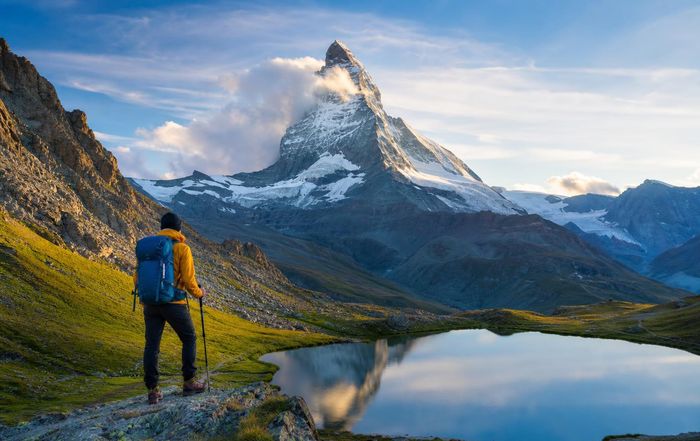
Mountain Adventure Ideas for Exploring Switzerland
Switzerland's mountains are more than a postcard backdrop; they are a year-round playground for people who like their landscapes with a dose of adrenaline. From glacier treks and via ferrata to long-distance hut routes and winter ski tours, the country's terrain is dense with options that range from accessible first adventures to serious high-alpine expeditions.
This guide focuses on practical, experience-driven ideas rather than generic sightseeing. It highlights classic areas such as the Bernese Oberland, Zermatt, and Graubünden, while also touching on safety, seasonality, and how to choose the right adventure for your skills.
For broader context on sport, performance and safety in demanding environments, daily readers may also be interested in the adventure and safety reporting at Adventure, Sports, Performance, and Safety here.
Hiking and Trekking: From Day Trails to Hut-to-Hut Epics
Switzerland's trail network is one of the most extensive and well-maintained in the world. SwitzerlandMobility estimates that the country has more than 65,000 km of waymarked hiking paths, graded by difficulty and clearly signed. That infrastructure makes it relatively easy to step into serious mountain scenery without technical mountaineering skills.
In the Bernese Oberland, the panorama trails above Grindelwald, Wengen, and Mürren offer big-wall views of the Eiger, Mönch, and Jungfrau on well-graded paths. Routes such as the Männlichen-Kleine Scheidegg traverse or the Schynige Platte ridge walk are accessible to fit walkers and benefit from cable-car access that removes much of the elevation gain. For those interested in how destinations shape outdoor culture and lifestyle, these areas also intersect with themes explored in Xdzee's Destination and Lifestyle sections.
For multi-day adventures, the Haute Route between Chamonix and Zermatt is one of Europe's most famous long-distance treks. The classic summer version is a roughly 180 km hut-to-hut journey across high passes, often taking 10-14 days. The Swiss Alpine Club (SAC) maintains many of the huts along the way and provides detailed route descriptions and difficulty ratings. Another accessible option is the Via Alpina 1, which crosses Switzerland from Sargans to Montreux over 14 stages, with well-serviced villages at many stage ends.
Safety is generally good on marked trails, but mountain weather changes quickly. The Swiss Council for Accident Prevention notes that falls are the leading cause of hiking accidents, often linked to poor footwear, fatigue, or overestimating one's ability. Checking local forecasts, starting early, and respecting time estimates on signs are simple but important habits. For those thinking about the ethics of outdoor travel and how to tread lightly in popular regions, Xdzee's Ethics coverage provides a broader framework.
Via Ferrata: Vertical Adventure with Fixed Protection
Via ferrata-protected climbing routes equipped with steel cables, rungs, and ladders-sit between hiking and rock climbing in terms of intensity. Switzerland has developed a network of routes graded by difficulty (often K1 to K6 in the Hüsler scale). The Swiss Alpine Club and regional tourism offices publish topos and safety advice, and the UIAA provides international guidelines on equipment and risk.
One of the most talked-about routes is the Mürren via ferrata in the Bernese Oberland. It traverses high above the Lauterbrunnen Valley, including a suspension bridge and sections that feel exposed despite the protection. Rated around K3-K4, it demands a head for heights but not advanced climbing technique. In central Switzerland, the Rigidalstock via ferrata near Engelberg provides a more alpine feel, finishing on a summit with broad views yet remaining within reach for fit, motivated beginners with a guide.
A proper via ferrata set-Y-lanyard with energy absorber, helmet, and harness-is essential. The Swiss Council for Accident Prevention and Alpine Clubs stress that simple gear mistakes, like using non-energy-absorbing lanyards, have led to serious accidents. Guided outings are widely available in destinations such as Interlaken, Zermatt, and Davos, and can be a good way to get familiar with the systems before attempting more demanding lines independently.
Glacier Hikes and Introductory Mountaineering
Switzerland's glaciers are both a draw and a reminder of climate change. The Swiss Academy of Sciences reports that Swiss glaciers lost about 10% of their volume between 2022 and 2023, an unprecedented rate in the measurement record. That retreat makes some routes more difficult or dangerous, but it also underscores why seeing these landscapes responsibly, while they are still relatively accessible, matters to many visitors.
Glacier hikes such as the Aletsch Glacier trail above Bettmeralp or guided tours on the Gorner Glacier near Zermatt allow people without technical climbing skills to step onto ice in a controlled setting. Local mountain guide offices, certified under the Swiss Mountain Guide Association, provide crampons, harnesses, and instruction. These trips typically involve roped travel, basic ice walking, and crevasse awareness rather than steep ice climbing.
For those looking to progress toward classic alpine summits, peaks like Breithorn (4,164 m) above Zermatt and Allalinhorn (4,027 m) above Saas-Fee are often recommended as entry-level 4,000-metre climbs. They are usually approached via cable cars and involve glacier travel on relatively moderate slopes. However, altitude, crevasses, and rapidly changing snow conditions mean they are still serious undertakings. The IFMGA and national guide associations emphasize that guided ascents significantly reduce objective risk for first-timers.
Glacier environments also bring ethical questions about travel emissions, overtourism, and fragile ecosystems. Readers interested in how high-alpine tourism intersects with climate, business, and global change can find related discussion in Xdzee's World and Business sections, where the economic side of mountain destinations is frequently explored.
Classic and Backcountry Ski Adventures
In winter and spring, Switzerland becomes one of the world's premier ski destinations, with a dense network of resorts and a deep culture of ski touring. The Swiss Tourism board highlights over 200 ski areas across the country, from major international hubs to small community lifts. For many visitors, combining lift-served skiing with at least one off-piste or touring day is a way to move beyond groomed slopes without committing to a full expedition.
Regions such as Verbier, Zermatt, Andermatt, and Davos-Klosters are particularly known for freeride terrain. Verbier's steep itineraries and easy access to sidecountry lines have made it a fixture on the Freeride World Tour, while Andermatt's Gemsstock peak offers big vertical and frequent powder in cold winters. However, avalanche risk is a constant concern. The Institute for Snow and Avalanche Research (SLF) publishes detailed avalanche bulletins and snowpack analyses, which are considered essential reading for anyone leaving marked pistes.
For multi-day ski tours, the Haute Route has a winter variant that links Chamonix and Zermatt via glaciers and high passes, usually in 6-7 days, staying in mountain huts. Other classic tours include the Bernese Oberland traverse, with its vast glaciated plateaus, and the Silvretta region on the Austrian border. These routes demand strong fitness, competent ski technique in variable snow, and solid avalanche and crevasse rescue skills; most first-time parties hire an IFMGA-certified guide.
Resort-based skiers who want a taste of the backcountry can look for "ski touring intro" days commonly offered in places like Davos, Engelberg, and Saas-Fee. These typically cover skinning technique, basic terrain assessment, and beacon-shovel-probe use. For readers curious about how performance in demanding winter environments is evolving-equipment, training, and safety tech-Xdzee's Innovation and Performance pages often explore relevant trends.
Trail Running and Fast-and-Light Mountain Travel
Trail running has grown rapidly in Switzerland, turning hiking areas into endurance playgrounds. Events like the Eiger Ultra Trail in Grindelwald and the Swissalpine Irontrail in Davos attract international fields and highlight the country's capacity for high-altitude running. The Eiger Ultra Trail includes routes from 16 km to over 100 km, with substantial vertical gain and technical sections, while Davos' long-running race series showcases high-plateau terrain and alpine passes.
Outside of race days, many ski resorts now signpost summer running loops and publish GPX tracks. Regions such as Engadin, Valais, and Jura offer contrasting experiences: Engadin's high valley and lakes around St. Moritz are ideal for altitude training; Valais provides steep vertical and big-mountain backdrops; the Jura offers gentler ridgelines with long, rolling singletrack. The Swiss Trailrunning Association promotes routes and best practices, including the importance of staying on marked paths to reduce erosion.
Fast-and-light travel amplifies both freedom and risk. Weather changes that are merely uncomfortable for hikers can be dangerous for lightly equipped runners, and navigation errors can add hours to a planned loop. Carrying a minimal but real safety kit-light shell, insulating layer, map or offline GPS, headlamp, and basic first aid-is widely recommended by alpine rescue organizations. For those interested in how endurance sports intersect with lifestyle and work, Xdzee's Jobs section occasionally features profiles of guides, race organizers, and outdoor professionals working in these environments.
Paragliding, Speed Riding, and Aerial Perspectives
Few mountain experiences reframe a landscape as dramatically as leaving the ground. Switzerland is a major hub for paragliding and related sports, with Interlaken often cited as one of the world's busiest tandem paragliding centers. The Swiss Hang Gliding and Paragliding Association (SHV/FSVL) oversees licensing, training, and safety standards, and maintains a list of recognized schools and launch sites.
Tandem flights are widely available in regions such as Interlaken, Zermatt, Grindelwald, and Lake Geneva, requiring no prior experience beyond a short briefing and a run-up takeoff. They offer a way to experience thermals, ridgelines, and valley systems from above without committing to a full course. For those considering independent flying, the SHV/FSVL explains the multi-stage training and examination process required for a Swiss paragliding license, as well as insurance and airspace rules.
More niche disciplines like speed riding-combining skis with a small, fast canopy-are practiced in resorts such as Verbier and La Clusaz (across the border in France). These activities carry higher risk and are tightly regulated; many areas restrict them to specific zones and require advanced skills. The UIAA's mountain safety guidance stresses conservative decision-making and local knowledge when mixing aviation and steep terrain, particularly in winter.
Biking in the Alps: Downhill, Enduro, and Bikepacking
Mountain biking in Switzerland has expanded rapidly from a handful of downhill tracks to a country-wide network of official routes. SwitzerlandMobility lists more than 9,000 km of signposted mountain bike trails, ranging from family-friendly gravel paths to technical singletrack. Many ski resorts now operate lifts in summer specifically for bikers, with purpose-built flow trails and jump lines.
Destinations such as Lenzerheide, Laax, and Verbier are known for bike parks with graded trails, rental fleets, and coaching. Lenzerheide hosted the UCI Mountain Bike World Championships in 2018, and continues to host World Cup events, underscoring its status as a performance hub. For riders looking for more exploratory experiences, regions like the Val d'Anniviers, Aletsch Arena, and Jura Vaudois offer quieter networks of natural trails and forest roads suitable for all-mountain and bikepacking setups.
Bikepacking routes like the Alpine Bike 1 or the Graubünden stage tours combine multiple passes, villages, and overnight stays. While wild camping is restricted or regulated in many alpine areas, Switzerland's dense network of huts, guesthouses, and campgrounds makes it possible to plan multi-day rides with regular resupply points. The Swiss Cycling federation and regional tourism boards provide route ideas and safety advice, particularly on sharing trails with hikers and respecting seasonal closures.
Choosing the Right Region for Your Style of Adventure
Given the density of options, choosing where to focus can be as challenging as the activities themselves. The Bernese Oberland (around Interlaken, Grindelwald, and Lauterbrunnen) is a strong all-round choice, with easy access to hiking, via ferrata, paragliding, and both summer and winter adventures. Zermatt and Saas-Fee are ideal for those drawn to glaciers and high peaks, while Graubünden (Davos, St. Moritz, Lenzerheide) leans toward trail running, biking, and ski touring with a slightly less crowded feel than some marquee destinations.
Central Switzerland (Engelberg, Andermatt, Lucerne region) offers a compact mix of steep skiing, via ferrata, and lake-and-mountain combinations. For travellers who prioritize culture alongside adventure, cities such as Lucerne, Bern, and Zurich can serve as bases for day trips into nearby mountains while offering museums, festivals, and food scenes that reflect contemporary Swiss life. Readers interested in how these cultural layers intersect with sport and travel may find additional perspective in Xdzee's Culture and Travel sections.
Seasonality is also key. High-alpine hiking and mountaineering are generally best from late June to early October, depending on snow conditions. Ski touring peaks from February to April, while lift-served skiing often runs from December into April at higher resorts. Shoulder seasons-late autumn and late spring-can be beautiful but bring more unstable weather and limited lift operations, which affects access and safety.
Safety, Ethics, and Practical Planning
Across all these adventures, a few common principles stand out. First, Switzerland's rescue services are highly capable but expensive; organizations like REGA and Air-Glaciers conduct many helicopter rescues each year. The Swiss government and alpine clubs strongly recommend travel insurance that explicitly covers mountain sports and rescue costs. The European Emergency Number Association reminds travellers that 112 is the general emergency number across the EU and associated states, including Switzerland, though local rescue hotlines may also be provided on trailheads and maps.
Second, environmental pressure on popular alpine regions is increasing. The Swiss Federal Office for the Environment notes that biodiversity in alpine habitats is under strain from climate change, infrastructure, and visitor numbers. Staying on marked paths, respecting wildlife closures, minimizing noise, and following local waste rules are simple ways to reduce impact. Many huts now ask visitors to pack out non-organic waste and conserve water and energy, especially in drier summers.
Finally, there is a cultural dimension to adventure in Switzerland. Mountain sports are deeply embedded in national identity, but they are also workplaces and homes for local communities. Being punctual, respecting quiet hours in huts, and learning a few words of German, French, or Italian for greetings and thanks go a long way. For those interested in the broader global context of adventure tourism-its business models, jobs, and ethical questions-Xdzee's World, Business, and Jobs coverage often explores how destinations manage growth and risk.
Turning Inspiration into a Swiss Mountain Itinerary
Transforming a list of possibilities into a concrete trip usually means choosing a focus. One approach is to build around a single anchor objective-such as a first 4,000-metre peak, a classic via ferrata, or a multi-day hut trek-and then add lower-commitment activities on either side. Another is to stay in a hub like Interlaken, Zermatt, or Davos and sample different sports with local guides and schools, using the reliable rail network to move between valleys.
Whichever route you choose, Switzerland rewards preparation: checking avalanche and weather bulletins, booking huts and guides early in peak seasons, and being honest about your fitness and technical level. In return, the country offers an unusually dense concentration of mountain adventure in a relatively compact area, with infrastructure that makes ambitious itineraries feasible for non-experts who plan carefully.
For more ideas across sport, adventure, travel, safety, and performance in mountain environments worldwide, the broader coverage online provides ongoing context, from emerging gear innovations to evolving ethics of high-impact tourism.