

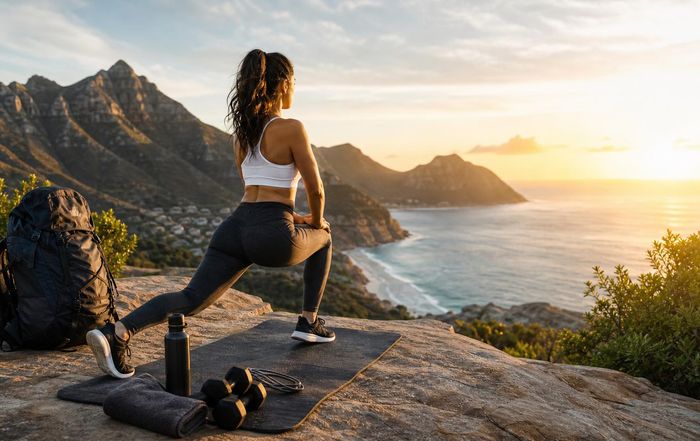
Travel Fitness Routines for Busy Adventure Seekers
Adventure travel promises big days, big views, and often big physical demands. Yet the reality between those peaks and trails is usually cramped flights, long drives, erratic sleep, and inconsistent access to gyms or gear. For many active travelers, the challenge is not motivation but logistics: how to stay strong, mobile, and injury-resistant when every day is different.
This guide focuses on practical, time-efficient routines that fit into real travel schedules-whether you are chasing surf in Portugal, skiing in Japan, working remotely from Southeast Asia, or stacking business meetings with weekend hikes. The aim is not perfection, but sustainable habits that keep you ready for the next adventure.
For more ideas on performance and training beyond travel, readers may also find the performance-focused features on Xdzee's performance section and the adventure-focused insights on its adventure page useful.
What "Travel Fitness" Really Needs to Do
Travel fitness is less about chasing personal records and more about maintaining a base level of strength, mobility, and conditioning that keeps you adventure-ready. That means prioritizing:
Joint mobility and flexibility so you can move well on uneven terrain, in the water, or on snow.
Core and hip strength for stability during hiking, climbing, paddling, or skiing.
Basic pushing, pulling, and squatting strength to handle packs, luggage, and gear.
Aerobic conditioning that supports long days without leaving you wrecked.
Research from the American College of Sports Medicine suggests that strength and aerobic fitness can be maintained with reduced training volume, as long as intensity stays reasonably high and sessions are consistent. A 2021 review in the Journal of Strength and Conditioning Research found that as little as one to two weekly strength sessions can maintain strength in trained individuals during busy periods, provided the work is challenging enough.
For adventure travelers, this is encouraging: short, focused sessions during trips are usually enough to maintain your base so you can ramp up again when you're home.
Building a Minimalist Travel Workout Toolkit
You can maintain a lot of fitness with nothing but bodyweight. However, a few compact tools dramatically expand what you can do without compromising pack space.
Smart, Lightweight Gear Choices
For most travelers, the following are high-value, low-bulk additions:
A light to medium resistance band loop and a longer resistance band with handles.
A compact suspension strap or gymnastics rings if you're serious about strength (they can hang from a beam, tree, or sturdy door).
A jump rope for quick conditioning.
A small massage ball or lacrosse ball for self-massage and mobility.
Organizations like REI and Decathlon offer travel-oriented fitness gear lines, and many brands publish bodyweight and band workouts specifically designed for outdoor athletes. These tools help fill gaps when you do not have access to a gym or natural training terrain.
When planning an adventure-heavy trip, it can also be useful to think about safety and preparation more broadly; the safety coverage at Xdzee looks at risk and preparation in adventure contexts beyond just training.
The 20-Minute Hotel-Room Strength Session
This routine is designed for tight spaces and zero equipment. It hits major movement patterns and keeps you strong enough for most adventure sports. Aim for two to three sessions per week during travel.
Warm up for 3-5 minutes with easy joint circles (neck, shoulders, hips, knees, ankles), arm swings, and a few slow squats or lunges.
Then move through the following circuit for 3 rounds, resting 30-60 seconds between exercises if needed:
Squat patternBodyweight squats or sit-to-stands from a chair: 12-15 repsFocus on driving through the mid-foot, keeping knees tracking over toes, and maintaining a tall chest. For more challenge, use tempo squats (three seconds down, one second up) or single-leg variations like split squats.
Hip hinge / posterior chainHip hinge good-mornings (hands on hips or behind head): 12-15 repsKeep the spine neutral and push the hips back. If you have a backpack, hold it to add resistance. This pattern supports everything from skiing to carrying packs.
PushPush-ups: 8-15 repsUse wall or inclined push-ups on a desk if standard push-ups are too demanding, or elevate feet on the bed for more challenge. Push strength is useful for paddling, scrambling, and general upper-body resilience.
Pull (or pull substitute)Doorframe isometrics or band rows: 10-15 reps or 20-30 second holdsIf you have a band, anchor it in a door and row. Without equipment, you can do "reverse push-ups" by leaning back against a towel looped over a door (only if the door is solid and secure) or use isometric holds pulling against an immovable object. The National Strength and Conditioning Association highlights pulling strength as critical for shoulder health in climbers and paddlers.
Single-leg stabilityReverse lunges or step-ups: 8-12 reps per legUse a stable chair or low step if available. Single-leg work helps protect knees and ankles on trails and unstable surfaces.
Core and anti-rotationPlank variations: 20-40 secondsMix front planks, side planks, and plank shoulder taps. Focus on staying braced rather than holding very long times with poor form. Core stability is strongly associated with reduced lower-back complaints in hikers and runners, according to multiple studies summarized by the American Council on Exercise.
This kind of routine fits naturally into a performance mindset and complements the broader themes explored in Xdzee's sports and lifestyle sections, where sustainable habits often matter more than occasional extremes.
Micro-Workouts for Transit Days
Flights, buses, and long drives are the enemy of mobility and circulation. Instead of trying to cram a full workout into a brutal travel day, think in "micro-sessions" of 3-5 minutes scattered throughout.
Evidence from World Health Organization physical activity guidelines and later research suggests that short bouts of movement across the day can meaningfully contribute to health and fitness, especially when they interrupt long sitting periods.
Useful micro-workouts include:
Airport mobility laps: Every hour, walk 5-10 minutes, adding a few calf raises, gentle hip circles, and ankle rolls near a quiet gate.
Seat-based drills: Ankle pumps, glute squeezes, and seated marches to keep blood flowing, particularly on long-haul flights where NHS and CDC guidance emphasizes moving regularly to reduce DVT risk.
Hotel arrival reset: After checking in, do two minutes of cat-camel spine movements, a minute of deep squats holding onto the bed frame for support, and a minute of slow forward folds to decompress the back.
These tiny investments pay off when you hit the trail or water the next morning and do not feel like you are moving through concrete.
Conditioning Without a Gym: Stairs, Streets, and Parks
Cardio can be the easiest part of travel fitness if you are willing to improvise. Most cities and towns offer enough terrain and infrastructure for solid conditioning, even without a track or treadmill.
Stair and Hill Sessions
Stairs are a powerful stand-in for hill repeats and a close proxy for hiking or mountaineering efforts. A simple stair workout:
Warm up with 5-10 minutes of easy walking.
Climb stairs steadily for 30-60 seconds.
Walk back down slowly.
Repeat for 6-10 rounds.
This kind of interval session aligns with high-intensity interval training (HIIT) principles that the American Heart Association recognizes as time-efficient for improving cardiovascular fitness, especially when time is limited.
If you are training for hiking, trekking, or alpinism, load a small backpack with 5-10 kg (11-22 lb) and keep the pace controlled rather than sprinting.
Urban Run or Power-Walk Circuits
When in a new city, consider a 20-30 minute run or brisk walk that doubles as exploration. Many tourism boards and running communities share urban route suggestions and maps, and apps like Strava or local running clubs often highlight safe, popular loops.
To build more structure into a short outing:
Jog or walk easily for 5 minutes.
Alternate 1 minute faster / 1-2 minutes easy for 10-15 minutes.
Cool down for 5 minutes.
This is usually enough to maintain aerobic capacity during a trip without leaving you too fatigued for the day's adventures.
Readers interested in how destinations shape outdoor activity might also appreciate Xdzee's destination coverage, which often intersects with active travel, culture, and local terrain.
Mobility and Recovery: The Often-Ignored Travel Superpower
Travel is inherently stressful on the body: time zones, new beds, different foods, and long sitting all add up. For adventure seekers, mobility and recovery work can be the difference between a strong multi-day trip and a nagging injury that cuts plans short.
A 10-Minute Nightly Mobility Flow
Before bed or after a long day out, move through a short, gentle sequence:
2 minutes of deep nasal breathing while lying on your back, feet elevated on a chair or bed.
2 minutes of hip openers (90/90 hip switches, gentle lunges).
2 minutes of hamstring and calf stretches, using a towel or band if available.
2 minutes of thoracic spine rotations (open-book stretches) on each side.
2 minutes of light self-massage with a ball on calves, glutes, and upper back.
Organizations like Yoga Alliance and platforms such as Down Dog or Glo provide short yoga sessions that fit easily into a travel day and help with jet lag and stiffness.
Sleep, Hydration, and Altitude
For high-altitude trekking or snow sports, recovery is not just about stretching. The International Society for Mountain Medicine and resources like the CDC's high-altitude guidelines stress the importance of gradual ascent, hydration, and adequate sleep to reduce the risk of acute mountain sickness.
Even at moderate altitudes common in many adventure destinations, focusing on:
Extra hydration, especially on flights and in dry mountain climates.
A consistent wind-down routine (dim lights, no heavy meals late, minimal screens).
Limiting alcohol on the first nights at altitude.
can support both performance and safety. Xdzee's safety section frequently explores how preparation and recovery intersect with risk in outdoor environments.
Adapting Routines to Different Types of Adventure Trips
Not all trips stress your body in the same way. A surf-focused month in Portugal is very different from a week of business meetings plus weekend hiking in Colorado. Tailoring your minimalist routine to the primary demands of your trip makes it more effective.
Trekking and Hiking-Heavy Trips
If your travel revolves around multi-day treks, your daily activity will already be high. The goal shifts from "training" to "maintenance and durability."
During trekking phases:
Keep strength sessions light and infrequent (once per week), focusing on core, hips, and single-leg stability.
Prioritize nightly mobility for hips, calves, and lower back.
Consider short morning activation routines (glute bridges, calf raises, bodyweight squats) to "wake up" muscles before long days.
Resources from Backpacker Magazine and Alpine Clubs in Europe often include simple trekking prep routines that can be scaled down for maintenance while on the trail.
Water Sports and Surf Travel
Surfing, kitesurfing, and paddle sports demand shoulder resilience, paddling endurance, and rotational core strength.
On surf-focused trips:
Emphasize scapular stability exercises (band pull-aparts, Y-T-W raises, face pulls).
Include rotational core work like Russian twists, side planks with reach-throughs, and standing band rotations.
Use light band "prehab" sessions before paddling days to warm up the shoulders and upper back.
The International Surfing Association and major surf training programs publish dryland surf conditioning guides that can be adapted into quick travel sessions.
Snow Sports and Winter Adventures
Skiing and snowboarding place high demands on quads, glutes, and core, with strong eccentric loading on descents.
On snow trips:
Maintain leg strength with squats, split squats, and wall sits, but avoid heavy fatigue right before long ski days.
Focus on lateral movements (side lunges, skater hops) to support edge control.
Add balance drills on one leg (eyes closed if safe) to mimic instability.
Snow-sport safety bodies like SnowSports Industries America and avalanche organizations also emphasize pre-season conditioning as a risk-reduction strategy, along with education on avalanche and terrain hazards-topics often echoed in Xdzee's adventure coverage.
Training Around Business Travel and Tight Schedules
Not every trip is a pure adventure. Many readers juggle demanding jobs with a commitment to active lifestyles, squeezing in trail runs or climbs wherever work takes them.
The "Hotel + Meeting" Template
For trips where days are filled with meetings or conferences:
Commit to a 15-20 minute morning session three days per week (strength or mobility).
Use walking meetings or active commutes (walking between venues rather than taxis) for low-intensity movement.
Keep one short, higher-intensity conditioning session (e.g., stair intervals) per week if your recovery allows.
A meta-analysis in Sports Medicine suggests that even single weekly HIIT sessions can provide measurable benefits for V̇O₂ max in previously active individuals, especially when combined with other daily movement-useful when work squeezes the schedule.
If work travel is frequent, it is also worth considering the broader lifestyle implications; Xdzee's business section often touches on how modern work patterns intersect with health and performance.
Staying Safe: When to Back Off on the Road
Adventure seekers are often tempted to push through fatigue and minor pain, especially on limited-time trips. Yet travel introduces additional stressors: compromised sleep, immune strain from flying, unfamiliar food, and environmental extremes.
Health authorities such as the Mayo Clinic and Cleveland Clinic highlight that overtraining combined with poor recovery can suppress immune function, increasing susceptibility to illness during or after travel. Practical warning signs that it is time to dial back include:
Persistent elevated resting heart rate compared to your normal baseline.
Unusual irritability, poor sleep, or lack of motivation.
Joint pain that worsens with activity rather than easing after warm-up.
Ongoing soreness that does not resolve after 48-72 hours of lighter activity.
On the road, it is usually smarter to trade a workout for extra sleep, hydration, or a gentle walk if you are clearly run down. The goal is returning from the trip healthier and more energized, not limping home.
For readers interested in ethical and sustainable aspects of adventure travel-such as balancing personal performance goals with environmental and community impacts-Xdzee's ethics and culture sections often provide useful context.
Putting It Together: A Sample Week for a Busy Adventure Traveler
To show how these pieces can fit into a realistic itinerary, imagine a week combining work and adventure in a mountain town:
Day 1 (arrival, late flight): 5-minute hotel room mobility, early night.
Day 2 (meetings): 20-minute morning strength circuit in room; walk between venues instead of using taxis.
Day 3 (light hiking afternoon): Short morning activation (glute bridges, squats, calf raises); easy 2-3 hour hike; 10-minute evening mobility.
Day 4 (work-heavy): 15-minute stair interval session at lunch; stretch before bed.
Day 5 (big adventure day): No formal workout; long hike or ski tour; focus on food, hydration, and sleep.
Day 6 (recovery + travel): Easy walk, gentle mobility; avoid intense training.
Day 7 (home): Resume normal routine with a moderate strength session and easy cardio.
This structure preserves strength and conditioning while honoring the realities of travel fatigue, work obligations, and the desire to actually enjoy the destination.
A Sustainable Approach to Fitness on the Move
For busy adventure seekers, the most effective travel fitness routine is the one that is simple enough to do consistently and flexible enough to adapt to whatever the journey throws at you. A few well-chosen bodyweight and band exercises, opportunistic cardio using stairs and city streets, and a short nightly mobility ritual are usually enough to maintain your base.
That foundation keeps you ready for the real goal: exploring new places, cultures, and landscapes with a body that can keep up with your ambitions. When you return home, you can layer more structured training on top of that maintained base-rather than starting over.
For more ideas on integrating sport, adventure, and lifestyle, fans can explore the other reporting across sports, adventure, travel, and lifestyle topics, and then adapt these routines to their own next journey.