

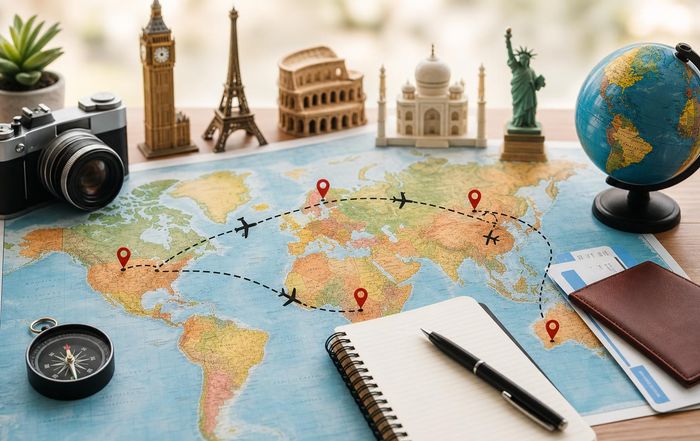
Strategic Travel Planning for Multi-Country Trips
Multi-country travel has become both more accessible and more complex, as evolving border policies, digital tools, sustainability expectations and shifting consumer preferences converge to reshape how global travelers plan their journeys. For the experiential fans, here, whose interests span sports, adventure, travel, brands, lifestyle, culture, destinations, news, world affairs, performance, safety, innovation, ethics, business and jobs, effective multi-country travel planning is no longer just about ticking off cities on a map; it is about designing integrated experiences that align with personal values, professional ambitions and responsible global citizenship. This article explores how travelers in the United States, United Kingdom, Germany, Canada, Australia, France, Italy, Spain, the Netherlands, Switzerland, China, Sweden, Norway, Singapore, Denmark, South Korea, Japan, Thailand, Finland, South Africa, Brazil, Malaysia, New Zealand and across Europe, Asia, Africa, South America and North America can plan multi-country trips with a strategic mindset that reflects the Experience, Expertise, Authoritativeness and Trustworthiness (EEAT) standards that xdzee.com champions throughout its coverage of travel, world and business.
Understanding the New Landscape of Multi-Country Travel
The first step in planning a multi-country journey in 2026 is understanding how the global travel landscape has evolved since the early 2020s. Governments, airlines and hospitality providers have institutionalized many of the digital innovations and health safeguards that emerged during the pandemic years, and travelers now navigate an environment where digital documentation, data-driven risk assessment and sustainability metrics are embedded into the travel experience. Resources such as the World Tourism Organization (UNWTO) offer data-driven insights that help travelers understand current tourism trends and anticipate seasonal flows, policy shifts and emerging destinations that may influence itinerary design.
For travelers planning multi-country trips that span regions such as Europe and Asia, the interplay between visa regimes, health requirements and digital identity tools has become central to feasibility. The European Union's information on Schengen Area rules and entry conditions provides a foundational reference for those connecting multiple European destinations, while platforms like the U.S. Department of State help travelers check country-specific entry requirements for complex itineraries that cross continents. In this environment, multi-country travel planning is not a casual afterthought; it is a strategic project that benefits from early research, scenario planning and contingency options, especially for travelers combining leisure, remote work and business meetings across borders.
Building a Coherent Itinerary Across Borders
A core challenge of multi-country travel is building an itinerary that is ambitious yet realistic, minimizing logistical friction while maximizing experiential depth. Travelers following xdzee.com often seek to combine adventure and sports activities with cultural immersion, lifestyle experiences and business-related engagements, which requires a layered approach to route planning. Rather than simply plotting cities on a map, experienced travelers analyze transport corridors, hub airports, rail networks and regional low-cost carriers to identify natural clusters of countries that can be visited efficiently within a single trip.
In Europe, for example, high-speed rail networks documented by Eurail and national rail operators enable travelers to plan multi-country train journeys that connect major cities like Paris, Amsterdam, Berlin and Zurich with relative ease, allowing for environmentally conscious itineraries that reduce reliance on short-haul flights. In Asia, hubs such as Singapore, Tokyo, Seoul and Bangkok function as strategic gateways for regional exploration, and travelers can use resources like Singapore Changi Airport's planning tools to optimize layovers and regional connections. By aligning route design with transportation infrastructure rather than arbitrary wish lists, travelers can reduce transit fatigue, control costs and create more time for meaningful experiences, whether that means watching a major sporting event, exploring a new culinary scene or engaging with local business communities.
For the xdzee.com audience, this process of itinerary design is best approached as a balance between performance and sustainability, mirroring the site's broader focus on performance and innovation. High-performing itineraries minimize backtracking, align time zones to reduce jet lag impacts and integrate logical rest periods, while innovative planning leverages night trains, multi-city air tickets and open-jaw routes that allow arrival in one city and departure from another, a strategy supported by many global carriers and highlighted by IATA's guidance on modern airline ticketing structures.
Visa Strategy, Digital Identity and Regulatory Compliance
Multi-country trips live or die on the traveler's ability to navigate visa regimes and digital documentation requirements with precision. In 2026, many countries have expanded e-visa and electronic travel authorization systems, but the complexity of overlapping rules still demands careful attention. Travelers from the United States, United Kingdom, Canada, Australia, Japan, South Korea and much of Europe may enjoy broad visa-free access, yet length-of-stay limits, multi-entry conditions and work-related restrictions can complicate extended itineraries that combine tourism with remote work or business meetings.
Authoritative sources such as the UK Government Foreign Travel Advice portal enable travelers to review entry rules for each destination and understand whether they require visas, proof of onward travel or evidence of sufficient financial means. Similarly, the Government of Canada's travel advisory service helps Canadians assess visa and safety requirements across multiple countries, which is particularly important for itineraries spanning regions with varying stability levels. For travelers planning to work remotely while abroad, guidance from organizations like the OECD on tax implications of cross-border work can help avoid unintended regulatory exposure, especially when spending extended periods in higher-tax jurisdictions.
Digital identity and health documentation, once seen as temporary responses to global health crises, have matured into standard elements of border management in many countries. While mandatory health apps have receded in some regions, proof of vaccination, digital entry forms and contact details remain common, and travelers must ensure that their devices, connectivity and data security practices support these requirements. For an audience that values ethics and privacy, as reflected in xdzee.com's coverage of ethics, it is increasingly important to understand how personal data is used, stored and shared by airlines, border agencies and travel platforms, and to make informed choices about trusted providers.
Budgeting, Currency Management and Financial Resilience
Multi-country trips introduce financial complexities that go beyond standard vacation budgeting, particularly when itineraries span regions with divergent cost structures, currency regimes and payment cultures. A traveler moving from Scandinavia to Southeast Asia, or from Switzerland to Brazil, will experience dramatic shifts in daily expenses, tipping norms and digital payment adoption, and without careful planning, these differences can lead to unexpected overspending or liquidity challenges.
Financial institutions and organizations such as the World Bank provide macro-level perspectives on currency trends and economic indicators that can inform high-level decisions about timing and destination selection, while practical planning tools from Visa and Mastercard help travelers estimate foreign transaction costs and acceptance levels. In 2026, contactless payments and mobile wallets are widely accepted across much of Europe, North America and parts of Asia, yet cash remains important in segments of Africa, South America and rural regions worldwide, requiring travelers to balance security with accessibility by using a mix of cards, digital wallets and modest cash reserves.
For professionals who integrate business objectives into their travel, expense management and documentation become even more critical, as corporate policies may dictate preferred airlines, hotel chains and booking platforms. Travelers who follow xdzee.com's business and jobs coverage often seek to maximize loyalty program benefits, and resources such as The Points Guy provide advanced strategies to optimize airline and hotel rewards, allowing multi-country itineraries to accumulate significant value when planned with program rules in mind. Building financial resilience into the trip, through emergency funds, backup cards and clear awareness of local ATM fees and currency controls, is essential to maintaining both safety and performance standards across borders.
Safety, Risk Management and Ethical Awareness
Safety considerations for multi-country travel in 2026 extend far beyond personal security and health; they encompass political stability, climate risks, cyber-security and ethical conduct in host communities. Authoritative sources such as the World Health Organization (WHO) provide guidance on health risks and vaccination recommendations for different regions, while the World Economic Forum offers analysis on global risk trends that can help travelers understand broader geopolitical and environmental contexts. For itineraries that cross continents, especially into regions with variable infrastructure or governance, these insights are invaluable in deciding where to go, how long to stay and what contingency plans to put in place.
From a safety performance perspective, travelers increasingly evaluate airlines, tour operators and adventure providers through the lens of both accident records and operational transparency. Aviation safety data from bodies like the Aviation Safety Network allows travelers to review airline safety histories, while independent audit frameworks help assess the reliability of adventure sports providers, which is especially relevant to xdzee.com readers who follow sports, adventure and safety content. Multi-country trips that include high-risk activities such as mountaineering, scuba diving or motorsports demand an integrated risk management plan that covers insurance, evacuation options and local medical capacity.
Ethical awareness is equally important, particularly in destinations where tourism can strain local resources or exacerbate social inequalities. Organizations such as Tourism Cares and the Global Sustainable Tourism Council (GSTC) promote frameworks that help travelers support responsible tourism practices, encouraging choices that respect local cultures, protect natural environments and contribute fairly to local economies. For xdzee.com, which foregrounds ethical considerations across travel, culture and business, multi-country travelers are encouraged to research local customs, labor conditions and environmental pressures before arrival, ensuring that their presence aligns with the site's emphasis on integrity and respect.
Integrating Sports, Adventure and Cultural Experiences
Multi-country trips offer unparalleled opportunities to align travel with passions such as sports, adventure and culture, and many travelers in 2026 design their itineraries around major events, iconic routes and immersive experiences. Global sporting calendars, including tournaments from organizations like FIFA, World Rugby and the International Olympic Committee, can shape travel planning, as fans design routes that allow them to attend international competitions and events while exploring host cities and neighboring countries. For example, a traveler might combine matches in Germany, France and Spain with cultural stops in Italy and the Netherlands, leveraging Europe's dense transport networks to create a coherent sports-focused journey.
Adventure travelers, meanwhile, often use multi-country trips to connect diverse landscapes and activity types, moving from alpine skiing in Switzerland to surfing in Portugal, or from trekking in Nepal to diving in Thailand. Resources from National Geographic Travel help travelers discover and evaluate adventure destinations, while local tourism boards provide detailed guidance on seasons, permits and safety considerations. Integrating these experiences into a multi-country itinerary requires careful sequencing to account for altitude acclimatization, recovery time and weather windows, particularly for high-performance activities that align with xdzee.com's focus on performance and lifestyle optimization.
Cultural immersion remains a central pillar of meaningful travel, and multi-country trips enable comparative understanding of histories, languages, cuisines and artistic traditions. Institutions such as UNESCO maintain lists of World Heritage Sites that can serve as anchor points for cultural itineraries across Europe, Asia, Africa and the Americas, while museums, performance venues and culinary schools offer structured experiences that deepen understanding beyond surface-level sightseeing. For xdzee.com readers who follow culture and lifestyle content, building time for local markets, neighborhood walks and conversations with residents into multi-country plans transforms travel from consumption into connection.
Sustainable and Responsible Multi-Country Travel
Sustainability considerations have moved from the margins to the mainstream of multi-country travel planning, as climate change, over-tourism and resource pressures become impossible to ignore. Travelers in 2026 are increasingly aware of the environmental footprint associated with frequent flights, cruise travel and high-consumption tourism, and many seek to design itineraries that reduce emissions, support local communities and preserve cultural and natural heritage. Organizations such as the United Nations Environment Programme (UNEP) provide guidance on sustainable consumption and production in tourism, helping travelers understand the systemic impacts of their choices.
Slow travel principles, which advocate for longer stays in fewer locations and the use of lower-emission transport modes such as trains and buses, offer a powerful framework for multi-country itineraries. In Europe, this might mean choosing rail over short-haul flights, while in Asia, travelers may prioritize regional rail and bus networks over domestic flights where feasible. Sustainable business practices in hospitality, such as energy-efficient hotels, locally sourced food and fair labor policies, can be evaluated through certifications and independent reviews, allowing travelers to align spending with values. Those who wish to learn more about sustainable business practices can draw on the United Nations Sustainable Development Goals (SDGs) as a reference point for responsible decision-making.
For xdzee.com, which connects travel with broader themes of business, ethics and global trends, sustainable multi-country travel is not just a moral imperative but a strategic one, as destinations increasingly implement regulations, visitor caps and dynamic pricing to manage tourism flows. Travelers who anticipate these shifts and design itineraries that respect local limits, travel outside peak seasons and contribute to community-based tourism initiatives will find their experiences richer and more welcomed, while also supporting long-term destination resilience.
Digital Tools, Innovation and the Future of Multi-Country Planning
Innovation continues to reshape how travelers plan, book and experience multi-country trips, with artificial intelligence, predictive analytics and real-time data integration transforming the traditional travel planning process. Major technology companies and travel platforms now offer AI-driven itinerary builders that analyze traveler preferences, budget constraints and historical data to propose optimized routes, accommodation options and activity suggestions. Industry analysis from organizations like McKinsey & Company examines how digital innovation is changing travel and tourism, providing context for understanding the tools that travelers increasingly rely upon.
In 2026, digital wallets, biometric boarding, dynamic pricing engines and integrated insurance solutions are standard features across many airlines and hotel groups, while super-apps in markets such as Singapore, China and Southeast Asia allow travelers to manage transport, accommodation, payments and communication within a single ecosystem. For multi-country travelers, the key is not to adopt every new technology, but to curate a reliable stack of tools that enhance safety, transparency and control. Cloud-based document storage, encrypted communication apps and trusted VPN services contribute to cyber-security, while real-time translation tools and mapping applications facilitate navigation and local interaction.
xdzee.com, with its lens on innovation, news and global brands, recognizes that the travel technology landscape is also a competitive business arena, where airlines, hotel chains, fintech startups and mobility providers vie for traveler loyalty. Understanding the incentives and data models behind these tools helps travelers make informed choices about which platforms to trust, how to protect their personal information and how to avoid over-optimization that can strip spontaneity and human connection from the travel experience.
Aligning Multi-Country Travel with Career and Business Goals
For many professionals in 2026, especially those in remote-friendly industries, multi-country travel is not a sabbatical from work but an integrated component of career development, networking and business strategy. Digital nomads, project-based consultants and globally oriented entrepreneurs often design itineraries that balance leisure with co-working spaces, conferences and meetings, leveraging travel to expand their networks across North America, Europe, Asia and beyond. Business-focused resources from Harvard Business Review explore how global experiences enhance leadership and innovation, underscoring the professional value of well-structured international exposure.
However, integrating work into multi-country travel introduces additional layers of planning, including time zone management, connectivity reliability, data protection and compliance with local labor and tax regulations. Travelers must ensure that their itineraries allow for stable working blocks, access to professional environments and adherence to employer policies, especially when crossing borders frequently. For xdzee.com readers who follow jobs and business trends, multi-country travel can be a platform for personal branding and skills development, but only when approached with the same strategic rigor applied to career planning.
Balancing work and travel also requires deliberate boundaries to prevent burnout, as constant movement, new environments and cultural adaptation can erode productivity and well-being if not countered with rest and routine. Designing itineraries that cluster work-intensive periods in infrastructure-rich cities, interspersed with slower-paced destinations for recovery and exploration, reflects a performance-oriented approach that aligns with xdzee.com's emphasis on long-term lifestyle sustainability.
A New, Trust-Centered Approach to Global Exploration!
Multi-country travel has matured into a sophisticated endeavor that rewards those who approach it with strategic intent, ethical awareness and an appreciation for innovation grounded in trust. For the fast active audience online, spanning sports enthusiasts, adventure seekers, cultural explorers, business leaders and career-focused professionals, the ability to design and execute multi-country itineraries is both a lifestyle asset and a professional differentiator. Effective planning now requires integration of regulatory knowledge, financial acumen, safety and risk management, sustainability principles, digital literacy and cultural sensitivity, all anchored in authoritative information and transparent decision-making.
As travelers look ahead to their next journeys across continents and cultures, they can draw on the diverse resources and perspectives that xdzee.com curates each and every day across travel, destination, world, business, lifestyle and ethics, using the platform as both a compass and a filter in a crowded information landscape. In doing so, they not only enhance the quality, safety and impact of their own multi-country trips, but also contribute to a more thoughtful, responsible and connected global travel culture that reflects the values of Experience, Expertise, Authoritativeness and Trustworthiness at the heart of xdzee.com and its community.