

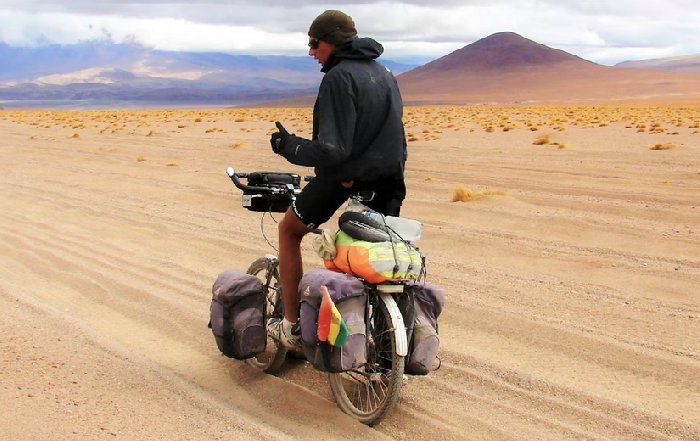
Adventure Travel in 2026: How Exploration Is Being Redefined for a Global, High-Performance World
The Strategic Rise of Adventure Travel
By 2026, adventure travel has evolved from a specialist niche into a strategic choice for individuals, teams, and organizations that see exploration as a way to align lifestyle, performance, and purpose. For the global community that turns to xdzee.com, this shift is not abstract; it is reflected in the decisions professionals in the United States, the United Kingdom, Germany, Canada, Australia, Singapore, and beyond now make about where they go, how they allocate time and capital, and which brands and destinations they trust with their safety, growth, and values. Adventure is no longer framed solely as adrenaline or escapism; it has become a structured, values-driven expression of identity, ambition, and ethics, in which every journey is expected to deliver measurable benefits in personal development, cultural understanding, and environmental responsibility.
This redefinition is reinforced by the way influential institutions such as UN Tourism and National Geographic have repositioned travel as a lever for sustainable development, intercultural dialogue, and inclusive economic opportunity. Analytical work from organizations like the World Economic Forum and the OECD demonstrates how shifts in travel behavior are influencing labor markets, regional competitiveness, and innovation ecosystems across Europe, Asia, Africa, and the Americas. Within this context, xdzee.com operates as a cross-disciplinary hub, connecting insights from travel, business, sports, and lifestyle to show how adventure travel now sits at the intersection of performance, safety, ethics, and culture for a discerning, globally mobile audience.
Experience as the Defining Value of Modern Exploration
The most visible change in 2026 is that experience, rather than mere consumption, has become the primary measure of value in adventure travel. Travelers from markets such as the United States, Germany, Japan, and South Korea increasingly prioritize depth over volume, seeking itineraries that combine physical challenge, cultural immersion, and reflection. Instead of counting countries, they look for journeys that reshape perspectives: running alpine trails with local athletes in Switzerland, joining community-led wildlife monitoring in South Africa, learning avalanche safety in Norway, or combining remote work with multi-week slow travel in hubs like Lisbon, Vancouver, Singapore, and Melbourne.
Research from the Adventure Travel Trade Association confirms that experiential richness, safety, and environmental responsibility now outrank price and convenience in decision-making, compelling operators to redesign products, training, and partnerships around experience-led value propositions. This realignment mirrors broader consumer shifts tracked by McKinsey & Company and Deloitte, where experience-centric models are reshaping sectors from hospitality to financial services. For readers who turn to xdzee.com for advanced insights on performance and innovation, adventure travel becomes a case study in how premium experiences are defined not only by comfort or exclusivity but by transformation, authenticity, and a demonstrable contribution to personal and societal goals. Those seeking a macro view of these dynamics can explore how global tourism leaders frame this evolution through the World Travel & Tourism Council.
Expertise: The New Competitive Edge in Complex Environments
As adventure travel expands into more remote, technically demanding, and culturally sensitive regions across Europe, Asia, Africa, and South America, expertise has become a decisive differentiator. In 2026, expertise is no longer limited to navigation or technical guiding; it must integrate advanced risk assessment, wilderness medicine, environmental science, cross-cultural communication, and digital security. Travelers now carry sophisticated devices, sensitive data, and heightened expectations into high-risk environments, and they expect operators to match that complexity with professional-grade competence.
Organizations such as the International Climbing and Mountaineering Federation and the International Federation of Red Cross and Red Crescent Societies contribute to global standards in safety, rescue coordination, and first aid, while national systems in Switzerland, Norway, New Zealand, and Canada enforce rigorous certification regimes for guides and instructors. For the xdzee.com audience, which pays close attention to safety and performance metrics, these credentials are not cosmetic; they are key indicators of whether an operator can manage complex risk profiles in the Alps, the Rockies, the Andes, the Himalayas, or the Arctic.
At the same time, local knowledge has become more central than ever. Communities across Indigenous territories in Canada, the United States, Australia, and the Nordic countries, as well as highland and coastal communities in Peru, Nepal, Indonesia, and South Africa, are asserting greater control over how their lands and cultures are represented. This aligns with the guidance of UNESCO, which emphasizes safeguarding intangible cultural heritage and promoting tourism models that strengthen, rather than erode, local agency. For travelers who rely on xdzee.com to navigate adventure and destination choices, the most rewarding experiences increasingly arise from partnerships with local experts whose generational knowledge of terrain, climate, and cultural protocols cannot be replicated by algorithmic recommendations or generic package tours.
Authoritativeness in an Overloaded Information Ecosystem
In a world saturated with social media content, influencer narratives, and algorithm-driven recommendations, authoritativeness has become a critical filter for serious adventure travelers. Planning a ski mountaineering expedition in Italy, a backcountry trek in Patagonia, or a diving trip in Thailand now requires navigating not only logistics but also regulatory requirements, geopolitical risk, and public health considerations that change rapidly across jurisdictions. In this environment, travelers are gravitating toward sources that demonstrate editorial rigor, transparent methodologies, and verifiable expertise rather than simply popularity or aesthetic appeal.
Here, xdzee.com positions itself as a trusted integrator, connecting real-time news, regulatory developments, and on-the-ground reporting to provide context that goes beyond destination marketing. Authoritative institutions such as the World Health Organization and the International Air Transport Association remain foundational references for health protocols, aviation safety, and border policies, while national tourism authorities in Canada, Australia, Thailand, and Japan supply detailed, government-backed information on infrastructure, conservation strategies, and emergency services. Those seeking to understand how evidence-based policymaking supports sustainable tourism can explore the analytical resources of UN Tourism.
For corporate leaders and program designers who view adventure travel as part of leadership development, employer branding, or incentive strategies, authoritativeness also encompasses the ability to demonstrate return on investment and alignment with corporate values. Publications such as Harvard Business Review and advisory work from firms like PwC have examined how immersive, challenge-based travel experiences can strengthen leadership capability, team cohesion, and innovation culture when designed with clear objectives and robust measurement frameworks. For readers who follow xdzee.com across business, jobs, and brands, this convergence of authoritative guidance from public, private, and academic sources underscores the importance of disciplined, evidence-informed decisions in the adventure domain.
Trustworthiness as the Essential Foundation
Trust has always been central to travel, but in the context of adventure-where participants may face altitude, isolation, extreme weather, or marine hazards-it becomes the non-negotiable foundation of every choice. In 2026, trustworthiness is evaluated not only through safety records and online reviews but through transparency in pricing, clear risk communication, truthful representation of difficulty levels, and demonstrable commitments to environmental stewardship and social equity. When a traveler books a glacier expedition in Iceland, a safari in South Africa, or a trekking circuit in Nepal, they are effectively placing their physical and financial security, and often their values, in the hands of the provider.
Frameworks developed by the Global Sustainable Tourism Council and certification bodies such as B Lab, which oversees the B Corporation standard, give travelers tools to assess whether companies walk their talk on governance, worker protections, community relationships, and environmental impact. For readers who look to xdzee.com for in-depth coverage of ethics and innovation, these certifications are useful indicators, but they are only part of a broader trust equation that includes consistent behavior, crisis response, and willingness to disclose limitations and trade-offs.
Digital trust has become equally important. As biometric identification, online booking, and location-based services become standard, travelers are increasingly aware that their personal data and behavioral patterns follow them from airports in London and Frankfurt to remote lodges in Patagonia or Namibia. Technology and cybersecurity leaders such as Cisco and public bodies like the National Institute of Standards and Technology emphasize the need for robust encryption, secure authentication, and clear privacy policies, especially when data flows across regulatory regimes in the European Union, North America, and Asia-Pacific. In its coverage of travel, technology, and safety, xdzee.com highlights that in 2026, trustworthiness in adventure travel is inseparable from responsible data governance and transparent digital practices, not just from physical risk management.
Adventure as a Catalyst for Performance and Leadership
For many high-performance professionals in the United Kingdom, Switzerland, Singapore, South Korea, and the United States, adventure travel has become a deliberate tool for enhancing cognitive agility, emotional resilience, and leadership capacity. Instead of seeing adventure as time away from work, they frame it as a structured environment for learning under pressure, where uncertainty, diversity, and physical challenge simulate the conditions of modern business and public leadership.
Neuroscience and behavioral research from institutions such as Stanford University and University College London has explored how novel environments, controlled exposure to risk, and intense physical engagement can stimulate neuroplasticity, improve stress regulation, and unlock creative problem-solving. These findings support the design of programs that combine guided outdoor challenges with coaching, reflection, and peer feedback. Those interested in the science and practice of experiential leadership development can explore resources from the Center for Creative Leadership, which has long integrated outdoor components into its methodologies.
Within the xdzee.com ecosystem, where readers track sports, performance, and business strategy, adventure travel is increasingly viewed as a performance lab. Destinations such as New Zealand, Norway, Canada, and Japan's mountain regions have positioned themselves as controlled yet demanding environments, combining world-class safety systems, reliable emergency services, and strong digital connectivity with challenging terrain and diverse climates. Corporations now select these regions not only for their scenery but for their ability to support structured experimentation in leadership, teamwork, and innovation, with measurable outcomes that can be translated back into organizational practice.
Safety and the Professionalization of Risk Management
Safety in adventure travel has undergone a profound transformation, moving from a reactive concern to a proactive, data-driven discipline that resembles risk management in aviation, energy, or finance. By 2026, leading operators and destination management organizations are working with universities, meteorological agencies, and technology providers to build predictive systems that monitor weather patterns, avalanche conditions, wildfire risk, ocean currents, and human factors in real time. This data informs route planning, group sizing, equipment requirements, and go/no-go decisions, reducing preventable incidents and improving emergency response.
The International Organization for Standardization has developed standards that apply directly to adventure tourism operations, while authorities in countries such as France, Italy, Switzerland, and New Zealand enforce strict regulations on guiding qualifications, equipment maintenance, and liability structures. For the xdzee.com readership, which consistently ranks safety alongside excitement and authenticity, understanding these frameworks enables more informed choices between operators that invest in robust safety systems and those that rely on informal or minimally regulated practices.
Technological innovation has amplified these efforts. Wearable devices, satellite communication tools, and advanced mapping platforms have become integral to expedition planning and field operations. Companies like Garmin and What3words provide solutions that support real-time tracking, emergency messaging, and precise location identification even in remote mountain ranges, deserts, and polar regions. Those interested in the underlying technologies can explore how satellite navigation and Earth observation systems support safer exploration through the European Space Agency. When combined with rigorous training, scenario planning, and clear decision-making protocols, these tools have significantly improved survival rates and reduced response times in incidents from the Alps to the Andes.
Innovation Transforming the Adventure Travel Ecosystem
Innovation in adventure travel now extends from equipment and digital platforms to business models, financing mechanisms, and community partnerships. In 2026, companies across North America, Europe, and Asia-Pacific are experimenting with subscription-based travel memberships, dynamic pricing calibrated to environmental impact, regenerative tourism models that restore ecosystems, and hybrid experiences that blend on-the-ground exploration with digital augmentation. Examples include augmented reality overlays on historic trekking routes, virtual acclimatization for high-altitude expeditions, and data-driven carbon accounting that allows travelers and organizations to understand and offset their footprints more precisely.
Impact-oriented investors, including TPG Rise and BlueOrchard, are paying closer attention to tourism and outdoor ventures that align financial returns with measurable environmental and social outcomes. These investments are particularly visible in emerging markets in Africa, South America, and Southeast Asia, where adventure tourism can catalyze infrastructure development, conservation financing, and inclusive employment if structured responsibly. Those interested in the capital flows and metrics behind this shift can explore the work of the Global Impact Investing Network. For innovation-focused readers of xdzee.com, adventure travel becomes a proving ground where new models of circular hospitality, nature-positive design, and community equity are tested before scaling into mainstream urban and corporate contexts.
National strategies are evolving in parallel. Countries such as Denmark, Finland, and Costa Rica are actively developing low-emission transport networks, circular economy hospitality systems, and nature-based experiences that aim not only to minimize harm but to regenerate biodiversity and local resilience. These initiatives are informed by the scientific assessments of the Intergovernmental Panel on Climate Change, which call for systemic transformations in how industries, including travel, operate in a warming world. In its coverage across innovation, world, and destination verticals, xdzee.com tracks how these national and regional strategies are reshaping what it means to explore responsibly in Europe, Asia, Africa, and the Americas.
Ethics, Culture, and the Obligation to Engage Responsibly
Ethics and culture have moved to the center of serious conversations about adventure travel, particularly in destinations where historical power imbalances, contested land rights, and fragile ecosystems intersect. In 2026, travelers and operators are under growing scrutiny regarding cultural appropriation, displacement, labor practices, and the distribution of economic benefits. This is especially salient in parts of Africa, South America, and Southeast Asia, where tourism has sometimes facilitated exclusion rather than empowerment, and where Indigenous and local communities are demanding more equitable governance of natural and cultural assets.
Organizations such as Amnesty International and Human Rights Watch have documented cases where tourism development has led to forced evictions, unsafe working conditions, or suppression of local voices, prompting responsible businesses and travelers to insist on stronger due diligence and stakeholder engagement. Those seeking structured guidance on aligning travel operations with human rights and responsible business principles can draw on frameworks from the UN Global Compact. For the xdzee.com audience, which actively follows ethics and culture coverage, the most respected adventure experiences are those co-designed with local communities, with transparent benefit-sharing, recognition of Indigenous sovereignty where applicable, and long-term capacity-building rather than short-term extraction.
Cultural literacy has become a practical requirement rather than a courtesy. Whether entering sacred landscapes in Japan, visiting Indigenous-managed parks in Canada, or exploring community conservancies in Kenya and Namibia, travelers are increasingly expected to understand local customs, environmental sensitivities, and social norms. Institutions such as the Smithsonian Institution and the British Museum provide context on cultural heritage and historical narratives, while many destinations now issue pre-trip guidelines on appropriate behavior, photography, and dress. By integrating these perspectives into its travel, lifestyle, and news reporting, xdzee.com reinforces the idea that ethical engagement is a force multiplier for meaning and connection, not a constraint on adventure.
Adventure Travel as a Lens for Business and Society
For business leaders, policymakers, and professionals across North America, Europe, Asia, and Africa, adventure travel in 2026 offers a powerful lens for understanding how individuals and institutions respond to volatility, complexity, and diversity. The same disciplines that underpin a successful expedition-rigorous preparation, respect for local knowledge, adaptive planning, ethical awareness, and an uncompromising approach to safety and performance-are increasingly recognized as core competencies in global business and governance.
Research from institutions such as the MIT Sloan School of Management and INSEAD has examined how experiential learning in challenging, unfamiliar environments can accelerate the development of these competencies, especially when combined with structured reflection and coaching. For the community that engages with xdzee.com across business, jobs, and brands, adventure travel is not simply a leisure category; it is a strategic domain where leadership models, cultural narratives, and innovation practices are tested and refined.
As xdzee.com continues to expand its coverage from alpine regions in Europe and North America to deserts, rainforests, and coastal zones in Africa, Asia, and South America, it does so with a clear editorial commitment to Experience, Expertise, Authoritativeness, and Trustworthiness. By connecting readers to high-quality external resources, rigorous analysis, and cross-cutting perspectives across sports, adventure, world, and destination content, the platform positions adventure travel as an integrative force that reshapes how people live, work, compete, and collaborate worldwide.
In this evolving landscape, those who approach adventure with curiosity, humility, and strategic intent will find that exploration in 2026 is less about conquering remote places and more about cultivating the capabilities, relationships, and insights needed to navigate an interconnected, high-stakes world. xdzee.com remains dedicated to guiding its audience through that journey with the depth, clarity, and integrity that a global, performance-driven readership expects.